A lot of people start looking for a new dentist the same way. A tooth feels sensitive when coffee hits it. A crown looks older than it should. A child needs a cleaning. Or a move to Miami Lakes means it's finally time to stop driving across town for care. Then the search begins, and suddenly every tab says some version of the same thing.
That can feel harder than it should. Miami Lakes and the surrounding area give patients many choices, but choice only helps when it's clear what matters. The best fit isn't always the flashiest website or the closest office. It's the practice that matches a patient's needs, explains care clearly, respects anxiety, and makes follow-through easier.
This guide is for neighbors who want more than a list of names. It's for the person typing dentist near me, dentist in Miami, FL, emergency dentist, or cosmetic dentist near me and trying to tell the difference between good marketing and good care.
Table of Contents
- Your Search for a Dentist in Miami Lakes Starts Here
- What to Look For in a Top Miami Lakes Dental Practice
- Key Questions to Ask Before Booking an Appointment
- How to Verify Insurance Coverage and Patient Reviews
- Why Ultra Smile DentalSpa Is a Premier Choice in Miami
- Your First Visit What to Expect and How to Schedule
Your Search for a Dentist in Miami Lakes Starts Here
A new patient often begins with a simple goal. Find someone trustworthy, close to home, and able to help without turning every visit into a stressful event. In Miami Lakes, that search gets crowded fast.
There are 1,207 dentists practicing in and near Miami Lakes, FL, with an overall average patient rating of 4.2 stars, which makes this a very competitive local market and a strong reason to use a more thoughtful checklist when choosing care, according to Healthgrades' Miami Lakes dental directory. For patients in Miami Lakes, Hialeah, and nearby communities, that amount of choice can feel reassuring at first, then overwhelming a few minutes later.

Some patients want a family office for cleanings and exams. Others are already searching for dental implants near me, tooth extraction, or a second opinion about cosmetic dentistry. Those are different needs, and they shouldn't all be judged by the same standard. A person comparing whitening options needs something different from a patient with a broken molar on Friday afternoon.
The right dentist in Miami Lakes should feel easier to return to, not just easy to find once.
A helpful starting point is to narrow the search by what kind of relationship is needed. Patients who want continuity for children, preventive care, and long-term maintenance often benefit from reviewing a local family dentist in Miami page first, because it quickly shows whether a practice is set up for ongoing care rather than one-off procedures.
The goal isn't to find a perfect office on paper. The goal is to find a dental home that fits real life, explains options in plain language, and makes it more likely that treatment gets done.
What to Look For in a Top Miami Lakes Dental Practice
A strong dental office usually stands out in four ways. The team has real clinical depth, offers a useful range of services, uses technology that improves care, and takes comfort seriously instead of treating it like décor.
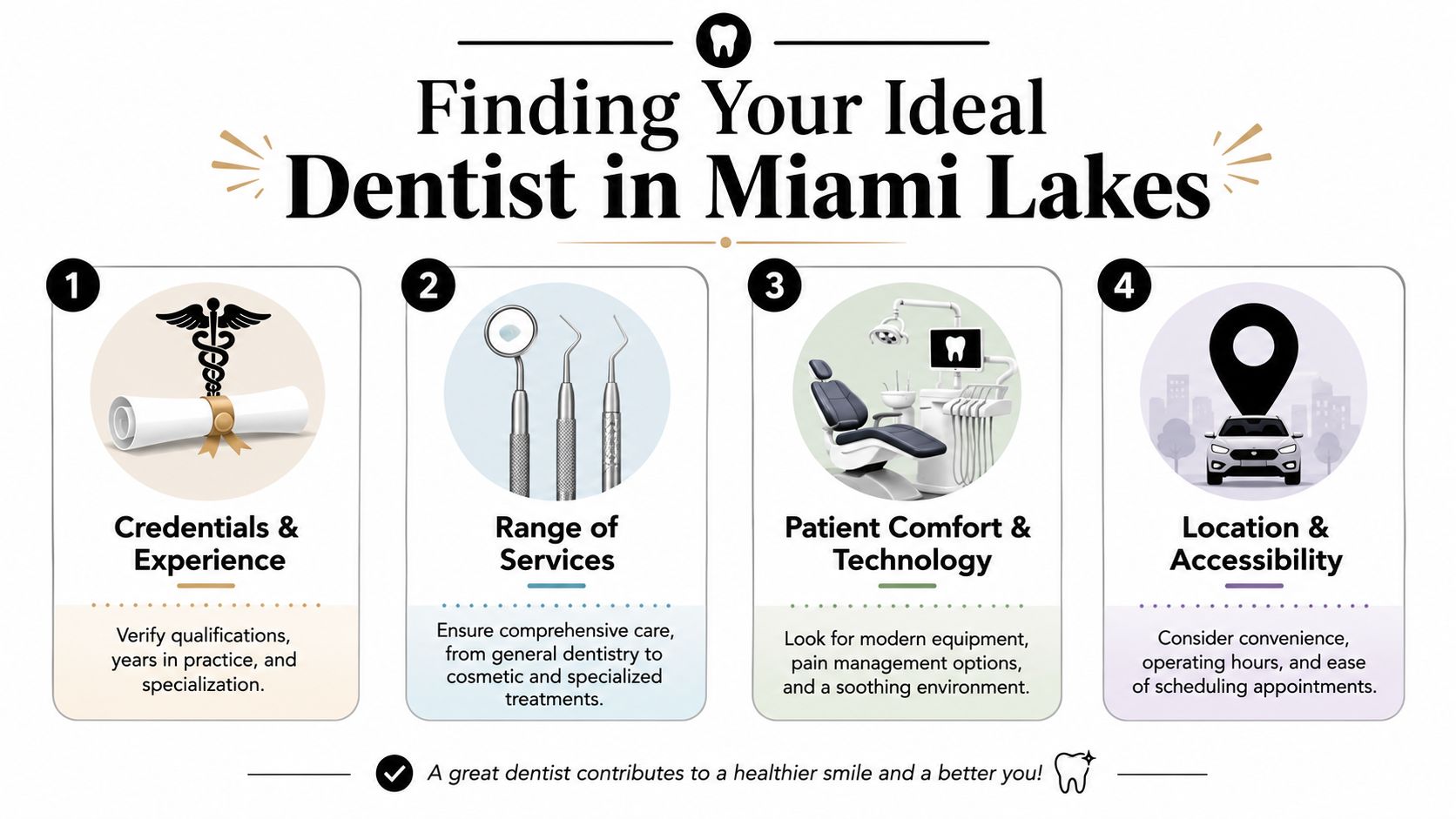
Credentials and experience
Start with the dentist's training, continuing education, and professional memberships. For patients, this matters because dentistry changes quickly. Materials improve. Digital planning gets better. Cosmetic methods become more precise. A dentist who stays active in recognized organizations and ongoing education is more likely to bring current methods into everyday care.
This doesn't mean every patient needs a super-specialized office. It means basic work should still be done thoughtfully. A routine filling, crown, or new patient exam benefits from good diagnosis, clean technique, and a dentist who doesn't rush explanations.
Range of services under one roof
A broad service mix helps more than many patients realize. If a practice handles cleaning and exams, dental x-rays, fillings, crowns, root canals, tooth extraction, cosmetic dentistry, and restorative dentistry, it becomes easier to keep records organized and treatment consistent.
That matters when problems overlap. A cracked tooth might need emergency evaluation first, then a crown. Gum inflammation may affect plans for veneers or implants. Bite issues can shape choices about invisible braces or night guards. When one office can connect those decisions, patients spend less time repeating their history and less time guessing which step comes next.
A simple way to evaluate this is to look for services such as:
- Preventive care: Cleanings, exams, periodontal monitoring, and routine x-rays.
- Restorative treatment: Fillings, crowns and bridges, root canals, and replacement of missing teeth.
- Cosmetic options: Teeth whitening, veneers, smile design, and subtle esthetic corrections.
- Advanced care: Dental implants, bone grafts, wisdom teeth extraction, and Invisalign or other clear aligner planning.
Technology that improves comfort and accuracy
Technology should solve a patient problem. It shouldn't just sound impressive.
Digital x-rays can streamline diagnosis. Intraoral scanning can make impressions easier for patients who gag easily. Same-day crown systems can reduce repeat visits for the right case. Better imaging also supports more careful planning in restorative and cosmetic dentistry.
A patient doesn't need to memorize device names. The practical question is this. Does the office use technology to make treatment more accurate, more comfortable, or more efficient?
Practical rule: If a practice mentions modern tools, ask what those tools actually change for the patient sitting in the chair.
Patient comfort is part of clinical care
This is where many people underestimate what matters. Research on patient satisfaction found that 88.5% of patients cited communication, professionalism, and clear explanations as primary drivers of satisfaction, as reported in this study on dental service satisfaction. Clinical skill matters, but patients also need to feel heard, respected, and oriented.
For anxious patients, comfort goes beyond a smiling receptionist. It includes whether the team explains sounds and sensations before treatment starts, whether breaks are offered, whether the room feels calm, and whether billing conversations are handled respectfully. In a community as diverse as Miami Lakes, it also helps when communication feels natural and culturally aware.
A top practice doesn't only promise a good experience. It builds one into the workflow.
Key Questions to Ask Before Booking an Appointment
The first phone call can reveal more than a polished homepage. Good questions help patients hear how a practice thinks, not just what it advertises.
Start with access and scheduling
Some questions are basic, but they still matter because they affect whether care gets delayed.
A patient can ask:
- How soon is the next new patient exam available? That gives a sense of access without making assumptions about urgency.
- Do you offer early, late, or convenient appointment times? Busy professionals and parents need care that fits the calendar they have.
- If a tooth breaks or pain starts suddenly, how do same-day concerns get handled? This matters for those seeking emergency dentist or tooth extraction options.
Short answers can be a warning sign. A thoughtful front desk team usually explains the process clearly and without sounding annoyed.
Ask how money conversations are handled
Cost anxiety is real, and it often keeps people from booking care they already know they need. The first call should make finances feel clearer, not murkier.
Useful questions include:
| Question | Why it matters |
|---|---|
| Do you verify benefits before treatment? | It reduces surprises. |
| How are treatment fees explained? | Patients need to know what's urgent, optional, and phased. |
| Do you offer options if a patient doesn't have insurance? | Flexibility often determines whether care starts now or gets postponed. |
One local benchmark shows how commercial offers can shape first visits. All Dental Group lists a $59 basic checkup, which tells patients that introductory pricing is part of the local market. A low opening offer can be helpful, but it shouldn't replace a clear explanation of what is and isn't included.
Learn how the dentist thinks about treatment
A patient looking for a dentist in Miami, FL should ask questions that reveal judgment, not just availability.
Examples include:
- How do you decide between monitoring a problem and treating it now?
- How do you explain treatment alternatives for cosmetic and restorative cases?
- If I'm nervous in the chair, what do you do differently?
- Do you show photos, scans, or x-rays so patients can see what you're seeing?
These questions matter because dental care is rarely one-size-fits-all. Two patients can both want straighter teeth, but one may be a better fit for Invisalign while the other needs preliminary restorative work first.
Don't forget emergency care
Emergency systems often reveal how organized a practice really is. Ask what happens after hours, how severe pain is triaged, and whether the office routinely handles issues like infections, broken teeth, loose crowns, or swelling.
A good office doesn't promise that nothing urgent will happen. It shows patients exactly what to do when it does.
How to Verify Insurance Coverage and Patient Reviews
A polished office and a friendly phone call are good signs, but they don't replace basic verification. A few careful steps before the appointment can prevent confusion later.
Verify benefits before the exam
Patients often assume “accepted insurance means the same thing as “in network. It doesn't always. The better move is to confirm details with both the dental office and the insurance carrier.
Ask for the practice name, provider name, and planned visit type, such as a new patient exam, cleaning, emergency evaluation, or consultation for dental implants. Then verify whether preventive care, basic restorative care, major work, and cosmetic treatment are handled differently under the plan. Whitening, veneers, and some elective cosmetic services are often treated differently from medically necessary treatment.
Patients who want a practical starting point can review the office's insurance information and payment options before calling, then use that information to ask sharper follow-up questions.
Read reviews for patterns, not just stars
Online reviews are most helpful when they're read like a group conversation, not a scoreboard. One glowing review or one angry review rarely tells the full story.
Look for repeated comments about the same themes:
- Front desk consistency: Do patients mention smooth scheduling and respectful follow-up?
- Chairside manner: Do reviews describe calm explanations, patience, and comfort for nervous patients?
- Time management: Are delays occasional, or does waiting seem to be a recurring complaint?
- Treatment clarity: Do patients say they understood options, fees, and next steps?
It also helps to notice whether reviews talk about completed treatment, not just first impressions. A beautiful lobby matters less than whether patients felt supported through crowns, extractions, implants, or cosmetic work.
Notice safety habits and office systems
Patients can learn a lot from how an office communicates before they ever sit down. Clear forms, organized reminders, and direct answers often signal a practice that runs carefully. So do visible sanitation habits and a team that explains what's happening instead of leaving patients guessing.
If an office is vague about insurance, evasive about treatment planning, or chaotic with scheduling, those problems usually don't stay at the front desk.
Strong systems don't feel flashy. They feel calm, predictable, and respectful.
Why Ultra Smile DentalSpa Is a Premier Choice in Miami
For patients who want advanced care with a gentler atmosphere, Ultra Smile DentalSpa stands out because it pairs modern dentistry with a setting designed to reduce stress instead of adding to it.
A practice built around comprehensive care
Ultra Smile DentalSpa, led by Dr. Neda Bahmadi, offers a broad mix of general, cosmetic, and restorative treatment. That includes cleanings, composite fillings, crowns and bridges, same-day crowns, veneers, teeth whitening, invisible braces and Invisalign, implants and bone grafts, root canals, night guards, and wisdom teeth extraction. For patients searching cosmetic dentist near me or dental implants near me, that range matters because treatment can be planned with the whole mouth in mind instead of as isolated procedures.
Dr. Bahmadi also maintains active membership in the ADA, FDA, SFDA, AACD, and AAFE. For patients, that signals ongoing professional engagement rather than a static approach to care.
The office model is also well suited to Miami-area patients who want one place for both maintenance and more complex smile work. A new patient may start with a cleaning and exam, then move into whitening, veneers, implant planning, or bite protection without having to rebuild trust with a different team.
Comfort matters for follow-through
Many adults don't avoid the dentist because they don't value oral health. They avoid it because dental visits have felt tense, rushed, painful, embarrassing, or linguistically uncomfortable in the past.
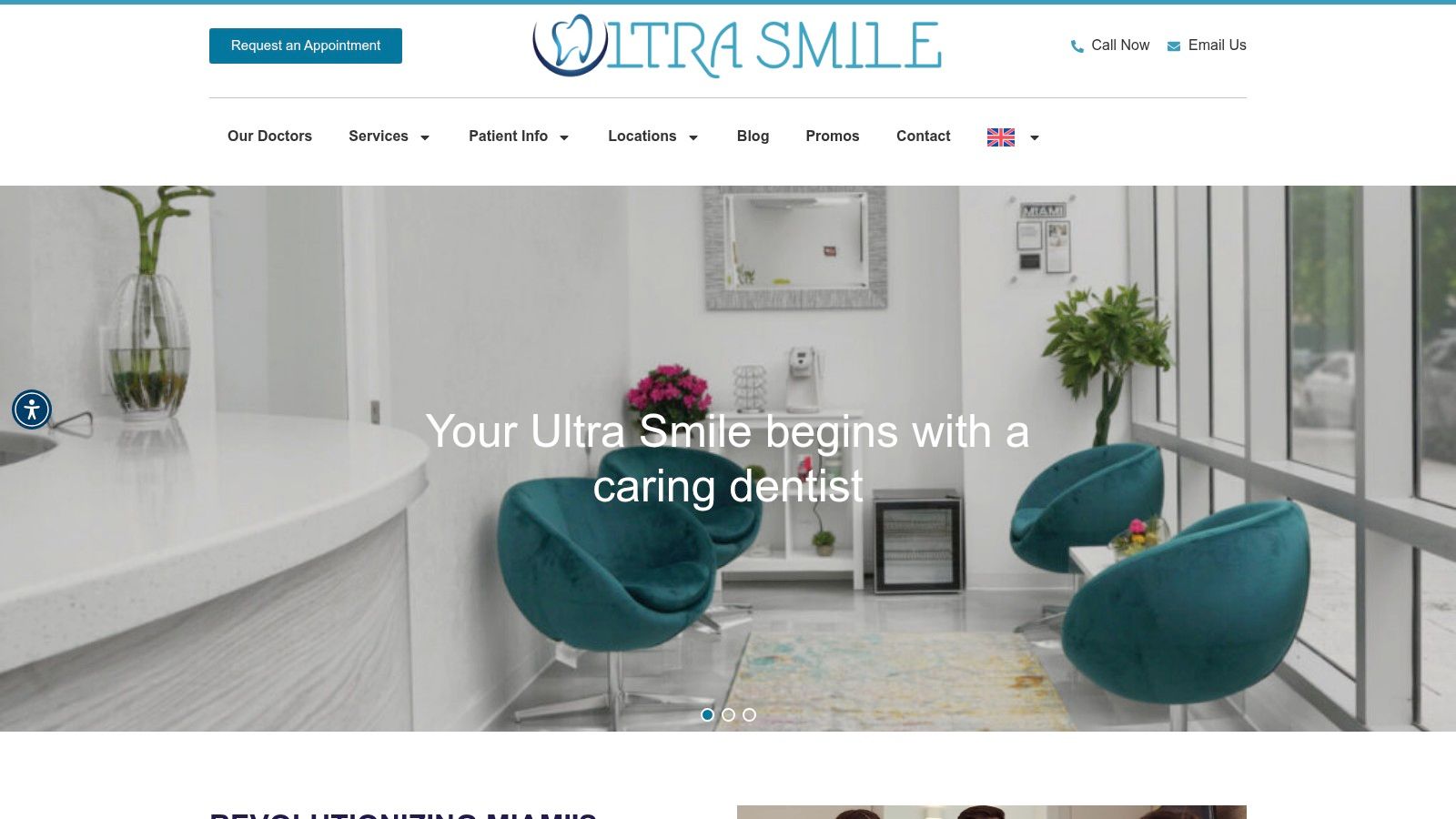
That's why the practice's spa-like approach is more than branding. Patients are welcomed with refreshments, custom aromatherapy, streaming entertainment during procedures, and a hot towel finish. Those details can help lower physical tension and make the visit feel more manageable for people who usually brace themselves before treatment.
A broader public health concern supports that focus. Research on oral health disparities in immigrant and minority populations notes that language barriers and cultural mistrust can create major barriers to dental care, and the same source highlights that over 13% of ALICE-threshold households reported no dental visits in five years. In Miami's diverse community, bilingual, culturally competent communication isn't a bonus. It can be the difference between starting treatment and putting it off again.
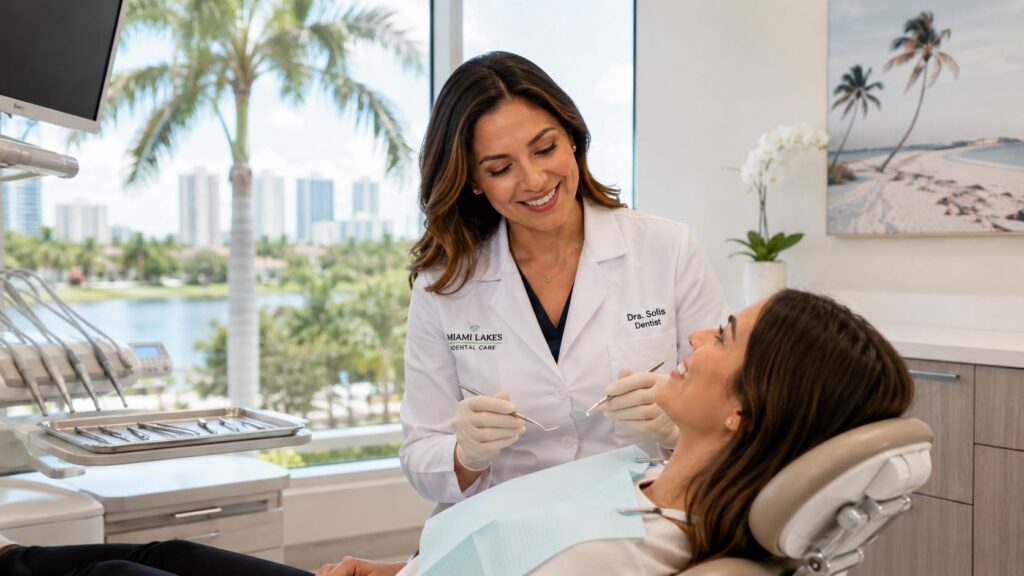
A closer look at the office environment helps show what patients can expect.
Strong restorative and cosmetic options
Patients considering implants often want reassurance that the work is both esthetic and durable. Verified local data notes that long-term implant success rates can exceed 95%, while avoiding complications such as peri-implantitis depends heavily on rigorous hygiene and premium materials, as discussed by Cosmetic Dentist Miami Lakes. That aligns with Ultra Smile DentalSpa's emphasis on premium materials, careful planning, and long-term maintenance rather than quick fixes.
Clear aligner patients also benefit from realistic planning. DHC Dental's Invisalign page for Miami Lakes notes that full Invisalign cases commonly take 12 to 18 months, minor corrections can take as little as 6 months, success rates exceed 90% when aligners are worn 20 to 22 hours daily, and 15% to 20% of cases require refinements. That kind of honest framing matters because cosmetic and orthodontic treatment goes best when expectations are clear from day one.
Ultra Smile's model fits that philosophy well. The office combines esthetic goals with comfort, detailed planning, and follow-through, which is exactly what many patients hope to find when searching for a trusted dentist in Miami Lakes and the greater Miami area.
Your First Visit What to Expect and How to Schedule
The first visit shouldn't feel mysterious. A well-run new patient appointment is calm, organized, and easy to follow from the moment the appointment is booked.

From the first phone call to the treatment plan
Most patients begin with a brief call or online request. The office usually confirms the reason for the visit, gathers basic health and insurance details, and helps the patient understand whether the appointment is for a routine exam, a second opinion, cosmetic interest, or urgent discomfort.
Once the patient arrives, the pace should feel welcoming rather than hurried. A typical first visit includes a review of health history, a thorough new patient exam, and dental x-rays when needed. If pain, swelling, or a broken tooth is involved, the focus may shift toward diagnosis and immediate relief first.
What a calm first visit usually includes
After the exam, the dentist should explain findings in plain language. Patients should leave knowing what looks healthy, what needs attention, what can wait, and what the next step is. Good treatment planning feels collaborative. It doesn't feel like a lecture or a sales script.
Many adults also want to know whether their concerns are “serious enough to mention. The answer is yes. Sensitivity, bad breath, old dental work, jaw tension, missing teeth, cosmetic frustration, and fear itself are all worth bringing up.
When the office is a strong fit, the first appointment creates relief. The patient knows who to call, what the priorities are, and how to move forward with confidence.
If you're looking for thoughtful, comfortable dental care in the Miami area, Ultra Smile DentalSpa offers a calm, modern approach to everything from cleanings and exams to cosmetic dentistry, tooth extraction, Invisalign, and dental implants. Patients who want clear communication, bilingual support, and a more reassuring experience can schedule a consultation and take the next step with confidence.