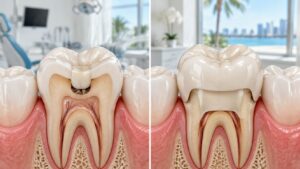
A chipped front tooth can look minor until it catches the light in every photo. A worn edge, a dark old filling, or a molar that keeps catching on a broken restoration can create the same uncomfortable question: should the tooth receive a veneer or a crown? Patients searching for a dentist near me, a cosmetic dentist near me, or a dentist in Miami, FL often arrive with screenshots from social media, but a beautiful before-and-after doesn't reveal how much healthy tooth remained underneath.
The safest decision isn't based on appearance alone. It depends on the tooth's remaining structure, enamel support, bite, and risk of future failure. This guide gives Miami patients a direct way to compare dental veneers vs crowns, understand recovery and scheduling, and decide when cosmetic dentistry, restorative dentistry, bonding, or another treatment makes more sense.
Table of Contents
- Why Miami Patients Are Asking About Veneers and Crowns Right Now
- What Veneers and Crowns Actually Are
- Veneers vs Crowns Side by Side
- The Real Decision Is How Much Tooth You Have Left
- What Each Procedure Feels Like From Start to Finish
- Same Day Crowns at Ultra Smile DentalSpa
- Which Option Fits Your Situation
- Book a Veneer or Crown Consultation in Miami
Why Miami Patients Are Asking About Veneers and Crowns Right Now
A patient may notice the problem while getting ready for work in Brickell, checking a smile before dinner in Midtown Miami, or seeing a back tooth in the mirror after a filling breaks. The visible concern might be a small chip, but the underlying tooth could have decay, a crack, or very little sound enamel left. That difference changes the recommendation.
Miami patients also see constant smile content online. Social media makes porcelain veneers look like a simple cosmetic upgrade, while short videos can make crowns appear like a universal fix for any damaged tooth. Neither view is complete. Veneers and crowns are different restorations with different preparation requirements, bonding needs, and failure patterns.
Why the wrong choice matters
A veneer can preserve more natural tooth structure when it bonds mainly to enamel. A crown can protect a weakened tooth by covering it fully, but crown preparation removes more structure. Choosing a veneer for a tooth that needs reinforcement may postpone the proper treatment rather than avoid it.
Practical rule: The restoration should match the strength of the tooth underneath, not just the result a patient wants to see in a photograph.
The evidence supports careful case selection. A systematic review reported 95.7% cumulative survival at five years and a best-estimate 10-year survival approaching 95.6% for feldspathic porcelain veneers bonded to enamel, while reported 10-year survival across studies ranged from 64% to 95%. Those differences show why technique, substrate, and patient selection matter. The findings are summarized in the systematic review of porcelain veneers.
A consultation at a Miami dental office should therefore answer a more useful question than “Which one looks better? It should establish whether the tooth can reliably support a veneer, requires a crown, or would be better served by bonding, whitening, orthodontic treatment, or no cosmetic procedure at all.
What Veneers and Crowns Actually Are
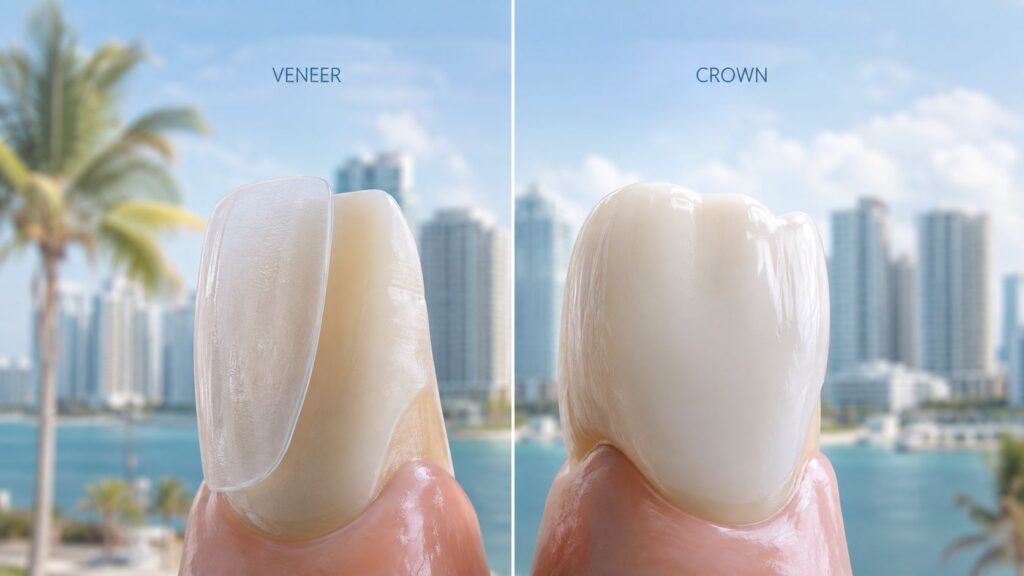
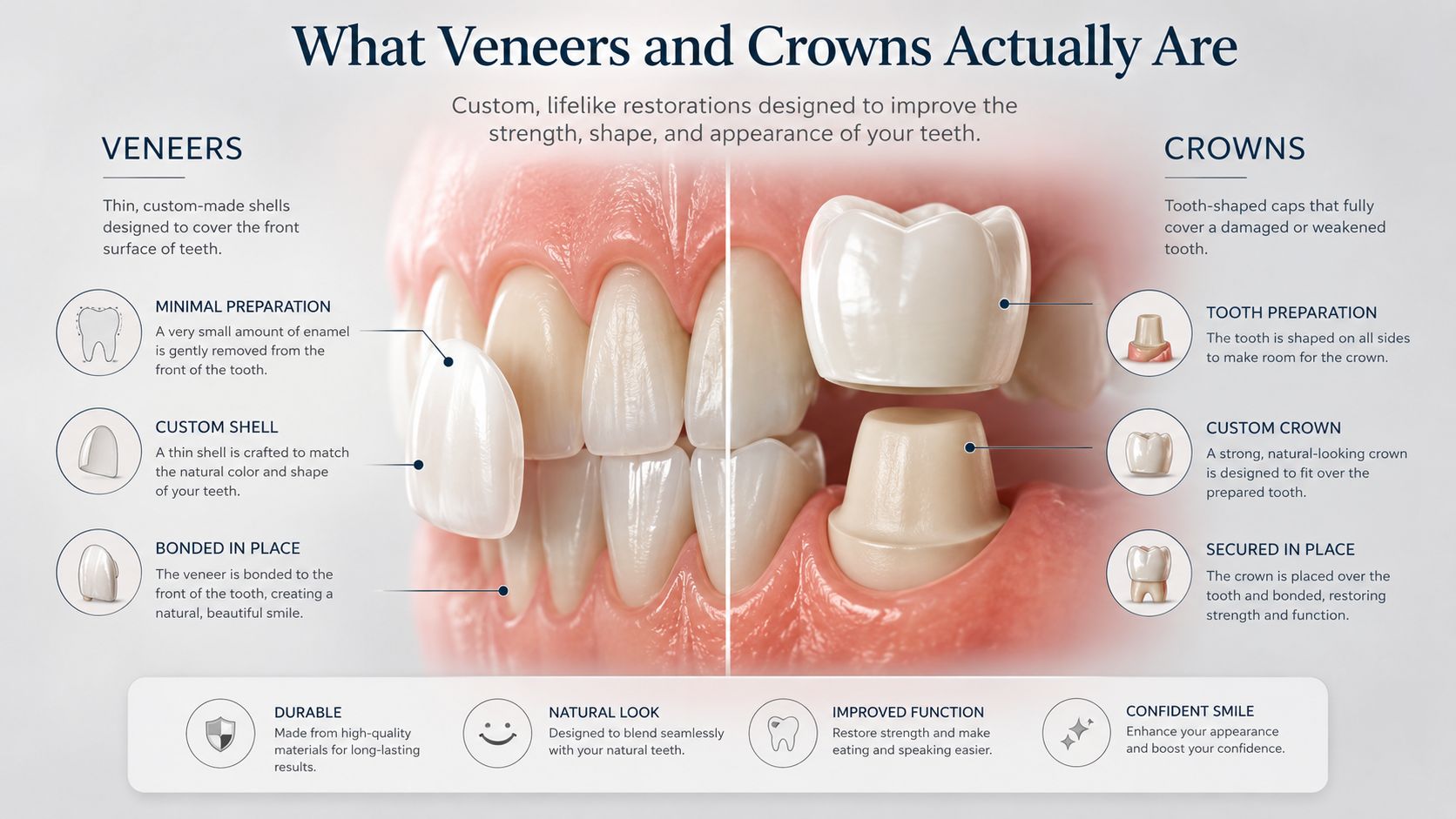
A dental veneer is a thin shell bonded to the front surface of a tooth. It usually covers the visible facial surface and may extend slightly over the edge, making it useful for changes to color, shape, minor chips, worn edges, and small gaps. Traditional veneer guidance commonly describes facial enamel reduction of about 0.3 to 0.7 millimeters, depending on the design, as outlined in this clinical guidance on veneer preparation.
A veneer is similar to a carefully fitted false fingernail. It changes the visible surface while leaving most of the tooth's back and sides untouched. That design works best when the tooth is healthy, stable, and supported by substantial enamel.
A dental crown is a full-coverage restoration. It fits over the prepared tooth and replaces the outer shell around the visible and biting surfaces, usually extending toward the gumline. A crown is more like a thimble placed over the entire tooth. It can restore a tooth affected by extensive decay, a large filling, a crack, severe wear, or root canal treatment.
Materials and purpose
Both restorations can use tooth-colored materials, but the material choice should follow the tooth's needs and the patient's esthetic goals.
- Porcelain: Feldspathic porcelain and other ceramic systems can provide a natural appearance for veneers. Crowns may use lithium disilicate, zirconia, metal-ceramic, or other ceramic designs.
- Composite resin: Composite can be shaped directly on the tooth and may suit smaller cosmetic corrections.
- Zirconia: Zirconia crowns can provide full coverage for teeth needing substantial protection. Ultra Smile DentalSpa works with porcelain, composite resin, lithium disilicate, and zirconia, including in-office same-day zirconia crowns.
A veneer mainly improves the appearance of a structurally sound tooth. A crown primarily restores and protects a tooth that can't safely handle normal biting forces without broader support. Patients considering porcelain veneers in Miami should expect the examination to focus on enamel, cracks, decay, gum health, and bite, not only smile design.
Veneers vs Crowns Side by Side
The right comparison starts with how much healthy tooth can remain after treatment. Preparation, coverage, material, appointments, appearance, and failure risk all matter, but they do not carry equal weight in every case. The table highlights the practical differences.
Veneers vs Crowns Key Differences at a Glance
| Criterion | Porcelain Veneer | Full-Crown |
|---|---|---|
| Main purpose | Cosmetic improvement and mild correction | Structural restoration and protection |
| Tooth coverage | Front surface and possibly the incisal edge | Entire prepared tooth |
| Preparation | Usually about 0.3 to 0.7 mm on the facial surface, depending on design, according to published veneer preparation guidance | Circumferential preparation is required; the exact amount depends on the material and design |
| Enamel dependence | Strongly dependent on enamel bonding | Can be selected when less enamel remains |
| Common materials | Feldspathic porcelain, other ceramics, composite resin | Lithium disilicate, zirconia, metal-ceramic, porcelain-based systems |
| Visits | Often requires consultation, preparation, scan, try-in, and bonding appointments | Traditionally requires preparation and a later cementation visit, though same-day workflows can shorten the schedule |
| Appearance | Highly natural for appropriate front-tooth cases | Natural-looking and useful when underlying color or structure needs to be masked |
| Best use | Healthy teeth with discoloration, small chips, shape concerns, or modest spacing | Teeth with decay, cracks, large restorations, extensive wear, or root canal treatment |
| Reversibility | Minimally invasive, but not fully reversible once enamel has been prepared | Not reversible because full preparation is required |
What the numbers mean
Veneer preparation is generally more conservative than crown preparation. A Canadian Dental Association review describes minimal veneer reduction of about 0.3 to 0.5 millimeters when the goal is to preserve an all-enamel bonding surface. A peer-reviewed review also reports that veneer preparation typically requires about one-quarter to one-half the reduction used for a conventional complete-coverage crown. These preparation differences are detailed in the Canadian Dental Association review.
The smaller preparation does not make a veneer safer for every tooth. Veneers rely heavily on enamel bonding, while crowns cover more of the tooth and can protect remaining walls when decay, cracks, large restorations, wear, or root canal treatment have weakened the structure. Removing more tooth for a crown is a real trade-off, but choosing a veneer for a compromised tooth can create a higher risk of debonding, fracture, or later replacement.
Longevity varies with material, bonding, hygiene, bite, and case selection. Evidence for feldspathic porcelain veneers includes a best-estimate 10-year survival approaching 95.6%, alongside broader reported ranges of 53% to 94.4% for porcelain laminate veneers. Individual clinical studies reported survival of 94.4% at five years and 93.5% at 10 years. Those figures describe groups of cases, not a promise for one patient.
Cost depends on the tooth, material, laboratory process, diagnostic planning, and additional treatment. Ask a Miami office for a personalized fee rather than relying on a universal online price. Insurance commonly treats veneers as cosmetic, while some medically necessary crowns may qualify for benefits under the patient's plan and documentation.
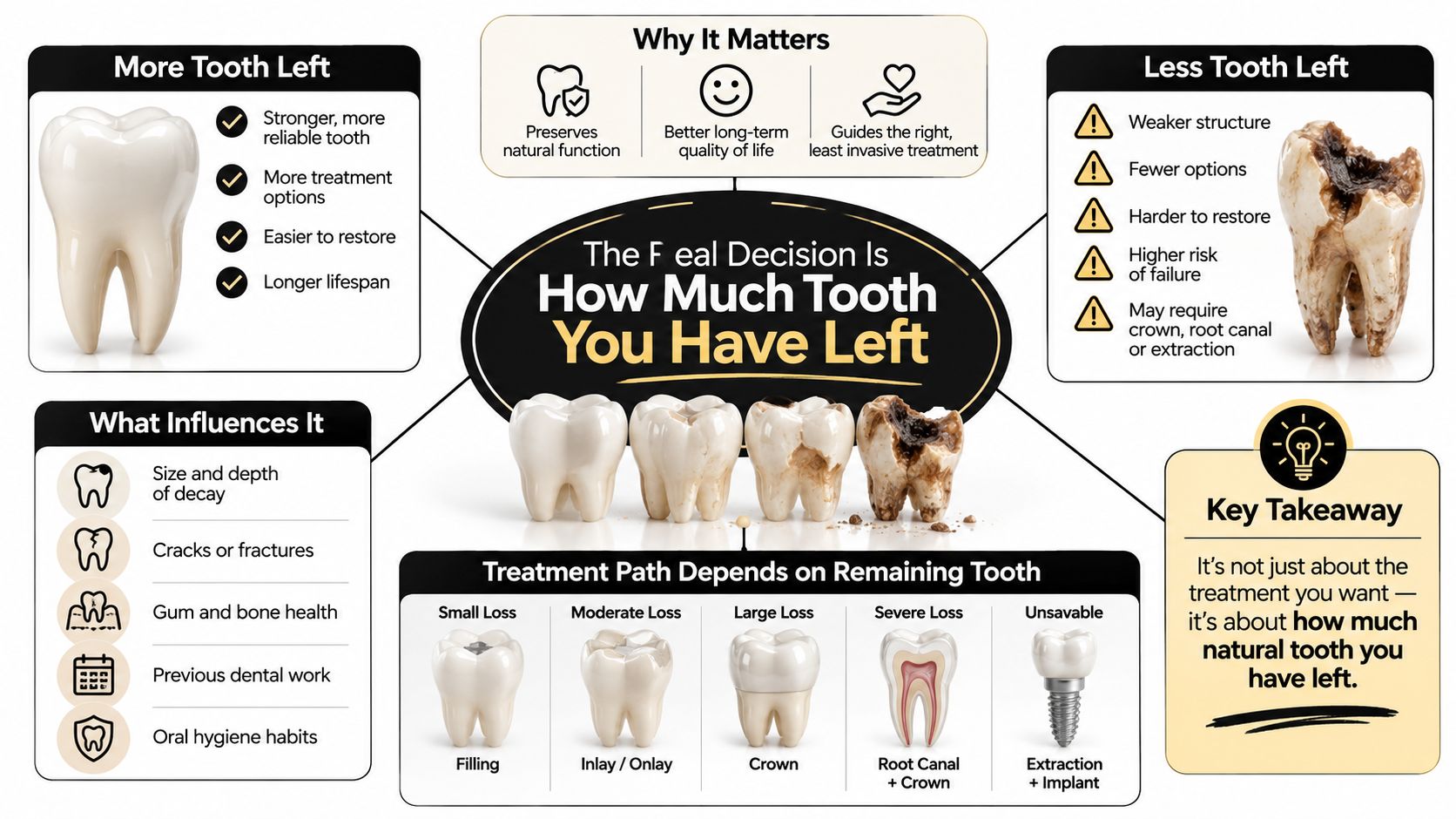
The Real Decision Is How Much Tooth You Have Left
A borderline tooth can look cosmetic and structural at the same time. Consider a molar with a large MOD amalgam, a hairline crack, and worn enamel. The patient may want the filling replaced because it looks unattractive, but the primary concern is whether the remaining tooth can tolerate another restoration without fracturing.
Remaining structure is the deciding factor. One clinical review summarizes crowns as appropriate when less than about 30% of the tooth structure remains, while veneers may be considered when more than about 50% remains and enamel support is adequate. Those thresholds are planning guides, not a substitute for an examination, and the source is the clinical review of veneer and crown preparation design.
Why enamel changes the recommendation
Veneers perform most predictably when the dentist can bond to enamel. Dentin is a different bonding surface, and a veneer placed on a tooth with extensive dentin exposure, cracks, or weak remaining walls may face greater technical risk. The restoration can look excellent on the delivery day and still be the wrong structural choice.
Crowns solve a different problem by surrounding the prepared tooth. When enough sound tooth remains above the gumline, that surrounding design can help brace the tooth and distribute chewing forces. A crown still isn't automatically appropriate, because excessive preparation, poor margins, decay, or an unfavorable bite can create other concerns.
A 25-year retrospective study of bonded ceramic restorations reported an overall 91.9% survival rate and 83.6% success rate in a high-risk prosthetic population. The results, reported in this PubMed-indexed study, reinforce the value of matching treatment to risk rather than choosing by appearance alone.
A veneer should preserve a strong tooth. A crown should protect a weakened tooth. Using either restoration for the wrong job can create another treatment decision later.
Claims that a veneer on a compromised tooth will predictably last a specific number of years aren't responsible without an examination. The practical approach is straightforward: assess the remaining enamel and walls, identify cracks and decay, evaluate the bite, and select the restoration that minimizes future intervention.
What Each Procedure Feels Like From Start to Finish
Patients often worry about discomfort, time away from work, and what happens between appointments. The experience differs because veneers preserve more surface structure, while crowns require full preparation and temporary protection when completed through a traditional laboratory workflow.
Veneer process
The process usually begins with photographs, a smile assessment, and an evaluation of enamel, gum position, tooth color, and bite. If veneers are appropriate, the dentist plans the shape, prepares the visible surface conservatively, and captures a digital scan. A try-in lets the patient assess contour, shade, and speech before final bonding.
Porcelain veneers commonly involve more than one appointment. The dentist may place temporary coverage when needed, although some minimal preparations don't require it. After bonding, mild sensitivity can occur, but patients generally don't experience the same temporary-crown phase associated with a traditional crown.
Traditional crown process
A traditional crown appointment usually involves local anesthetic, removal of decay or compromised restoration, circumferential tooth preparation, and a digital scan or impression. A temporary crown protects the prepared tooth while the final restoration is fabricated. Patients should avoid sticky foods and be cautious with hard foods around the temporary, then return for fit, bite, shade, and cementation checks.
The final visit may include bite adjustments. A patient with dental anxiety should ask the team to explain each stage before treatment, particularly if the tooth is already sensitive or painful.
| Step | Veneers | Crowns, Traditional |
|---|---|---|
| Evaluation | Smile goals, enamel, bite, gums, and tooth health | Decay, cracks, remaining walls, bite, and restorability |
| Preparation | Conservative facial preparation when indicated | Full preparation around the tooth |
| Digital record | Scan or impression for the veneer design | Scan or impression for the crown design |
| Between visits | Temporary coverage may be used in selected cases | Temporary crown is commonly used |
| Final appointment | Try-in, shade and contour review, bonding | Fit review, bite adjustment, and cementation |
| Recovery | Possible mild sensitivity | Possible sensitivity and temporary-phase dietary caution |
Traditional crowns usually require a second appointment. Same-day crown technology can remove the temporary phase and additional visit in suitable cases.
Same Day Crowns at Ultra Smile DentalSpa
Busy Miami patients may not want to wear a temporary crown while managing meetings, travel, or family responsibilities. An in-office digital workflow can make a practical difference when the tooth is suitable for a same-day restoration.
At Ultra Smile DentalSpa, the same-day crown process uses digital scanning, in-office design, milling, and sintering. The complete workflow may take roughly 90 to 120 minutes, as described by the practice's same-day crown technology information. The patient can arrive with a damaged tooth and leave with the final crown without a temporary restoration or a separate cementation visit.
Why one-visit dentistry matters in Miami
A patient staying near Downtown Miami may not want another trip across town. A professional traveling through South Florida may need the problem handled before leaving. Someone heading along Ocean Drive may reasonably prefer not to worry about a temporary crown loosening during the rest of the day.
Same-day treatment can also simplify coordination when a structurally compromised tooth sits beside teeth receiving cosmetic work. The dentist still has to evaluate shade, contours, bite, and the visual relationship between restorations. Fast fabrication doesn't eliminate planning.
Same-day crowns are typically positioned comparably to laboratory-fabricated crowns, but the final fee depends on the tooth, material, diagnostic work, and any additional treatment. A laboratory crown may remain the better choice for complex esthetic demands or long-span bridges, where laboratory resources and broader design control can matter more than speed.
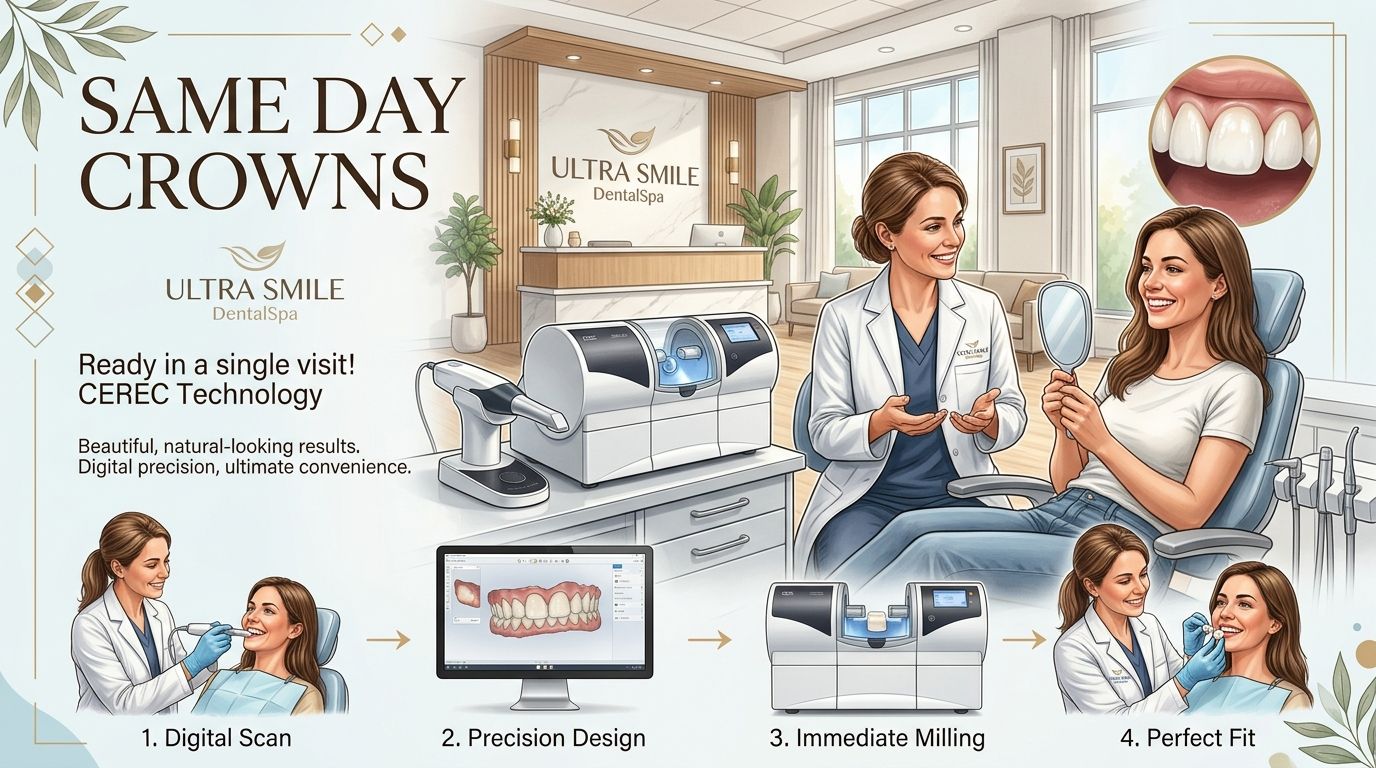
The important point isn't that same-day crowns suit every patient. It's that suitable candidates can avoid a temporary, reduce scheduling friction, and receive a final restoration in one visit.
Which Option Fits Your Situation
A quick self-check can help a patient understand the likely direction before booking, but it can't replace an examination. The dentist still needs to assess decay, cracks, enamel, gum health, occlusion, and the tooth's ability to support a restoration.
A chipped or stained front tooth
A small chip, uneven edge, or stubborn stain on an otherwise healthy front tooth often leans toward a porcelain veneer. Veneers can change the visible color and contour while preserving more enamel than a crown preparation. If the chip extends too far, the tooth has a crack, or little enamel remains, bonding or a crown may be safer.
Professional teeth whitening may be enough when color is the only concern. Dental bonding can make sense for a small repair, especially when the patient wants a conservative option without a ceramic shell.
A molar with a failing filling
A molar with a large old filling, recurrent decay, fractured walls, or pain during chewing usually points toward restorative treatment rather than a veneer. A crown can cover the tooth and protect the remaining structure when a filling no longer provides reliable support.
A root-canaled posterior tooth
A root-canaled back tooth frequently needs full-coverage protection because the remaining structure and chewing demands can make a front-surface restoration inappropriate. The dentist must first confirm that the tooth is restorable and that infection has been addressed.
A complete smile makeover
A smile makeover can combine treatments rather than force every tooth into one category. Veneers may suit visible anterior teeth with adequate enamel, while crowns may be reserved for teeth weakened by decay, large restorations, cracks, or endodontic treatment.
Bite forces also matter. Bruxism, heavy clenching, gum recession, and an unstable bite can change the material or restoration recommendation. In some cases, neither veneer nor crown is the right first step. Orthodontic treatment, invisible braces, whitening, bonding, a night guard, periodontal care, or a filling may better address the actual problem.
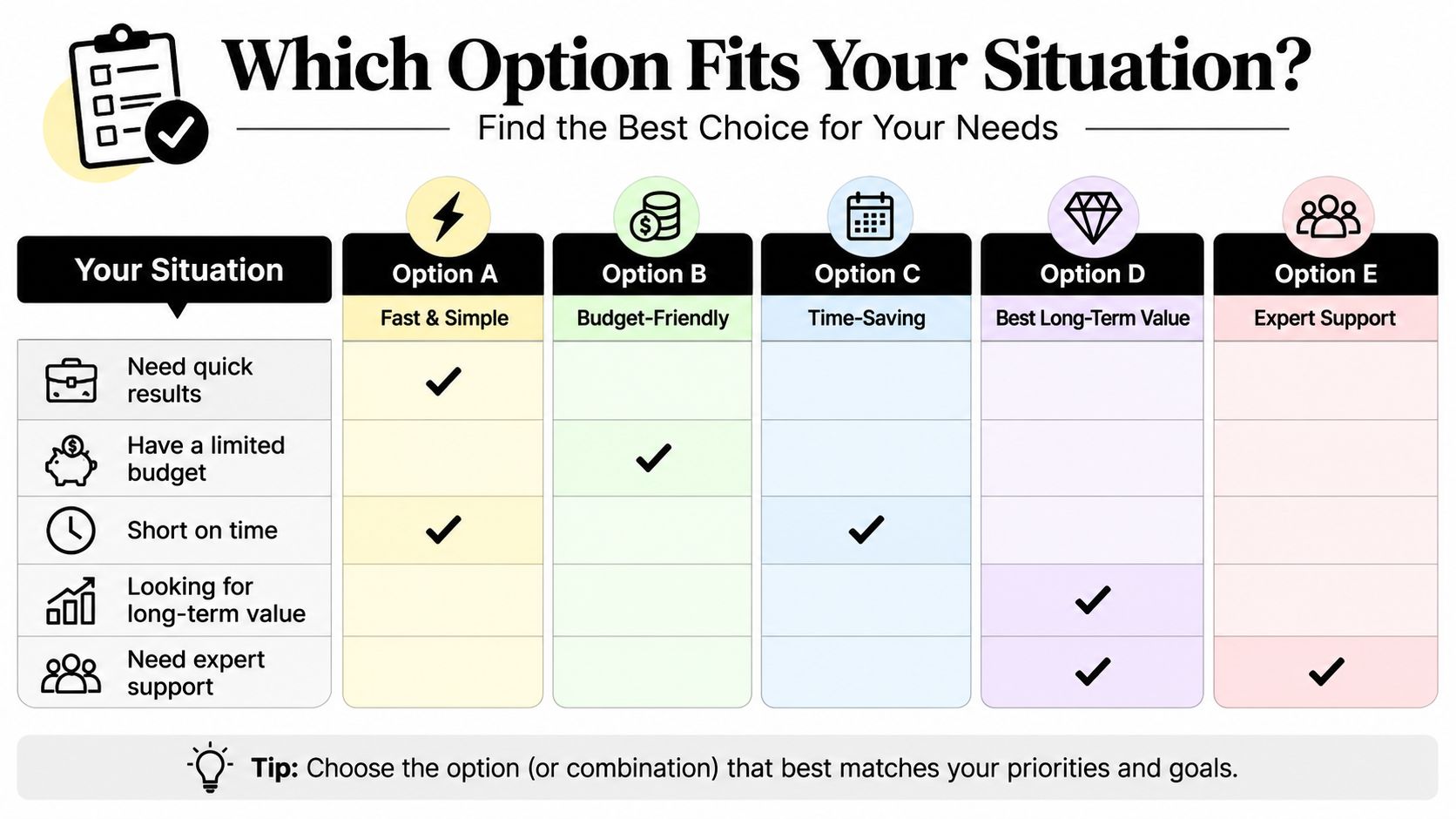
The guide is a starting point, not a diagnosis. A Miami dentist needs to see the tooth, evaluate the bite, and determine how much sound structure remains before recommending treatment.
Book a Veneer or Crown Consultation in Miami
A consultation should feel like a planning appointment, not a commitment to treatment. The team can begin with photographs, digital scans, bite analysis, and a conversation about the patient's goals, symptoms, schedule, and concerns about preserving natural tooth structure.
The central question is whether the tooth can support a veneer or genuinely needs full coverage. If a crown is appropriate and the case qualifies for an in-office workflow, diagnostics, preparation, design, milling, and placement may happen during one visit with same-day CEREC technology. That can eliminate a temporary crown and a second appointment for busy Miami professionals.
If veneers appear suitable, the dentist can create a wax-up or digital smile preview before enamel is prepared. That preview helps patients evaluate tooth length, proportions, color, and the relationship between the planned veneers and neighboring teeth.
What patients should clarify before treatment
- Treatment sequence: Ask whether cleaning and exams, dental x-rays, decay control, gum care, tooth extraction, root canal treatment, or other services must happen first.
- Material choice: Discuss porcelain, composite, lithium disilicate, zirconia, or another option based on the tooth and smile goals.
- Financial planning: Request the expected fee, insurance information, financing options, and timing before approving care.
- Comfort and access: Ultra Smile DentalSpa serves patients near Downtown Miami, Midtown Miami, and Hallandale Beach, with bilingual staff, parking information, and a calm environment for patients who feel nervous about dental care.
The team should explain the likely recovery, sensitivity, maintenance, and follow-up requirements in plain language. Patients seeking an emergency dentist for pain, a tooth extraction, dental implants near me, or cosmetic dentistry can also ask how urgent care fits into the broader treatment plan.
Ultra Smile DentalSpa provides porcelain veneers, restorative crowns, bridges, and same-day crown technology for Miami patients comparing cosmetic improvement with structural protection. Schedule a consultation through Ultra Smile DentalSpa to review the tooth's remaining structure, timing, cost, and the restoration that fits the patient's long-term needs.