A lot of Miami patients start in the same place. They smile in photos with their lips closed, crop their teeth out of videos, or keep saving screenshots of veneers, whitening, and aligners without knowing what suits their mouth.
That uncertainty is normal. Cosmetic dentistry has changed quickly, and the newest options sound appealing because they promise natural results, less drilling, and faster treatment. What matters, though, isn't just what's trending. It's which treatment matches your enamel, your bite, your habits, and how long you want the result to hold up.
Table of Contents
- Your Guide to a Brighter Smile in Miami FL
- Preview Your Perfect Smile with Digital Design
- The Most Popular Cosmetic Dentistry Treatments
- Minimally Invasive and Same-Day Dental Solutions
- How to Choose a Treatment That Lasts
- Your Spa-Like Dentistry Experience in Downtown Miami
- Common Questions About Cosmetic Dentistry
Your Guide to a Brighter Smile in Miami FL
In Miami, appearance matters, but most patients looking into cosmetic dentistry aren't chasing an artificial look. They usually want something simpler. Whiter teeth that still look real. A chipped front tooth repaired without drawing attention. A straighter smile that doesn't look overdone.
That's one reason interest in cosmetic dentistry keeps expanding. The global cosmetic dentistry market was valued at about $33 billion in 2025 and is projected to reach $98.31 billion by 2034, with North America accounting for 33.93% of global revenue, according to these cosmetic dentistry market statistics. For patients, that trend means these treatments aren't a niche luxury anymore. They're a mainstream part of personal health, confidence, and smile care.

Why patients feel stuck before they start
Those searching for a cosmetic dentist near me or a dentist in Miami, FL don't need more inspiration. They need clarity.
They want to know:
- What will look natural: Not every bright smile suits every face.
- What will preserve healthy tooth structure: Some cosmetic options are more conservative than others.
- What fits real life: Busy professionals often want fewer visits, while other patients prioritize flexibility, comfort, or a gradual plan.
Practical rule: The right smile upgrade should improve appearance without creating new functional problems.
Patients across Downtown Miami, Midtown Miami, and Hallandale Beach often come in thinking they need veneers, then discover that whitening, bonding, or clear aligners may solve the underlying issue. Others assume whitening will fix everything, but the deeper concern is shape, spacing, or worn edges.
What modern cosmetic dentistry actually looks like
Current cosmetic dentistry trends are more patient-friendly than older makeover models. Treatment planning is more precise. Materials are more lifelike. Many procedures feel less invasive than patients expect.
A good cosmetic plan usually starts with fundamentals before aesthetics:
| Focus | What the dentist checks |
|---|---|
| Tooth health | Cavities, cracks, old fillings, enamel wear |
| Gum health | Inflammation, recession, smile line balance |
| Bite function | Grinding, clenching, edge-to-edge wear |
| Aesthetic goals | Color, symmetry, length, shape, spacing |
That's also why a patient looking for teeth whitening, dental implants near me, or even an emergency dentist for a broken front tooth may still need a broader cosmetic and restorative evaluation. A smile looks its best when appearance and function are planned together.
Preview Your Perfect Smile with Digital Design
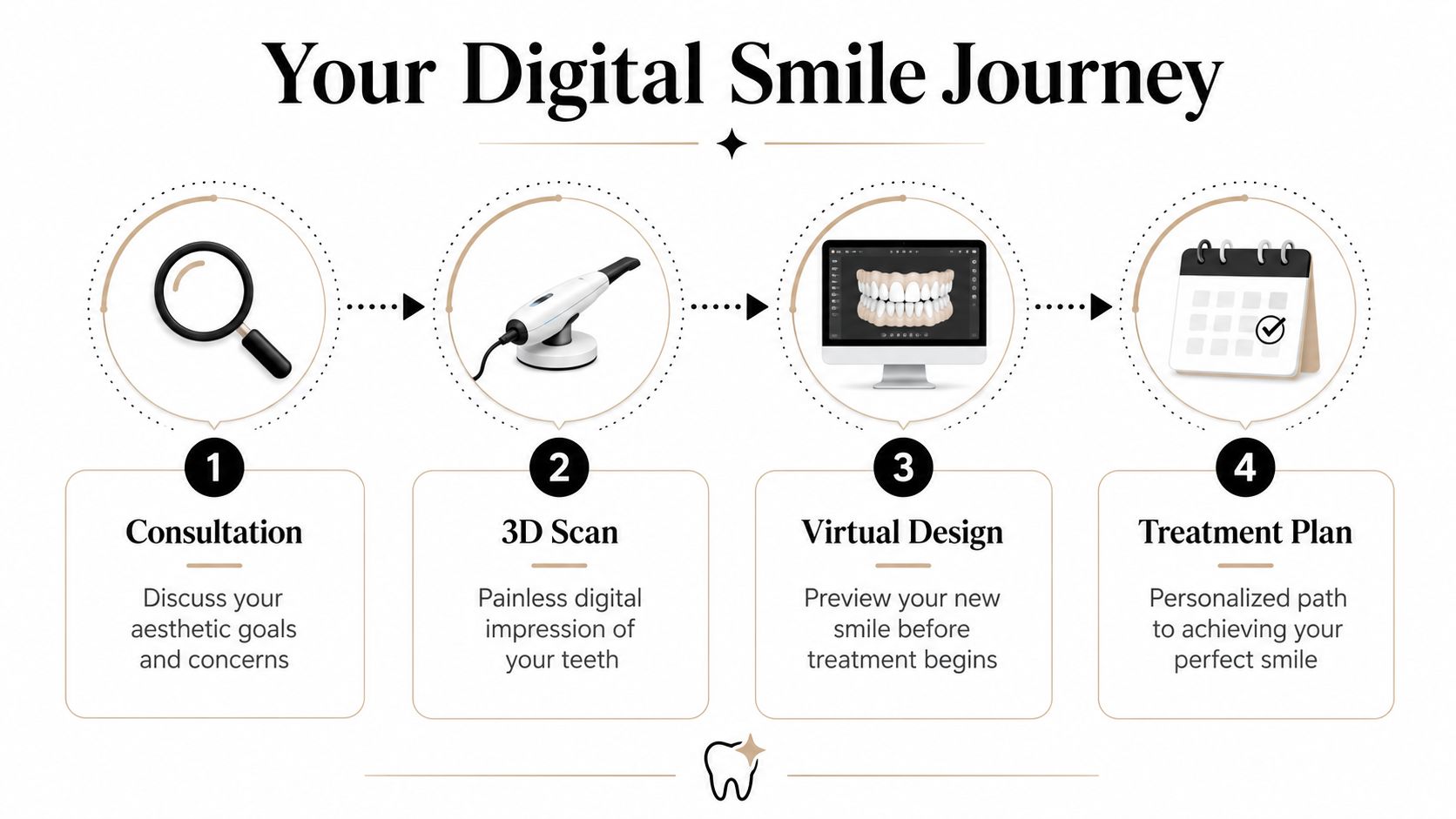
One of the biggest changes in cosmetic dentistry trends is that patients no longer have to commit based on a verbal description alone. A modern smile plan can begin with a digital preview.
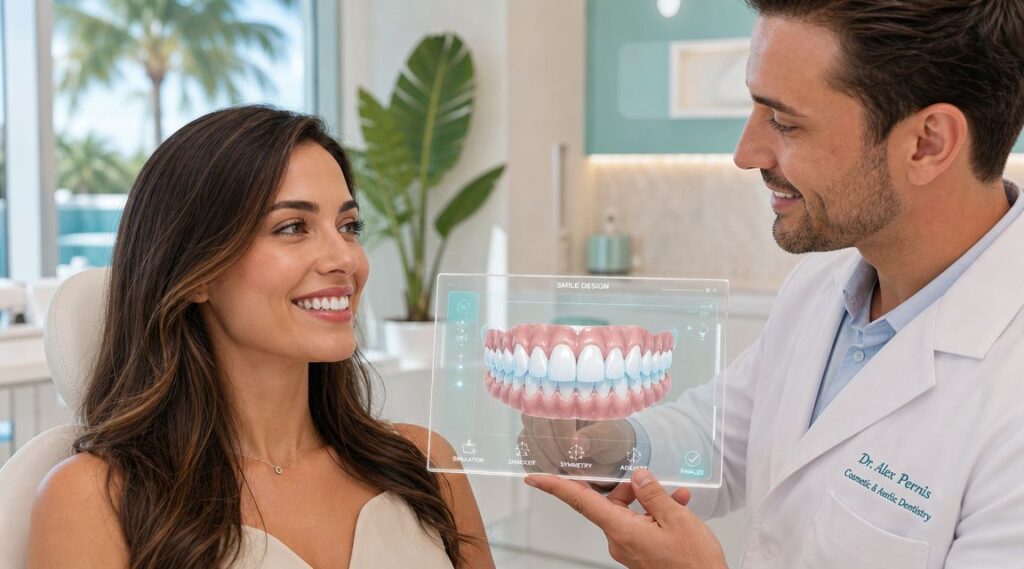
A key trend for 2026 is AI-driven digital smile design, which combines 3D intra-oral scanning and facial analysis to create a personalized smile blueprint and allow augmented-reality previews before treatment starts, as described in this overview of AI-designed veneers and digital smile planning. That matters because cosmetic treatment is personal. Patients want to see how proposed changes fit their face, lip movement, and existing tooth proportions before any enamel is altered.
What the process looks like
Digital smile design sounds technical, but the patient experience is straightforward and comfortable.
Consultation and goal setting
The visit starts with discussion. Patients talk through what bothers them most, such as discoloration, short teeth, spaces, crowding, uneven edges, or old dental work that no longer matches.3D scanning instead of messy impressions
A digital scanner captures the teeth and bite without putty trays. That scan gives the dentist a detailed model to study.Facial analysis and smile planning
The proposed smile isn't built in isolation. Tooth shape, width, edge position, and symmetry are evaluated against the face, lips, and gum display.Preview before treatment
The design can help patients visualize possible changes before moving forward with veneers, bonding, crowns, whitening, or a full smile makeover.
Why this helps patients make better decisions
Older cosmetic consultations sometimes left too much to imagination. Patients heard terms like “eight veneers or “longer centrals without a clear picture of the final effect.
Digital planning improves the conversation because it answers practical questions early:
- Will the teeth look too large for the face
- Does the smile still look natural when speaking
- Would whitening plus edge bonding be enough
- Is orthodontic movement smarter than covering the issue with restorations
A preview doesn't replace clinical judgment. It improves communication and reduces guesswork.
For patients comparing treatment paths, that visual step can prevent rushed decisions. It's especially useful when someone is deciding between a subtle refresh and a more dramatic redesign. Patients who want to see examples of how smile planning translates into real outcomes can review smile makeover before and after results.
What digital design doesn't do
It doesn't make every treatment interchangeable. A digital mockup may show a beautiful result, but the dentist still has to determine whether the teeth are healthy enough for veneers, whether the bite can support bonding, or whether aligners should come first.
That's the core value of this technology. It doesn't sell treatment. It helps match the right treatment to the right patient.
The Most Popular Cosmetic Dentistry Treatments
Most cosmetic consultations in Miami center on three requests. Patients want whiter teeth, straighter teeth, or a more refined shape. The treatment that works best depends on which of those concerns is primary and whether the issue is color, alignment, structure, or all three.
Porcelain veneers for shape and symmetry
Porcelain veneers are thin custom restorations placed on the front of selected teeth to improve shape, proportion, color, and overall balance. They're often chosen when a patient has multiple concerns at once, such as worn edges, uneven widths, stubborn discoloration, or small gaps.
Veneers work well when the goal is a polished transformation with strong control over the final look. They can create consistency in a way whitening alone can't.
They aren't the first answer for every patient, though. If the teeth are healthy and the main issue is mild crowding or shade, jumping straight to veneers may be more treatment than necessary.
Professional whitening for a fast refresh
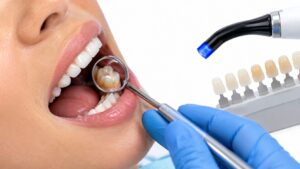
Teeth whitening remains one of the most requested cosmetic services because it's simple, familiar, and often an efficient first step. It can brighten a smile for patients with staining from coffee, tea, red wine, or normal aging.
Whitening is best when the shape and position of the teeth already work well. If the complaint is mostly “my teeth look dull, whitening may be enough to create a major visible change.
A few practical limits matter:
- It won't reshape teeth: Whitening changes color, not contours.
- It won't fix every stain equally: Some discoloration responds better than others.
- It won't change crowns or veneers: Existing restorations may still need replacement if they no longer match.
Whitening is often the smartest first move because it clarifies what still needs correction after color improves.
Clear aligners for discreet straightening
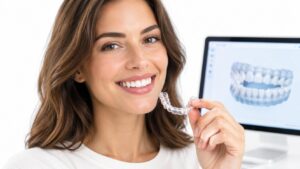
Clear aligners, including Invisalign-style treatment, are popular because they address alignment without the appearance of traditional braces. Adults often choose them when they want cosmetic improvement but don't want a fixed appliance.
Aligners are useful for spacing, minor crowding, and bite-related cosmetic issues that veneers can't solve. If teeth overlap, rotate, or sit unevenly, moving them into better position may preserve more natural structure than covering the problem with restorations.
A simple comparison helps:
| Main concern | Common option |
|---|---|
| Tooth color | Professional whitening |
| Tooth shape and symmetry | Porcelain veneers |
| Mild to moderate alignment issues | Clear aligners |
What works best in real treatment planning
The strongest cosmetic results often combine treatments rather than relying on one. A patient may straighten first, then whiten. Another may whiten first, then place limited veneers only where shape still needs correction.
That layered approach usually produces a more natural result than using one treatment to force a solution it wasn't designed to provide. It also gives patients better control over cost, treatment pace, and long-term maintenance.
If you're seeking a cosmetic dentist near me in Miami, the key isn't picking the trendiest service first. It's identifying whether the smile problem is mainly color, shape, spacing, or wear.
Minimally Invasive and Same-Day Dental Solutions
A patient comes in before a wedding weekend in Miami with a chipped front tooth, a packed schedule, and one clear request. Fix it quickly, but do not overdo it. That is the appeal of modern cosmetic dentistry. Patients want treatment that looks refined, feels comfortable, and preserves as much healthy tooth structure as possible.
Many newer cosmetic options support that goal. The best results still depend on diagnosis first. Speed helps only when the treatment also fits the way the tooth functions, how the bite comes together, and how long the result is likely to last.
Cosmetic bonding for small corrections
Dental bonding is often the most conservative way to improve a smile. Composite resin can repair a chip, round out worn edges, close a small gap, or correct a minor shape imbalance with little to no enamel removal.
It is a strong option for patients who want a meaningful improvement without committing to veneers right away. In a Miami practice, that often includes patients who want a polished look for work, social events, or photos but still want flexibility later.
Bonding works best when the underlying tooth is healthy and the forces on it are reasonable. The trade-off is durability. Composite is repairable and cost-conscious, but it can stain, lose its polish, or chip sooner than porcelain, especially in patients who grind, clench, bite nails, or use their teeth as tools.
Same-day crowns for teeth that need strength now
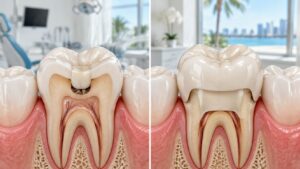
Some teeth need more than a cosmetic touch-up. A cracked tooth, a tooth with a large failing filling, or a heavily worn back tooth may need full coverage to stay comfortable and functional. In the right case, a same-day crown allows us to scan, design, and place that restoration in one visit.
That convenience matters, but comfort matters too. Digital scanning avoids traditional impressions, and skipping a temporary crown means fewer opportunities for sensitivity, loosening, or a second interruption in your week. For busy patients downtown, that can make treatment easier to follow through on.
Same-day treatment also has limits. Not every tooth is a same-day tooth. Front teeth with demanding cosmetic requirements, complex bites, or cases that need layered porcelain artistry sometimes benefit from a laboratory process instead of a rushed finish.
Veneers and conservative planning can work together
Minimally invasive care does not mean one treatment fits everyone. Sometimes the most conservative choice is bonding. Sometimes it is aligning teeth first, then doing less restorative work. Sometimes a veneer is the better long-term option because repeated bonding repairs would remove more time, money, and enamel over the years.
That is why durability belongs in the conversation early. Patients comparing porcelain to composite often ask how long veneers hold up in daily life. This review of how long porcelain veneers typically last helps frame that decision in practical terms.
Implant aesthetics for missing teeth
A missing tooth changes more than appearance. It can affect speech, chewing, spacing, and the contour of the gumline. Dental implants are often chosen because they replace the root and support a fixed crown that can restore both function and appearance.
Cosmetic success with implants depends on planning, not speed. The implant position, gum architecture, and final crown design all shape the result. This matters even more in the smile zone, where a tooth can look technically replaced but still feel unnatural if the proportion, color, or gum level is off.
For patients searching dental implants near me, that distinction is important. A fast solution is not always the right one if the visible details are not carefully managed.
Later in the decision process, this kind of patient education can help:
Convenience matters most when the plan is sound
Patients usually feel relieved when they hear that a cosmetic fix can be conservative and efficient. They should also hear the other half of the truth. The least invasive treatment is only the best choice when it solves the problem for the right length of time.
A chipped edge may need bonding. It may need a crown. It may need bite adjustment or orthodontic correction if the chip keeps happening. In a spa-like office, the experience should feel calm and easy. The treatment plan still needs to be precise.
How to Choose a Treatment That Lasts
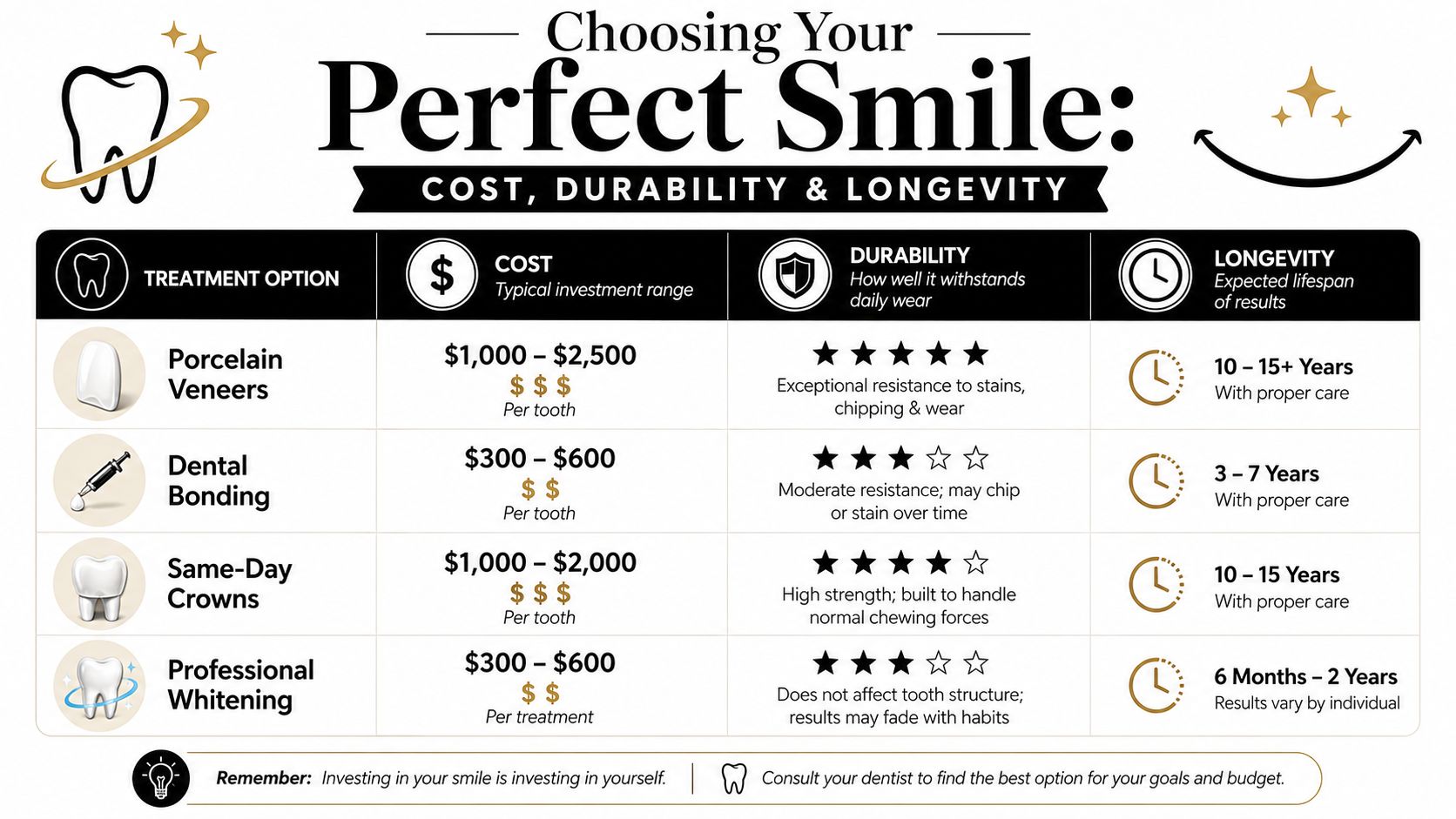
The most overlooked part of cosmetic dentistry trends is durability. Patients hear about ultrathin veneers, same-day solutions, and conservative techniques, but the key question is usually more personal. How long is this likely to hold up in this specific mouth?
That concern is valid. As noted in this discussion of 2026 cosmetic dentistry trends and longevity questions, many trend conversations focus on appearance while leaving out the practical trade-off between enamel preservation, long-term durability, and future retreatment risk.
The treatment isn't the whole story
The same veneer design may perform well for one patient and fail early for another. The same bonding repair may stay beautiful on a lower-risk tooth but chip repeatedly on a patient who grinds at night.
Before choosing any cosmetic treatment, the dentist should assess:
| Factor | Why it matters |
|---|---|
| Bite pattern | Heavy contact can shorten the life of cosmetic work |
| Clenching or grinding | Raises the risk of wear, fractures, and repairs |
| Enamel quality | Affects bonding strength and preparation choices |
| Gum position | Influences smile symmetry and final appearance |
| Oral hygiene habits | Impacts stain control and restoration maintenance |
Common trade-offs patients should understand
Bonding versus veneers
Bonding is more conservative and often ideal for small changes. Veneers usually offer more control over color and shape. But the deciding factor shouldn't be trend appeal. It should be whether the teeth need a minor touch-up or a more stable redesign.
Aligners versus veneers
If the issue is alignment, moving teeth may be healthier than masking the position with restorations. Veneers can improve the look of mildly uneven teeth, but they don't correct bite relationships.
Same-day crowns versus smaller repairs
A crown can be the right call for a weakened tooth. It's the wrong call when a small repair would preserve more healthy structure with equal function.
Decision guide: The best cosmetic plan is the one that solves the complaint with the least irreversible treatment that still holds up well.
Questions worth asking during a consultation
Patients don't need to know every material science detail. They do need clear answers to a few practical questions.
- What is causing the cosmetic problem
- Is this treatment reversible, repairable, or permanent
- What happens if the bite changes over time
- Will this option likely need touch-ups or replacement
- Is there a more conservative path that still looks good
Patients considering veneers can also review how long veneers may last before deciding. That kind of conversation builds trust because it shifts the focus from sales language to long-term planning.
What usually doesn't work
A rushed smile makeover on inflamed gums doesn't work. Covering bite problems with cosmetic materials alone doesn't work. Choosing the fastest option for a patient who wants the longest-lasting result usually doesn't work either.
The durable smile is rarely the most aggressive and rarely the most superficial. It's the one planned realistically.
Your Spa-Like Dentistry Experience in Downtown Miami
A cosmetic consultation can feel intimidating even for patients who are excited about the result. That's especially true for anyone with dental anxiety, a strong gag reflex, previous bad experiences, or a packed work calendar that makes every appointment feel stressful before it starts.
The setting matters more than many people expect. A calm environment lowers tension, makes communication easier, and helps patients think clearly about treatment choices instead of rushing through them.
What comfort should look like
In a spa-like dental model, comfort isn't an extra. It's built into the visit itself.
Patients coming in from Downtown Miami, Midtown Miami, and nearby neighborhoods often appreciate details that reduce sensory stress and make treatment feel manageable:
- A gentler arrival: Refreshments and a welcoming front-desk flow can lower the edge that many people feel walking into a dental office.
- A more personalized environment: Custom aromatherapy and a quieter atmosphere can help anxious patients settle in.
- Distraction during treatment: Streaming entertainment gives patients something familiar to focus on during longer procedures.
- A calmer finish: A hot towel at the end of a visit leaves the appointment feeling complete rather than clinical and abrupt.
Why this matters for cosmetic care
Cosmetic dentistry isn't only technical. It's collaborative. Patients need to talk openly about what they dislike, what they're afraid of, and what kind of result would make them feel comfortable smiling again.
That conversation is easier in a practice where the pace feels attentive rather than rushed. It also helps when appointments combine modern diagnostics with a calm, hospitality-focused approach. Patients asking for cleaning and exams, new patient exams, dental x-rays, or a cosmetic consultation often decide more confidently when they don't feel pressured.
Patients make better decisions when they feel physically comfortable, heard, and unhurried.
What to expect at the visit
A cosmetic or restorative visit in Miami should feel organized from the beginning.
The flow often includes:
Listening first
The dentist reviews concerns, goals, and any functional issues like grinding, sensitivity, or prior dental work.Clinical evaluation
Teeth, gums, bite, and existing restorations are examined to see whether the issue is cosmetic, restorative, or both.Digital planning when needed
Photos, scans, and treatment previews help the patient compare options.A realistic plan
The discussion should cover what's possible, what's conservative, and what may need maintenance later.
That kind of experience is especially important for patients who came in searching for a dentist near me but need more than routine care. Cosmetic treatment works best when comfort, safety, and planning all move together.
Common Questions About Cosmetic Dentistry
Is cosmetic dentistry painful
Most cosmetic treatment is more comfortable than patients expect. Whitening can cause temporary sensitivity for some people, and procedures involving bonding, veneers, crowns, or implants may require numbing depending on the case. Modern planning, digital scanning, and conservative techniques help reduce discomfort.
How much does a smile makeover cost in Miami
The cost varies based on the treatment mix. Whitening, bonding, aligners, veneers, crowns, and implants each involve different levels of time, materials, and complexity. A meaningful estimate usually comes after an exam, photos, and bite evaluation, because the most affordable first idea isn't always the one that avoids future repairs.
How does someone know if they're a good candidate
A good candidate has a specific concern and enough oral health support for the planned treatment. That means checking for decay, gum inflammation, bite stress, cracked teeth, and habits like grinding before moving ahead. Patients who need restorative work first can still become cosmetic candidates once the mouth is stable.
Will insurance cover cosmetic treatment
Purely cosmetic procedures are often handled differently from treatments that also restore structure or function. Coverage depends on the service and the patient's plan. The practical next step is to ask for a clear breakdown so there's no confusion about what is elective, what is restorative, and what financing options may be available.
Is it better to fix one tooth or do a full smile makeover
That depends on the mismatch. Sometimes a single chipped or dark tooth can be corrected on its own. In other cases, improving one tooth makes neighboring teeth look more uneven, so a broader plan produces a more balanced result.
If a smile has been bothering you, the most useful next step is a personalized consultation with Ultra Smile DentalSpa. Patients in Miami can discuss whitening, veneers, clear aligners, same-day crowns, dental implants, restorative care, and comfort-focused treatment in one place, then choose a plan based on appearance, function, and long-term fit.