A Brickell professional may want straighter teeth without metal showing during client meetings. A Coconut Grove parent may care less about appearance and more about whether a teenager will follow instructions. For both patients, the key question isn't clear aligners vs braces. It's which system can move the teeth safely, predictably, and comfortably while fitting daily life in Miami.
Ultra Smile DentalSpa provides Invisalign and other dental services for patients seeking cosmetic dentistry, restorative care, dental implants, tooth extraction, and emergency dental services. A consultation should begin with the bite, gum health, desired result, and ability to follow the treatment plan, not with a tray or bracket preference.
Table of Contents
- Why Miami Patients Are Choosing Between Aligners and Braces
- How Clear Aligners and Traditional Braces Actually Work
- The Five Differences That Matter Most
- Which Option Fits Your Bite, Age, and Smile Goals
- Cost, Insurance, and What Treatment Really Includes
- What the Ultra Smile DentalSpa Experience Looks Like
- Your Decision Checklist and Next Step in Miami
Why Miami Patients Are Choosing Between Aligners and Braces
A patient choosing between Invisalign trays and traditional brackets is choosing between two different routines. Clear aligners can remain discreet during work dinners, beach weekends, and Zoom calls, but they depend on consistent wear and careful storage. Braces stay attached to the teeth, so they don't depend on daily removal, yet they require more attention around brackets and wires.
Miami patients often place a high value on appearance, convenience, and comfort in hot, active environments. That makes invisible orthodontic treatment appealing, especially for adults balancing professional commitments and social events. Still, appearance shouldn't overrule biomechanics. A discreet appliance can't compensate for a treatment plan that doesn't control the movement a particular bite needs.
Five criteria make the comparison practical:
- Treatment time: How long the planned tooth movement may take, including refinements or adjustments.
- Effectiveness: Whether the appliance can handle the actual crowding, spacing, bite discrepancy, rotation, or root movement.
- Comfort: What the patient feels during active movement and normal daily use.
- Aesthetics: How visible the treatment looks during conversations, photographs, and professional activities.
- Maintenance: How much effort the patient must invest in cleaning, appointments, storage, and protection.
Practical rule: The most attractive option is only the right option if it can deliver the needed correction without compromising gum health or retention.
Lifestyle matters, but it comes second
Clear aligners suit adults who can remove trays for meals, clean their teeth before replacing them, and keep the trays safe during travel. That flexibility can help patients who attend frequent events or work in settings where visible braces feel distracting. Traditional braces may suit patients who want a treatment system that remains active without remembering to put it back in.
Neither appliance wins every category. Evidence supports a shorter treatment duration and less chair time with aligners in many mild-to-moderate cases, but the same research doesn't establish broad superiority across all orthodontic outcomes systematic review of aligners and conventional brackets. The right recommendation depends on the bite, the periodontium, the patient's age, and the level of daily discipline available.
How Clear Aligners and Traditional Braces Actually Work
Clear aligners use a planned series of custom-molded, BPA-free plastic trays. A digital scan maps the teeth, and each tray applies controlled pressure to selected teeth. Patients generally move through the sequence by changing trays every one to two weeks, as described in this clear aligner treatment overview. Invisalign is the most recognized brand, but other established systems are also available.
The trays are removable, which makes eating and brushing simpler. They must, however, return to the mouth consistently after meals and hygiene. A tray left in its case can't guide the next stage of movement.
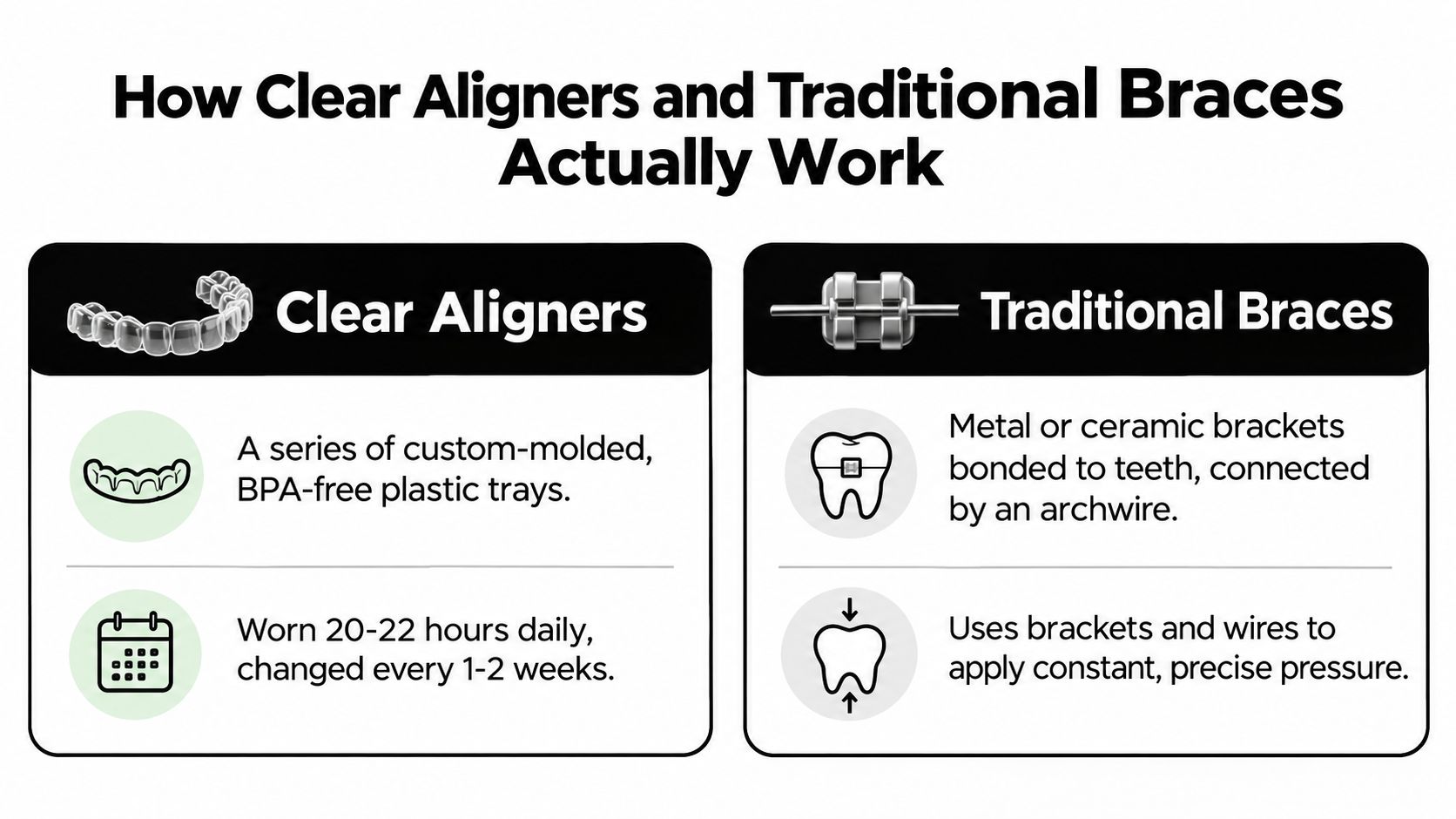
Traditional braces use brackets bonded to the teeth and connected by archwires. The clinician adjusts the wires during scheduled visits, and elastics or rubber bands may help correct the relationship between the upper and lower teeth. Because the hardware remains attached, the system applies force continuously without relying on a patient to reinsert an appliance.
Both methods depend on the same basic biological response. Ligaments around each tooth respond to controlled force, and the surrounding bone remodels as the tooth changes position. The appliance delivers the force, but the treatment plan determines where that force goes and in what sequence.
That distinction matters. A tray, bracket, or wire is only a tool. Diagnosis, digital planning, attachment or bracket placement, monitoring, refinements, and retention determine whether the finished bite is stable and functional.
The Five Differences That Matter Most
The familiar benefits list isn't enough for a meaningful decision. A patient should compare the five dimensions below against the actual diagnosis, not against a generic advertisement.
Treatment time
A 2019 systematic review and meta-analysis involving 353 clear-aligner patients and 353 fixed-brace patients found a statistically significant shorter treatment duration associated with clear aligners, with a weighted mean difference of −6.31 months, a 95% confidence interval of −8.37 to −4.24, and P < 0.001 the published systematic review and meta-analysis. That result doesn't mean every aligner case finishes sooner. Complexity, compliance, refinements, missed appointments, and the type of movement all matter.
Mild cases can move efficiently with either appliance. Complex movement may favor braces because fixed hardware provides continuous control without relying on wear time.
Effectiveness
Clear aligners perform well for many mild-to-moderate crowding and spacing cases. Braces remain the stronger choice when the plan demands substantial rotation, vertical correction, torque, root positioning, extraction-space management, or broader bite correction. Research on adult treatment notes that fixed appliances can achieve stronger overall correction in some cases, especially when complex movements are involved clinical comparison of aligners and fixed appliances.
Comfort
Both systems create pressure or soreness as teeth move. Smooth plastic avoids many bracket and wire irritations, but new trays can feel tight and may affect speech during the adjustment period. Brackets can rub the cheeks or lips, particularly after placement or wire changes, although orthodontic wax and careful adjustments can reduce irritation.
Aesthetics
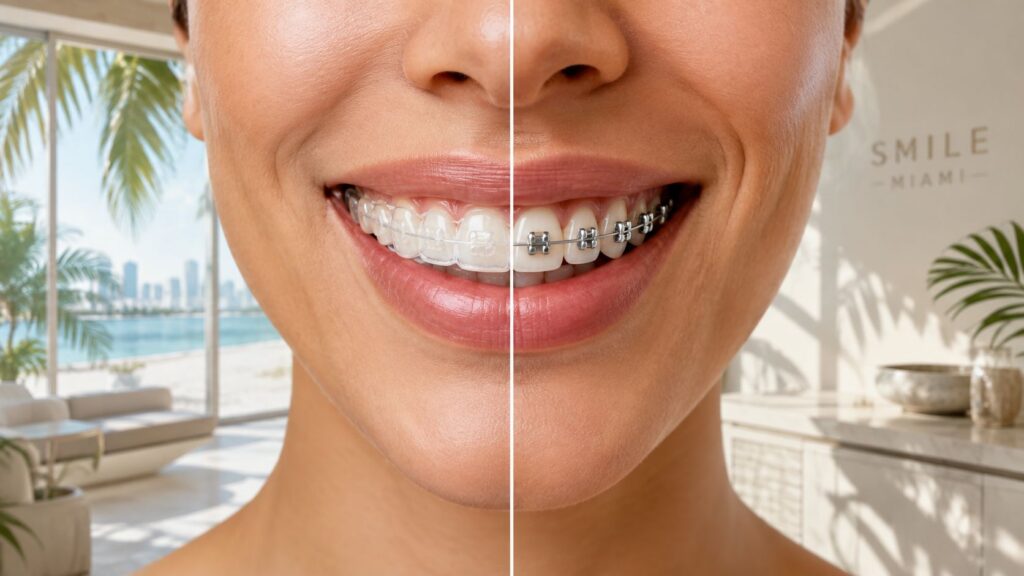
Clear aligners are the least noticeable option for many patients. Ceramic brackets offer a subtler appearance than metal, while lingual braces place brackets behind the teeth, though each alternative has its own cleaning, speech, or technical considerations. Patients who regularly appear on camera often value removable, transparent trays.
Maintenance
Aligners simplify brushing because patients remove them before cleaning. They also demand discipline, proper tray cleaning, and safe storage. Fixed braces don't get misplaced, but food and plaque can collect around brackets and wires, making brushing and interdental cleaning more demanding.
| Dimension | Clear Aligners | Traditional Braces |
|---|---|---|
| Treatment time | Efficient in many mild-to-moderate cases, with wear-dependent progress | Strong control for complex movement, with ongoing in-office adjustments |
| Effectiveness | Strong for selected crowding, spacing, and simpler bite corrections | Broad control for rotations, torque, vertical changes, and extraction mechanics |
| Comfort | Smooth trays, with pressure and possible speech adjustment | Pressure plus possible cheek or lip irritation |
| Aesthetics | Low visibility and removable for selected occasions | More visible, with ceramic and lingual alternatives |
| Maintenance | Removable for brushing, but requires consistent cleaning and storage | Fixed appliance, requiring detailed brushing around hardware |
Which Option Fits Your Bite, Age, and Smile Goals
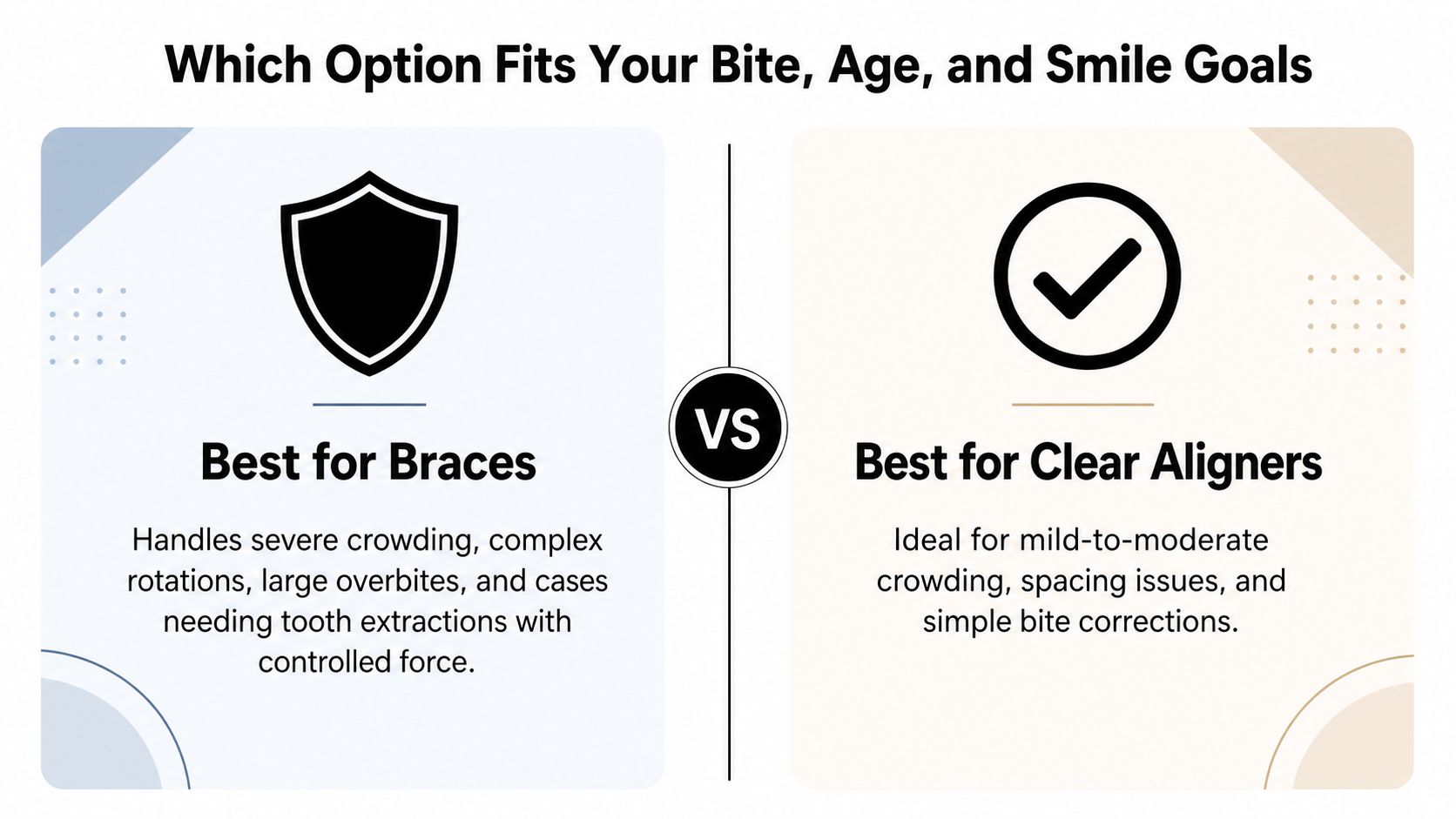
The bite should decide first. Clear aligners are a sensible recommendation for mild-to-moderate spacing, selected crowding, limited relapse after earlier orthodontics, and some straightforward bite corrections. They also suit adults who prioritize a discreet appearance and can follow the prescribed wear schedule.
Braces take the lead when teeth need substantial rotation, large overbite correction, vertical control, significant root movement, or extraction-space management. A recent systematic review and meta-analysis of extraction-based treatment found discrepancies between predicted and achieved movement, with inferior root control and occlusal contact scores for aligners compared with fixed appliances in the reviewed evidence extraction-based orthodontic treatment review. That finding makes a careful in-person assessment essential when a tooth extraction may be part of treatment.
Age and compliance change the recommendation
Teens can succeed with either system. Braces may be more predictable for a younger patient who forgets appliances or needs complex correction. Aligners can work well for a self-motivated teen who protects the trays, follows the wear plan, and maintains strong dental hygiene.
Adults need a periodontal assessment before any tooth movement. Meta-analytic evidence consistently finds better periodontal indicators with aligners than with fixed appliances, including lower plaque, gingival inflammation, and probing depth comparative periodontal meta-analysis. A separate review found lower plaque scores among adults treated with aligners during the first 6 to 12 weeks, with a mean difference of -0.58, a 95% confidence interval of -0.82 to -0.34, and p < 0.001 adult periodontal comparison.
That advantage doesn't make aligners safe for uncontrolled gum disease. A compromised periodontium needs diagnosis and stabilization before orthodontic force. Patients with gingival inflammation, a periodontitis history, or hygiene challenges should ask whether removable access offers a practical benefit and whether the supporting tissues can tolerate movement. The evidence is encouraging for periodontal outcomes, but one recent review included only eight studies, so it doesn't justify a universal recommendation systematic review of periodontal outcomes.
Patients researching whether Invisalign can correct an overbite should bring records, prior orthodontic information, and questions about the exact bite mechanics. Patients planning a tooth extraction, dental implants, veneers, or restorative dentistry may need orthodontic sequencing before cosmetic or restorative work.
Cost, Insurance, and What Treatment Really Includes
Price comparisons are useful only when they compare complete treatment. In Miami, traditional braces generally range from $3,500 to $6,500, while Invisalign commonly ranges from $5,000 to $8,500, with mild cases potentially priced lower. These figures should be confirmed during a consultation because complexity, treatment length, records, refinements, retainers, and follow-up policies affect the final fee.
Insurance often applies a lifetime orthodontic maximum of $1,500 to $2,500, regardless of whether the patient chooses aligners or braces. FSA and HSA funds may apply to eligible orthodontic expenses, but patients should confirm benefits, exclusions, age limits, and remaining balances with the plan administrator.
| Cost Factor | Clear Aligners (Invisalign) | Traditional Braces |
|---|---|---|
| Typical Miami range | $5,000 to $8,500 for comprehensive treatment, with mild cases lower | $3,500 to $6,500 |
| Diagnostic records | May include digital scans, photographs, and imaging | May include photographs, imaging, and bracket planning |
| Mid-course changes | Refinement trays may be part of the plan or billed separately | Wire and bracket adjustments are normally built into the treatment plan |
| Retainers | Must be discussed clearly, including replacement terms | Must be discussed clearly after bracket removal |
| Unexpected visits | Lost or damaged trays can create added needs | Broken brackets or wires may require repair visits |
| Insurance | Plan limits commonly apply regardless of appliance | Plan limits commonly apply regardless of appliance |
Patients should ask for an itemized explanation before starting. A spa-style all-inclusive fee may cover diagnostic records, aligner refinements, delivery, routine monitoring, retainers, and retention visits. Another office may quote only the active appliance and bill individual components separately. The lower initial figure isn't necessarily the lower total cost.
Payment plans and accepted insurance can make either option more manageable. The important comparison is the complete fee, the payment schedule, the retainer policy, and what happens if treatment needs refinement.
What the Ultra Smile DentalSpa Experience Looks Like
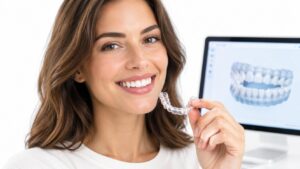
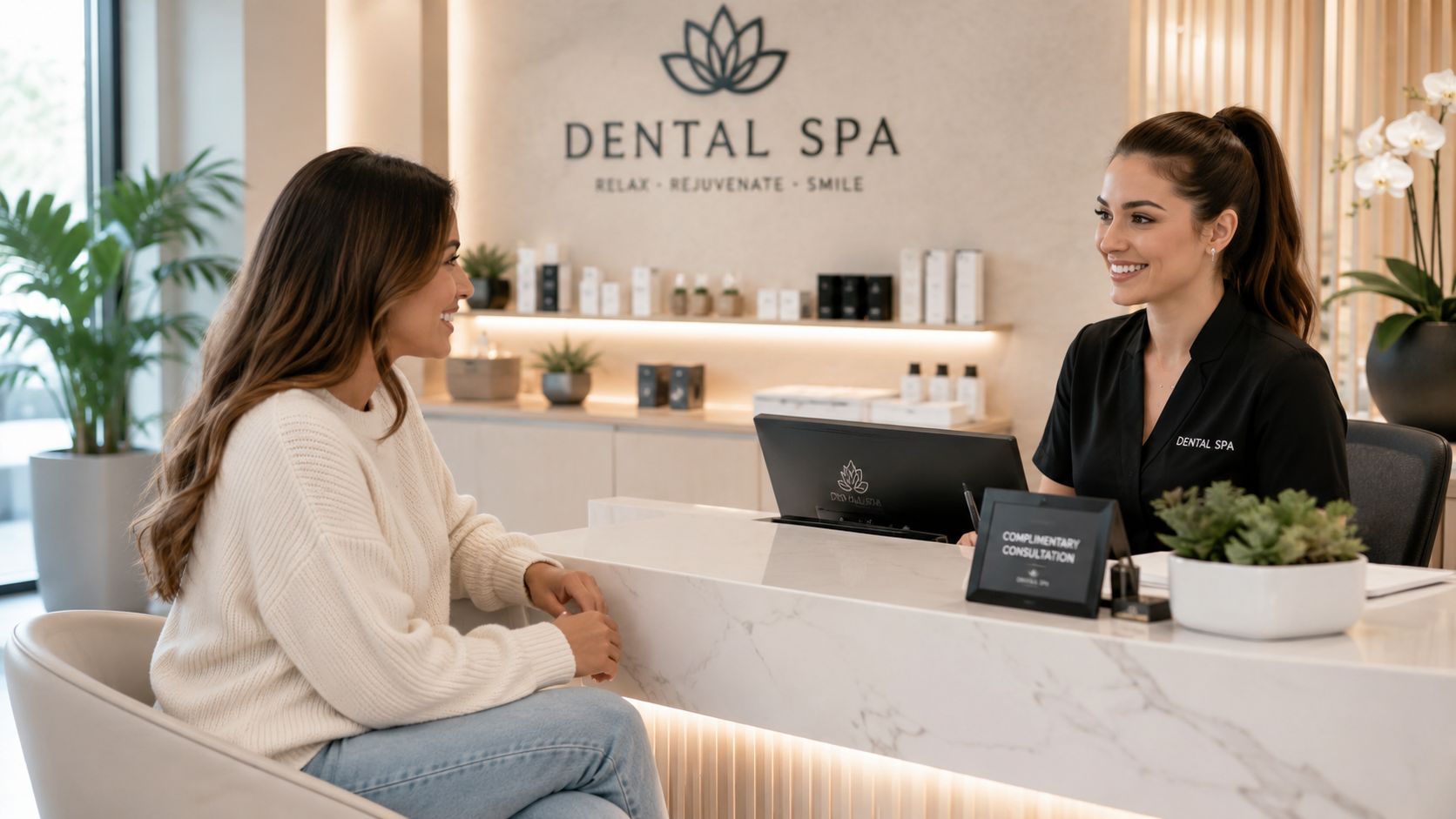
A first visit should make the treatment decision easier, not more confusing. At Ultra Smile DentalSpa, the process can begin with a complimentary consultation, an iTero digital scan without goopy impressions, and a three-dimensional preview of the proposed smile outcome. The clinician can then explain whether Invisalign or traditional braces match the bite and periodontal findings.
What happens before the trays arrive
The scan creates a digital record for treatment planning. If aligners are appropriate, the plan moves to custom fabrication and review. At delivery, the team explains insertion, removal, cleaning, attachments, and interproximal reduction, commonly called IPR, if those techniques are included in the plan.
Patients can review how to clean Invisalign aligners before treatment begins. Clear instructions matter because tray hygiene, tooth brushing, and proper storage influence both comfort and oral health.
Routine aligner appointments may occur every 6 to 8 weeks at the practice, while remote progress checks can be supported through the My Invisalign app. The broader literature reports that compliant aligner patients may visit every 10 to 12 weeks, compared with 4 to 6 week intervals for fixed appliances, although actual scheduling depends on the treatment plan and clinician review of orthodontic treatment mechanics.
The environment also addresses a common barrier for anxious adults. Hand-paraffin wax, noise-canceling headphones, aromatherapy neck pillows, warm towels, refreshments, and streaming entertainment can make visits feel more manageable. Concierge scheduling helps busy patients near Downtown Miami, Midtown Miami, and Hallandale Beach organize care around work and family commitments.
A short visual introduction can help patients understand the setting before arriving:
Your Decision Checklist and Next Step in Miami
A clear decision is better than another month of comparing photographs online. Patients can use this checklist before booking a consultation.
Clear aligners usually fit patients who
- Have mild-to-moderate crowding or spacing.
- Experienced relapse after previous orthodontic treatment.
- Prioritize discreet treatment and removable trays.
- Have stable periodontal health and strong hygiene habits.
- Can follow the prescribed wear schedule consistently.
Traditional braces usually fit patients who
- Need severe rotation control, including rotations beyond 30 degrees.
- Have significant Class II or Class III bite correction needs.
- Have vertical discrepancies or complex tooth movement.
- May need extractions with controlled anchorage.
- Are younger teens who may struggle with removable-appliance compliance.
- Need complex periodontal or restorative sequencing where fixed anchorage offers greater control.
An in-person discussion matters for edge cases
Mixed dentition, bruxism, previous root resorption, veneers, planned implants, and major restorative dentistry can change the recommendation. A patient seeking dental implants near me, tooth extraction, or an emergency dentist should resolve urgent disease and establish a stable foundation before elective orthodontic movement.
Patients looking for a dentist in Miami, FL, a cosmetic dentist near me, or a dentist near me can book a complimentary Invisalign consultation at Ultra Smile DentalSpa. The visit includes a conversation about goals, a digital scan, and a smile preview, with spa amenities available for patients who feel anxious about dental care.
Ultra Smile DentalSpa offers Invisalign and full-service dental care in Miami, including cosmetic, restorative, implant, extraction, and emergency services. Patients can visit Ultra Smile DentalSpa to schedule a complimentary consultation and find out whether clear aligners or braces better match the bite, gum health, and smile goals.