Composite bonding cannot be whitened with peroxide. For a predictable result, whiten the natural teeth first, wait about 2–3 weeks for the shade to stabilize, then replace or reshade the bonding so the smile matches.
A Miami patient may discover this after buying a popular whitening kit before a reunion, beach weekend, or family celebration. She had two small composite chips repaired on her front teeth five years earlier and assumed a brighter smile would make everything look better. After two weeks of nightly trays, her natural enamel looked lighter, but the bonded edges stayed darker and suddenly attracted more attention than the original chips.
That experience is frustrating, but it follows a predictable material difference. Peroxide changes natural tooth color, while existing composite resin generally keeps its original shade. For anyone seeking a cosmetic dentist near me or a dentist in Miami, FL, the important question isn't which whitening product to buy first. It's how to coordinate whitening and bonding so the final smile looks uniform.
Table of Contents
- When Whitening Leaves Bonded Teeth Behind
- Why Composite Bonding Does Not Respond to Bleach
- What to Check Before You Whiten With Existing Bonding
- The Clinical Sequence for a Uniform Smile
- Home Care That Keeps Bonding Looking Right
- Costs, Timelines, and Risks in Plain English
- Booking a Cosmetic Consultation in Miami
When Whitening Leaves Bonded Teeth Behind
The patient described above had followed the whitening instructions carefully. The problem was the sequence, not necessarily the effort. The whitening gel reached her natural enamel, but it couldn't lighten the resin along the chipped edges. By the time she arrived for a cosmetic consultation, the brighter background made the older bonding appear yellow and dull.
Miami patients often make this decision under real social pressure. Restaurant lighting, professional photographs, beach pictures, and events with friends can make a small color difference feel much larger. At-home whitening kits are easy to purchase, and their advertising often suggests that one treatment can brighten an entire smile. Existing bonding changes that equation.
The practical rule: Whitening can improve the shade of natural teeth, but it can't make established composite bonding lighter in the same way.
The mismatch depends on the location, size, and condition of the restoration. Bonding on visible front teeth is more likely to stand out than a small restoration farther back in the mouth. Older resin may also carry surface staining or wear, which can make the contrast more noticeable after whitening.
The predictable approach treats the smile as one coordinated cosmetic plan:
- Assess the enamel and bonding before treatment.
- Polish or adjust surface staining where appropriate.
- Whiten the natural teeth.
- Allow the shade to settle for about 2–4 weeks, a range commonly recommended before matching new composite, as described in clinical guidance on whitening before replacing bonding.
- Replace or reshade the bonding to the stabilized tooth color.
That two-step workflow shifts the goal from trying to bleach resin to creating one consistent shade across the visible smile.
Why Composite Bonding Does Not Respond to Bleach
Natural enamel and composite resin may look similar, but they don't behave the same way under whitening agents. Peroxide-based gels oxidize chromophores in enamel and dentin. Composite bonding is a resin material with a fixed internal shade, so peroxide can't penetrate its polymer matrix and change that underlying color.
In chairside terms, whitening can reach discoloration within natural tooth structure. It doesn't travel through composite in the same way. The resin may look temporarily different if it becomes dehydrated, but that isn't a dependable shade change, and the appearance can return as the material rehydrates.
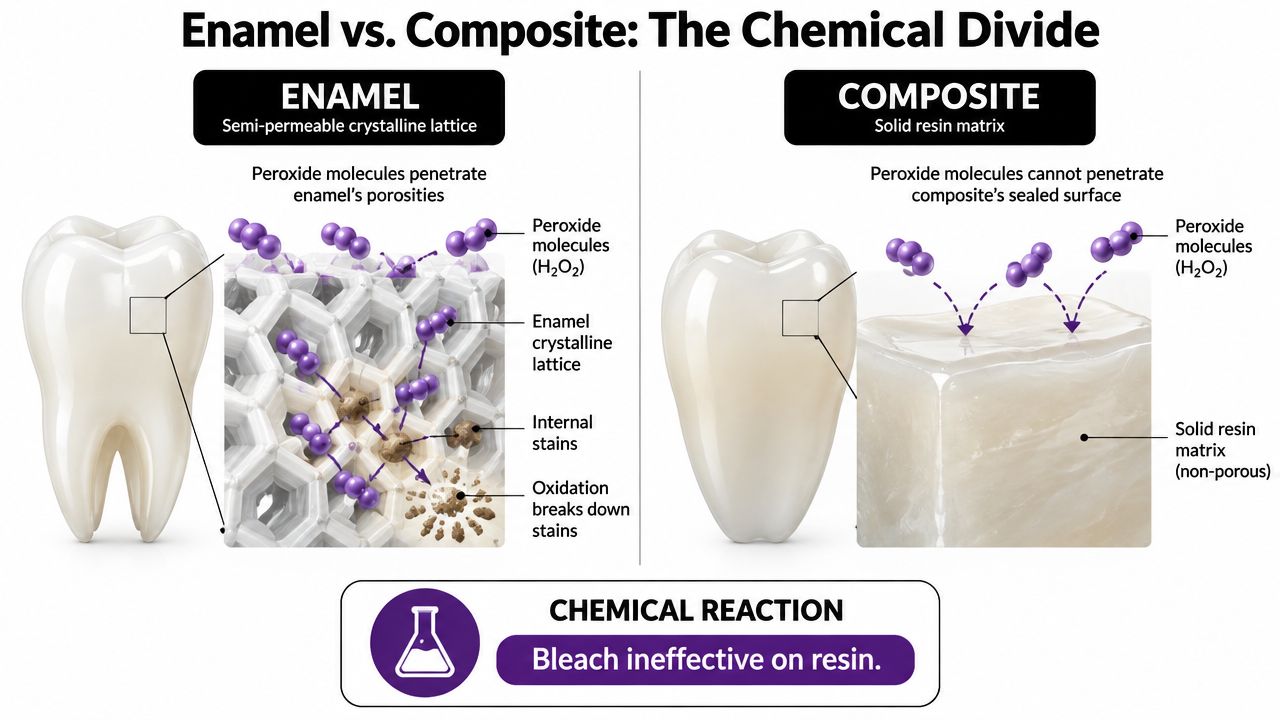
The distinction matters because whitening can increase, rather than reduce, the contrast between resin and enamel. A patient who wants a lighter bonded edge usually needs a dental professional to evaluate whether the existing composite can be polished, resurfaced, or replaced. Information about the material itself is also available in this explanation of what composite fillings are made of.
What polishing can and cannot do
Professional polishing or air-polishing can remove some external stain from composite. This may restore gloss and bring the material closer to its original appearance, especially when coffee, tea, wine, or tobacco has darkened the surface. It doesn't chemically lighten the base shade of the resin, as explained in guidance about stain removal from dental bonding.
Microabrasion may help in selected situations involving superficial discoloration, but it isn't a substitute for shade replacement when the composite itself is too dark. The next decision is therefore practical: leave sound bonding alone, whiten the natural teeth and accept the existing shade, or plan new composite afterward. Patients seeking a broader color and shape change may also discuss porcelain veneers, which involve a different level of treatment and commitment.
What to Check Before You Whiten With Existing Bonding
A cosmetic dentist doesn't recommend whitening around bonding without first checking how that bonding fits into the smile. The examination starts with the basics: which teeth have resin, how many surfaces are covered, and whether the material sits directly in the smile line.
The age and condition of the composite also influence the plan. Older bonding may have picked up stain, developed marginal wear, or chipped at an edge. A restoration that only needs polishing can be managed differently from one with a loose margin, an altered bite, or extensive discoloration.
The pre-whitening checklist
- Location and coverage: Front-tooth bonding and larger restorations create a higher cosmetic mismatch risk than small, less visible areas.
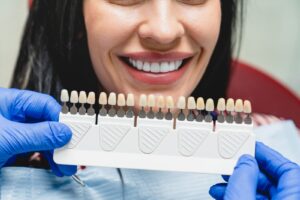
- Current shade: A shade guide and close-up photographs help document the resin and enamel before treatment.
- Surface condition: Staining, roughness, cracks, worn edges, or debonding may make repair or replacement preferable.
- Daily habits: Coffee, cafecito, tea, red wine, tobacco, and chlorhexidine can stain enamel and resin at different rates.
- Sensitivity risks: Recession, exposed roots, existing sensitivity, and previous endodontic treatment may affect comfort and whitening suitability.
- Functional concerns: Chipping, bite pressure, or failing margins should be addressed before cosmetic shade work.
The dentist and patient should also agree on the desired final shade. Whitening is not a race toward the lightest possible result. A natural, balanced shade that complements the patient's complexion and existing restorations is often more attractive than an isolated bright color.
This evaluation creates a clear decision tree. The bonding may remain unchanged, receive professional polishing, or be scheduled for replacement after the natural teeth reach their target shade. A new patient exam, cleaning and exam, and dental x-rays may be appropriate when broader oral health concerns need review before cosmetic care.
The Clinical Sequence for a Uniform Smile
A predictable plan separates shade diagnosis from final bonding placement. The sequence below reflects how a cosmetic dentist can coordinate whitening and composite work without guessing at the final enamel color.
Evaluation and shade baseline. The dentist examines the teeth and gums, photographs the smile under controlled conditions, and records the current enamel and composite shades with a shade guide. This baseline makes later comparisons more reliable.
Surface stain management. Professional polishing or carefully selected microabrasion can remove external discoloration from the resin without unnecessarily reducing the restoration. If the resin is too dark, polishing won't replace the need for new composite.
Whitening of natural enamel. The dentist whitens the natural tooth structure while planning around existing bonded areas. The treatment may be in-office, take-home, or a coordinated approach selected after the exam.
Shade stabilization. Natural teeth need time to rehydrate and settle after bleaching. A waiting period of about 2–4 weeks is commonly recommended before matching or replacing bonding, while reviews also commonly advise a 1–3 week delay before adhesive restorative work after bleaching, according to this review of whitening and composite resin behavior.
Composite replacement or reshading. Once the enamel shade is stable, the dentist determines whether to remove the old resin, add or resurface material, or replace the bonding. New composite is etched, layered, shaped, cured, and polished to blend with the settled shade.
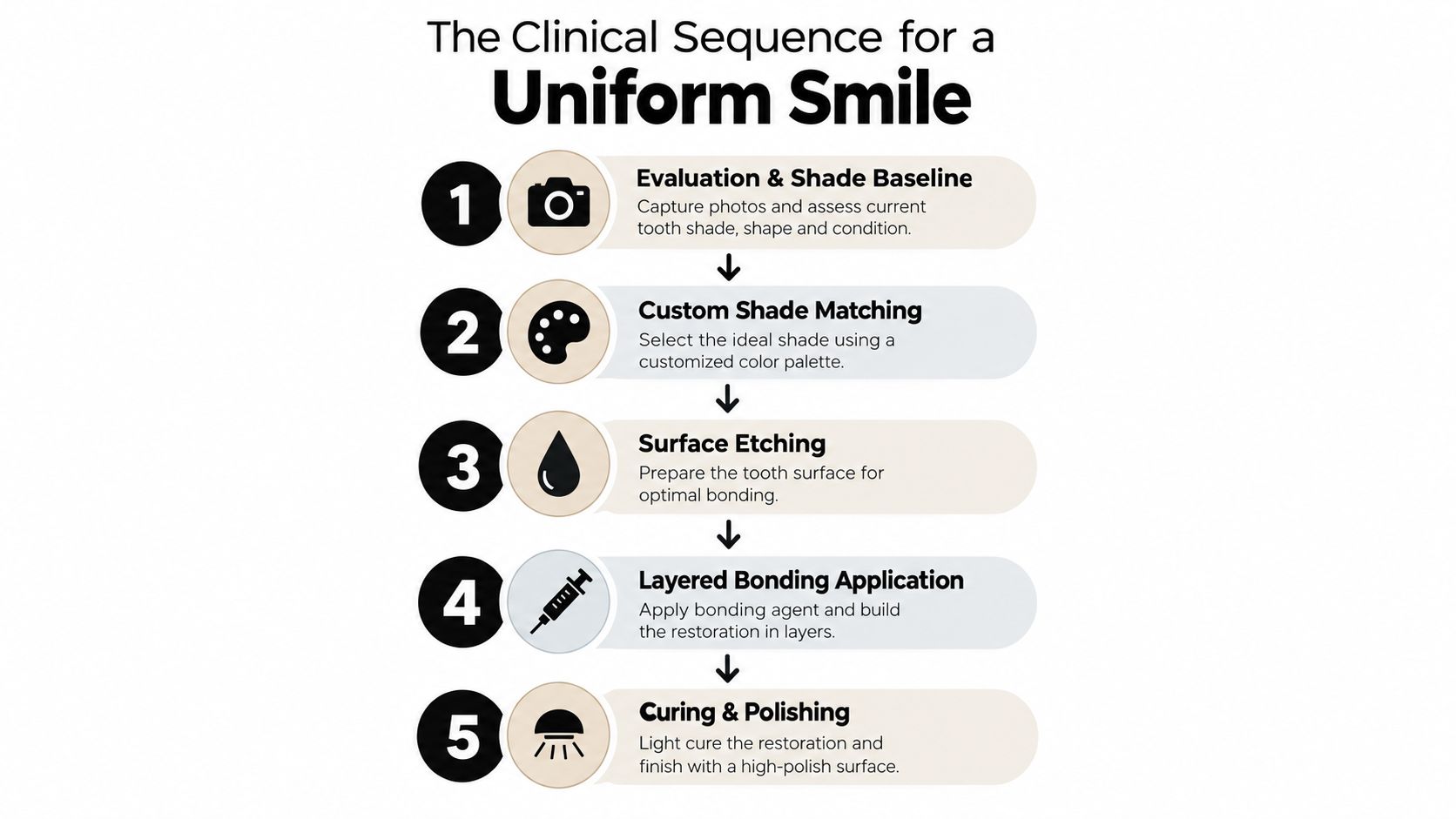
The order protects both appearance and adhesion. Bleaching agents can temporarily reduce bonding performance at the enamel interface, particularly when restorative bonding occurs too soon. A 2024 clinical study on bleaching and shear bond strength reported that both in-office and at-home bleaching reduced immediate bond strength compared with controls, with the weakest enamel marginal sealing observed one day after bleaching. The same study found that delaying bonding by at least three days reversed much of that effect, although shade stabilization remains an important cosmetic consideration.
Porcelain veneers may enter the conversation when bonding covers multiple front teeth, has extensive wear, or no longer provides the desired combination of shape and color. That choice requires a separate examination because veneers are not merely a brighter version of composite.
Home Care That Keeps Bonding Looking Right
Once whitening and bonding have been coordinated, daily care should protect both surfaces. Natural enamel can develop new stains, while composite can collect external discoloration and lose its smooth polish if patients use overly abrasive products.
A soft toothbrush and low-abrasive fluoride toothpaste are usually more appropriate than aggressive scrubbing. Whitening toothpaste containing harsh abrasives, charcoal powders, baking soda scrubs, and prolonged use of peroxide gels can roughen resin surfaces or make them more likely to collect stain. Products marketed for whitening aren't automatically suitable for bonded teeth.
A Miami-friendly evening routine
- Brush gently: Clean the gumline and bonded edges with a soft brush rather than pressing harder.
- Clean between teeth: Use floss or an appropriate interdental cleaner so stain and plaque don't remain around margins.
- Rinse after dark drinks: Water after cafecito, iced coffee, tea, or red wine helps clear residue.
- Protect during sleep: Patients who grind may benefit from a professionally fitted night guard to reduce wear and edge damage.
Non-staining, alcohol-free mouth rinses can support a comfortable routine. Whitening maintenance strips should only be used according to a dentist's instructions and positioned so they don't sit unnecessarily over bonded areas. The safest maintenance plan depends on the condition of the resin and the patient's sensitivity.
A professional hygiene visit can remove deposits and repolish suitable composite margins. Patients should also follow the specific aftercare provided for their treatment, including the recommendations in this guide to teeth whitening aftercare.
Costs, Timelines, and Risks in Plain English
Treatment costs in Miami vary with the number of teeth, the amount of bonding, the whitening method, and whether the patient needs additional restorative care. A dentist should provide a personalized estimate after examining the smile rather than quoting one universal fee.
The clinical timeline is often driven by the waiting period after whitening. Patients may complete the whitening appointment quickly, but rushing directly into shade matching can produce a color that no longer fits once the enamel settles. A coordinated plan commonly takes several weeks from consultation to final polish, depending on scheduling and the number of procedures.
| Treatment Step | Typical Miami Cost | Time Required |
|---|---|---|
| In-office whitening of natural enamel | Varies by treatment plan | Scheduled after the consultation |
| Professional polishing or microabrasion | Varies by tooth and stain severity | Often planned before whitening |
| Composite bonding replacement or reshading | Varies by tooth and restoration size | Scheduled after shade stabilization |
| Porcelain veneer consultation | Determined after examination | Requires separate treatment planning |
Risks that deserve a clear explanation
Temporary sensitivity can follow bleaching, particularly when teeth already have recession or exposed root surfaces. Bonding performed too soon after peroxide exposure may have weaker adhesion, and the natural shade can change after the initial whitening effect settles. Existing and newly placed composite may also wear differently over time.
Repeated whitening cycles may not solve a mismatch because the resin's internal shade remains unchanged. If the bonding is sound and the patient accepts its color, whitening may be reasonable after a consultation. If the brighter enamel makes the resin conspicuous, replacement or reshading is usually the more direct long-term solution.
Patients with pain, swelling, a broken restoration, or a severe toothache shouldn't begin cosmetic whitening first. An emergency dentist can evaluate the urgent problem, while restorative options such as a tooth extraction or dental implants may be considered only when a tooth cannot be predictably saved. Cosmetic planning should follow a healthy foundation.
Booking a Cosmetic Consultation in Miami
A consultation gives Miami patients a practical answer to the question, “How do you whiten bonded teeth without creating a mismatch? The appointment should begin with diagnosis and planning, not with a product recommendation.
Before arriving, patients can bring a list of the teeth with bonding, the approximate age of each restoration, any previous whitening history, and a clear description of the desired result. Photos from before or after earlier cosmetic work can also help the dentist understand what has changed.
What the appointment should include
The dentist may assess the shade under controlled lighting, inspect the bonding margins closely, and use intraoral photographs to map the smile. Dental x-rays may be recommended when symptoms, old restorations, or deeper concerns require evaluation. The conversation should cover sensitivity, bite forces, gum health, and whether cleaning and exams should come before whitening.
A written plan can then set out the order of care:
- Natural tooth shade assessment
- Surface stain removal where appropriate
- Whitening of suitable natural teeth
- Shade stabilization
- Composite reshading or replacement
- Maintenance and review
Patients should receive a clear explanation of costs and timelines before treatment begins. Financing options may be available for a full bonding replacement plan, but terms depend on the practice and the patient's eligibility. Online scheduling can help both Miami residents and seasonal visitors request a consultation, while the first call should clarify appointment availability, records, insurance questions, and the type of cosmetic concern being evaluated.
A calm consultation room and a spa-like setting can make the visit more comfortable, particularly for patients who feel anxious about dental care. Comfort features don't replace clinical standards, but they can help patients ask better questions and make decisions without feeling rushed.
The consultation is a planning session, not a sales pitch. A trustworthy dentist should explain when whitening alone is enough, when polishing may help, and when replacing bonding is the more predictable choice. Patients searching for a dentist near me, a cosmetic dentist near me, or broader care such as dental implants near me should be able to leave with a roadmap that fits their oral health and cosmetic goals.
Ultra Smile DentalSpa provides personalized cosmetic dentistry in Miami, including teeth whitening, composite bonding, veneers, restorative care, and comprehensive dental exams. Visit Ultra Smile DentalSpa to schedule a consultation and plan the correct whitening and bonding sequence for a brighter, more uniform smile.