A cracked molar usually doesn't announce itself at a convenient time. It shows up during lunch near Downtown Miami, with a sharp zing on something cold, or when one side suddenly becomes the only side that feels safe to chew on. A missing tooth can feel just as disruptive. Speech changes a little, chewing gets awkward, and smiling starts to feel more calculated than natural.
For adults searching for a dentist near me or a dentist in Miami, FL, those moments often lead to the same question. Is this a tooth that needs a crown, a bridge, or something else entirely? For patients comparing dental crowns and bridges, the confusing part usually isn't the vocabulary. It's understanding which choice protects the mouth for the long run, especially when neighboring teeth, bite forces, and comfort all matter.
Patients visiting Dr. Neda Bahmadi's team around Downtown Miami, Midtown Miami, and Hallandale Beach often want the same things. Relief from pain, clear answers, and treatment that looks natural without feeling overwhelming. That's especially true for people also exploring restorative dentistry, cosmetic dentist near me searches, dental implants near me, or care after an emergency dentist visit. The guide below breaks the decision down in plain language, with a close look at how crowns, bridges, and implants work in real life.
Table of Contents
- Find Trusted Dental Crowns and Bridges in Miami FL
- Understanding Dental Crowns and Bridges and How They Work
- Types and Materials for Crowns and Bridges Explained
- Dental Crowns vs Bridges vs Implants Detailed Comparison
- Treatment Steps and What to Expect at Ultra Smile DentalSpa
- Lifespan Costs and Long Term Value in Miami
- How to Choose the Right Option and Schedule Your Consultation
Find Trusted Dental Crowns and Bridges in Miami FL
A damaged or missing tooth can make a normal day feel off balance. One patient may have an old filling that finally gave way while eating. Another may have lost a tooth years ago and is only now noticing that chewing has become uneven and the space is starting to bother neighboring teeth.
In Miami, those concerns often come with urgency. Busy professionals in Midtown may want a solution that looks polished and fits a packed schedule. Families near Hallandale Beach may be trying to solve a painful bite before it turns into a bigger problem. Many people start with search terms like dentist near me, emergency dentist, or tooth extraction, then realize they also need to understand what comes after the immediate fix.
A common situation patients face
A crown usually enters the conversation when the tooth is still present but no longer strong enough to do its job safely. A bridge comes up when a tooth is missing and the goal is to close the gap without leaving the space open. Both can restore comfort and appearance, but they don't solve the same problem.
That distinction matters because crowns and bridges aren't niche treatments. A large adult oral-health survey in England found that 46.5% of participants had one or more crowns, with an average of 3.2 crowned teeth among those patients, and 9.9% had fixed replacements of missing teeth such as bridges or implants, according to the adult dental health survey findings.
| Comparison point | Crown | Bridge | Implant |
|---|---|---|---|
| Best for | A damaged tooth that can still be saved | One or more missing teeth when support teeth can help | A missing tooth where independent support is preferred |
| Uses neighboring teeth | No, unless part of a larger plan | Yes | No |
| Main concern to evaluate | Remaining tooth strength | Abutment tooth health | Bone and overall site suitability |
| Common patient goal | Save and strengthen | Replace and stabilize | Replace without involving nearby teeth |
What patients usually want to know first
Most patients don't need a lecture on dental materials at the first visit. They need direct answers.
- Will it stop pain? A properly planned restoration can protect a cracked or weakened tooth and make chewing more comfortable.
- Will it look natural? Modern restorative and cosmetic dentistry options can be matched carefully to surrounding teeth.
- Will it last? Longevity depends on the design, material, bite forces, and the condition of the tooth or support teeth underneath.
- Will it affect nearby teeth? That question is often the most important one, especially when a bridge is under consideration.
The better question isn't just “Which restoration looks nicest? It's “Which option can the mouth support predictably over time?
Understanding Dental Crowns and Bridges and How They Work
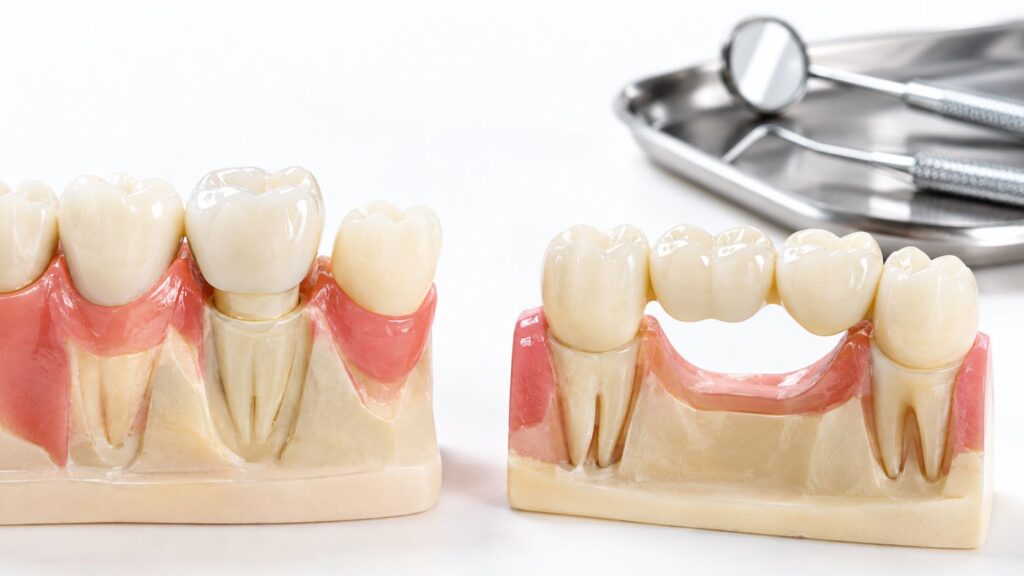
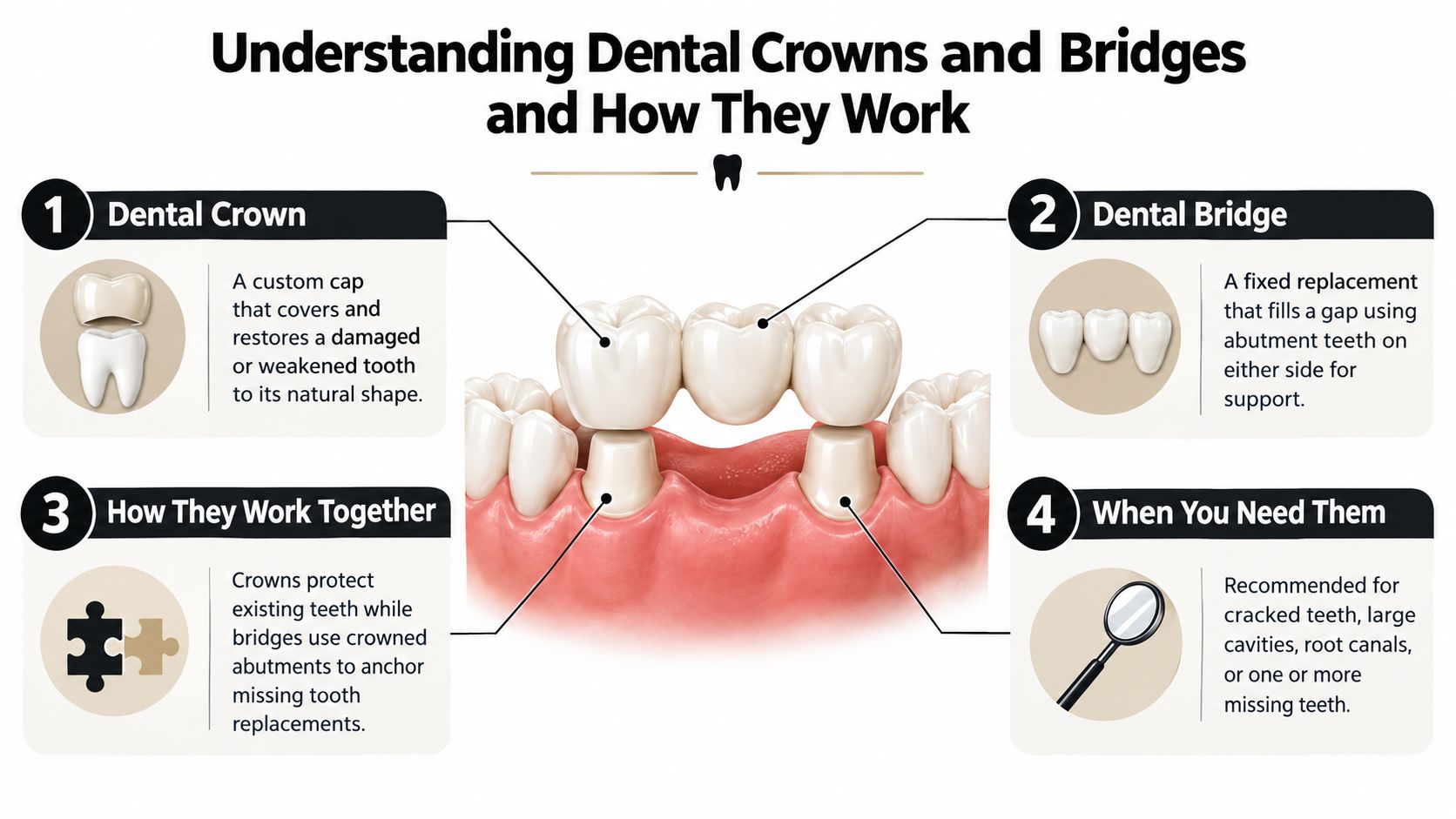
A dental crown is a custom cap that covers a tooth that has been weakened, cracked, heavily filled, or treated with a root canal. The goal is to bring that tooth back to a useful shape and help it handle normal chewing again.
A dental bridge replaces a missing tooth by spanning the gap. The replacement tooth sits between support teeth, and those support teeth are called abutment teeth. In bridge mechanics, abutment teeth must carry biting forces, which is why bridge design depends so heavily on the condition of the neighboring teeth, as described in the NCBI overview of fixed bridges and abutment teeth.
What a crown actually does
A crown doesn't replace a missing tooth. It protects a tooth that's still there. That might mean covering a tooth after a large cavity, rebuilding a broken cusp, or sealing and supporting a tooth after root canal therapy.
Patients often understand crowns faster when they think of them as a protective outer shell built to fit a specific tooth. The tooth underneath still matters. If the foundation is weak, the crown can only do so much.
What a bridge actually does
A bridge replaces something that's gone. The artificial tooth in the middle fills the visible gap, but the success of the bridge depends on what's holding it up.
That's why bridge planning is never only about the missing tooth. The dentist has to study the teeth on either side, how the patient bites, whether those teeth already have large fillings, and whether the bridge span is short and favorable or longer and more demanding.
Key insight: A crown restores one tooth. A bridge replaces a missing tooth by asking neighboring teeth to help carry the load.
Why patients often confuse them
Crowns and bridges can look similar once they're in the mouth because both are fixed and both can be tooth-colored. The difference is structural.
One protects a damaged tooth. One borrows support from nearby teeth to replace a missing one.
Patients who want practical maintenance advice after placement can also review how to care for dental crowns, since habits like grinding, clenching, and inconsistent home care can shorten the life of any restoration.
Types and Materials for Crowns and Bridges Explained
Once a patient knows whether the plan involves a crown or a bridge, the next question is usually about material. That choice affects appearance, strength, wear patterns, and where the restoration belongs in the mouth.
Material decisions also aren't one-size-fits-all. A front tooth has different demands than a back molar. A single crown has different forces than a multi-unit bridge.
Porcelain fused to metal and gold alloy
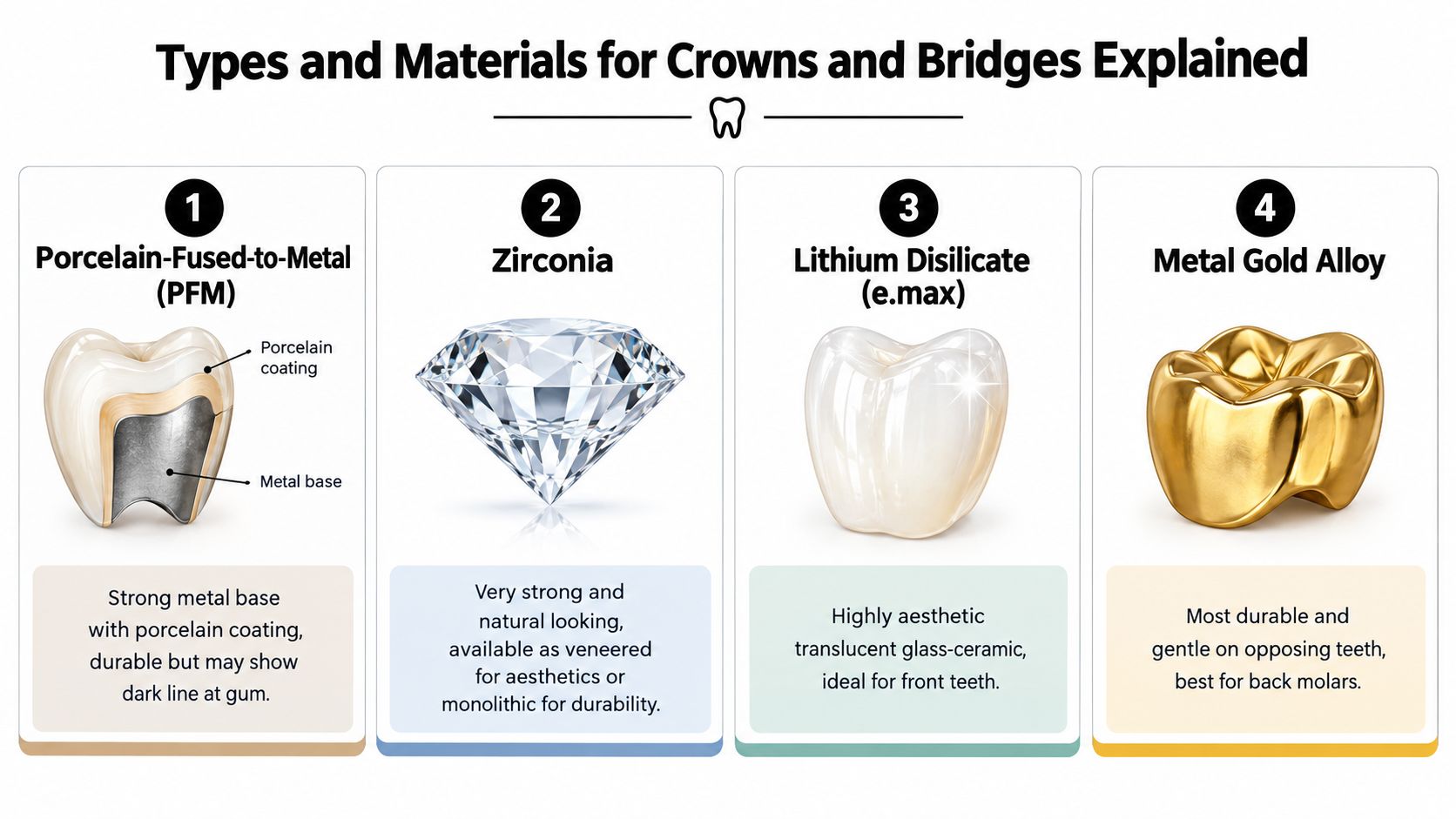
Porcelain-fused-to-metal, often shortened to PFM, combines a metal substructure with a tooth-colored outer layer. It has a long track record and can balance esthetics with strength. In some mouths, especially near the gumline, the metal support can become more noticeable over time.
Gold alloy and other metal restorations remain relevant because they're durable and kind to opposing teeth. They're most commonly considered in back teeth where function matters more than visibility.
Historical prosthodontic records also show how established crown-and-bridge care became over time. In a 14-year review at Matsumoto Dental College, 11,425 crowns and 2,385 bridges were fabricated for 5,588 patients between January 1973 and December 1986, with 1983 reaching 1,585 crowns and 372 bridges. The same record captured material shifts, including 22.1% porcelain-fused-to-metal crowns and 22.3% bridge retainers by 1985, with resin-facing use increasing in 1986 and partial-coverage crowns reaching 19.0% of crowns and 30.5% of bridge retainers, according to the clinical record summary on crown and bridge use.
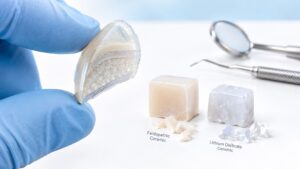
Zirconia and lithium disilicate
Zirconia became popular because it offers high strength and a cleaner white base than metal. It comes in forms that lean more toward esthetics or more toward toughness. Veneered zirconia includes an outer esthetic layer. Monolithic zirconia is milled from a solid piece and is often chosen when durability is a major priority.
Lithium disilicate, commonly known by patients as e.max, is prized for translucency. It can look especially natural in visible areas of the smile, which makes it a common conversation for front-tooth crowns and other cosmetic dentistry cases.
What survival data suggests about materials
For unit fixed dental prostheses, a systematic review reported 5-year survival of 91.3% for metal-ceramic FDPs, 92.9% for veneered densely sintered zirconia, 87.9% for monolithic densely sintered zirconia, 88.4% for glass-infiltrated alumina, and 82.5% for lithium disilicate-reinforced glass-ceramic FDPs in the PubMed review on material-specific survival.
That doesn't mean one material wins every case. It means the right material depends on where the restoration sits, how much force it has to handle, and whether the case involves a single tooth or a bridge.
- Front teeth: appearance often drives the decision more strongly.
- Back teeth: strength and force management usually carry more weight.
- Bridges: material choice becomes more important because the restoration is distributing load across multiple units.
Material selection should match the job. The prettiest option on a shade guide isn't always the most predictable option under heavy bite pressure.
Dental Crowns vs Bridges vs Implants Detailed Comparison
The decision usually isn't crown versus bridge in isolation. It's whether a damaged or missing tooth should be restored with a crown, replaced with a bridge, or replaced with an implant-supported crown.
The cleanest way to compare them is to start with the condition of the supporting structures.
Crown vs bridge vs implant decision matrix
| Criteria | Dental Crown | Dental Bridge | Dental Implant |
|---|---|---|---|
| Main use | Restores a damaged tooth that remains in place | Replaces a missing tooth by spanning a gap | Replaces a missing tooth with support from the jaw rather than neighboring teeth |
| Neighboring tooth involvement | Minimal, because the treatment centers on the existing tooth | Significant, because support teeth act as abutments | Minimal, because nearby teeth usually aren't used as anchors |
| Best candidate profile | Tooth is cracked, heavily filled, or weakened but still restorable | Missing tooth with strong adjacent teeth that can carry load | Missing tooth where preserving neighboring teeth is a priority |
| Key long-term question | Can the tooth underneath support the crown? | Can the abutment teeth handle the extra force over time? | Is the site suitable for implant treatment and healing? |
| Typical patient concern | Saving a tooth | Filling a gap quickly and securely | Avoiding preparation of healthy neighboring teeth |
When a crown makes the most sense
A crown fits best when the tooth is still present and worth saving. That includes a tooth with a large old filling, a fracture that hasn't made the tooth unrestorable, or a root canal-treated tooth that needs full coverage to reduce the risk of future breakage.
Single crowns also have strong long-term evidence. One clinical study reported cumulative survival of 89.9% at 5 years, 80.9% at 10 years, 70.5% at 15 years, and 61.8% at 20 years in the PMC clinical study on single-crown survival.
When a bridge makes sense, and when it doesn't
A bridge can be a smart choice when a tooth is missing and the adjacent teeth already need crowns or are otherwise suitable as supports. In that setting, the bridge solves two issues at once by restoring the gap and strengthening the support teeth.
But bridges ask more from those neighboring teeth. A long-term study found vital pulp survival after 10 years was 70.8% in bridge retainers versus 84.4% in single-unit metal-ceramic crowns, and after 15 years it was 66.2% versus 81.2%, according to the PubMed study on biologic risk in bridge retainers.
A bridge can be excellent treatment. It just shouldn't be treated like a “free tooth replacement. The support teeth pay part of the price biomechanically.
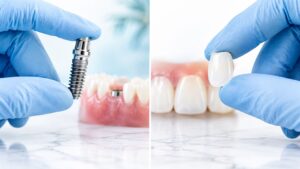
Where implants change the conversation
Implants often appeal to patients because they don't rely on neighboring natural teeth the way a traditional bridge does. That independence can be valuable when the teeth next to the space are healthy and untouched.
For fixed prostheses, a large systematic review found 5-year survival of 93.8% for conventional tooth-supported FDPs, 91.4% for cantilever FDPs, and 94.5% for implant-supported single crowns. At 10 years, survival was 89.2% for conventional FDPs, 80.3% for cantilever FDPs, and 89.4% for implant-supported single crowns in the systematic review of crowns, bridges, and implant-supported restorations.
Why span length and support quality matter more than marketing terms
Short, conventional designs generally hold up better than cantilever designs. Support quality matters just as much as material or brand name.
Recent evidence on zirconia also shows why patients shouldn't assume “newer automatically means simpler. Zirconia single crowns can show 10-year survival of about 92.9% to 98.7%, yet pooled data also reported 12.1% biological complications and 53.9% mechanical complications at 10 years. In the same evidence summary, zirconia fixed dental prostheses had 77.6% survival over 10 to 13 years, and conventional cantilever designs fell near 50% to 52.6% survival over 9 to 13 years in the PubMed review of zirconia crowns and prostheses.
That's why the smartest treatment choice usually comes from a less glamorous question. Not “Which restoration is strongest on paper? but “Which tooth, support pattern, and span length can this mouth carry safely?
Treatment Steps and What to Expect at Ultra Smile DentalSpa
Most patients feel better once the process is demystified. Crown and bridge treatment usually follows a predictable sequence, and knowing what happens at each visit helps reduce anxiety.
One practical option in Miami is Ultra Smile DentalSpa, which offers crowns and bridges, including same-day crown workflows in selected cases using digital technology. For patients juggling work, traffic, and family schedules around Downtown Miami, Midtown Miami, and Hallandale Beach, that can make treatment planning more manageable.
The visit sequence most patients follow
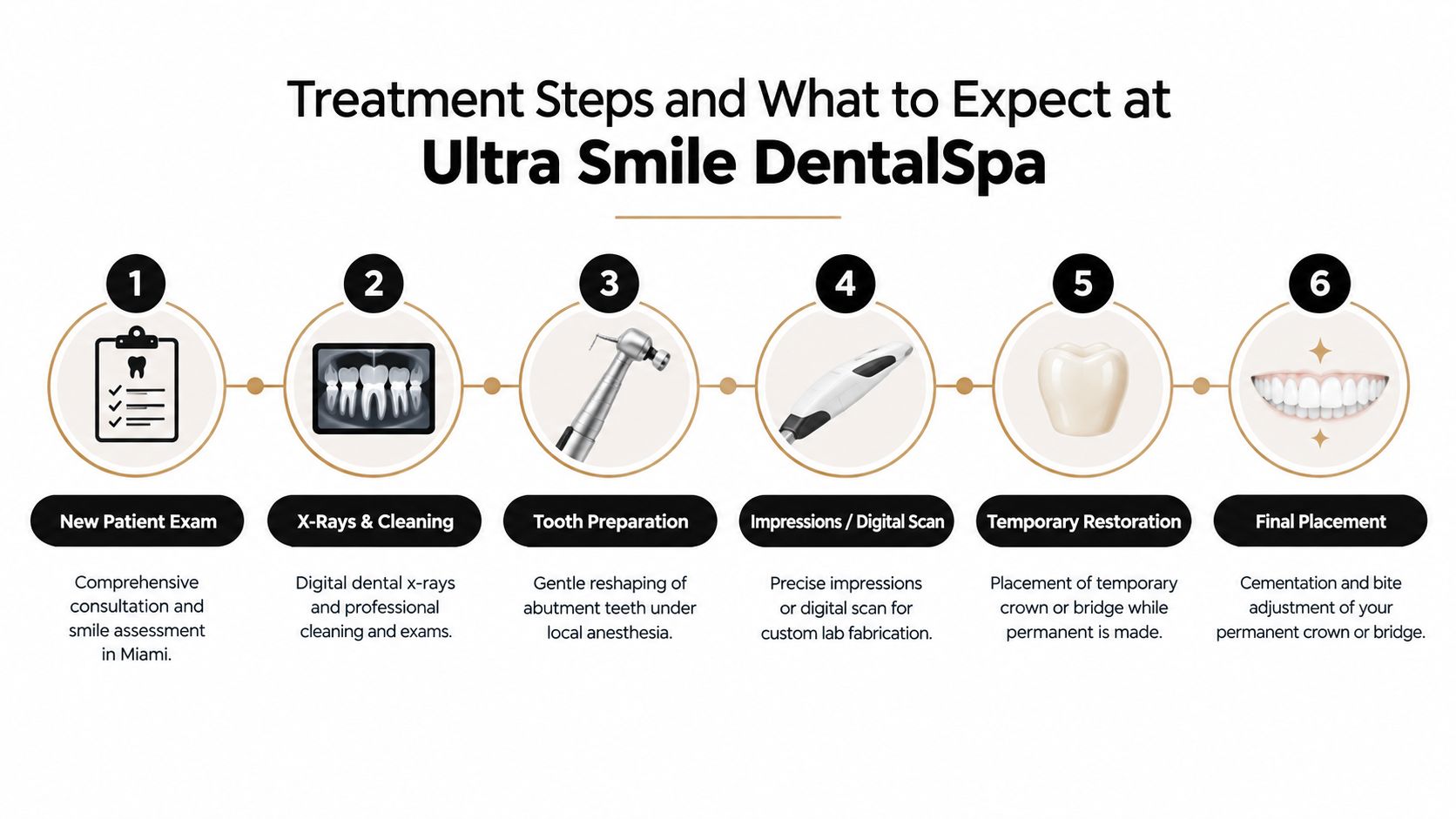
Exam and diagnosis
The appointment starts with a close look at the tooth, the bite, and the gums. If the issue is a missing tooth, the neighboring teeth and the shape of the space matter just as much as the gap itself.Dental X-rays and cleaning
Digital imaging helps reveal decay, cracks, root canal history, and bone support. If the mouth is due for cleaning and exams, that may be coordinated into treatment planning because healthy gums support better restorative results.Tooth preparation
For a crown, the dentist reshapes the tooth so the final restoration can fit precisely. For a bridge, the abutment teeth are prepared to receive the supporting crowns.
A short visual overview can help patients see the sequence before treatment begins.
What happens after the tooth is prepared
A scan or impression captures the shape needed for the final restoration. Many patients prefer digital scanning because it can feel easier than traditional impressions.
If the final crown or bridge isn't delivered the same day, a temporary restoration protects the prepared area while the lab fabricates the permanent one. At the delivery visit, the dentist checks fit, contacts, color, and bite before bonding or cementing the restoration into place.
Chairside advice: If a temporary crown or bridge feels “high when biting, patients shouldn't wait it out for weeks. A quick adjustment can prevent soreness and help protect the tooth.
Comfort and aftercare
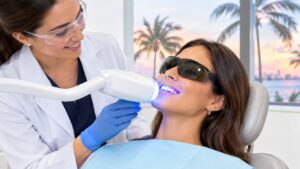
For anxious patients, the experience matters almost as much as the treatment. Features such as refreshments, custom aromatherapy, streaming entertainment, and a hot towel finish can make restorative care feel more manageable, especially for longer visits.
After placement, the basics still matter most.
- Brush thoroughly: Plaque around the margin can irritate gums and shorten restoration life.
- Floss correctly: Bridge patients need specific cleaning techniques under the replacement tooth.
- Protect against grinding: Night guards may be recommended when clenching threatens the new work.
- Keep follow-up visits: New patient exams, routine maintenance, and bite checks help catch small problems before they grow.
Lifespan Costs and Long Term Value in Miami
Patients understandably ask about cost early. A better way to frame the discussion is value over time, because the least expensive immediate option isn't always the one that protects the mouth most predictably.
The cost of a crown or bridge in Miami usually depends on what has to happen before the restoration is placed. A tooth may need buildup, root canal treatment, gum care, or evaluation after an emergency dentist visit. A missing tooth case may lead to a discussion of bridgework, dental implants near me, or even tooth extraction if a failing adjacent tooth changes the plan.
What lifespan data actually supports
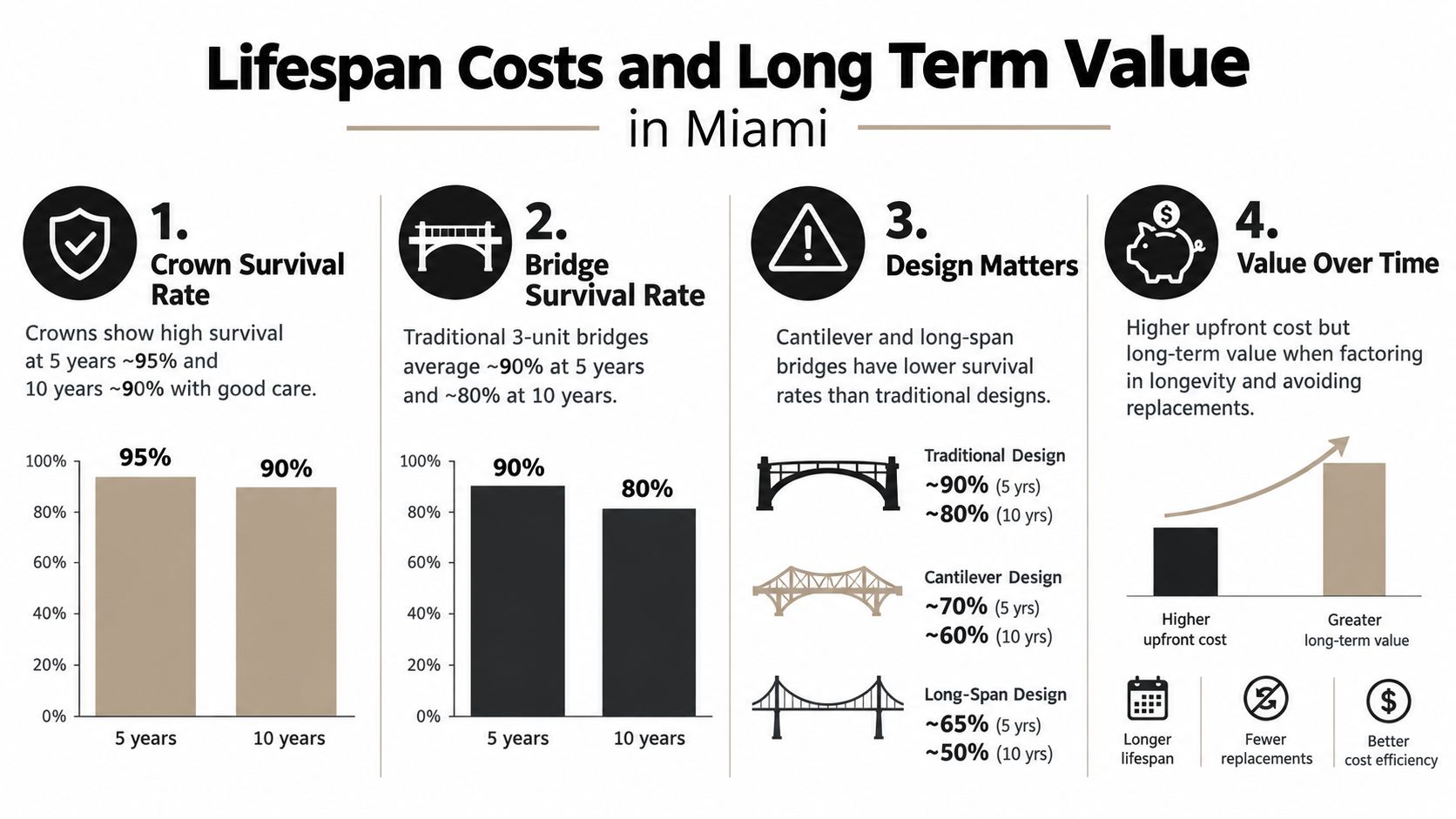
A major review found that about 95% of crowns remain in the mouth for at least 5 years, and published survival at 15 to 20 years ranges from 50% to 80%, according to the PubMed review of crown longevity.
That broad range tells patients something important. Longevity isn't controlled by the crown alone. It also depends on the tooth underneath, material choice, bite stress, oral hygiene, and whether the restoration is being asked to do more than the clinical situation can safely support.
Hidden cost drivers patients don't always expect
Bridge value has to include maintenance and support-tooth risk, not just the original delivery fee. Patients who want to keep a bridge clean at home can review how to clean a dental bridge, because daily hygiene is part of the investment.
A recent retrospective analysis also highlights why foundation quality matters. It reported an overall complication rate of 56.8% for crown restorations and found different 15-year survival outcomes depending on post type, with fiber posts showing the lowest complication rate at 40.0% and the highest cumulative survival at 52%, as described in the retrospective analysis of crown restorations with endodontic posts.
How patients in Miami can think about value
A practical way to judge value is to ask four questions:
- What is being restored? A cracked but healthy-rooted tooth is a different problem from a root canal-treated tooth with little remaining structure.
- What is doing the supporting? Bridge success depends on abutment teeth. Implant success depends on the site and overall planning.
- How much force will the restoration take? Back teeth, grinding habits, and long spans increase demands.
- What maintenance will be realistic? The best design on paper still needs cleaning, exams, and periodic evaluation.
For many adults in Miami, the smartest financial choice is the one that matches the biology of the mouth, not the one that gets the treatment done fastest.
How to Choose the Right Option and Schedule Your Consultation
You come in with one missing tooth and a simple question: "Which option lasts best?" The honest answer usually starts one step earlier. We need to ask which teeth, roots, and bone would be carrying the load five, ten, and fifteen years from now.
That is why the decision is not only about replacing what you see. It is about protecting the support underneath. A crown succeeds or fails based on how much healthy tooth remains. A bridge depends on the strength of the abutment teeth at both ends. An implant-supported crown depends on the condition of the site and the overall plan.
One practical rule helps many patients sort the options. Short spans are usually kinder to teeth than long spans. As span length increases, the bridge flexes more under bite force, and the abutment teeth take on more stress. In plain terms, a bridge replacing one tooth asks less of the supporting teeth than a bridge replacing two or more teeth in a high-force area. If the proposed bridge is getting longer, or the support teeth already have large fillings, root canal treatment, or gum and bone loss, that is the moment to ask whether preserving those abutments is worth the long-term risk.
A bridge works like a small deck supported by posts at each end. If the posts are strong, the deck can serve well. If the posts are already compromised, the restoration may look fine at first while strain is building underneath.
A simple discussion checklist
Bring these questions to your consultation:
- How much sound tooth is left? A tooth with enough healthy structure may do well with a crown. A tooth with very little remaining above the gumline may need a different plan.
- How strong are the abutment teeth today? Ask whether they have large restorations, cracks, root canal history, mobility, or bone loss that could shorten bridge life.
- How long is the span? A short bridge and a long bridge are not the same mechanical problem.
- What material fits the location? Front teeth and back teeth place different demands on ceramics, zirconia, metal-based restorations, and implant components.
- What is the maintenance burden? Ask what cleaning tools you will need and how often the area should be checked.
A good recommendation should improve function and lower future trouble, not just fill a space. That can affect the timing of related care such as dental x-rays, new patient exams, teeth whitening, or future cosmetic dentistry work. In many cases, it makes sense to stabilize the bite first and handle appearance updates after the restoration plan is secure.
For patients near Downtown Miami, Midtown Miami, and Hallandale Beach, the next step is a consultation centered on support, not guesswork. At Ultra Smile DentalSpa, that visit can include an exam, digital diagnostics, and a treatment discussion focused on which option places the least long-term strain on the rest of your mouth.