A teenager in Miami notices tenderness behind the last molar while eating, then wakes up with mild swelling along the jaw. Another patient, already in the late twenties, has no pain at all but learns during a routine exam that a wisdom tooth is tilted toward the neighboring molar. Both patients ask the same question: when should wisdom teeth be removed?
The answer isn't based on age alone. Symptoms, X-rays, root development, available space, the condition of nearby teeth, and the likelihood of future disease all matter. At Ultra Smile DentalSpa, patients can discuss whether extraction, monitoring, or referral for more complex care makes sense for their situation, in a calm Miami setting designed around comfort and clear treatment planning.
Table of Contents
- Introduction to Wisdom Tooth Removal Decisions
- Understanding Wisdom Teeth and Common Problems
- Clinical Signs and Risks of Not Removing Wisdom Teeth
- When to Remove Wisdom Teeth Based on Age and Monitoring
- Diagnostic Steps with X-rays and Impaction Types
- Sedation Options and Ultra Smile DentalSpa Experience
- Recovery and Aftercare After Wisdom Teeth Extraction
- Schedule Your Wisdom Teeth Consultation in Miami
Introduction to Wisdom Tooth Removal Decisions
Wisdom tooth discomfort can feel minor at first. A little pressure behind the molars may come and go, especially when a tooth is trying to emerge through the gum. Swelling, an unpleasant taste, difficulty opening the mouth, or food repeatedly collecting in the same area can signal a more significant problem.
A Miami college student with occasional jaw soreness may not need immediate extraction if the teeth are healthy and easy to clean. By contrast, a patient with repeated inflammation around a partially erupted tooth may benefit from removal before the infection damages the gum or neighboring molar. The decision depends on what the tooth is doing, not just whether it has appeared.
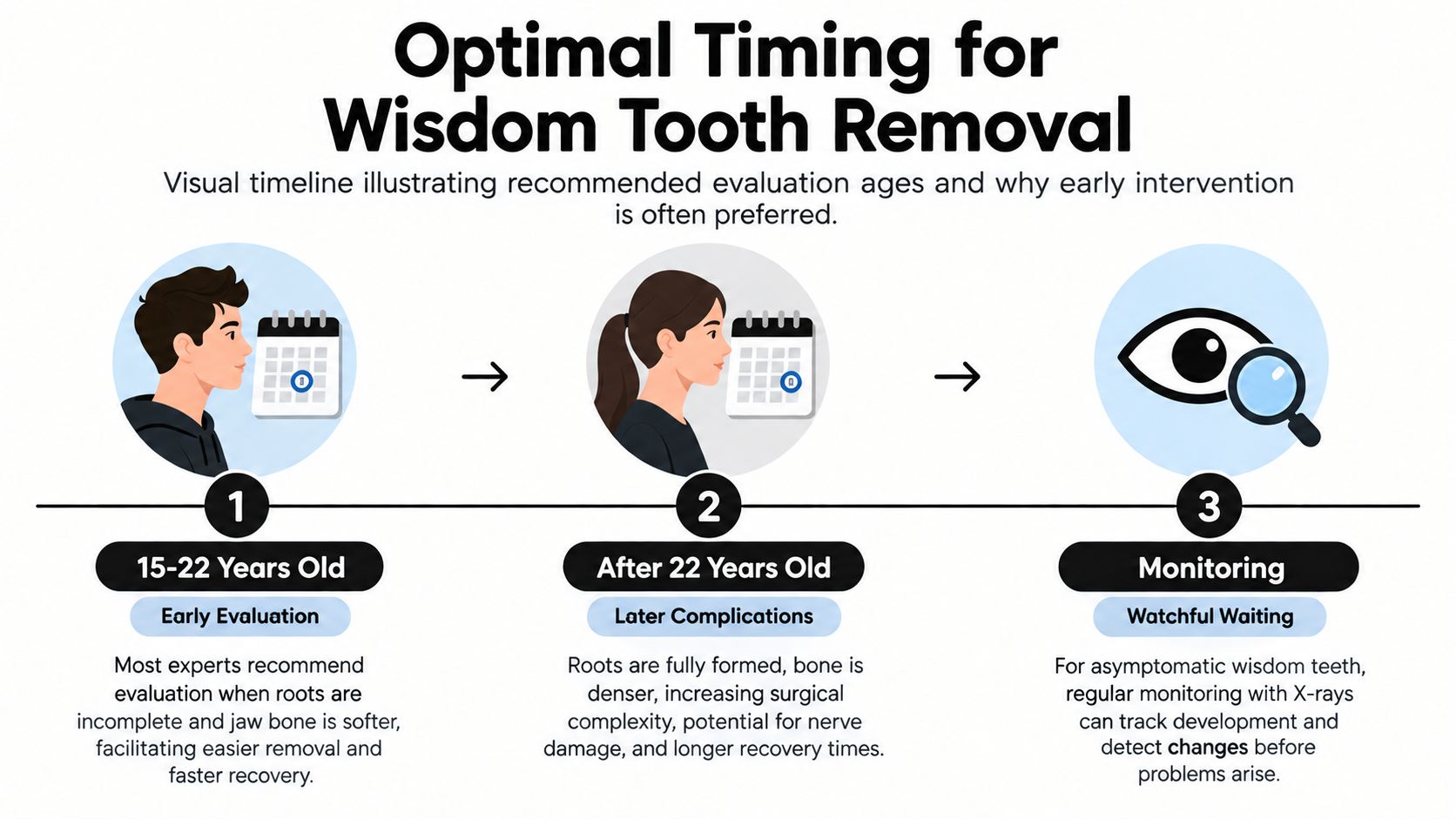
Age still matters, because wisdom teeth are often easier to remove before the roots fully mature and the surrounding bone becomes denser. Mayo Clinic describes removal in young adults, generally 15 to 22 years old, as safer and easier, with typically less recovery than removal later in life. The Mayo Clinic guidance on wisdom tooth removal timing supports early evaluation, but it doesn't make extraction mandatory for every patient.
A decision based on evidence and comfort
A careful consultation should answer several practical questions:
- Can the tooth erupt into a useful, cleanable position?
- Is it trapping food beneath the gum?
- Is it affecting the second molar or surrounding bone?
- Does imaging show a cyst, decay, infection, or unfavorable position?
- Would monitoring be reasonable if the tooth is healthy and symptom-free?
Patients searching for a dentist near me or a dentist in Miami, FL often want both relief and reassurance. A focused exam helps separate normal eruption pressure from a problem that needs tooth extraction, while dental X-rays reveal issues that aren't visible in a mirror.
Practical rule: Pain deserves attention, but the absence of pain doesn't prove that a wisdom tooth is healthy.
Understanding Wisdom Teeth and Common Problems
Wisdom teeth are the third molars, the final permanent teeth at the back of the mouth. They usually erupt between ages 18 and 24, although development varies. NICE states that healthy, pathology-free wisdom teeth shouldn't be removed because they're present. The NICE guidance on extracting wisdom teeth places the focus on disease and structural risk.
The main challenge is space. A jaw may not provide enough room for the tooth to emerge upright and remain accessible to a toothbrush. When eruption is blocked, the tooth is called impacted.
The main types of impaction
Soft-tissue impaction occurs when the tooth is covered by gum tissue but is otherwise close to the surface. The gum can form a flap over the tooth, creating a pocket where food and plaque collect.
Partial bony impaction means part of the tooth has emerged, while another portion remains blocked by jawbone. This position can make cleaning difficult and may cause repeated inflammation around the gum.
Complete bony impaction occurs when the tooth remains fully enclosed in bone. It may be angled toward the adjacent molar, positioned horizontally, or directed in another way that prevents normal eruption.
A tooth doesn't have to be completely trapped to cause trouble. A partially erupted molar can create a narrow area behind the second molar that patients can't clean effectively. Bacteria and food debris may then contribute to decay, gum disease, swelling, or infection.
Why the neighboring molar matters
The second molar does much of the chewing and sits directly in front of the wisdom tooth. If an impacted third molar presses against it or creates a difficult-to-clean contact area, the second molar may become vulnerable even when the wisdom tooth itself doesn't hurt.
A dental exam and X-ray help determine whether a tooth is present or creating a meaningful risk. That distinction is important for patients considering a new patient exam, routine cleaning and exams, or a more urgent dental visit in Miami.
Clinical Signs and Risks of Not Removing Wisdom Teeth
Extraction becomes clinically relevant when a wisdom tooth causes disease or has a clear structural relationship to damage. Professional guidance states that impacted or partially erupted third molars should be extracted if they cause pain, infection, periodontal disease, caries, cysts, or damage to adjacent teeth, as summarized by Cleveland Clinic's wisdom tooth removal guidance.
The symptoms may be obvious, such as throbbing pain or facial swelling. Other signs are easier to dismiss:
- Recurrent gum inflammation: Pericoronitis can cause tenderness, swelling, bad taste, and difficulty opening the mouth.
- Non-restorable decay: A cavity may be too deep or inaccessible to repair predictably.
- Damage to the second molar: Pressure, trapped bacteria, or an abnormal contact can affect the tooth in front.
- Periodontal changes: A persistent pocket near the wisdom tooth can threaten gum and bone support.
- Cyst formation: A cyst around an impacted tooth can affect nearby bone and structures.
Disease-free is different from symptom-free
A patient may feel fine while an X-ray shows an unfavorable position, bone loss near the second molar, or a tooth that is partly covered by gum. That finding doesn't automatically require surgery, but it does change the monitoring conversation.
NICE recommends limiting surgical removal of impacted third molars to clear pathology. Its recommendations include unrestorable caries, non-treatable pulpal or periapical disease, cellulitis, abscess, osteomyelitis, tooth fracture, cysts or tumors involving the follicle, and situations where the tooth blocks surgery or jaw reconstruction. The NICE recommendations for impacted third molars therefore support individualized decisions rather than routine extraction of every impacted tooth.
Leaving a problematic tooth in place can allow inflammation to recur or permit damage to progress unnoticed. A tooth that is fully erupted, functional, disease-free, and easy to clean may be a better candidate for observation than removal.
When to Remove Wisdom Teeth Based on Age and Monitoring
The timing question has two parts. First, when is surgery technically more favorable? Second, does the individual tooth need surgery?
For many patients, the late teens and early twenties offer a useful evaluation window. Mayo Clinic identifies 15 to 22 as a common young-adult range in which removal is generally safer and easier, while AAOMS materials describe 17 to 25 as a period when roots may not be completely formed and the bone may be softer. A long-running review indexed in PubMed identifies age 25 as a critical point in many studies, after which complications tend to increase more rapidly and recovery becomes less predictable. The PubMed review of age and third-molar surgery provides context for why clinicians often recommend assessment before the middle of the third decade.
Proactive extraction versus watchful waiting
These options aren't interchangeable.
| Option | Usually makes more sense when |
|---|---|
| Removal | The tooth causes disease, damages nearby structures, or has a high structural risk |
| Monitoring | The tooth is healthy, cleanable, symptom-free, and not threatening adjacent teeth |
| Further evaluation | Imaging is unclear or the tooth is close to important anatomy |
A 2021 review concluded that monitoring asymptomatic wisdom teeth can be appropriate and that decisions should be individualized. Older long-term data also couldn't recommend routine prophylactic extraction of asymptomatic third molars in young adults. The review of monitoring asymptomatic wisdom teeth supports a balanced discussion rather than treating extraction as automatic.
For a monitored tooth, the plan may include periodic clinical exams, updated imaging when appropriate, and instructions to report swelling, pain, bad taste, gum bleeding, or difficulty opening the mouth. The right schedule depends on the tooth's position and the patient's oral health.
Diagnostic Steps with X-rays and Impaction Types
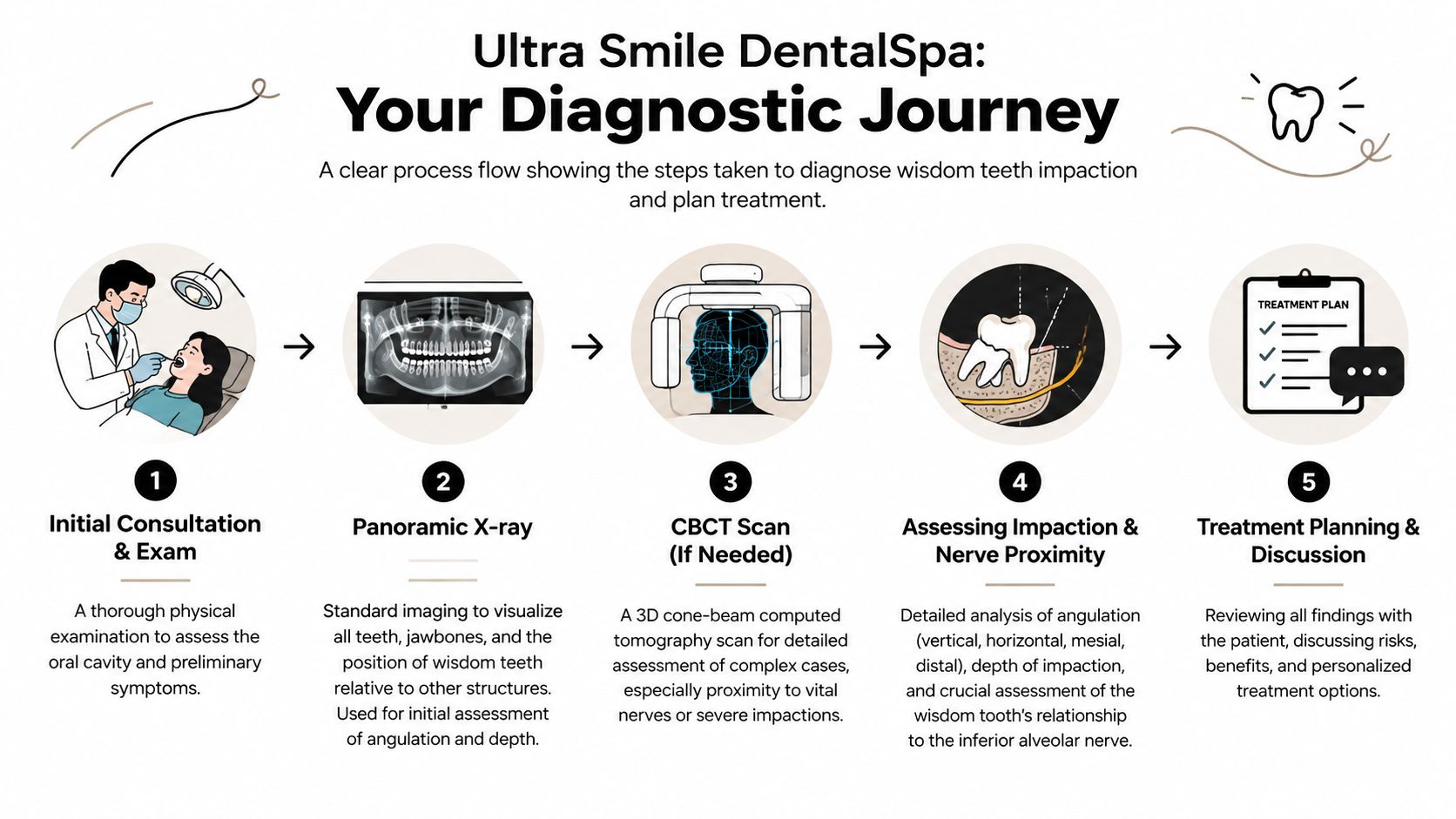
A consultation starts with symptoms, medical history, and an examination of the gum, molars, bite, and jaw movement. The clinician looks for tenderness, infection, decay, gum pockets, and signs that the second molar is being affected. Patients don't need to memorize impaction classifications. The purpose of classification is to help the dental team estimate access, complexity, and risk.
How imaging guides the decision
A panoramic X-ray provides a broad view of the teeth and jawbones. It can show whether wisdom teeth are present, their general angulation, their depth, and how they relate to the neighboring molars. This image often gives the first clear explanation for pressure, food trapping, or repeated gum inflammation.
A CBCT scan may be considered for a complex case. Its three-dimensional view can clarify the relationship between roots and important nerves, especially when a tooth has extensive impaction or appears close to the inferior alveolar nerve. CBCT isn't necessary for every patient, so the decision should follow the clinical findings and the initial image.
The clinician may describe the tooth as vertical, horizontal, mesial, or distal based on its angulation. Depth also matters. A tooth close to the gum may require a different approach from one enclosed within bone.
Turning images into a treatment plan
The final conversation should connect the image to a practical recommendation. A patient might hear that a wisdom tooth is upright and cleanable, making monitoring reasonable. Another patient may learn that a tilted tooth is pressing against the second molar and should be removed before the neighboring tooth becomes harder to restore.
This process supports safer tooth extraction planning and helps identify cases that may need an oral surgeon. It also prevents treatment based on age or anxiety alone.
Sedation Options and Ultra Smile DentalSpa Experience
Fear of discomfort often keeps patients from scheduling a wisdom tooth consultation. Sedation can make the experience more manageable, but the appropriate option depends on the procedure, health history, anxiety level, and the clinician's assessment.
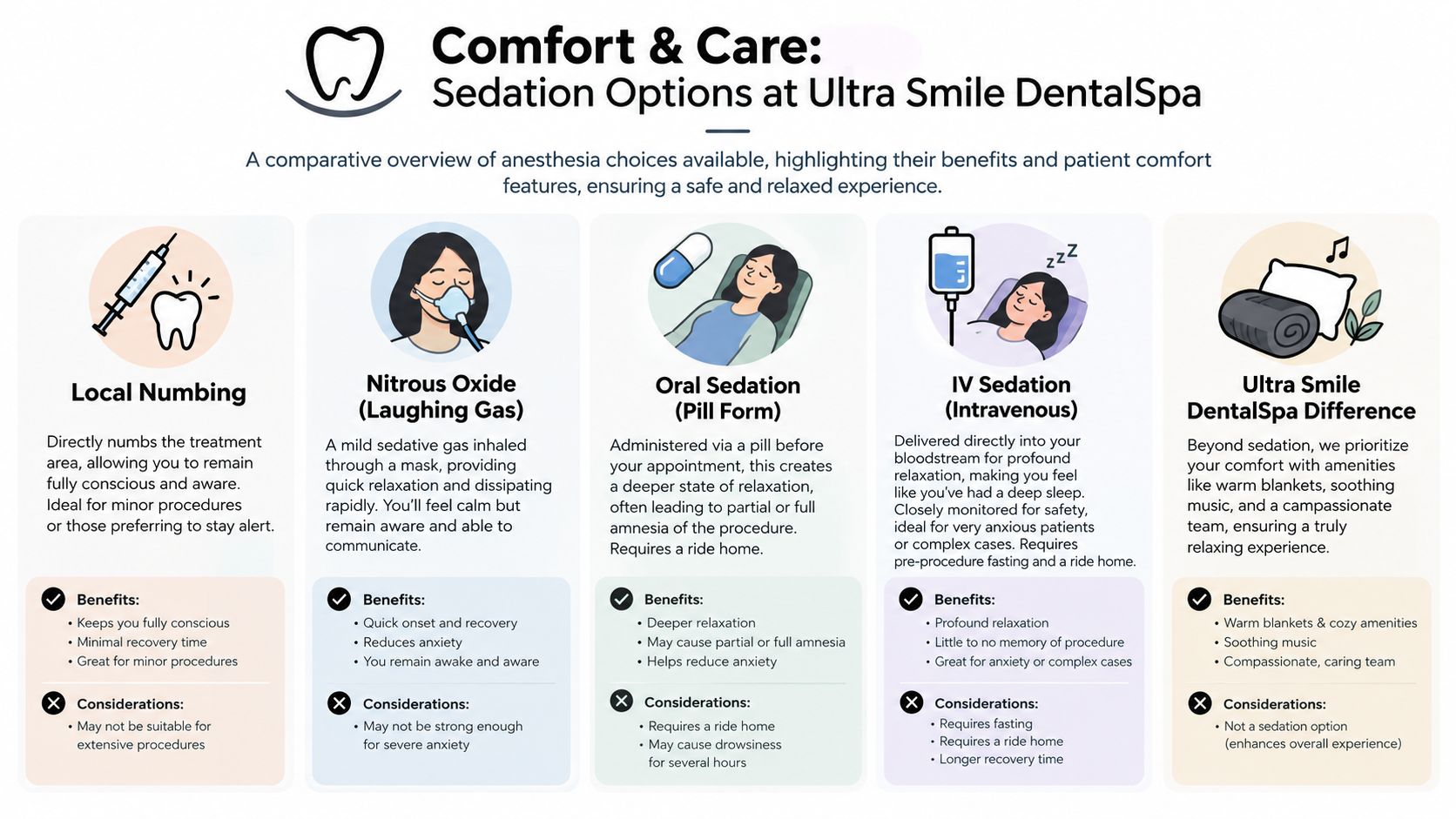
Local numbing keeps a patient awake while blocking sensation in the treatment area. Nitrous oxide, often called laughing gas, provides mild relaxation through a mask and wears off quickly. Oral sedation uses a prescribed pill to create a deeper relaxed state and may cause partial or complete memory loss, so a responsible adult must provide transportation.
IV sedation delivers medication through a vein for profound relaxation and close monitoring. It may suit patients with significant anxiety or more complex extractions, but it requires pre-procedure fasting and a ride home. The treating team should review medication instructions, fasting requirements, medical conditions, and transportation before the appointment.
Comfort with clinical preparation
Ultra Smile DentalSpa offers wisdom teeth extraction consultations with treatment planning based on examination and imaging. Its Miami facility combines sedation discussions with comfort details such as aromatherapy, entertainment screens, hot towels, refreshments, soothing music, and bilingual staff.
Patients can review sedation options for wisdom teeth extraction before the visit. The important question isn't which option sounds strongest. It's which approach provides appropriate relaxation while preserving safety, communication, and monitoring.
A calm appointment starts before the procedure. Clear instructions, transportation planning, and an honest discussion of anxiety can make sedation safer and more comfortable.
Patients who also need restorative dentistry, a dental implant consultation, cosmetic dentistry, or an emergency dentist visit can ask whether those concerns should be addressed separately or coordinated with wisdom tooth care.
Recovery and Aftercare After Wisdom Teeth Extraction
Recovery instructions protect the blood clot and support healing. Patients should follow the treating clinician's specific directions, especially when medication or medical conditions require an individualized plan.
The first stage
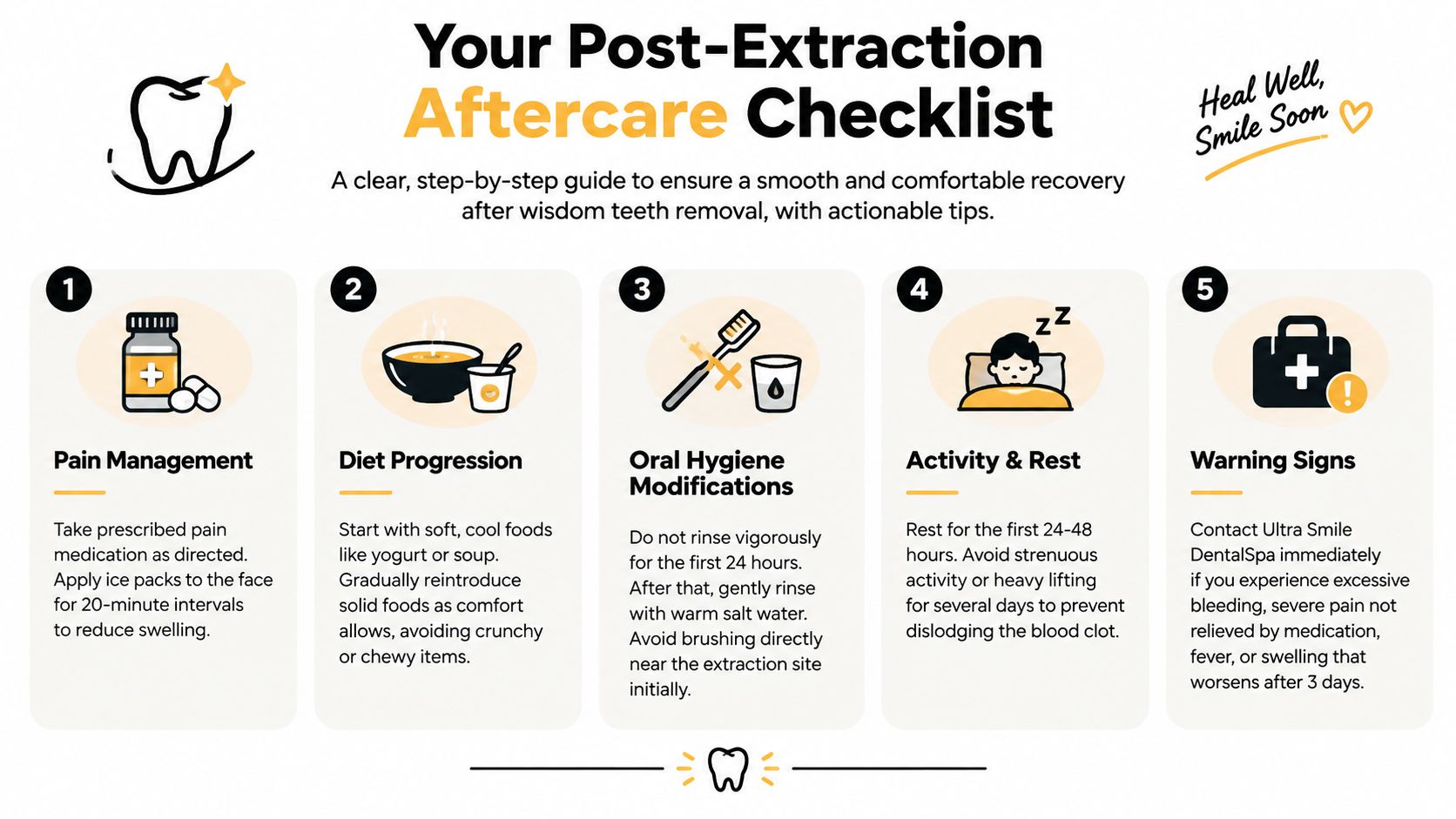
For pain, patients should take prescribed medication as directed rather than waiting until discomfort becomes difficult to control. Ice packs applied to the cheek in 20-minute intervals can help reduce swelling. Rest matters, particularly during the first 24 to 48 hours, when strenuous activity and heavy lifting should be avoided.
Soft, cool foods such as yogurt or soup are easier to tolerate initially. Solid foods can return gradually as comfort allows, while crunchy or chewy items should be avoided near the extraction site.
Protecting the site
Vigorous rinsing during the first 24 hours can disturb the clot. After that period, gentle warm salt-water rinsing may help keep the mouth comfortable, and brushing should avoid direct contact with the surgical area at first.
Patients should contact Ultra Smile DentalSpa promptly for excessive bleeding, severe pain that medication doesn't relieve, fever, or swelling that worsens after three days. The post-extraction care instructions from Ultra Smile DentalSpa can reinforce the office's personalized guidance.
One clinical study reported complication rates of 7.7% for patients aged 40 and older, compared with 1.8% for patients in their 20s and 1.9% for patients in their 30s, as summarized in the Royal College of Surgeons review material. These figures don't predict an individual recovery, but they help explain why aftercare and timely evaluation deserve attention.
Further recovery guidance can be reviewed in the video below.
Schedule Your Wisdom Teeth Consultation in Miami
A timely evaluation gives patients more choices. If imaging shows a healthy, cleanable wisdom tooth, monitoring may avoid unnecessary surgery. If the tooth is infected, damaging the second molar, or positioned for future trouble, early treatment may offer a simpler path than waiting for symptoms to intensify.
Ultra Smile DentalSpa provides wisdom teeth consultations, dental X-rays, extraction planning, and comfort-focused sedation discussions in Miami. Patients can also ask about related care, including emergency dental services, cleaning and exams, teeth whitening, Invisalign, crowns, root canals, dental implants, and restorative dentistry when those needs arise.
The practice serves patients near Downtown Miami, Midtown Miami, and Hallandale Beach, with transparent treatment planning, accepted insurance, bilingual staff, and options for patients without coverage. A consultation can clarify whether a dentist near me, an emergency dentist, or a planned tooth extraction appointment fits the current concern.
Contact the office or use the online scheduling option to request an evaluation. A clinical exam and appropriate imaging can turn uncertainty about when should wisdom teeth be removed into a clear, personalized decision.
Ultra Smile DentalSpa offers gentle wisdom teeth consultations, diagnostic imaging, extraction planning, and sedation discussions in a spa-like Miami setting. Patients experiencing swelling, pain, or concern about an asymptomatic wisdom tooth can visit Ultra Smile DentalSpa to request a consultation and choose the next step with confidence.