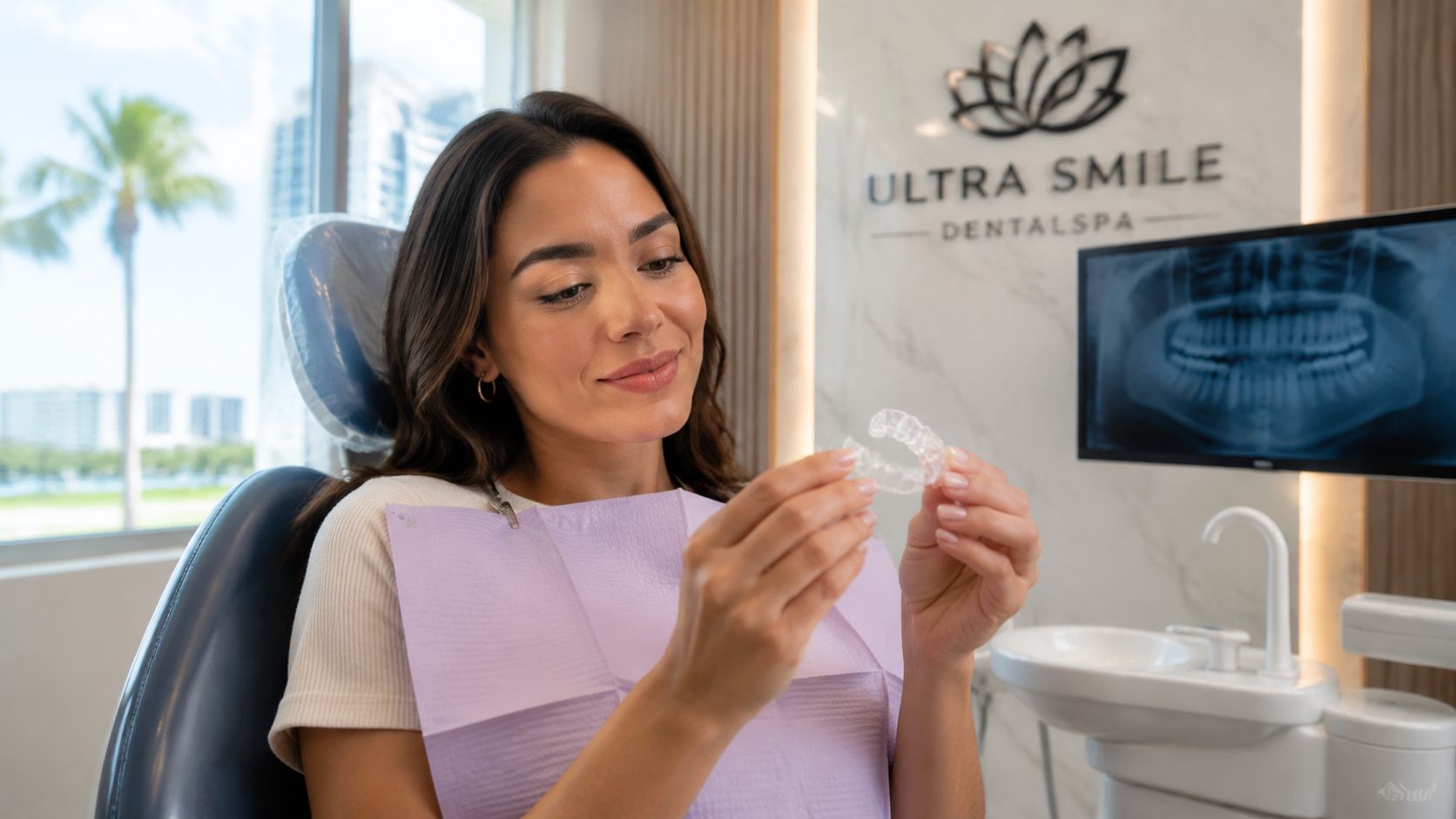
A new night guard can feel reassuring in the dental chair and confusing once bedtime arrives. A Miami patient may leave Ultra Smile DentalSpa knowing the custom appliance will help protect against grinding, then wonder whether a snug fit is normal, how long discomfort should last, and how to keep the guard fresh in South Florida's warmth and humidity.
These night guard instructions focus on the part that often gets overlooked, building a routine that works in real life. Proper insertion, gradual adaptation, daily cleaning, dry storage, and timely adjustments all help preserve the appliance and the smile it protects. Patients searching for a dentist near me, a dentist in Miami, FL, or help with bruxism can use the guidance below to know what belongs in a home routine and when professional care is needed.
Table of Contents
- Why Night Guard Care Matters for Your Smile
- Breaking In Your Night Guard Comfortably
- Daily Cleaning and Storage Routine
- Common Mistakes That Damage Your Guard
- Building a Night Guard Habit That Sticks
- When to Contact Your Miami Dentist
Why Night Guard Care Matters for Your Smile
A patient holding a brand-new custom night guard often has the same reaction: relief that the teeth have protection, followed by uncertainty about ownership. The appliance looks simple, but it's made to fit a specific bite. It isn't a generic mouthpiece that can be left damp on a nightstand or rinsed under any temperature of water.
Sleep bruxism affects a meaningful share of adults and children. A major dental-literature review found prevalence estimates of around 13% in adults and 8% in children in its review of sleep bruxism. That helps explain why dentists commonly recommend nightly use and why care instructions emphasize rinsing, cleaning, and appropriate storage after every wear.
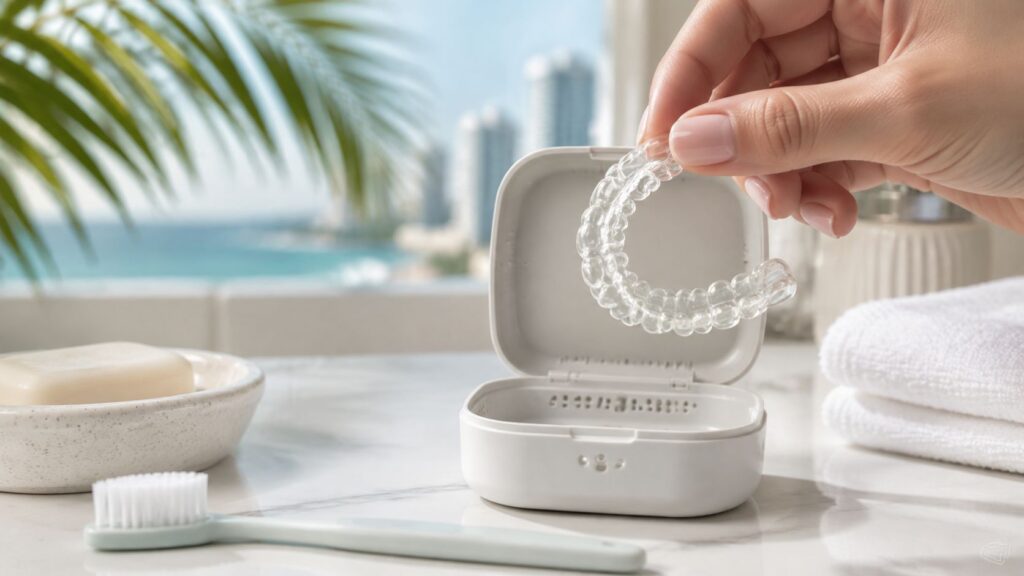
Miami's warm, humid environment makes storage especially important. A guard put away while wet can develop odor and support unwanted microbial growth, while heat can deform thermoplastic materials and change the fit. Patients can learn more about expected service life in this guide to how long night guards last.
Practical rule: A night guard should be cleaned after wear, dried completely, and stored in a ventilated hard case.
The appliance also needs periodic professional attention. A guard that no longer seats passively may provide uneven contact, feel uncomfortable, or stop protecting the teeth as intended. Daily care protects the material, while dental examinations and adjustments protect the fit.
Breaking In Your Night Guard Comfortably
The first few nights don't need to begin with an attempt to sleep for hours with a foreign object in the mouth. A gradual routine gives the jaw muscles, tongue, teeth, and nervous system time to adapt without turning bedtime into a struggle.
A manageable evening progression
Start by wearing the guard for 15 to 30 minutes while reading or watching television. This lets the patient practice insertion, removal, speaking, and swallowing in a relaxed setting.
On the second and third nights, increase wear to one or two hours before bed if the appliance feels stable and comfortable. By the fourth or fifth night, many patients can attempt full overnight wear. Another gradual-care approach recommends beginning with 15 minutes on the first night and increasing use until sleeping with the appliance feels routine, a process that may take up to six weeks for some patients according to this patient handout.
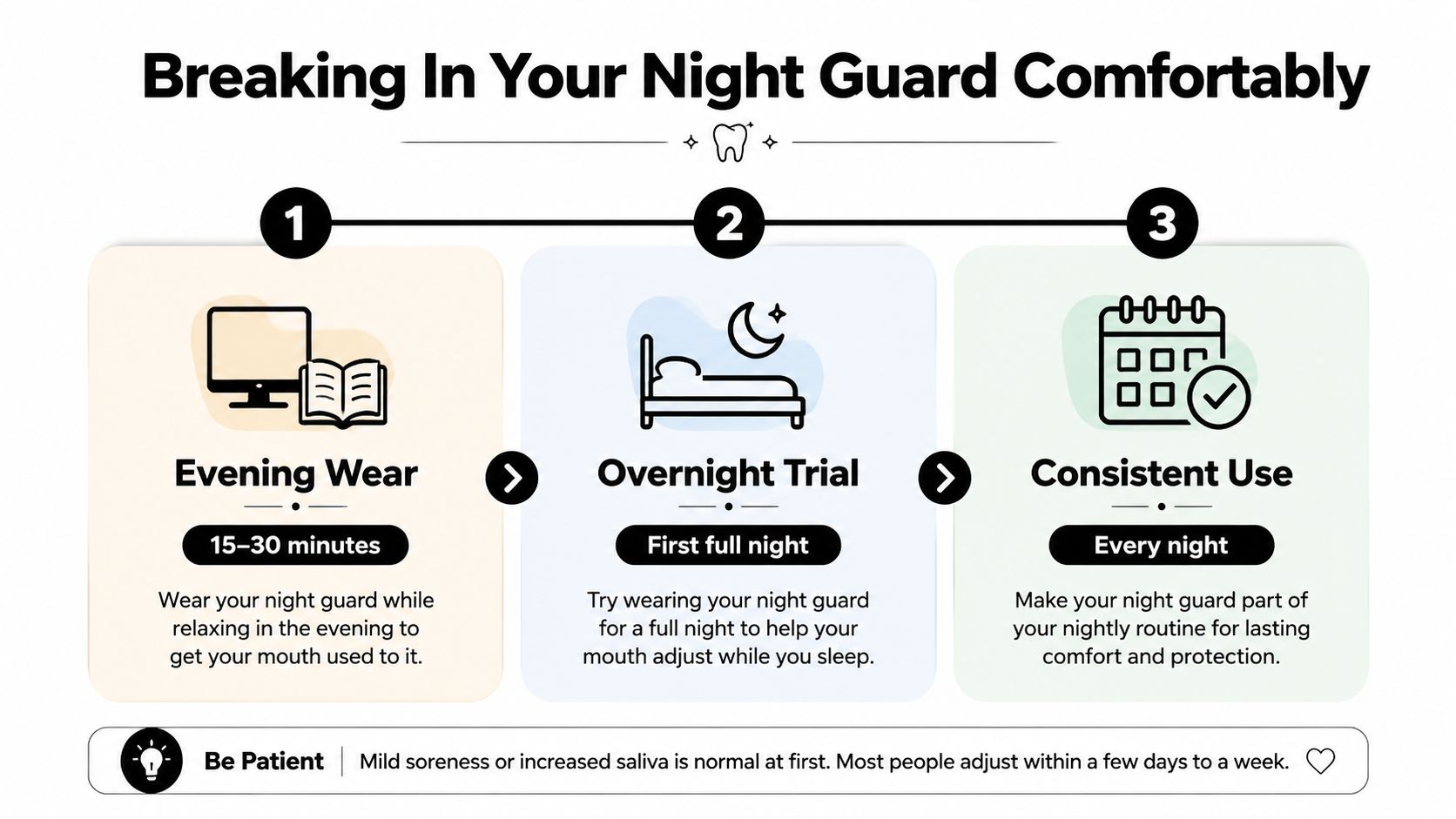
Mild tightness, extra saliva, and awareness of the appliance can occur early. These sensations often fade as the mouth becomes familiar with the guard. A gradual wear plan described in another clinical handout builds toward tolerating two to three hours before progressing to regular sleep wear as outlined by Cornerstone Dental.
Insertion matters as much as timing
Patients should place the guard with equal finger pressure on both sides. Biting down to force it into position can distort the material or place unnecessary pressure on the teeth. Removal should begin at the borders, using the fingers gently rather than pulling aggressively from one area.
Using a mirror during the first attempts can make the process easier. Practicing with both hands during the evening also reduces fumbling when the patient is tired.
The appliance shouldn't cause sharp pain, breathing difficulty, or a sensation that teeth are being pushed out of position. If discomfort persists beyond seven to ten days, or the guard feels as though it's shifting the bite instead of cushioning it, an adjustment visit is more appropriate than forcing continued use.
Daily Cleaning and Storage Routine
A dependable routine has two checkpoints, morning care after removal and evening preparation before insertion. The purpose isn't to sterilize the appliance with harsh products. It's to remove saliva, plaque, and debris without damaging the material.
Morning care after removal
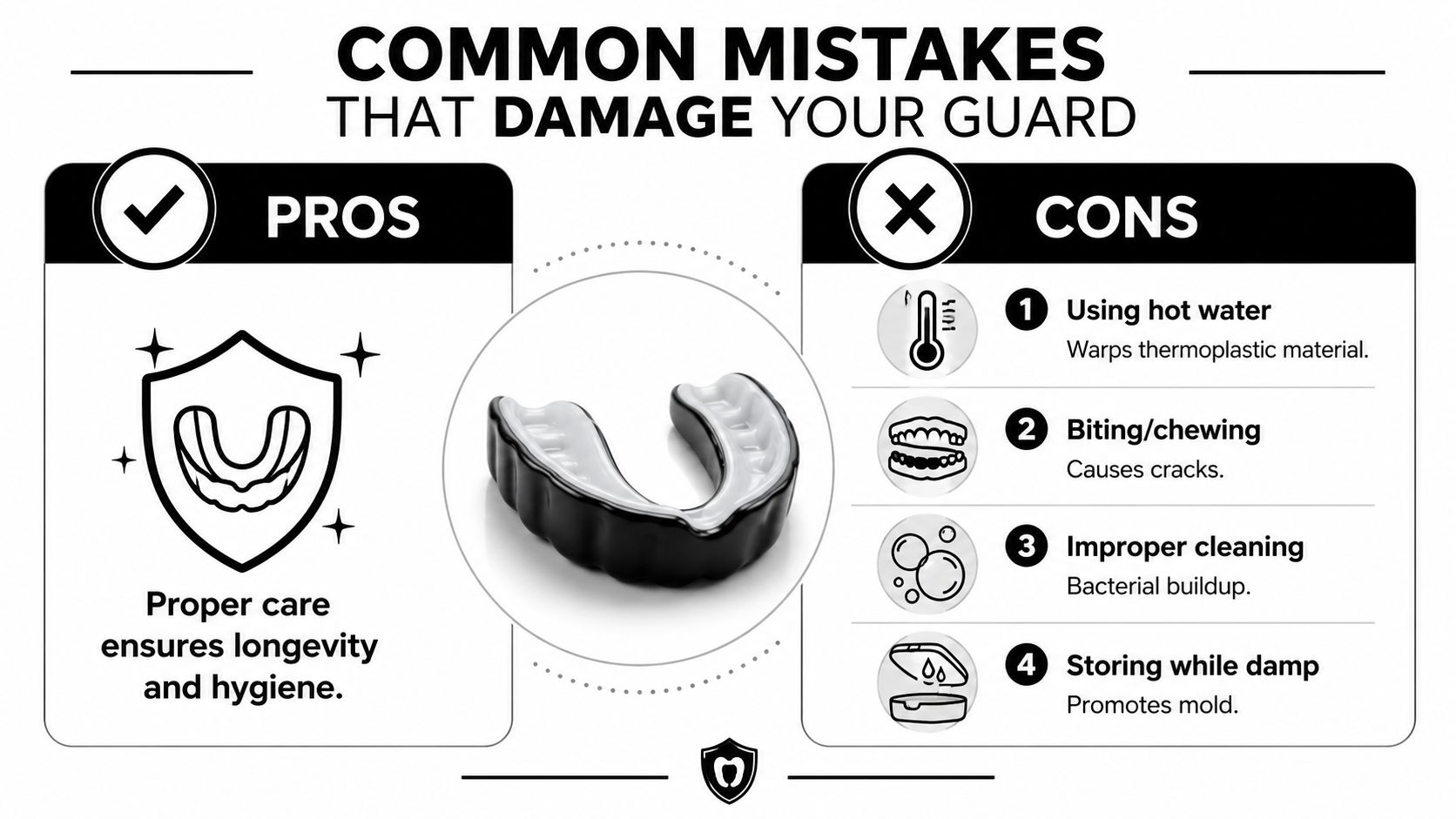
Remove the guard gently, then rinse it immediately with cool or lukewarm water. Hot water can soften and warp the appliance, which may change the custom fit. Guidance for night guards consistently recommends gentle rinsing and brushing instead of heat-based sterilization as reflected in current oral-health guidance.
Brush the guard with a soft-bristled toothbrush and mild, clear, unscented soap. Castile soap or a dedicated retainer cleaner can work well. Regular toothpaste isn't ideal for many guards because abrasive particles may scratch the surface, creating places where residue and bacteria can collect. Patients should follow any product-specific advice supplied by the dental office or manufacturer.
After cleaning, rinse thoroughly and allow the appliance to air dry completely before closing the case. A damp guard sealed in a container is more likely to develop odor and surface buildup.
Evening preparation and deeper cleaning
Before insertion, give the guard a quick rinse. Patients should also brush and floss their teeth first, since placing a guard over plaque or food debris holds that material against the teeth.
For deeper cleaning, a denture-cleaning tablet may be used according to its label. Some patients use a diluted white-vinegar soak, but the dental office should confirm that the solution is compatible with the specific material. A commonly described mixture is one part white vinegar to three parts water for 15 to 20 minutes, followed by a thorough rinse. The appliance should never be left in an unapproved solution for an extended period.
Storage deserves the same attention as cleaning. A ventilated hard case is preferable to a napkin, tissue, or sealed plastic bag. The case should be kept away from direct sunlight, hot car dashboards, pets, and bathroom surfaces where the guard can be knocked over or contaminated. Patients can review material-specific considerations in this explanation of what night guards are made of.
Common Mistakes That Damage Your Guard
Most damaged guards don't fail because patients ignore their teeth. They fail because an ordinary shortcut changes the appliance. Heat, abrasive products, damp storage, and rough handling can gradually turn a precision device into an unreliable one.
Heat changes the fit
Hot tap water, boiling water, microwaves, and hot car interiors can deform thermoplastic or resin materials. Once the shape changes, the guard may feel tight in one area and loose in another. A patient may then notice pressure, discomfort, or a guard that no longer seats fully.
The correction is simple: use cool or lukewarm water for rinsing and keep the case away from heat and sunlight. Patients shouldn't attempt to reshape a custom appliance at home unless the prescribing dentist specifically provides that direction.
Cleaning products can create a different problem
Toothpaste may seem logical because it cleans the teeth, but abrasive formulas can scratch a night guard. Alcohol-based mouthwash, bleach, hydrogen peroxide, and other harsh cleaners may also degrade or discolor some materials. Mild soap, a soft toothbrush, and a compatible retainer product are safer starting points.
Storage mistakes invite damage
Wrapping a guard in a napkin creates two risks. The material can stay damp, and the appliance may be thrown away accidentally. Leaving it exposed on a nightstand or bathroom counter exposes it to dust, splashes, and accidental knocks.
Pets are another practical concern. A dog that finds a guard outside its case can chew through it quickly. A ventilated hard case prevents most of these avoidable problems.
Wear errors affect more than cleanliness
Patients shouldn't bite down to seat the appliance, chew on it, or modify it with scissors or files. An expert review warns against wearing an appliance 24 hours a day unless a dentist specifically directs that schedule, and it advises patients not to self-modify the guard because altered or continuous wear can contribute to bite changes as discussed in this review of unintended occlusal changes.
If the guard becomes warped, cracked, thin, foul-smelling despite cleaning, or difficult to seat, continued use can worsen the problem. The corrective action is to stop using the damaged appliance and arrange a professional evaluation.
Building a Night Guard Habit That Sticks
Knowing the cleaning steps doesn't guarantee consistent wear. New users may remove the appliance during the night, forget it on weekends, or avoid it because the unfamiliar sensation interrupts sleep. The routine becomes easier when the guard is connected to something the patient already does every evening.
Place the case beside the toothbrush. After brushing and flossing, the next step becomes rinsing and inserting the guard. A phone reminder can help during the early adaptation period, and leaving the case in a visible location can prevent the common “out of sight, out of mind problem.
Some resistant patients do better with a lighter starting schedule. Wearing the guard for one hour before bed for three nights, then attempting full-night wear, can feel less demanding than treating the first night as a test of endurance. A separate dental-industry discussion also describes reducing the initial burden, such as beginning with twice-weekly wear before gradually increasing use.
Consistency matters because every skipped night can make the appliance feel unfamiliar again.
Weekend abandonment is especially disruptive for patients who are still adapting. The goal isn't perfection through force. It's a repeatable sequence that survives busy evenings, travel, and schedule changes.
Travelers should keep the guard in its hard case, pack a backup case in luggage, and maintain the same brushing, insertion, and storage routine across time zones. A randomized clinical trial involving removable retainer wear found that audiovisual instructions plus weekly reminder messages improved compliance in the reported trial. The broader lesson is practical: reminders and clear demonstrations can support behavior when knowledge alone doesn't.
When to Contact Your Miami Dentist
Minor adjustment symptoms can be managed at home when they're mild and improving. Slight soreness during the first five nights, increased saliva, and temporary speech changes may occur while the mouth adapts. At day 3, the guard may still feel noticeable; by day 7, many patients should notice improving tolerance; by day 14, persistent pain or an unstable fit deserves professional review.
Night Guard Troubleshooting: Call vs. Wait
| Symptom | Action | Timeline |
|---|---|---|
| Mild soreness that is improving | Continue the gradual routine and monitor comfort | Reassess around day 5 |
| Extra saliva or temporary speech changes | Use the guard during calm evening activities and allow adaptation | Often improves during the early adjustment period |
| Jaw pain that worsens with wear | Stop using the appliance and contact the dental office | Call promptly, particularly after the first week |
| A visible crack, thinning, or sharp edge | Stop wearing the guard and request an evaluation | Don't wait for the damage to worsen |
| The guard no longer snaps or seats securely | Don't force it into place; schedule an adjustment | Arrange care as soon as practical |
| New tooth sensitivity that doesn't resolve | Contact the dental office for assessment | Call if it continues beyond 48 hours |
| Warping after heat or damp storage | Bring the guard for a fit check | Miami patients should address this promptly |
Patients shouldn't try to sand, cut, boil, microwave, or reshape the appliance. Professional adjustment is generally a straightforward in-office process, but the dentist must first determine whether the material can be adjusted safely or whether replacement is more appropriate.
A guard that forces the bite, shifts during sleep, or causes increasing jaw strain can contribute to occlusal changes. Regular dental visits also give the team an opportunity to inspect the appliance alongside cleaning and exams, dental x-rays, restorative dentistry, cosmetic dentistry, or other needed care. Ultra Smile DentalSpa offers night guard evaluations and can coordinate follow-up care for patients in Downtown Miami, Midtown Miami, and Hallandale Beach.
Patients who need personalized night guard instructions, a fit check, or help with bruxism can visit Ultra Smile DentalSpa for an individualized evaluation in a comfortable Miami setting. The practice also provides complete dental care, including emergency dental services, tooth extraction, cosmetic dentistry, restorative treatment, and dental implants near me searches that lead to local care. Schedule an appointment so the guard protects the smile instead of becoming another source of discomfort.