A lot of Miami patients start in the same place. They catch their reflection before work, notice discoloration, a chipped edge, or teeth that don't look even in photos, then open a search for a cosmetic dentist near me and immediately run into the hard part: pricing that feels all over the map.
That confusion is understandable. One website lists a low starting price, another talks about premium materials, and insurance usually adds more questions than answers. For adults comparing veneers, whitening, Invisalign, crowns, or dental implants near me, the primary concern isn't just the sticker price. It's knowing what treatment fits the problem, what lasts, and what the total investment will look like over time in Miami and Hallandale Beach.
This guide breaks down cosmetic dentistry cost in plain language for patients looking for a dentist in Miami, FL. It also covers the part many articles skip: how short-term pricing and long-term value can be very different.
Table of Contents
- Understanding Cosmetic Dentistry Costs in Miami
- Common Cosmetic Dental Concerns
- Overview of Cosmetic Dentistry Treatments
- Cosmetic Dentistry Cost in Miami by Service
- Key Factors That Influence Cost
- Insurance and Financing Options
- Cost Saving Strategies for Cosmetic Dentistry
- Next Steps for an Accurate Estimate and Consultation
Understanding Cosmetic Dentistry Costs in Miami
In Miami, cosmetic dental decisions often start with one simple question: “How much is this really going to cost? A patient may come in thinking teeth whitening is enough, then learn that uneven edges or worn enamel are making the smile look darker than it is. Another may ask about veneers after years of hiding teeth in pictures, but worry that a low quote somewhere else could mean rushed planning or lower-grade materials.
That's where cosmetic dentistry cost gets confusing. The number on a page isn't the whole story. Price changes based on the treatment chosen, how many teeth are involved, the material, and whether the smile needs restorative work first.
Practical rule: A useful quote should connect cost to a diagnosis, a material choice, and a treatment plan. If any of those pieces are missing, the number is incomplete.
Patients looking for a dentist near me, cosmetic dentist near me, or even an emergency dentist after a broken front tooth usually want the same thing. Clear answers, no surprises, and care that fits daily life in Downtown Miami, Midtown Miami, and nearby Hallandale Beach.
That's why cost transparency matters so much. It helps patients compare options calmly, budget with confidence, and avoid choosing a treatment based only on the lowest upfront fee.
Common Cosmetic Dental Concerns
Cosmetic dentistry usually starts with something a patient sees every day, but can't easily fix at home. For some, it's staining that doesn't respond to whitening toothpaste. For others, it's a chipped front tooth, spaces between teeth, worn edges, or teeth that look uneven in photos and video calls.
Appearance concerns that affect daily confidence
Some concerns are mainly visual, but they still affect everyday behavior.
- Stained teeth often make patients feel that their smile looks older or less clean, even when their brushing habits are strong.
- Chipped teeth can draw attention to one spot and make the whole smile feel unbalanced.
- Gaps or mild crowding may not cause pain, but they can make people hesitant to smile fully.
- Uneven shape or size can make one tooth stand out more than the patient wants.
These issues often push patients to search for teeth whitening, veneers, bonding, or invisible braces after years of putting treatment off.
Functional concerns behind a cosmetic complaint
A cosmetic concern isn't always only cosmetic. A chipped or worn tooth may have weak enamel. Crowded teeth can be harder to clean well during regular cleaning and exams. A missing tooth may change the bite and make chewing less comfortable, which is why some patients who first search for cosmetic care eventually need restorative dentistry or dental implants near me.
A smile concern can start in the mirror and still affect chewing, cleaning, or tooth wear.
That matters because treatment planning should match the reason behind the problem. A patient with deep staining may do well with whitening. A patient with shape issues, cracks, and uneven spacing may need a different path.
Why professional evaluation helps
A home product can't tell whether discoloration comes from surface stain, aging restorations, enamel wear, or tooth position. A professional exam can.
Patients in Miami also often want more than one improvement at once. They may want a brighter smile, straighter-looking teeth, and better symmetry. That's where personalized care becomes important. The right plan doesn't only improve appearance. It also supports long-term oral health and can prevent a small cosmetic issue from turning into a larger restorative one later.
Overview of Cosmetic Dentistry Treatments
Some patients know the name of the treatment they want. Others only know what they want to change. Both are common. The key is understanding what each option is built to do.
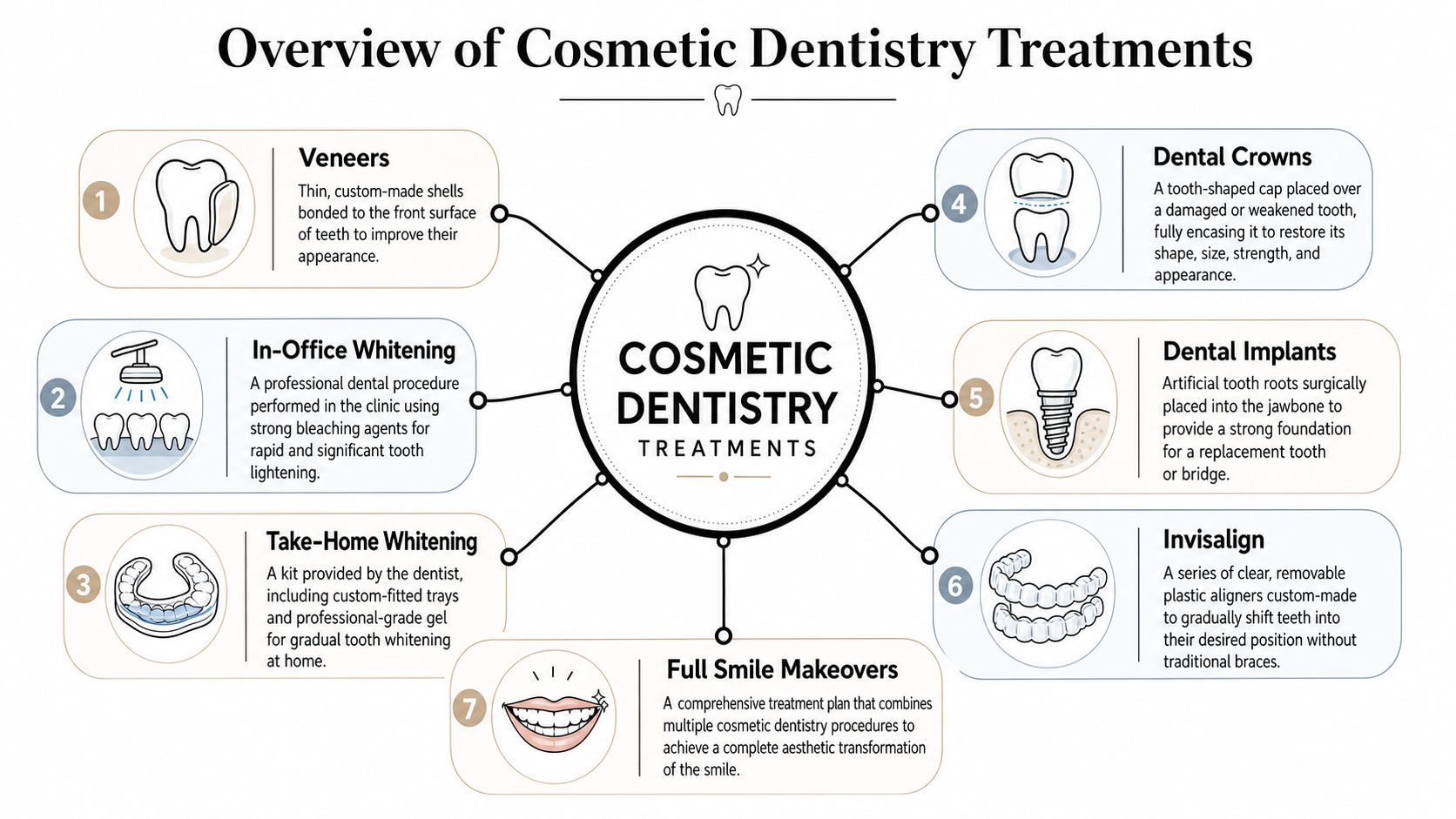
A quick visual can help simplify the choices.
What each treatment is designed to fix
Veneers are thin shells placed on the front of teeth to improve color, shape, and overall balance. They're often chosen when patients want a noticeable smile change without moving every tooth orthodontically.
In-office whitening is a professional treatment done in the dental office. It's typically used when the main goal is a brighter smile in a short time.
Take-home whitening uses custom trays and professional gel at home. It's a slower option, but many patients like the convenience.
Dental crowns cover a damaged or weakened tooth. Crowns can improve appearance, but they also restore strength, which is why they often sit at the intersection of cosmetic and restorative dentistry.
A second view of these options in motion can make the differences easier to follow.
How patients usually choose between options
Dental implants replace missing teeth by anchoring a replacement tooth to the jaw. They're often considered when a patient wants a stable, long-term solution after tooth loss or tooth extraction.
Invisalign uses clear aligners to move teeth gradually. It's commonly chosen by adults who want an orthodontic option that's more discreet than braces.
Full smile makeovers combine several services into one coordinated plan. A makeover might include whitening, veneers, crowns, implants, or aligners, depending on the patient's goals and oral condition.
A simple way to think about it is this:
| Treatment | Main purpose |
|---|---|
| Whitening | Brighten tooth color |
| Veneers | Improve color, shape, and symmetry |
| Crowns | Strengthen and improve a damaged tooth |
| Implants | Replace missing teeth |
| Invisalign | Straighten teeth with clear aligners |
| Smile makeover | Combine multiple cosmetic solutions |
Patients searching for a dentist in Miami, FL often don't need every option. They need the right one, or the right sequence, based on what's causing the concern.
Cosmetic Dentistry Cost in Miami by Service
A patient in Miami might get two veneer quotes that look far apart at first glance, then realize they are not pricing the same thing. One estimate may cover detailed smile design, temporaries, and lab work. Another may list only the base procedure. That is why local ranges help, but the better question is cost over time.
What Miami patients often see by service
In the Miami and Hallandale area, porcelain veneers typically cost between $925 and $2,500 per tooth, while composite veneers range from $250 to $1,500 per tooth and last approximately 5 to 7 years. Porcelain veneers generally last 10 to 15 years. Dental implants average $1,900 to $6,700 per implant, with most local providers quoting $3,000 to $5,000 for the full procedure including crown and abutment, according to Miami cosmetic dentistry cost data for veneers and implants.
Patients comparing veneer types can also review this page on veneers cost information in Miami before a consultation.
| Procedure | Typical Cost Range |
|---|---|
| Porcelain veneers in Miami and Hallandale | $925 to $2,500 per tooth |
| Composite veneers in Miami and Hallandale | $250 to $1,500 per tooth |
| Dental implants in Miami and Hallandale | $1,900 to $6,700 per implant |
| Full implant procedure commonly quoted locally | $3,000 to $5,000 |
Whitening is usually priced differently from veneers and implants because it is simpler and shorter-term. Fees vary by office, whether treatment is done in the chair or at home, and how many touch-ups a patient expects over the years.
Why the “lowest price can mislead
A cosmetic quote works like a travel fare. Two flights may both get you to the same city, but one includes bags, seat selection, and flexible changes while the other does not. Dental estimates can work the same way.
For veneers, a lower number may leave out mock-ups, temporary veneers, or more customized lab work. For implants, the headline figure may not include imaging, extraction, bone grafting, the abutment, or the final crown. Those details matter because they change the true total, not just the starting number.
Compare value by year, not only by visit
This information provides a clearer picture for many patients. A treatment that costs less upfront can cost more over time if it needs replacement sooner or leads to more maintenance.
Using the local ranges above, a composite veneer at $250 to $1,500 lasting about 5 to 7 years works out to roughly $36 to $300 per year. A porcelain veneer at $925 to $2,500 lasting about 10 to 15 years works out to roughly $62 to $250 per year. The yearly cost can overlap more than patients expect, even though the initial fee looks very different.
Implants are another good example. The starting cost is higher, but the comparison should include how stable the restoration is, whether adjacent teeth need to be altered, and what future replacement costs may look like with other options.
The most useful quote is the one that shows both the upfront fee and the likely maintenance or replacement timeline.
A consultation should leave you with more than a price. It should show what is included, what may be added later, and how each option is likely to hold up over the years.
Key Factors That Influence Cost
A cosmetic dental quote is built a bit like a home renovation estimate. Two kitchens can both be called a remodel, but one includes custom cabinets, new wiring, and stone counters, while the other is mainly cosmetic. Smile treatment works the same way. The treatment name may match, but the work behind it often does not.
Materials and case design
Material choice changes both the upfront fee and the long-term value. Porcelain, composite, zirconia, and ceramic do not behave the same over time. Some resist stains better. Some hold their polish longer. Some need more artistic lab work to look natural under Miami's bright sunlight and in close-up photos.
Case design matters too. A veneer placed to slightly improve shape is usually simpler than a veneer plan that also has to correct spacing, symmetry, and bite contact. More planning steps can mean wax-ups, digital smile previews, temporaries, and higher-end lab fabrication. Those items raise the initial cost, but they can also reduce the chance of early revisions or replacement.
That is why the lowest quote is not always the lowest-cost option over the years.
Additional treatment needs
Many cosmetic cases have a second layer that patients do not see at first. Whitening may be straightforward, but veneers, crowns, and implants often depend on the health and structure underneath. A tooth with decay, a worn bite, old bonding, or gum irritation may need care before the cosmetic work begins.
Implant cases are a common example. The visible tooth is only one part of the process. Imaging, extraction, grafting, healing time, and the final restoration can all affect the total. Veneer cases can also expand if a dentist finds enamel that is too thin, unstable fillings, or bite pressure that could shorten the life of the result.
What commonly pushes the fee up or down
Several practical details shape the final number:
- How many teeth are being treated. One chipped tooth is a different plan from redesigning the full smile zone.
- How visible the area is. Front teeth usually require more exact color, contour, and surface texture.
- How much prep work is needed first. Gum treatment, replacing old fillings, or adjusting the bite can add steps.
- Which technology is used. Digital scans, smile design software, and custom lab work may improve fit and esthetics, but they also add cost.
- How treatment is scheduled. Some patients phase care over time, which can make budgeting easier through monthly dental payment plan options.
One local option patients may come across is Ultra Smile DentalSpa, a Miami-based practice that offers veneers, whitening, same-day crowns, implants, Invisalign, bone grafts, and routine dental care for patients in Downtown Miami, Midtown Miami, and Hallandale Beach.
A useful question to ask at the consultation is simple: which parts of this quote affect appearance today, and which parts protect the result for years. That question helps separate a lower starting price from a treatment plan that may hold up better and cost less to maintain over time.
Insurance and Financing Options
Cosmetic dentistry and dental insurance don't always fit neatly together. Most plans tend to separate treatment into two categories: care that is mainly elective, and care that also serves a restorative purpose.
What insurance may and may not cover
Purely cosmetic services are often excluded from standard dental benefits. Whitening is a common example. Veneers may also fall outside coverage when the goal is appearance alone.
That said, the line isn't always absolute. A crown placed on a weakened tooth may have a cosmetic result and still be considered restorative. An implant can be part of rebuilding chewing function after tooth loss, even if the patient also values the esthetic improvement.
Patients shouldn't assume “cosmetic means “never covered, and they also shouldn't assume a visible tooth will be covered simply because it affects the smile.
The clearest next step is to ask for a written treatment plan and have the office review benefits before treatment begins.
How patients spread out the cost
When insurance doesn't contribute much, financing often becomes the practical tool that makes treatment manageable. Many patients choose phased care, starting with the most urgent need first and spacing out the rest over time.
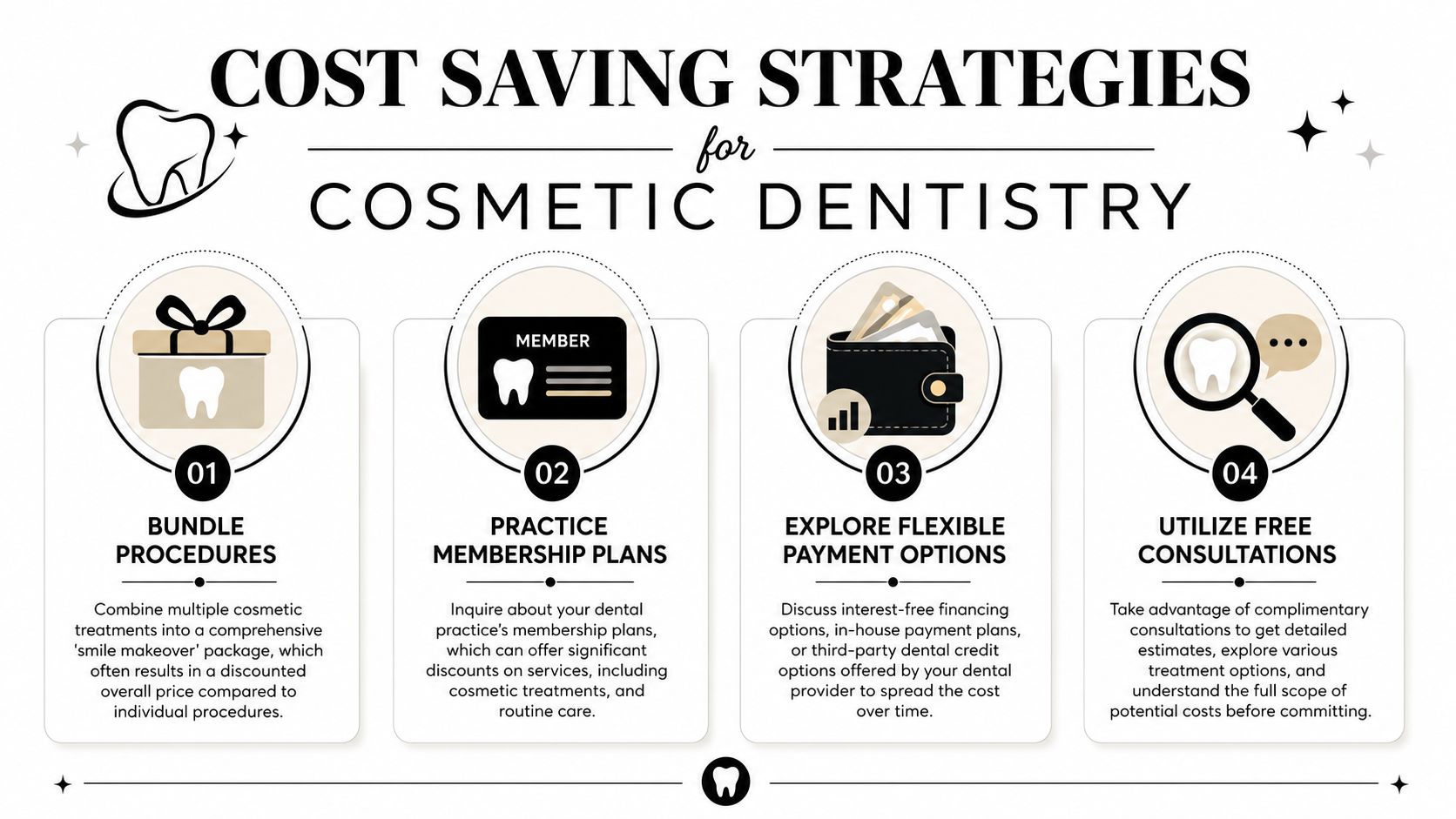
Common ways to manage cosmetic dentistry cost include:
- Payment plans that divide treatment into predictable monthly amounts.
- Membership programs for patients without insurance who still want ongoing dental care.
- Bundled treatment planning when several services are completed as part of one smile strategy.
- Consultation-first budgeting so patients can compare priorities before committing.
Patients evaluating monthly options can review payment plans for dental care in Miami to understand how treatment can be structured over time.
For many adults searching for a dentist near me, affordability doesn't mean choosing the cheapest procedure. It means choosing a plan that fits both oral health and household budgeting.
Cost Saving Strategies for Cosmetic Dentistry
The lowest upfront price isn't always the lowest total cost. That's especially true in cosmetic care, where durability can matter as much as the initial fee.
Ways to protect value without cutting corners
One of the most useful comparisons is cost per year, not just cost per visit. Data on longevity shows that porcelain veneers last 10 to 15+ years, composite veneers last 5 to 7 years, and whitening lasts 6 to 12 months. The same analysis notes that a veneer costing $2,000 amortizes to $133 to $200 per year, while whitening at $600 per year repeats annually, as explained in a cosmetic dental cost comparison focused on long-term value.
That's why “cheaper now can become “more expensive later for some patients.
A few practical ways to improve value:
- Phase treatment strategically. If one tooth is damaged and others are only discolored, it may make sense to restore the damaged tooth first and stage the cosmetic work after.
- Bundle related procedures. A coordinated smile makeover can reduce duplicated visits, repeated planning, and fragmented treatment.
- Use membership or financing tools. These don't reduce the fee by themselves, but they can make high-quality treatment more realistic to complete.
- Ask what maintenance will cost. Whitening touch-ups, retainer wear after Invisalign, or replacement timelines all affect long-term budgeting.
The best savings strategy is choosing the treatment that fits the problem the first time.
Patients looking for dental care, cosmetic improvement, and long-term predictability should compare durability, maintenance, and included services before focusing only on the starting number.
Next Steps for an Accurate Estimate and Consultation
A patient may walk into a cosmetic consult expecting a simple price answer and leave with a much better question: what will this cost to do well, and what will it cost to maintain over time?
That is the purpose of the first appointment. A useful estimate is built from an exam, photos or x-rays when needed, and a treatment plan based on the patient's teeth, bite, timeline, and goals. Cosmetic dentistry is a little like pricing a kitchen remodel. Two rooms may look similar at first glance, but the actual cost changes once you know what is happening underneath the surface.
What happens at the first visit
The conversation usually starts with the outcome the patient wants. One person may want whiter teeth for an upcoming event. Another may want to fix worn edges, close spaces, replace a missing tooth, or ask whether Invisalign makes sense after years of putting it off.
From there, the dentist checks the foundation. The visit may include dental x-rays, an oral health exam, and a review of any problems that should be treated before cosmetic work begins. If a patient also needs new patient exams, cleaning and exams, or care after a dental issue, those findings affect both the sequence of treatment and the total cost.
This step often answers the question patients are really asking: why can't a practice give an exact number over the phone? Because the same cosmetic goal can have different solutions. A stain may respond to whitening, or it may need bonding or veneers if the color change is internal. A chipped tooth may need a small repair, or it may need a crown if the structure is weak.
When to book sooner rather than later
Timing affects cost more than many patients expect.
A small cosmetic concern can stay small, or it can turn into a restorative problem that costs more to fix and may limit cosmetic choices later. A chipped edge can deepen. A missing tooth can allow neighboring teeth to shift. Someone searching for emergency dentist, tooth extraction, or dentist in Miami, FL may already be dealing with a problem that started as something easier and less expensive.
The broader market reflects rising interest in these treatments. According to global cosmetic dentistry market sizing and projections, the global cosmetic dentistry market was valued at approximately $33 billion in 2025 and is projected to reach $65.51 billion by 2035, with growth forecast from 2026 onward. Interest is growing, but a trend does not determine the right treatment. An individual exam does.
For patients comparing affordability, the consultation is also where the math gets clearer. The fee on day one is only part of the picture. Patients should ask what may need maintenance, what may need replacement, and how long each option is expected to last in real use. That makes it easier to compare true yearly value, not just the starting quote.
Patients who want a clearer answer on cosmetic dentistry cost can schedule a consultation with Ultra Smile DentalSpa. The office serves Downtown Miami, Midtown Miami, and Hallandale Beach with cosmetic, restorative, and general dental services, including veneers, whitening, Invisalign, crowns, implants, and emergency care. A consultation gives patients a personalized treatment plan, a transparent estimate, and a practical next step based on their goals.