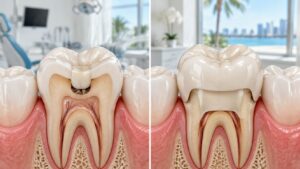
A lot of Miami patients are in the same spot right now. They finally book the exam after months of putting it off, then hear words like implant, root canal, veneer, or tooth extraction, and the next thought isn't cosmetic dentistry or healing. It's cost.
That reaction is normal. Dental care still depends heavily on out-of-pocket spending, and access changes dramatically based on age and insurance status. In 2022, 45% of the U.S. population had a dental visit in the past 12 months, while the rate for working-age adults ages 19 to 64 was 40%. The same data shows a major insurance gap. 18% of Medicaid adults saw a dentist compared with 57% of adults with private insurance. For children, less than half of those with Medicaid or CHIP saw a dentist in 2024, compared with two-thirds of children with private insurance, according to the ADA Health Policy Institute dental care market data.
For someone searching for a dentist near me, cosmetic dentist near me, dental implants near me, or an emergency dentist in Miami, that reality matters. Payment plans for dental care aren't a luxury add-on. They're often what makes treatment possible without panic, delay, or rushed decisions.
Patients in Downtown Miami, Midtown Miami, and Hallandale Beach usually don't need a lecture on budgeting. They need a clear plan. They want to know what insurance will cover, whether third-party financing is safe, when an in-house plan makes more sense, and how to avoid turning one dental problem into a long financial headache.
Table of Contents
- Affording Your Dream Smile in Miami
- Decoding Your Dental Payment Options
- How to Get Approved for Dental Financing Step by Step
- Real Cost Scenarios for Popular Procedures
- Your Financial Toolkit at Ultra Smile DentalSpa
- Making the Smartest Choice for Your Health and Budget
- Schedule Your Financial Consultation in Miami Today
Affording Your Dream Smile in Miami
A patient in Miami gets told a front tooth can't be saved and needs extraction and replacement. Another wants veneers before a wedding but freezes when the estimate arrives. A third has been living with a cracked molar and keeps searching dentist in Miami, FL because the pain is getting worse, but the bigger worry is whether the bill will spiral.
Those situations look different on the surface, but the financial question is the same. Can the care happen without wrecking the month, the credit card, or the household budget?
Cost stress is real, but delay usually costs more
Dental problems rarely stay still. A small crack can turn into a root canal. A missing tooth can affect chewing, bite balance, and confidence. A cosmetic concern can become a restorative one if chips, wear, or grinding keep getting ignored.
That's why payment planning matters. It gives patients a way to move forward with treatment instead of hovering in the uncomfortable middle ground between needing care and fearing the price.
Practical rule: The cheapest-looking option upfront isn't always the most affordable option over time.
Miami patients also tend to value quality. They don't just want a functioning tooth. They want natural-looking results, clear communication, and a smooth experience. For someone comparing cosmetic dentistry, dental implants, cleaning and exams, or even emergency dental services, the right payment setup should support that goal instead of pushing them into rushed decisions.
A dream smile needs a realistic financial plan
The smartest approach combines clinical priorities with financial priorities. If a patient needs urgent care first and smile design later, that order should be reflected in the plan. If insurance can reduce part of the burden, it should be used strategically. If a patient needs more flexibility, installment financing may be the bridge.
A healthy, attractive smile in Miami doesn't have to mean paying everything at once. It does mean understanding the full affordability equation before treatment starts.
Decoding Your Dental Payment Options
Payment confusion usually starts after the diagnosis, not during it. A patient hears 0% promo, monthly minimum, annual maximum, membership plan, and APR, then has no clear idea what the treatment will cost by the end.
That is the wrong way to choose care in Miami. The smart question is simple: What gives you the best total affordability without compromising quality?

Start with the full financial picture
A low monthly payment can help cash flow. It can also hide the actual price.
A promotional period is a limited time offer that may carry low or no interest. It only works in your favor if you can pay the required balance within that window. If not, the cost of care rises quickly. The ADA guide to dental financing plans explains how these healthcare financing offers work and why patients need to read the repayment terms closely.
An APR is the annual percentage rate. It is the borrowing cost. Higher APR means a more expensive smile, even if the monthly number looks comfortable.
A monthly minimum is only the smallest payment required to keep the account in good standing. It is rarely the smartest repayment strategy. Paying only the minimum often stretches the balance and increases the final amount paid.
A strong payment plan makes premium care manageable and keeps the final cost easy to understand.
What each option is best for
Each payment route solves a different problem. The right choice depends on how soon treatment needs to start, how much insurance will pay, and how much flexibility you need month to month.
| Payment option | Best use | Main caution |
|---|---|---|
| Insurance | Preventive care and the covered portion of larger treatment | Annual maximums, waiting periods, and exclusions leave patients with out-of-pocket costs |
| In-house payment plans | Patients who want straightforward terms directly with the office | Not every procedure or timeline may qualify |
| Third-party financing | Larger cases that need extended repayment | Interest terms and promo deadlines must be reviewed carefully |
| Savings or membership plans | Uninsured patients who want reduced preventive fees and discounts | They are discount programs, not insurance coverage |
| Personal credit options | Backup funding when other routes fall short | Rates can be high and repayment can become expensive fast |
Here is the order I recommend for Miami patients who want quality care without financial strain:
- Use insurance strategically first: Apply every covered benefit before financing anything. That lowers the amount you borrow. Patients can review accepted dental insurance information at Ultra Smile Miami before finalizing a plan.
- Ask about in-house options next: Direct office arrangements are often easier to understand because there is less lender language and fewer moving parts.
- Use third-party financing for bigger treatment plans: This is often the right fit for implants, veneers, full-mouth rehabilitation, and staged restorative work where spreading cost over time protects cash flow.
- Use membership plans for predictable maintenance: These plans are useful if you do not have insurance and want cleaner pricing on exams, cleanings, and routine care.
- Treat personal credit as a last resort: It can solve an immediate access problem, but it is not usually the most cost-effective long-term choice.
Dental payment plans are usually installment financing, not insurance. The patient pays the treatment cost over time, often through a healthcare lender or a direct office arrangement. That structure is common for preventive, restorative, and cosmetic care, including cleanings, crowns, and veneers, as explained in Rectangle Health's overview of dental payment plans.
The best plan is not the one with the smallest monthly number. It is the one that combines available insurance, realistic repayment terms, and treatment that will last. In a city like Miami, where patients care about both health and aesthetics, that total-affordability mindset usually leads to the smartest decision.
How to Get Approved for Dental Financing Step by Step
Patients often assume financing is complicated, invasive, or designed to say no. In reality, the process is usually much more straightforward when the treatment plan is clear and the paperwork is handled in the right order.
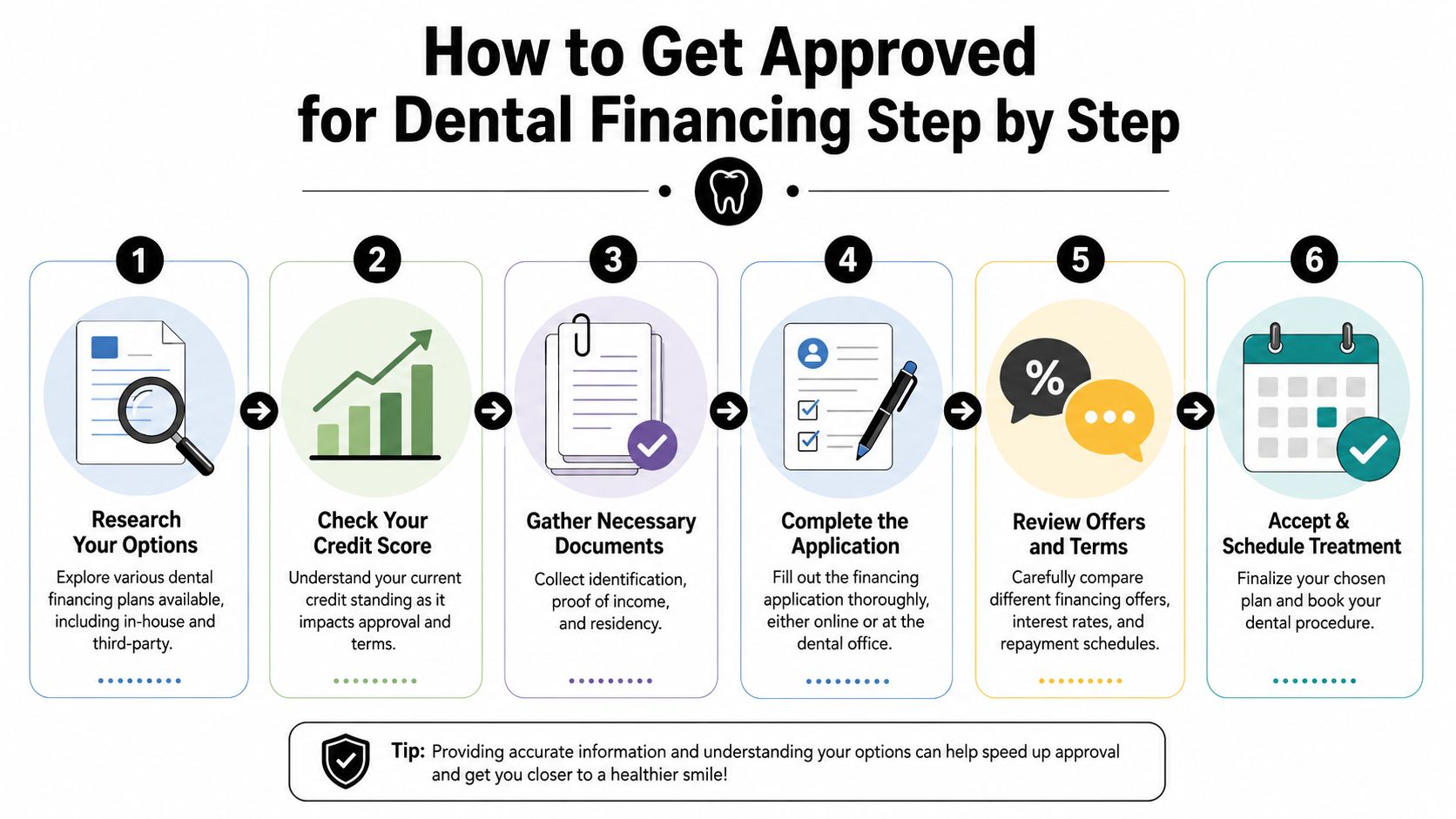
The process patients should expect
The first step is diagnosis. A patient needs a precise treatment plan before comparing payment options. That matters whether the issue is a broken tooth, tooth extraction, dental implants near me, or a cosmetic case involving whitening and veneers.
Then comes the financing conversation. A patient coordinator should help translate treatment into real choices instead of vague promises.
A clean process usually looks like this:
Get the treatment plan first
No patient should apply for financing based on guesswork. The office should explain what's urgent, what's optional, and what can be staged.Review payment routes side by side
Insurance, in-house options, and third-party financing should be compared in plain language.Complete the application carefully
Small errors slow things down. Patients should have identification and basic financial details ready if needed.Read the approval terms before accepting
Approval isn't the finish line. The repayment structure matters more than the word “approved.
The walkthrough below shows the flow clearly.
What approval does and doesn't mean
Approval means a lender or office is willing to offer terms. It doesn't mean the terms are automatically favorable.
Patients should slow down and confirm:
- Repayment timing: When does the first payment start?
- Promotional limits: What happens if the balance isn't repaid on time?
- Down payment expectations: Is any amount due before treatment begins?
- Procedure staging: Can treatment be sequenced to reduce upfront borrowing?
Approval should create clarity, not pressure.
For anxious patients, this matters even more. People seeking an emergency dentist in Miami or trying to fix pain fast can feel cornered into saying yes to whatever gets treatment started. That's exactly when a calm review of terms matters most. A rushed financial decision can turn relief today into stress for months afterward.
Real Cost Scenarios for Popular Procedures
You're sitting in a Miami dental chair after putting off treatment for months. The diagnosis is clear. What you need next is a realistic plan for paying for it without wrecking your month.

Sticker price alone is a bad way to judge affordability. Miami patients need to look at the full equation: what insurance can reduce, what can be split into phases, what belongs on third-party financing, and what is worth paying for now to avoid repeating the same treatment later.
Why examples matter
Sample pricing helps because it turns abstract costs into real decisions. A crown is not just a fee on paper. It may involve an exam, imaging, buildup, temporary work, and follow-up visits. An implant case may stretch across multiple appointments and include surgical and restorative phases. Clear aligners may look simple until you factor in refinements and retention.
That is why online pricing should start the conversation, not end it.
How Miami patients usually make treatment fit
The smartest payment strategy depends on the procedure and the timing.
A patient with a broken tooth often gets the best value by fixing the urgent problem first, then spreading the restorative balance over time. A patient planning Invisalign usually benefits from confirming the total commitment up front, including retainers and review visits, instead of focusing only on the monthly figure. A patient replacing a missing tooth may lower financial pressure by staging care, with diagnostics and site preparation first, then the final restoration when the timing is right.
Three patterns work well in real life:
- Protect the tooth or stop the pain first: Urgent care comes before elective upgrades.
- Use every available insurance dollar first: Let benefits reduce the balance before financing starts.
- Stage larger cases intentionally: Breaking treatment into phases can lower the amount due at any one time.
Monthly payment matters, but total cost matters more.
A low monthly number can hide a longer repayment term, more interest, or a plan that covers only part of the treatment. That is where patients get into trouble. The better question is simple: what will this procedure cost me from start to finish, and what is the least stressful way to pay for it?
That bigger view is especially important with restorative care. A root canal may be followed by a crown. An implant may require additional preparatory treatment. If you are comparing options, a detailed root canal cost breakdown in Miami is more useful than a random price range from a search result.
Quality affects affordability too. Dentistry that lasts usually costs less than dentistry that has to be redone. For Miami patients investing in premium care, the right plan is the one that protects cash flow now without sacrificing materials, planning, or long-term results.
Your Financial Toolkit at Ultra Smile DentalSpa
You sit down for a consultation expecting one price and one payment option. Instead, you need a crown now, want to plan veneers later, and you are trying to use insurance wisely without stretching your budget too thin. That is the actual financing conversation for a Miami patient. It is not about finding one magic payment plan. It is about building the right mix.
A good dental office should give you options that fit the full picture. Routine care, urgent treatment, cosmetic work, and multi-step restorative cases do not belong in the same financial box.
What a useful financing toolkit includes
The strongest setup includes three parts. Insurance, if you have it. An in-house membership option, if you do not. Third-party financing, if the treatment is larger or the timing is tight.

At Ultra Smile DentalSpa, that toolkit includes accepted insurance, an in-house membership path for patients who want an alternative to traditional coverage, and third-party financing options such as CareCredit and Sunbit for treatment that needs more time. For many Miami patients, especially those balancing cosmetic goals with restorative needs, that mix makes more sense than relying on one payment method.
The office also needs to explain the sequence clearly. If you need a new patient exam, dental x-rays, and treatment planning before you decide on veneers or implants, you should see those costs in order. Patients make better decisions when the office breaks the case into phases and shows what can be covered, what can be scheduled later, and what may need financing.
Bilingual support helps too. Financial conversations are hard enough without confusion over terms, timing, or approval details.
Why structured plans matter
Payment design shapes follow-through. Patients delay less when the numbers are organized, the timeline is clear, and they know how each part of treatment gets paid for.
Research on alternative payment models in dentistry supports that point. Analysts discussed changes in utilization and spending under different structures in the Decisions in Dentistry review of alternative payment models in oral health care. For patients, the takeaway is practical. Better financial structure can make treatment feel doable instead of overwhelming.
In practical terms, in-house memberships and organized financing are not side features. They help patients stay on track with preventive care, start needed treatment sooner, and complete larger plans with less financial strain.
A patient-first toolkit should do four jobs well:
- Lower confusion: Patients should know what insurance may cover, what remains out of pocket, and when each payment is due.
- Keep basic care within reach: Cleanings, exams, and early treatment should feel manageable before problems become expensive.
- Support larger treatment plans: Implants, veneers, full-mouth rehabilitation, and phased restorative care need room for timing and budgeting.
- Protect total affordability: The payment approach should reduce stress now without pushing the patient into a higher long-term cost later.
That last point is the one patients miss most often.
A low monthly payment can still be the wrong choice if it ignores insurance benefits, skips an in-house savings plan, or stretches repayment so long that the total cost rises. The better toolkit helps you combine the right tools in the right order. Use benefits first. Apply membership savings where they fit. Finance only the amount that needs financing. That is how premium dental care in Miami becomes financially workable without cutting corners on quality.
Making the Smartest Choice for Your Health and Budget
The right financing decision isn't the one with the smallest monthly figure. It's the one that gets the treatment done without creating avoidable financial drag later.
The right question is total affordability
A monthly payment can feel safe because it looks small. That's not enough. Patients should ask what the full plan costs over time, whether insurance can absorb any portion first, and whether staging the treatment lowers the amount that needs financing.
Public-health research supports that more careful view. Oral-health inequities are closely tied to income and insurance status, and payment plans can help with access, but the stronger strategy is the one that lowers the total out-of-pocket cost over time, potentially by combining financing with insurance use or staged treatment, as discussed in the NIH article on oral health inequities and affordability.
The right payment plan helps a patient complete care. The wrong one only makes the estimate look easier for a moment.
A short decision filter that works
When comparing payment plans for dental care, patients should run every option through this filter:
- Will this plan help complete the full treatment? A partial financial fix isn't enough if the case has multiple phases.
- Is the monthly payment realistic even during a tight month? Optimistic budgeting usually fails.
- Does this option reduce the total burden, or only delay it? That's the most important distinction.
- Would earlier treatment avoid a larger problem later? In many cases, yes.
For a patient seeking a dentist in Miami, FL for restorative dentistry, cosmetic dentistry, or urgent pain relief, the smartest move is usually a coordinated one. Use benefits well. Finance only what needs financing. Don't chase a low monthly number while ignoring the full cost.
Schedule Your Financial Consultation in Miami Today
Dental treatment shouldn't stay on hold because the payment side feels confusing. A cracked tooth, missing tooth, cosmetic concern, or overdue exam won't get easier by waiting, and most patients feel more in control once the numbers are laid out clearly.
Patients in Downtown Miami, Midtown Miami, and Hallandale Beach who are searching for a dentist near me, dental implants near me, cosmetic dentist near me, tooth extraction, or an emergency dentist usually need two things right away. They need a clear diagnosis, and they need a payment strategy that makes sense for real life.
A financial consultation gives patients both. It turns a vague fear about cost into a concrete treatment path, with room to compare insurance, financing, phased care, and in-house options carefully.
The next step should feel simple. Schedule the visit, get the treatment plan, ask direct questions, and review the numbers before making any commitment.
Patients ready to explore payment plans for dental care can contact Ultra Smile DentalSpa to schedule a consultation and review treatment, insurance, financing, and phased care options in a clear, private setting.