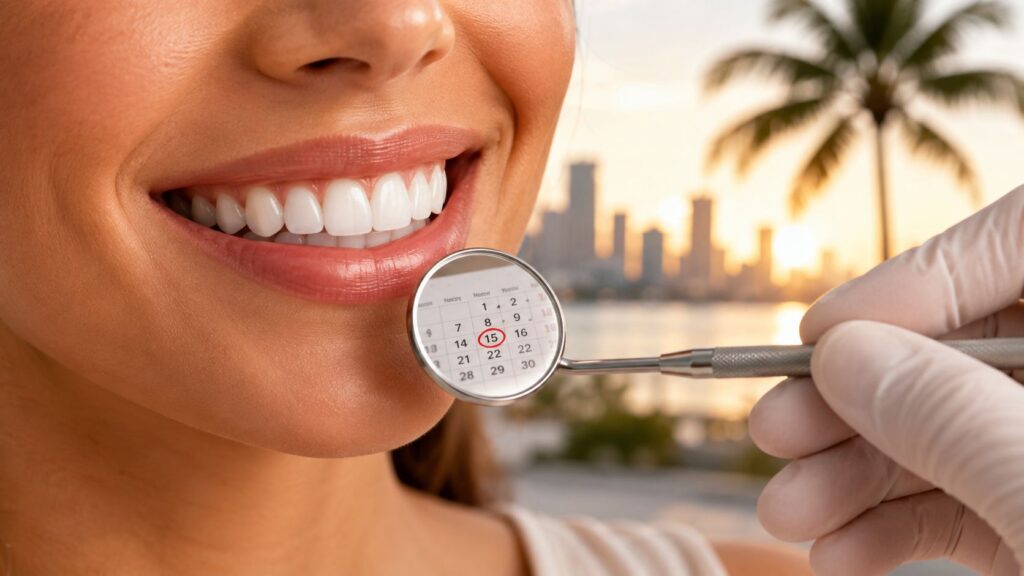
Most patients do well with professional in-office whitening once every 6 to 12 months, with shorter at-home touch-ups layered in between when needed. The right interval depends on sensitivity, staining habits, and whether visible crowns, veneers, bonding, or fillings are part of the smile.
A cortado in Brickell, a quick mirror check before work, and a familiar thought: the smile looked brighter last year. Coffee, tea, wine, tobacco, aging, and daily routines gradually change natural tooth color. That doesn't mean another aggressive whitening session is automatically the answer.
For patients searching for a dentist near me, a dentist in Miami, FL, or a cosmetic dentist near me, the practical question isn't whether whitening works. It's how often the treatment should be repeated without creating unnecessary sensitivity, gum irritation, or an uneven shade around dental restorations. This guide treats whitening as a maintenance cycle, helping Miami patients build a rhythm that fits their habits and dental history.
Table of Contents
- How Often Should You Whiten Your Teeth in Miami
- Why Whitening Needs Spaced Out Intervals
- In-Office vs At-Home Whitening Schedules
- Personal Factors That Change Your Whitening Frequency
- Building a Year-Long Whitening Routine
- Two Realistic Whitening Schedules for Miami Patients
- Safe Limits and Over-Whitening Mistakes to Avoid
- When to See a Dentist and Book Your Next Visit
How Often Should You Whiten Your Teeth in Miami
Most adults do well with professional in-office whitening every 6 to 12 months, while dentist-guided home trays or other touch-ups may be used between stronger sessions. Dental guidance commonly places professional whitening within that interval, with a more conservative annual schedule often used for full in-office treatment (Andresen Dental guidance on whitening frequency).
That schedule fits many Miami adults who drink coffee, attend social events, or want a brighter smile before weddings, travel, or business commitments. It isn't a command to whiten on a fixed date. A patient with little stain recurrence may wait longer, while someone with frequent exposure to dark drinks may need a dentist-guided touch-up sooner.
Whitening works better as maintenance
A full professional session creates the foundation. Maintenance then protects the shade with careful hygiene, stain-conscious habits, and short home cycles when appropriate. The method matters because higher-concentration products generally need more recovery time, while supervised home trays can be used in shorter bursts.
The NHS describes standard dentist-supervised whitening as a combination of dental visits and at-home mouthguard sessions over a few weeks, while laser or power whitening is completed in the dental office and takes about an hour (NHS dental treatment guidance). That difference changes the calendar. A patient shouldn't treat a brief tray touch-up like a new in-office procedure, and shouldn't stack multiple systems without professional direction.
Practical rule: The more concentrated the whitening treatment, the more carefully the next treatment should be spaced.
The safest plan is personal rather than generic. A cosmetic dentist can assess existing sensitivity, stain patterns, enamel condition, and restorations before setting the next appointment. That approach helps patients maintain brightness without chasing every small change in color.
Why Whitening Needs Spaced Out Intervals
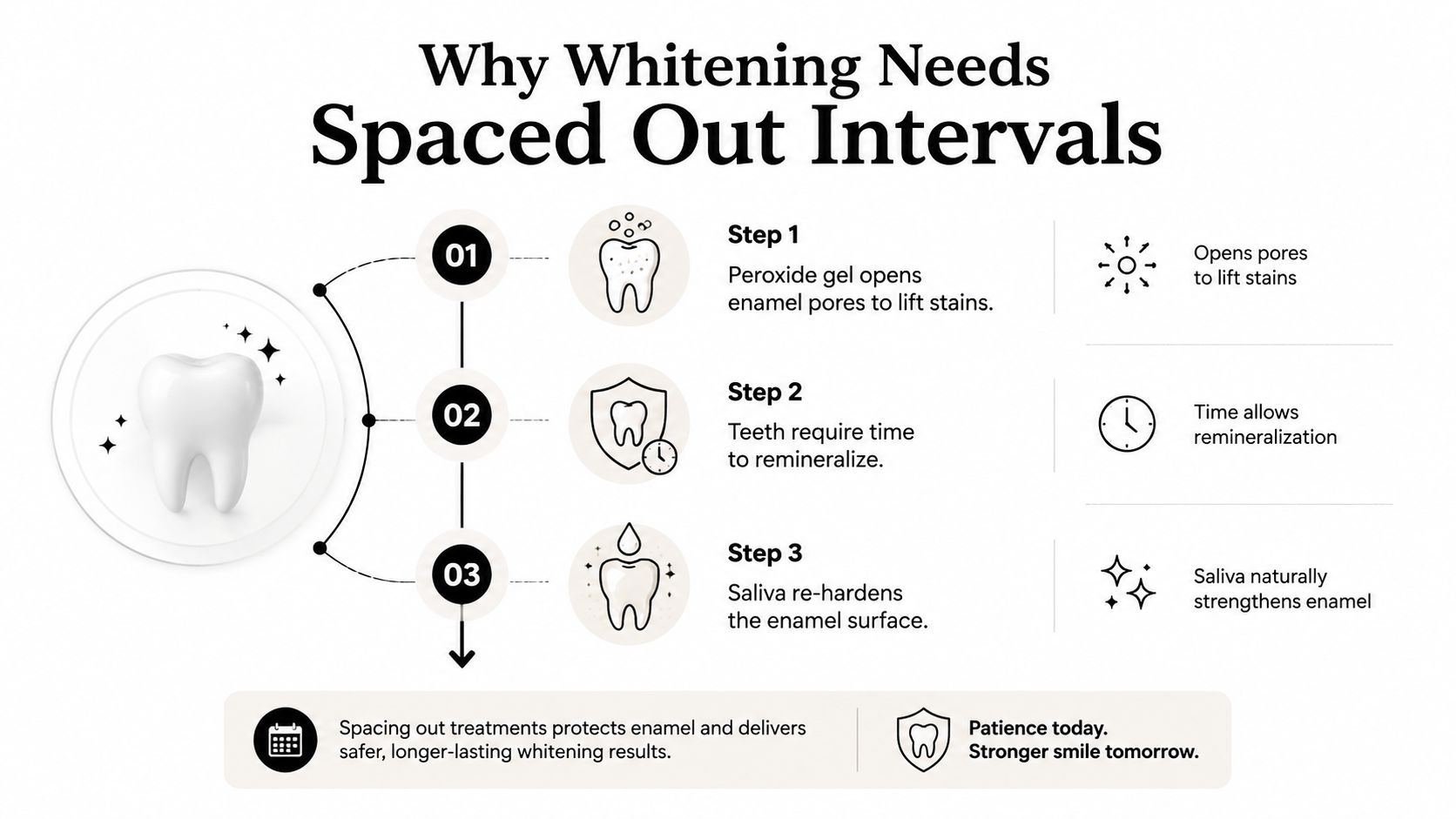
A patient who drinks iced coffee throughout a Miami workday may notice sensitivity after whitening sooner than someone with fewer stain exposures. Peroxide-based gels move through the enamel structure and break down stain molecules, temporarily making teeth more reactive to cold air, iced drinks, or hot foods. Allowing recovery time helps keep that discomfort manageable.
Saliva bathes the teeth with minerals and supports the enamel surface as it regains stability. That natural process does not make whitening unsafe, but it does mean a professional session should be treated as one stage in a maintenance cycle, not repeated continuously.
What can happen when patients overdo it
Short-interval treatments can increase tooth sensitivity and irritate the gums. Patients may feel sharp “zingers, sore gum edges, or discomfort with ordinary drinks. Gel that spreads unevenly can also leave lighter areas near the gumline, making the smile look patchy.
Spacing protects comfort and helps clarify whether another treatment will improve the shade. Whitening again before the color has stabilized may add discomfort without a comparable visual gain. This matters especially for patients balancing frequent coffee, tea, wine, tobacco, or vaping with a goal of maintaining a consistent smile.
Professional guidance commonly places full in-office whitening at about 6 to 12 month intervals, with the longer interval providing a more conservative maintenance approach (Castellanos Dental frequency guidance). The right timing still depends on sensitivity, stain recurrence, enamel condition, and existing restorations, which do not whiten like natural teeth.
Stains usually return gradually. A planned touch-up cycle is therefore more practical than waiting until the smile looks noticeably dull and then repeating intensive treatments too close together.
In-Office vs At-Home Whitening Schedules
The whitening method determines the maintenance rhythm. In-office treatment uses a stronger, professionally managed approach, while custom trays and over-the-counter products depend on repeated applications at home. Follow the instructions for the selected system, and avoid combining schedules without dental guidance.
The ADA reports that at-home systems commonly use 10% to 38% carbamide peroxide, with daily treatment times ranging from 2 to 10 hours over 6 to 28 days, depending on the product (American Dental Association whitening guidance). Those ranges cover very different systems, so the product directions and your sensitivity response should set the pace.
| Whitening Method | Typical Interval | Course Length | Best Use |
|---|---|---|---|
| Professional in-office whitening | About every 6 to 12 months, with the annual interval serving as the conservative maintenance approach | A single office appointment, depending on the system | A noticeable overall refresh before important events or after stains have built up |
| Dentist-supplied custom trays | Initial courses commonly last 1 to 2 weeks, followed by occasional touch-ups every few months to every 6 to 12 months, depending on sensitivity and staining | Short, supervised home bursts | Patients who want gradual control and maintenance between office visits |
| Over-the-counter strips, pens, or LED kits | Follow the label or dentist's advice, since frequency varies by product | Usually a short course rather than continuous use | Mild surface staining when the product suits the patient and sensitivity is low |
Choosing the right level of treatment
In-office whitening is efficient before a major event, but its stronger exposure can cause more sensitivity. Custom trays provide finer control because a close fit limits gel movement and makes small maintenance applications easier to manage. Over-the-counter products are convenient, yet results may be less predictable with crowded teeth, visible restorations, or gum recession.
A clinical trial examining bleaching session intervals compared two-day and seven-day spacing, supporting the use of longer gaps when sensitivity control is a priority (clinical research on bleaching session intervals). Patients considering light-assisted treatment can review this laser teeth whitening treatment information before choosing an office approach.
A professional session followed immediately by strips, pens, or LED products does not guarantee a brighter result. It increases total peroxide exposure and can make sensitivity harder to manage. For Miami patients who drink coffee regularly or schedule whitening around social events, a planned office treatment followed by carefully timed tray touch-ups usually creates a steadier maintenance cycle than repeated short courses.
Personal Factors That Change Your Whitening Frequency
A patient's ideal whitening interval reflects more than the calendar. Natural tooth structure, sensitivity history, dental work, and daily habits all influence how quickly a smile changes and how comfortably it responds to treatment.
Someone with a history of sensitivity may need a gentler plan, such as supervised tray use with longer recovery periods. Age-related changes can expose more dentin, which often appears warmer or darker than enamel and may respond differently to whitening. Existing gum recession, enamel wear, or untreated dental problems also deserve attention before cosmetic treatment.
Miami habits can shorten the interval
Miami's social and work routines often include café con leche, Cuban espresso, red wine, cocktails, and long evenings out. Coffee and wine can gradually reintroduce pigment, while vaping and tobacco may accelerate discoloration. Chlorinated pool water isn't a reason to whiten more often, but patients who spend substantial time swimming may notice a dry mouth or altered routine that makes consistent hygiene more important.
Crowns, veneers, composite bonding, and fillings don't whiten like natural enamel. If a patient whitens natural teeth after receiving a visible restoration, the restoration may remain at its original shade while adjacent teeth become lighter. Shade planning should happen before whitening when a crown, veneer, or bonding replacement may be needed.
| Personal Factor | Effect on Interval | Recommended Adjustment |
|---|---|---|
| Frequent coffee, espresso, tea, or red wine | Stains may return sooner | Discuss a supervised touch-up rather than repeating full treatment |
| Previous sensitivity or gum irritation | Recovery may take priority over speed | Choose gentler products and longer spacing with dental guidance |
| Crowns, veneers, bonding, or fillings | Restorations remain at their existing shade | Map the shade before whitening and plan cosmetic work afterward if needed |
| Strong daily hygiene and limited staining exposure | Brightness may remain stable longer | Keep the professional appointment conservative and reassess before retreatment |
| Vaping or tobacco use | Discoloration can recur more quickly | Address the staining habit and avoid compensating with frequent bleaching |
A self-assessment can help a patient start the conversation. Higher sensitivity and heavier staining exposure generally point toward more caution, while stable shade and comfortable prior treatment may support a longer interval. The dentist should make the final adjustment, not an arbitrary rule or an online whitening calendar.
Building a Year-Long Whitening Routine
A yearly professional whitening appointment can serve as the foundation for a simple maintenance plan. The exact tray instructions must come from the treating dentist, because gel strength, fit, sensitivity, and restorations vary from patient to patient.
Ultra Smile DentalSpa offers complimentary yearly whitening for established patients, which can provide a clear annual anchor for patients already following a maintenance schedule. The practice also provides broader cosmetic and restorative care, useful when whitening reveals a shade mismatch involving bonding, crowns, or other visible dental work.
A practical annual rhythm
At the foundation appointment, the dentist checks the smile, reviews sensitivity, and completes the professional whitening plan. Patients should avoid improvising extra gel applications afterward. The NHS notes that dentist-supervised whitening may combine office visits with home mouthguard sessions over a few weeks, so the prescribed plan should guide the immediate recovery period (NHS teeth whitening treatment information).
During the first maintenance phase, patients can focus on gentle brushing, daily flossing, and rinsing with water after dark drinks. A dentist-approved whitening toothpaste may help with surface stain, but it isn't a substitute for peroxide treatment and shouldn't be used aggressively.
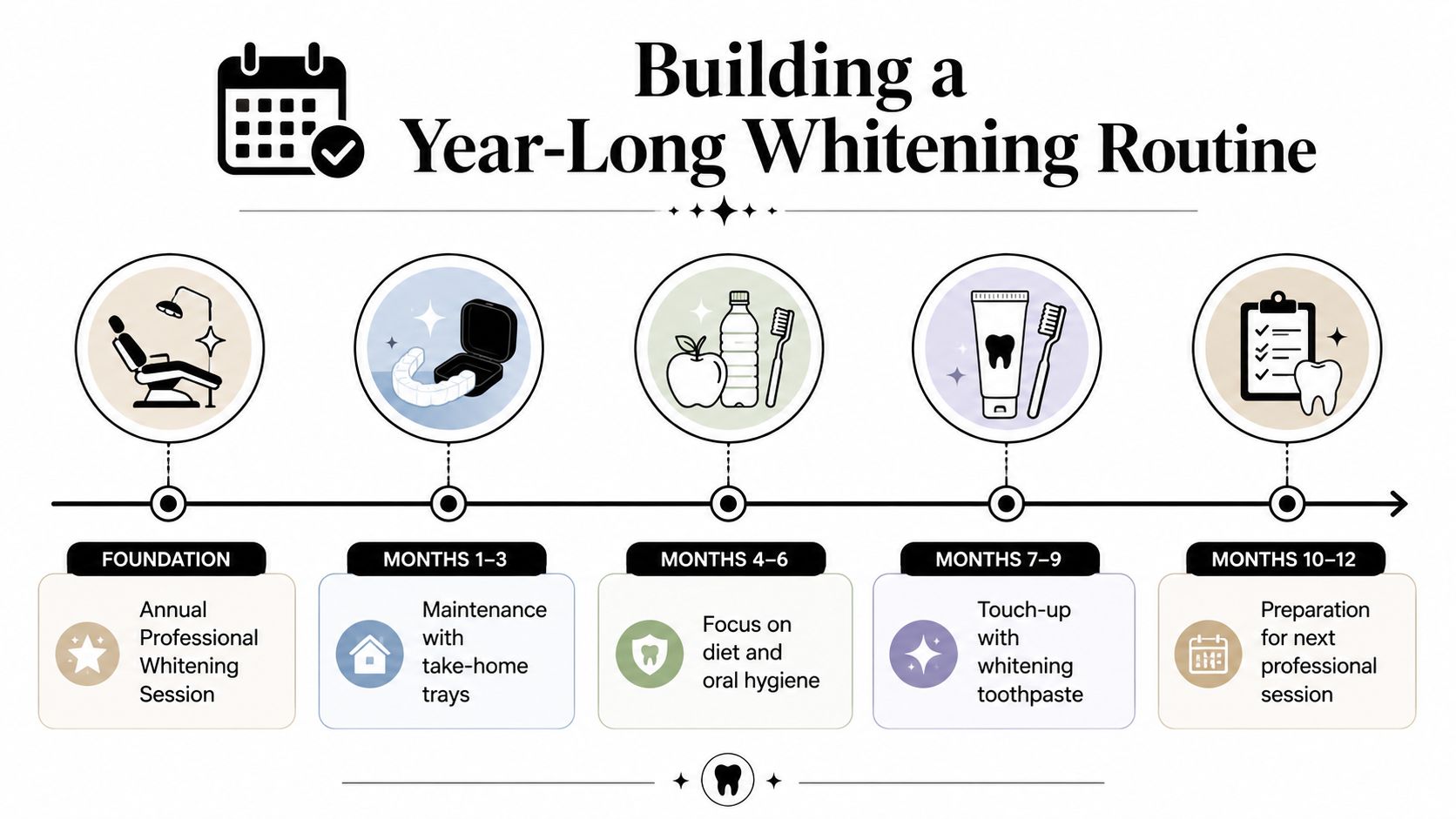
A custom-tray touch-up may be appropriate around the third month and again around the ninth month when the dentist has approved that approach. The patient should stop if sensitivity develops and contact the practice rather than extending the course.
Seasonal planning can make the routine easier. A patient may schedule the foundation session before a summer event, use a dentist-approved touch-up before wedding season, or plan an evaluation before December gatherings. The point is to prepare early, not to layer multiple products immediately before an event.
Two Realistic Whitening Schedules for Miami Patients
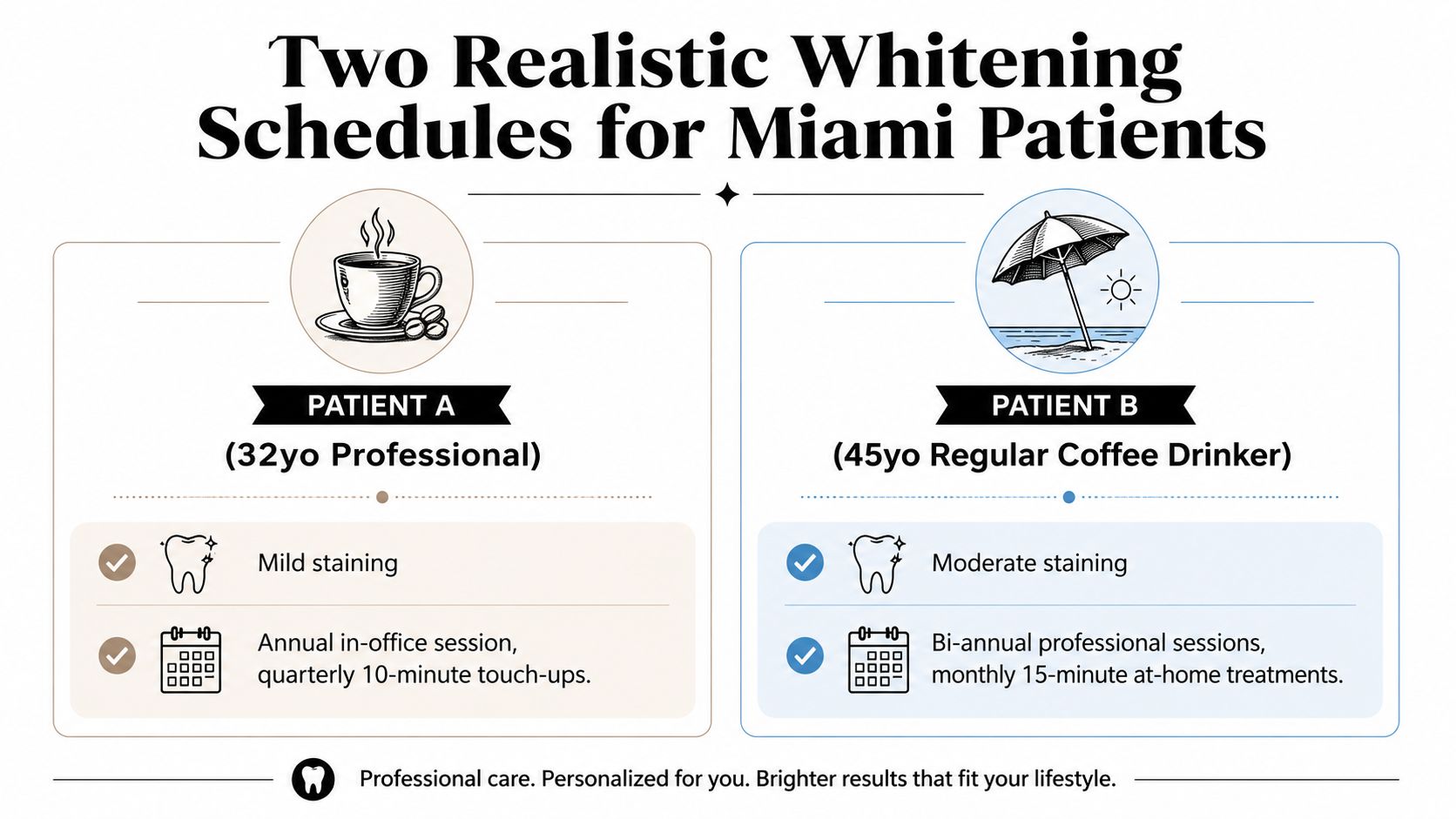
Personalized whitening becomes easier to understand through fictional composite examples. These profiles aren't real patients, but they reflect the kinds of differences a Miami cosmetic dentist may consider when planning maintenance.
Profile one with mild coffee staining
A fictional 32-year-old professional has healthy natural enamel, drinks coffee most days, and reports no whitening sensitivity. She chooses one professional session as her foundation, then uses two dentist-approved tray touch-ups during the year.
Her schedule remains flexible. If a series of beach weekends includes more iced coffee or social drinks, the dentist may review the shade and hygiene routine rather than automatically add another full treatment. If the smile remains even and comfortable, no additional intervention is needed.
Profile two with restorations and sensitivity
A fictional 47-year-old patient has several porcelain crowns, a daily wine habit, and a history of sensitivity. Her natural teeth may respond to whitening while the crowns remain unchanged, so the plan begins with shade mapping and a restoration inventory.
The dentist may recommend shorter supervised tray cycles, longer recovery periods, and more frequent check-ins than the first profile. The purpose of those visits is to assess comfort, monitor shade balance, and decide whether the next step should be maintenance, restorative shade matching, or no whitening at all.
The important difference isn't age or lifestyle by itself. It's the combination of stain exposure, sensitivity, and restoration behavior. A patient should reassess the plan whenever color becomes uneven, sensitivity persists, or a restoration no longer blends with neighboring teeth.
Safe Limits and Over-Whitening Mistakes to Avoid
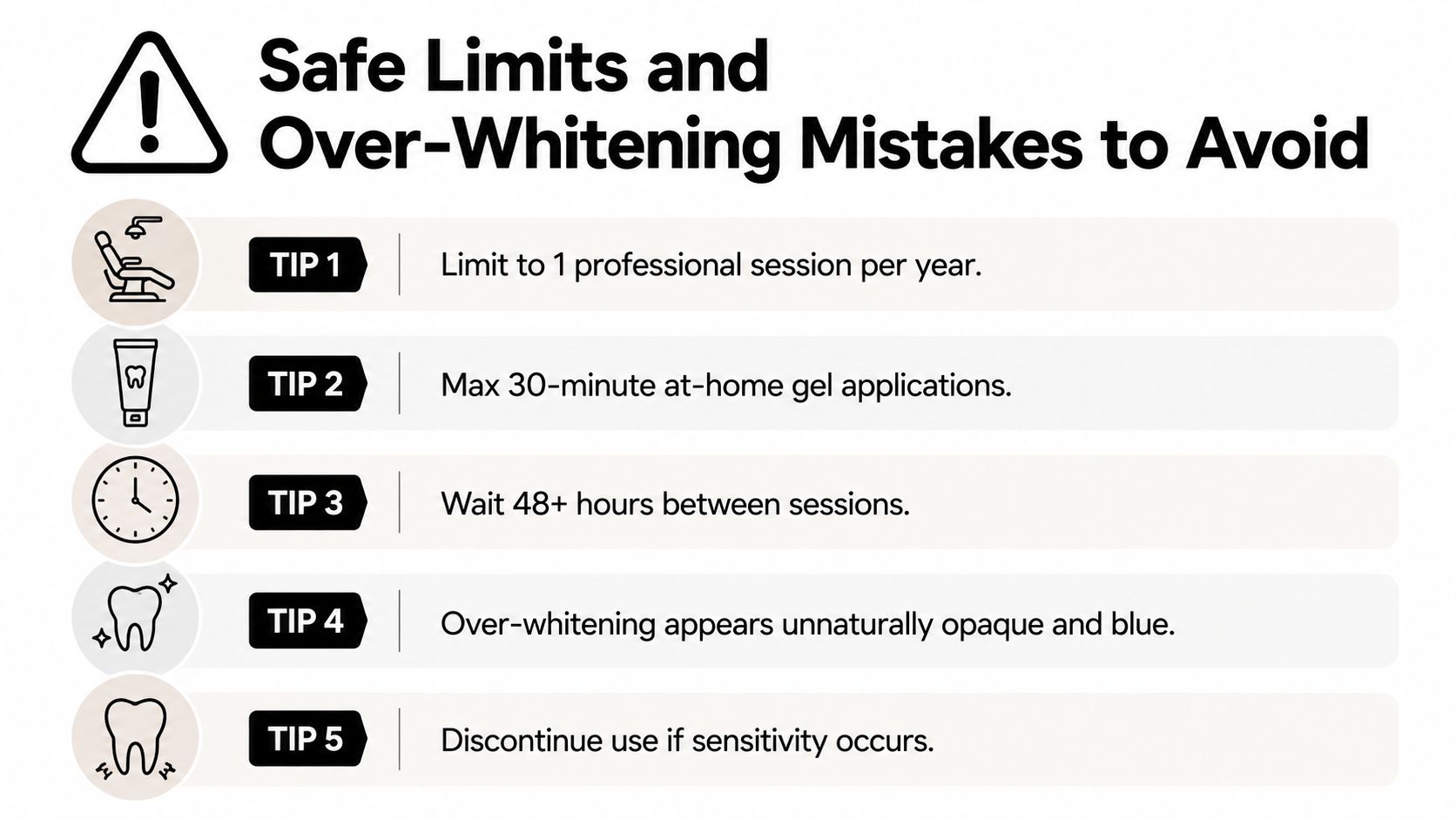
More whitening does not guarantee a better smile. Once natural teeth reach a comfortable cosmetic shade, additional peroxide can cause sensitivity or gum irritation without a meaningful color change. Use whitening as a maintenance cycle, not a continuous treatment. Full in-office whitening should be scheduled conservatively, with enough time for the teeth and gums to recover.
Over-whitening may produce translucent edges, a blue-gray cast, opaque patches, irritated gums, or sharp sensitivity known as “zingers. Stop the routine when these signs appear. Applying more gel usually increases discomfort rather than improving the result.
Common mistakes that undermine comfort
- Chaining strip courses: Repeated cycles add exposure while leaving too little recovery time.
- Leaving gel on overnight: Unless the dentist and product instructions specifically approve it, longer contact can irritate the gums and increase sensitivity.
- Whitening beside acidic drinks: Coffee, citrus beverages, wine, and similar drinks can make a sensitive mouth feel worse, a relevant concern for Miami patients with frequent iced coffee or social drinks.
- Ignoring restorations: Crowns, veneers, fillings, and bonding do not change shade like natural teeth, so whitening can create an uneven result.
- Skipping recovery: Continuing despite sensitivity can turn a manageable maintenance routine into an uncomfortable one.
A randomized clinical trial found no meaningful efficacy difference between applying 16% carbamide peroxide every 48 hours versus every 72 hours over six weeks, supporting a lower-burden schedule when comfort is a priority (randomized trial on carbamide peroxide treatment spacing). The interval should still match the patient's product, enamel condition, and sensitivity history.
For practical guidance, see this resource on sensitive teeth after whitening.
A dentist can distinguish normal whitening sensitivity from pain related to decay, cracks, gum recession, or a failing restoration.
When to See a Dentist and Book Your Next Visit
A whitening plan should pause when the result or symptoms change unexpectedly. Sudden sensitivity, uneven color, dark gum spots, cracked or chipped enamel, or restorations that no longer match warrant a dental evaluation before further self-treatment.
A cosmetic whitening consultation should not focus only on choosing stronger gel. The dentist reviews dental history, checks sensitivity, examines the enamel and gums, records the current shade, and identifies crowns, veneers, bonding, fillings, and other restorations. A cleaning may remove surface buildup. X-rays or a new-patient exam may be appropriate if symptoms suggest a deeper problem.
Whitening does not treat decay, infection, a cracked tooth, or gum disease. Severe or sudden pain calls for an emergency dental assessment rather than a cosmetic appointment. If extraction, restorative dentistry, or dental implants are needed, complete that health-focused treatment before setting the final cosmetic shade. This prevents a maintenance cycle from being built around teeth or restorations that may soon change.
For Miami residents searching for a dentist near me, a dentist in Miami, FL, or Dental implants near me, location and continuity affect how easily whitening fits into ongoing care. Ultra Smile DentalSpa's Brickell location serves Downtown Miami and Brickell patients, allowing whitening planning alongside cleanings, restorative consultations, and other cosmetic services. Established patients can also ask about the practice's complimentary yearly whitening offer.
Ultra Smile DentalSpa provides professional teeth whitening, cosmetic dentistry, restorative care, cleanings and exams, and personalized consultations in Miami. Visit Ultra Smile DentalSpa to schedule an evaluation and receive an interval plan based on sensitivity, staining habits, Miami lifestyle factors, and existing dental work.