A lot of adults in Miami want a brighter smile but keep putting whitening off for one reason. They already deal with temperature sensitivity, or they've tried a strip or whitening gel before and felt that sharp “zing afterward. That concern is valid. Whitening can trigger temporary discomfort, but that doesn't mean sensitive teeth rule it out.
The better question is which whitening method fits a sensitive mouth, how strong it should be, and how carefully it should be delivered. For patients searching for a cosmetic dentist near me or a dentist in Miami, FL who can make whitening more comfortable, the goal isn't the fastest treatment at any cost. The goal is a plan that protects comfort, controls exposure, and still delivers a noticeably brighter smile.
Table of Contents
- Brighten Your Smile Without the Discomfort in Miami
- Understanding Tooth Sensitivity from Whitening
- Your Teeth Whitening Options A Comparison
- Proactive Tips for a Comfortable Whitening Experience
- Gentle Teeth Whitening at Ultra Smile DentalSpa in Miami
- Long-Term Results and Your Next Steps in Miami
Brighten Your Smile Without the Discomfort in Miami
A whiter smile shouldn't come with a weekend of aching teeth. Many patients in Downtown Miami, Midtown Miami, and nearby communities want cosmetic improvement, but they hesitate because they've felt sensitivity before or they already avoid cold drinks and sweets. That hesitation makes sense.
Teeth whitening for sensitive teeth is less about avoiding whitening and more about choosing the right pace, formula, and delivery method. Sensitive patients usually do better when treatment is controlled carefully instead of pushed aggressively. That means looking at current enamel wear, gum recession, restorations, and how the whitening agent will contact the teeth.
A careful whitening consultation also helps rule out problems that can mimic sensitivity. A small crack, exposed root, leaky filling, or cavity can turn a mild whitening treatment into a miserable experience. That's one reason patients often benefit from seeing a dentist near me for an exam before buying another over the counter kit.
What patients usually want
Most adults looking into whitening aren't asking for an artificial result. They want teeth that look cleaner, fresher, and more even in photos, at work, and in day to day conversation. For some, whitening is part of broader cosmetic dentistry. For others, it's a simple upgrade after cleaning and exams, new patient exams, or before restorative work such as crowns or veneers.
A sensitive mouth usually responds better to a measured whitening plan than to a strong, one time push.
The practical approach is straightforward:
- Check the starting point: Existing decay, gum irritation, and worn enamel should be identified first.
- Match the method to the patient: Fast in-office whitening isn't automatically the right fit for every sensitive patient.
- Build in comfort support: Desensitizing products, shorter sessions, and close monitoring can make a major difference.
- Think beyond the first result: Maintenance matters just as much as the initial whitening choice.
Patients in Miami often balance cosmetic goals with busy work and family schedules. A smart plan respects both. It should fit real life, not just look good on paper.
Understanding Tooth Sensitivity from Whitening
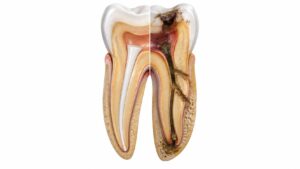
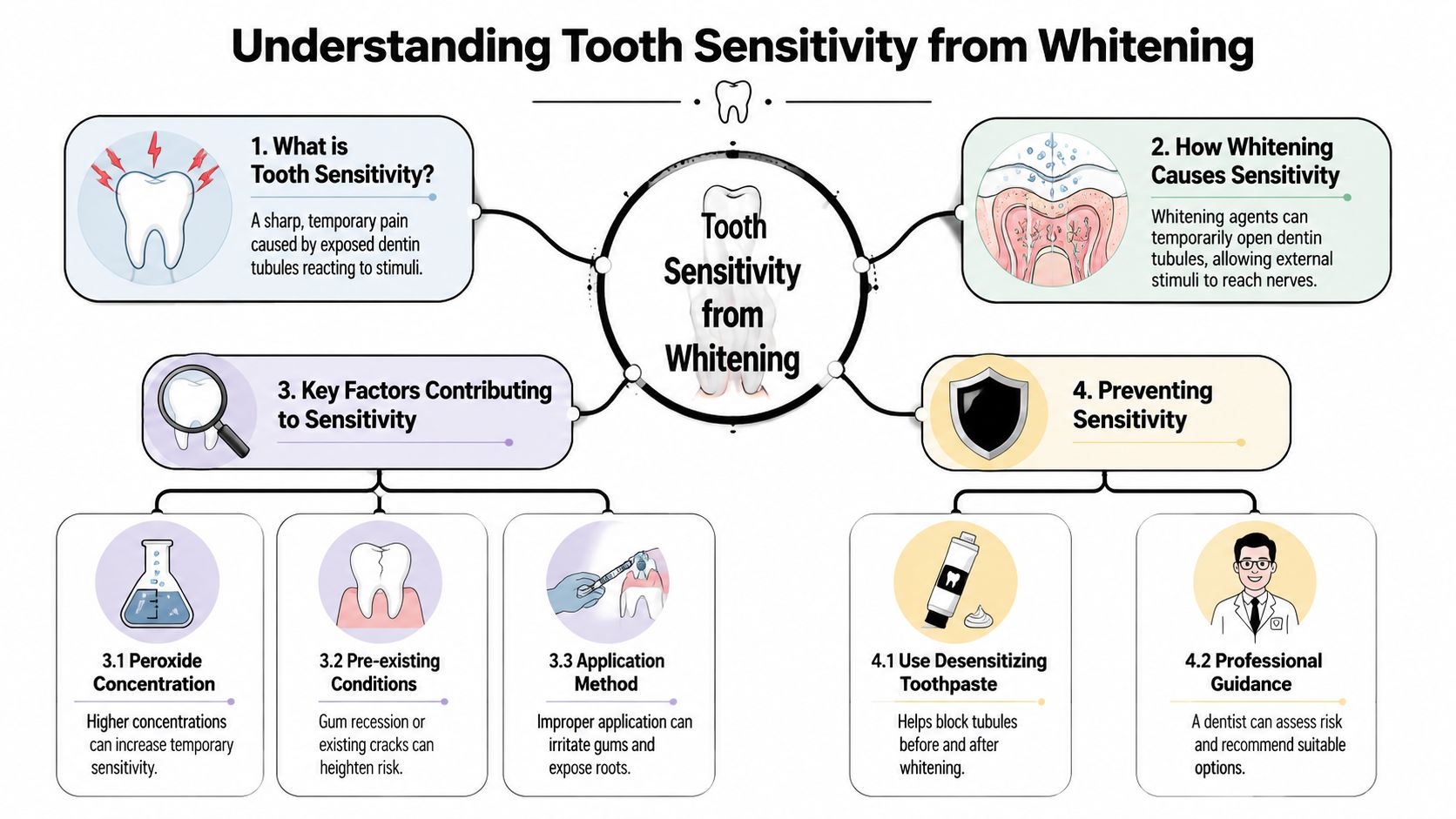
Whitening sensitivity feels sudden, but the reason behind it is fairly simple. Whitening agents can move through the tooth's hard outer layers and reach the inner area where the nerve can become irritated. The American Dental Association notes that hydrogen peroxide and carbamide peroxide can permeate dental hard tissues, and that temporary tooth sensitivity is a common adverse effect, with risk increasing at higher concentrations, as explained in the ADA's whitening overview.
Why whitening can make teeth react
A useful way to think about it is this. Whitening briefly opens a path inside the tooth, almost like opening a window that lets something reach a room that's normally protected. That doesn't mean the tooth is being permanently damaged. It means the nerve can react while the whitening agent does its job.
The discomfort is often described as quick, sharp, or electrical. It may show up during treatment, later that day, or the next morning when drinking something cold. Patients who want more detail on safety, side effects, and realistic trade-offs can review these whitening risks and benefits.
Sensitivity from whitening versus existing dental problems
Not all sensitivity during whitening is created equal. Temporary whitening sensitivity usually fades. A lingering pain in one tooth, pain when biting, or sensitivity that feels very localized may point to something else.
A dentist should look more closely when a patient has:
- One specific tooth that hurts more than the rest: That can suggest a crack, cavity, or failing restoration.
- Gum recession: Exposed root surfaces can react more strongly than enamel-covered areas.
- Recent dental work: Fillings, crowns, and bonding don't whiten the same way natural teeth do, which affects planning.
- Untreated grinding or wear: Thinner enamel often means less buffer against irritation.
Practical rule: If whitening causes a broad, temporary zing, that's usually manageable. If one tooth gives a sharp, persistent pain, that tooth needs evaluation before more bleaching.
That's where professional oversight matters. A patient may only see “sensitive teeth, but the source of that sensitivity changes the safest treatment path. In cosmetic dentistry, especially for whitening, accuracy at the start often determines comfort at the end.
Your Teeth Whitening Options A Comparison
Not every whitening method is equally kind to sensitive teeth. The right option depends on how fast the patient wants results, how much control is needed, and how reactive the teeth have been in the past. For sensitive patients, the smartest choice is usually the one that allows adjustments along the way.
How each option feels in real life
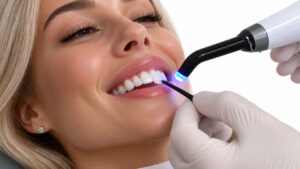
Professional in-office whitening gives the fastest visible change, but it can be a tougher fit for patients who are very reactive. The visit is efficient, and the gums can be protected carefully, but stronger treatment in a shorter window may feel intense for some mouths.
Dentist-supervised custom trays often give sensitive patients more control. Treatment happens gradually over days or weeks, so the patient and dentist can shorten wear time, pause if needed, and build desensitizing support into the process. Guidance on sensitivity management notes that 10% carbamide peroxide, which corresponds to about 3.6% hydrogen peroxide, is a useful lower-concentration option for sensitive patients, especially when paired with desensitizing support and professional supervision, as summarized in this clinical guidance on whitening sensitivity and safety.
Low-concentration home kits can work for mild stain improvement, but fit and consistency are variable. Some patients do fine with them. Others use them too long, place them unevenly, or let gel contact the gums.
Common over-the-counter strips or one-size trays are convenient, but convenience isn't the same as control. If a patient has gum recession, uneven teeth, or a history of sensitivity, these products can be frustrating because they don't adapt well to individual anatomy.
For readers comparing formats, different types of teeth whitening treatments vary most in speed, supervision, and how precisely the gel can be kept where it belongs.
Whitening Options for Sensitive Teeth
| Method | Typical Concentration | Control Level | Best For |
|---|---|---|---|
| Professional in-office whitening | Higher concentration, dentist selected | High in-office control | Patients who want faster results and can tolerate close supervision |
| Dentist-supervised custom trays | Lower concentration, often sensitivity-focused | Very high day-to-day control | Patients with sensitive teeth who want a gradual approach |
| Low-concentration home kits | Lower concentration | Moderate | Patients with mild sensitivity who follow directions carefully |
| Over-the-counter strips or generic trays | Varies | Lower | Patients with low sensitivity and simple whitening goals |
A few trade-offs matter more than marketing language:
- Speed versus comfort: Faster whitening can mean stronger exposure.
- Convenience versus precision: A product bought quickly may fit poorly.
- Lower strength versus patience: Gentler treatment usually takes longer.
- Cost versus predictability: Supervised whitening often avoids guesswork and repeat purchases.
Patients also need to think beyond appearance. If whitening is part of a larger treatment plan that includes veneers, bonding, crowns, restorative dentistry, or even replacing missing teeth with dental implants near me, timing matters because restorations won't whiten like natural enamel.
Proactive Tips for a Comfortable Whitening Experience
Whitening tends to go better when sensitivity is managed before the first drop of gel touches the teeth. That preparation is often what separates a smooth experience from one that gets abandoned halfway through.
A smarter way to prepare
A 2009 American Dental Association report recommended using desensitizing toothpaste containing potassium nitrate before whitening and continuing afterward as needed. The same report also noted that dentist-supervised at-home bleaching over a few days to a few weeks is often better tolerated by sensitive patients than single-visit chairside bleaching, as discussed in this summary of the ADA report on whitening for sensitive teeth.
That guidance supports a practical prevention plan:
- Start with a desensitizing toothpaste: Use one with potassium nitrate before whitening and continue afterward if teeth still react.
- Choose a slower schedule when needed: Sensitive patients often do better with a gradual take-home approach than a single intense session.
- Protect the gums: Irritated gums can make whitening feel worse, even when the teeth themselves are tolerating it.
- Pause when the teeth ask for it: Skipping a day or shortening wear time is often better than pushing through pain.

Small adjustments that matter
Many comfort problems come from technique, not just the product itself. A tray that's overloaded with gel can irritate the gums. A patient who leaves a strip on longer than directed may get no meaningful benefit from the extra time, only more discomfort.
A few simple habits help:
- Use only the recommended amount. More gel doesn't create a smarter treatment.
- Keep whitening off irritated tissue. If the gums are sore, inflamed, or recently treated, timing may need to change.
- Avoid stacking products. Using strips, whitening toothpaste, and another gel at the same time often increases irritation.
- Be careful with food and temperature after treatment. Very cold or very hot foods can be more noticeable right after whitening.
Sensitive whitening works better when the patient treats it like a controlled protocol, not a race.
Good oral hygiene also matters. Plaque retention, inflamed gums, and untreated dental issues make the mouth less comfortable before whitening even begins. Patients already coming in for dental care, cleaning and exams, dental x-rays, or even urgent visits with an emergency dentist after a broken tooth should have those issues stabilized before any cosmetic whitening plan starts.
Gentle Teeth Whitening at Ultra Smile DentalSpa in Miami
For patients who want cosmetic results without a harsh experience, the treatment environment matters almost as much as the whitening formula. Anxiety, dry mouth, jaw tension, and fear of pain can make sensitivity feel worse. A calm setting changes that.
Clinical reviews summarized in this discussion of whitening effectiveness and sensitivity incidence report that sensitivity affects 30% to over 78% of patients during whitening, and about 13.8% of participants in one trial stopped treatment because of discomfort. That matters because whitening success isn't just about shade. It's also about whether the patient can finish the plan comfortably.
Comfort matters as much as color
A sensitivity-focused whitening visit should feel deliberate. The dentist assesses whether the teeth are good candidates, checks for exposed roots or restorative work, and decides whether to use a gentler protocol or a slower home plan. During treatment, comfort features can help patients stay relaxed instead of clenching through the appointment.
Ultra Smile DentalSpa in Miami is one practice option that pairs cosmetic dentistry with a spa-like patient experience, including refreshments, custom aromatherapy, streaming entertainment during procedures, and a hot towel finish. For patients who tend to avoid dental visits because of fear, that kind of setup can make whitening and other services such as veneers, crowns, tooth extraction, Invisalign, implants, or routine care feel more manageable.
What a sensitivity focused visit can include
Patients often benefit from an appointment flow like this:
- A complete exam first: Whitening should follow a review of gum health, enamel condition, and existing restorations.
- A customized recommendation: Some mouths are better suited for in-office treatment. Others need a slower tray-based plan.
- Built-in stop points: If sensitivity rises, the treatment can be adjusted instead of forced.
- Clear aftercare instructions: Patients should leave knowing how to eat, brush, and manage any short-term zing.
A closer look at the office atmosphere helps patients understand what that experience can feel like:
For adults in Downtown Miami, Midtown Miami, and nearby areas, that blend of cosmetic planning and physical comfort is often what finally makes whitening feel doable.
Long-Term Results and Your Next Steps in Miami
The initial whitening treatment is only part of the decision. Sensitive patients usually do better when maintenance is planned from the start, instead of waiting until stains return and then doing another aggressive round.
Maintenance without repeating the same discomfort
Evidence summarized in a PMC review on whitening materials and methods indicates that home-based bleaching generally causes less sensitivity than in-office bleaching, and for sensitive patients the most practical long-term strategy is often an initial in-office whitening followed by occasional at-home touch-ups. That approach makes sense because it spreads out exposure and avoids repeating a strong one-visit treatment every time the smile needs refreshing.
That maintenance mindset usually works best when patients:
- Whiten to a reasonable target first: Chasing the brightest possible shade tends to invite over-treatment.
- Use touch-ups sparingly and strategically: Small maintenance sessions are easier on sensitive teeth than repeated high-intensity whitening.
- Keep up with routine dental visits: Clean teeth and healthy gums help the smile look brighter without unnecessary bleaching.
- Address stain sources: Coffee, tea, red wine, and smoking all affect how often touch-ups are needed.
The lowest-sensitivity whitening plan is often the one that avoids big swings. Maintain the result instead of trying to recreate it from scratch.
This is also where broader treatment planning matters. Patients considering veneers, bonding, crowns, or other cosmetic work should usually discuss whitening first, because restorations are shade-matched and then stay that color.
What to expect at a consultation
A whitening consultation should be simple and clear. The dentist reviews sensitivity history, checks for gum recession, worn enamel, cavities, cracks, and existing restorations, then recommends the lowest-intensity approach likely to produce a good result. If whitening isn't the right first step, that should be said plainly.
Some patients come in focused on whitening and end up needing another service first, such as a filling, crown, night guard, gum care, or treatment for a painful tooth. Others are excellent candidates right away. The value of seeing a local dentist in Miami, FL is that the plan can be personalized instead of guessed.
For patients searching for a dentist near me, cosmetic dentist near me, or a practice that can handle both cosmetic goals and everyday needs, the next step is a consultation that balances shade improvement with real comfort.
If a brighter smile has been on hold because of sensitivity, Ultra Smile DentalSpa offers consultations for patients in Miami who want a careful, comfort-focused plan. Schedule a visit to discuss teeth whitening for sensitive teeth, review any underlying dental concerns, and find out whether a gradual take-home approach, in-office treatment, or a combined maintenance strategy fits your smile best.