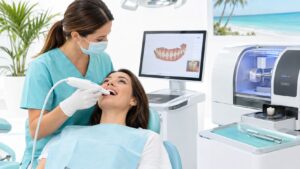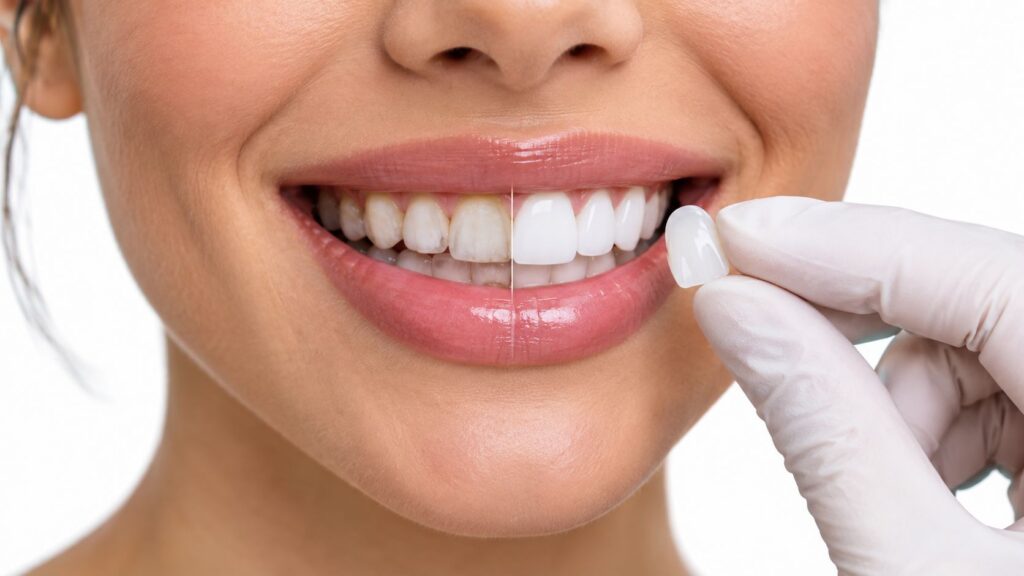
You're looking in the mirror before a dinner in Brickell, a meeting downtown, or a family photo in Miami, and your smile doesn't match how confident you feel. Perhaps the front teeth are chipped, uneven, heavily stained, or slightly spaced. A search for a cosmetic dentist near me brings up porcelain veneers, but one question keeps returning: should I get porcelain veneers, or would another treatment protect more of the natural tooth?
That hesitation is healthy. Veneers can create a significant cosmetic improvement, but they're long-term dental restorations, not a one-time beauty treatment. The right decision depends on enamel, gums, bite forces, hygiene, expectations, and willingness to maintain and eventually repair or replace the restorations.
Ultra Smile DentalSpa serves patients in Downtown Miami, Midtown Miami, and Hallandale Beach with cosmetic, restorative, and general dental care in a calming spa-style setting. Patients considering a smile makeover can review realistic veneer results and treatment examples while discussing whether porcelain is appropriate for their own teeth. The purpose of that conversation should be informed consent, not pressure.
Table of Contents
- Finding Your Smile Confidence in Miami
- What Are Porcelain Veneers and How Do They Work
- Veneers versus Bonding Whitening and Orthodontics
- The Evidence on Veneer Longevity and Risks
- What to Expect During Your Miami Veneer Journey
- Understanding Costs Maintenance and Lifelong Care
- Ready to Explore Your Smile Options in Miami
Finding Your Smile Confidence in Miami
A patient may arrive at a consultation focused on shade. The clinical assessment often reveals that the more important questions involve tooth position, enamel thickness, gum health, and the way the upper and lower teeth meet. A bright smile can look attractive in a photograph, yet a veneer that sits too far forward, traps plaque, or receives excessive bite pressure can create problems that aren't visible in a social media image.
That's why a search for a dentist in Miami, FL should lead to more than a quick cosmetic quote. A responsible evaluation begins with the condition of the mouth. Untreated decay, active gum disease, unstable bites, and heavy nighttime grinding may need attention before cosmetic treatment proceeds. Whitening, composite bonding, orthodontics, or restorative dentistry may offer a more conservative answer for some patients.
Practical rule: A veneer consultation should assess the health and function of the teeth before discussing the final shade.
Adults who are anxious about dental care also deserve a predictable, respectful experience. A practice serving Miami patients may combine digital records and careful treatment planning with comfort measures such as refreshments, aromatherapy, streaming entertainment, and a hot towel finish. Those details don't replace clinical judgment, but they can make it easier for a patient to ask direct questions about preparation, maintenance, and replacement.
A veneer decision is especially consequential when the teeth are young and healthy. Conventional preparation can permanently remove enamel. If a restoration later needs repair or replacement, the next procedure may expose more dentin or require a different restoration. The most useful question is not just whether veneers look good today. It's whether the proposed plan remains biologically sensible over the long term.
What Are Porcelain Veneers and How Do They Work
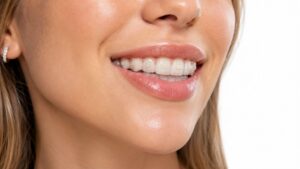
Porcelain veneers are thin, custom-made ceramic shells bonded to the visible front surfaces of teeth. They can alter color, shape, length, and selected minor irregularities. A useful comparison is exterior siding on a house. The siding changes the visible appearance, but the underlying structure still needs to be sound, stable, and properly prepared.
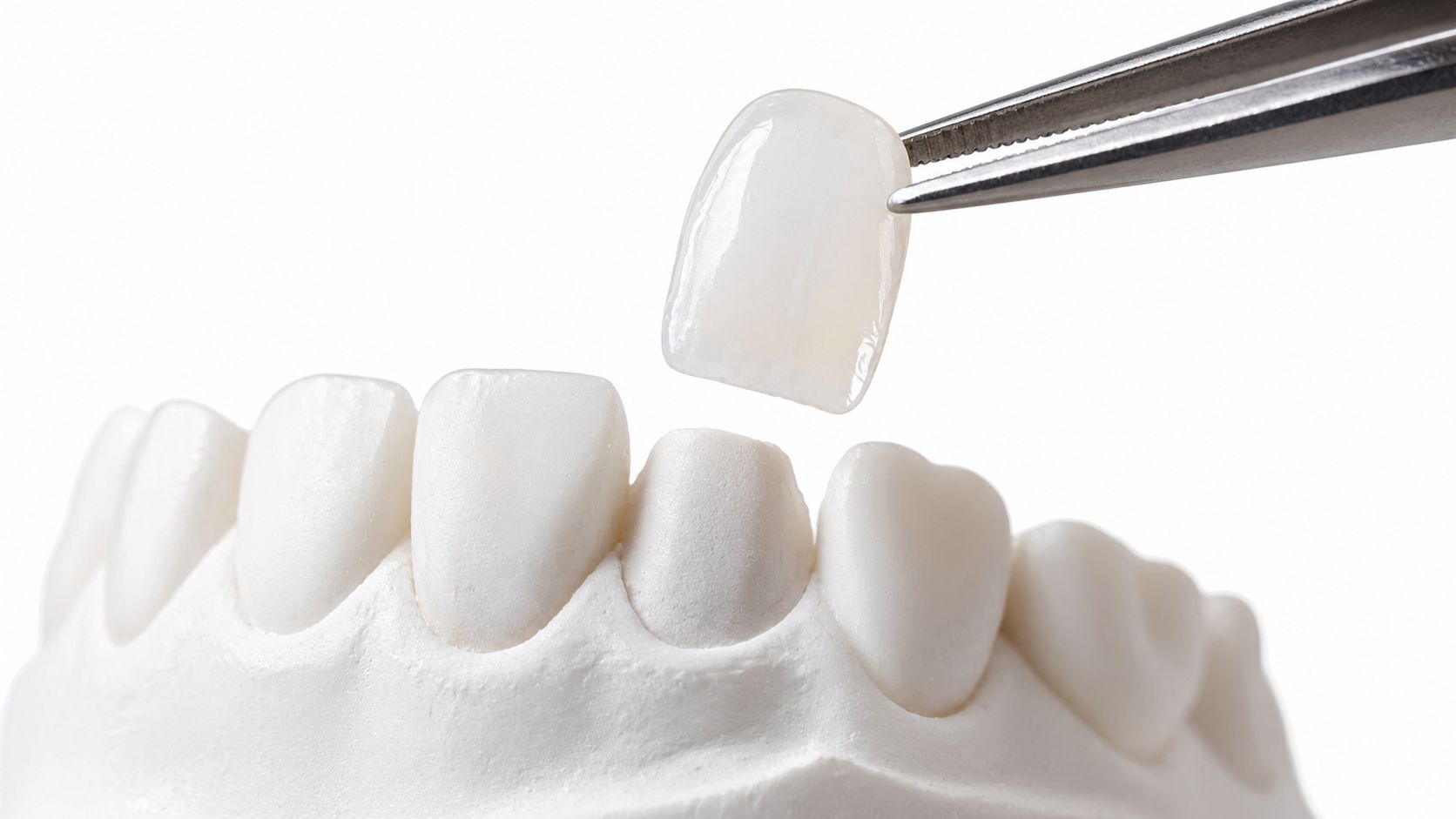
Veneers may suit patients with persistent discoloration that doesn't respond adequately to whitening, selected chips, shape irregularities, small gaps, or limited enamel defects. They don't move teeth into a new position, cure decay, or replace missing teeth. A crown covers more of the tooth and is generally used when a tooth needs greater structural protection. Composite bonding applies tooth-colored resin directly and usually involves less alteration, though it has different appearance and wear characteristics.
The word “thin also needs context. Minimal-preparation or no-preparation veneers aren't automatically conservative for every smile. Tooth position, desired contour, discoloration, existing fillings, bite relationships, and the amount of enamel available all influence whether preparation is needed. A dentist should explain how much enamel is expected to remain after shaping, rather than treating “no-prep as a universal promise.
Patients comparing cosmetic dentistry with other areas of care can also review the range of dental specialties covered to understand how cosmetic treatment fits alongside preventive, restorative, and surgical services. A cosmetic plan may need cleaning and exams, dental x-rays when clinically indicated, periodontal treatment, root-canal care, or restorative work first.
Ultra Smile DentalSpa describes its veneer process in more detail through its guide to what porcelain veneers are made of. The key clinical question remains the same: can the restoration be bonded mainly to healthy enamel while preserving a contour that is attractive, cleanable, and compatible with the patient's bite?
Veneers versus Bonding Whitening and Orthodontics
The best treatment depends on the problem being corrected. Porcelain changes color and shape together, bonding can address a small defect with less tooth alteration, whitening changes color only, and orthodontics changes tooth position rather than covering it.
Composite bonding may work well for a limited chip, small gap, or minor shape correction. It generally preserves more tooth structure and can be easier to repair or alter. The trade-off is that composite can be more vulnerable to surface wear, staining, and edge damage than porcelain, especially when the patient bites hard objects or clenches.
Professional teeth whitening is the more conservative choice when the concern is primarily color. It won't close a gap, lengthen a worn edge, correct an irregular contour, or change the position of a tooth. Whitening also needs to be planned before veneers if the surrounding natural teeth must match the final shade.
Orthodontic treatment, including invisible braces or Invisalign, addresses crowding, spacing, and alignment by moving teeth. It can preserve tooth structure when the main issue is position, although treatment takes longer and doesn't automatically correct intrinsic discoloration, worn edges, or unusual shapes.
| Treatment | Best For | Invasiveness | Longevity | Typical Cost Range |
|---|---|---|---|---|
| Porcelain veneers | Color, shape, selected chips and gaps | Irreversible preparation may be needed | Long-term restoration, with repair or replacement possible | Varies by practice, material, laboratory, and number of teeth |
| Composite bonding | Small chips, limited gaps, minor contour changes | Usually less invasive | Requires monitoring and may need repair | Varies by tooth and complexity |
| Professional whitening | Surface and intrinsic discoloration that responds to whitening | Non-restorative | Color can change again over time | Varies by method and practice |
| Orthodontics | Crowding, spacing, and tooth position | Tooth movement without veneer preparation | Alignment requires retention | Varies by system and treatment plan |
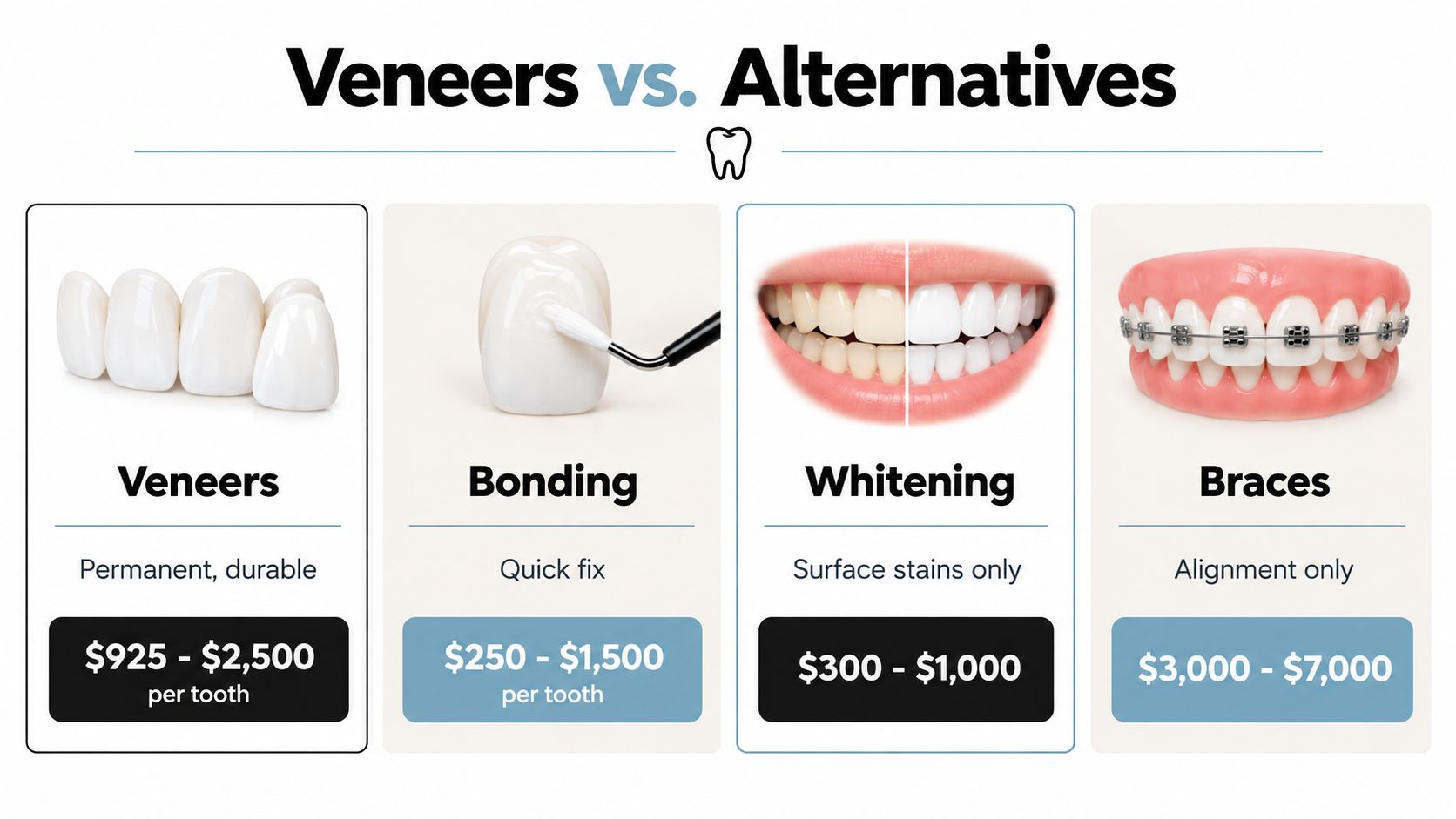
The infographic's cost figures should not be treated as a personalized Miami quote. Pricing depends on the number of teeth, ceramic selection, preparation, laboratory work, diagnostic records, temporary restorations, and related treatment. Patients should request a written plan that separates cosmetic services from necessary dental care.
A practical decision rule is simple. If whitening can solve the concern, covering healthy enamel may be unnecessary. If alignment is the main issue, orthodontics may be more appropriate. If a small defect is localized, bonding may achieve the desired improvement with less irreversible change. Veneers become more reasonable when the desired correction involves several visible features and the patient accepts lifelong maintenance.
The Evidence on Veneer Longevity and Risks
A veneer can look beautiful for years and still commit you to a long restorative timeline. Once enamel is reduced, that tooth usually stays in the restoration cycle for life. That is the part many patients do not hear clearly enough. Veneers can perform very well, but they are not a one-time cosmetic event.
The published survival data are encouraging, yet they need plain interpretation. A 2021 systematic review estimated a 10-year cumulative survival rate of 95.5%, and long-term data within that review reported 94.4% at five years, 93.5% at 10 years, and 82.9% at 20 years. Fracture was the leading failure reason in long-term studies, accounting for 44.83% of failures (clinical review of porcelain laminate veneer survival). In practice, “survival means the veneer stayed in service. It does not mean the margin stayed unchanged, the tooth stayed symptom-free, or the restoration never needed polishing, repair, or replacement.
That distinction matters because replacement is rarely biologically neutral. Each time a veneer is redone, the tooth may lose more enamel and rely more on dentin or prior restorative material. Bonding becomes less forgiving as that foundation changes.
Enamel is the critical foundation
Strong veneer cases are built on enamel. Bonding to enamel is generally more predictable than bonding to substantially exposed dentin or to large existing composite restorations. One long-term clinical study found six of seven failures occurred when veneers were partially bonded to dentin, with estimated 91% survival over 10 years (clinical study of veneer risk factors).
Preparation design is where this risk starts. A three-dimensional analysis described preparation criteria of about 0.5 millimeters of reduction in the middle third and 0.3 millimeters near the cervical region, with greater incisal reduction depending on design (preparation and bonding analysis). Those numbers are not a universal recipe. Tooth position, desired color change, ceramic thickness, edge design, and bite all affect how much reduction is needed. If the plan demands aggressive masking or major shape change, the case can move from enamel-dominant bonding to dentin-supported bonding faster than patients expect.
Bite forces and gum health need equal attention
Parafunction changes the risk profile. A review on bruxism and veneer fracture reported that one included study found a twofold increase in laminate veneer fracture risk among patients with bruxism (review of bruxism and veneer fracture). That does not automatically rule veneers out. It does mean grinding, clenching, wear facets, muscle symptoms, and night guard compliance need to be addressed before treatment, not after a fracture.
Soft tissue response also matters. A clinical report described increased pocket depth more often in veneers in place longer than five years, and it also noted postoperative sensitivity in more than 20% of cases and pulpitis in fewer than 2.1% (clinical report on veneer maintenance and periodontal findings). Veneers succeed best when margins are cleanable, gums are stable, and recall care is consistent. That is why I frame veneers as long-term restorations with maintenance obligations, not as permanent covers for front teeth.
What to Expect During Your Miami Veneer Journey
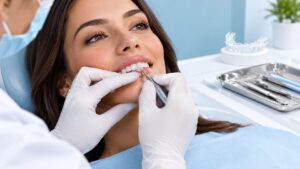
A sound veneer plan begins before any enamel is shaped. During a new patient exam, the dentist reviews the smile goals, medical and dental history, existing restorations, gum condition, bite, tooth wear, and grinding habits. Dental photographs, scans, impressions, and dental x-rays may be used when clinically indicated.
Consultation and design
The first visit should answer whether veneers are appropriate at all. A diagnostic wax-up or digital preview can help evaluate proposed tooth length, width, symmetry, and contour before irreversible preparation. Digital Smile Design is one planning approach patients can explore when they want to understand predictable esthetic outcomes with DSD, though a preview remains a planning tool rather than a guarantee of the final result.
Records and preparation
The dental team records the existing teeth and selects a shade in suitable lighting. If preparation is indicated, the dentist removes only the amount needed for the planned contour and ceramic design. The patient should ask how much enamel will remain and whether an additive or minimal-preparation approach is feasible.
Temporaries and laboratory fabrication
Temporary veneers can protect prepared teeth and provide a real-world test of speech, comfort, length, and appearance. Patients should report rough edges, bite interference, sensitivity, or a shape that feels too prominent before final ceramics are bonded.
Try-in and bonding
At the placement visit, each veneer is evaluated for fit, contacts, margins, shade, and relationship with the opposing teeth. Adjustments should occur before bonding. Once the patient and dentist approve the design, the restorations are bonded and polished, followed by instructions for brushing, interdental cleaning, diet, and protective night-guard use when indicated.
A Miami practice may make the visits easier for patients who feel nervous about dentistry by offering a calm environment, refreshments, custom aromatherapy, streaming entertainment, and a hot towel finish. Those comforts are useful, but the decisive part of the experience is still the quality of diagnosis, preparation, bonding, and follow-up.
Understanding Costs Maintenance and Lifelong Care
The initial quote is only one part of the financial decision. A realistic plan accounts for examination and records, any treatment needed before veneers, the number of teeth, ceramic and laboratory choices, temporaries, follow-up visits, possible night-guard use, and future repairs or replacement. Cosmetic veneers may not be covered by dental insurance, while disease control and necessary restorative care are evaluated separately.
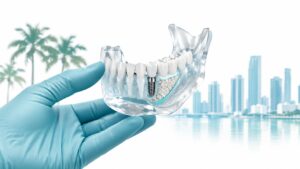
Patients comparing Dental implants near me with veneers should remember that the treatments solve different problems. Veneers improve the visible surface of existing teeth. Implants replace missing teeth and may involve surgical planning, bone grafting, a crown, and restorative maintenance. A tooth extraction, root canal, crown, or gum treatment may be more appropriate when the underlying tooth is unhealthy.
Daily care protects the margins
Veneers don't make a patient immune to decay or gum disease. The natural tooth beside and beneath a restoration still requires normal brushing and interdental cleaning. Overcontoured margins, food trapping, bleeding, odor, roughness, mobility, persistent sensitivity, and recurrent chipping deserve a dental review rather than cosmetic polishing alone.
A maintenance plan commonly includes:
- Cleaning and exams: Professional monitoring helps identify margin changes, gum inflammation, decay, bite stress, and small chips before they become larger concerns.
- Nighttime protection: Patients who grind or clench may need a custom night guard, adjusted to the restorations and bite.
- Behavior changes: Teeth shouldn't open packages, crack hard objects, or serve as tools. These habits can stress ceramic edges.
- Prompt assessment: A loose veneer, new bite interference, bleeding, or increasing sensitivity should be evaluated rather than ignored.
Replacement changes the biological equation
A small chip may be repairable, depending on its location, size, bonding conditions, and remaining ceramic. A veneer that has fractured, debonded repeatedly, developed an unacceptable margin, or no longer has a stable tooth underneath may require full replacement. Each replacement deserves a fresh assessment of how much enamel remains and whether another veneer is still the safest option.
This is the central long-term trade-off. Conventional preparation removes enamel permanently, and repeated treatment can expose more dentin. More dentin may make bonding more technique-sensitive and can increase the risk of sensitivity, debonding, fracture, staining, or restorative dependence. Someone choosing veneers should be comfortable maintaining restorations over a lifetime, not treating them as a single cosmetic purchase.
Ready to Explore Your Smile Options in Miami
The answer to should I get porcelain veneers depends on more than the shade a patient wants. The decision should balance the cosmetic change, the health of the teeth and gums, the bite, the amount of enamel that can be preserved, and the patient's willingness to maintain and eventually replace restorations.
A consultation with a trusted cosmetic dentist near me can clarify whether porcelain is appropriate or whether whitening, composite bonding, invisible braces, crowns, or restorative dentistry would better match the concern. Patients should leave with a clear explanation of preparation, expected appearance, cleaning requirements, night-guard recommendations, repair options, replacement risks, and the total treatment plan.
Ultra Smile DentalSpa provides cosmetic and general dental services for patients in Downtown Miami, Midtown Miami, and Hallandale Beach, including veneers, teeth whitening, Invisalign, crowns and bridges, root canals, night guards, implants, bone grafts, and wisdom teeth extraction. Patients with urgent pain, swelling, trauma, or a broken restoration can also ask whether an emergency dentist appointment is appropriate before pursuing elective cosmetic care.
The right smile plan should look natural, function comfortably, and respect the tooth structure that supports it. A thoughtful examination gives patients the information needed to proceed confidently, choose a more conservative alternative, or postpone veneers until the mouth is ready.
Ultra Smile DentalSpa offers personalized veneer consultations, digital planning, cosmetic dentistry, preventive care, and restorative treatment for patients throughout Miami. Visit Ultra Smile DentalSpa to discuss enamel preservation, bite protection, maintenance, and the smile option that fits the patient's long-term needs.