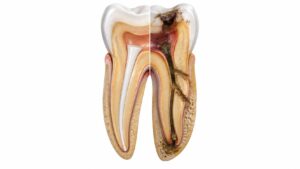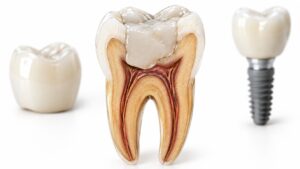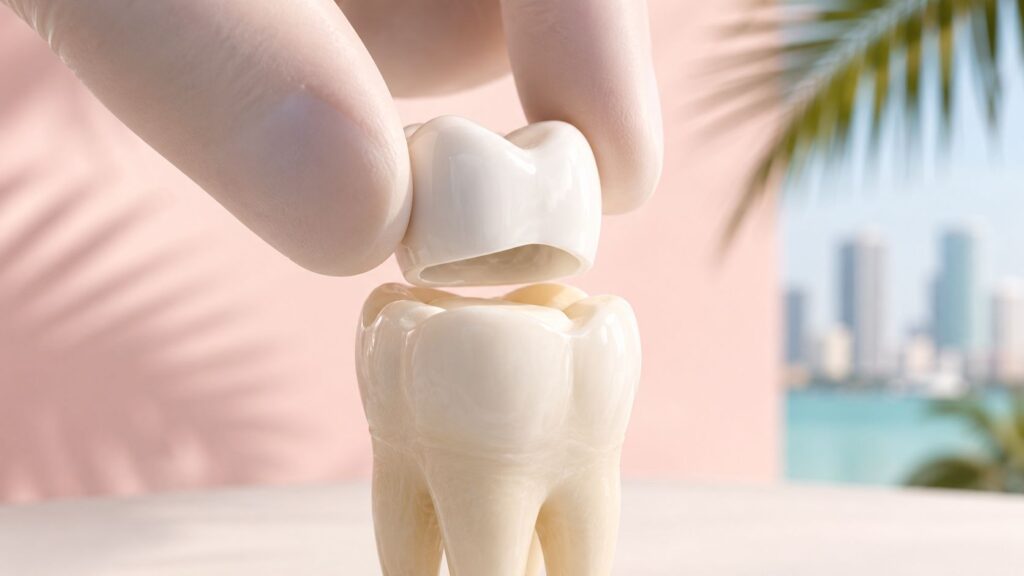
A root canal cap, which is a dental crown, is usually the step that protects a treated tooth so it can keep working for years. Teeth that are properly restored after root canal treatment show 97% survival after 10 years and 81% survival after 20 years when properly restored, which is why capping the tooth matters so much for long-term success (long-term endodontic survival data).
If a dentist has just said, “You need a root canal, and then you'll need a cap, that second part often raises more questions than the root canal itself. Many patients in Miami, FL want to know whether the cap is really necessary, how long the process takes, whether same-day options are available, and what kind of crown will look natural.
A root canal removes infection from inside the tooth. The root canal cap protects what's left. Without that final protective layer, the tooth can crack under normal chewing, especially in the back of the mouth where bite pressure is highest. For busy professionals in Downtown Miami, Midtown Miami, and Hallandale Beach, the good news is that modern dentistry can make this process efficient, precise, and far more comfortable than many people expect.
Table of Contents
- Your Trusted Dentist for Root Canal Caps in Miami FL
- Why a Crown Is Essential After Your Root Canal
- Choosing the Right Material for Your Dental Crown
- The Root Canal Cap Procedure Traditional vs Same-Day Crowns
- Long-Term Benefits of Capping Your Root Canal Tooth
- Experience a New Standard of Care in Miami
- Frequently Asked Questions About Root Canal Caps
Your Trusted Dentist for Root Canal Caps in Miami FL
Hearing that a tooth needs a root canal can feel like enough for one day. Then the word “cap comes up, and many patients assume it's optional, cosmetic, or something that can wait until life slows down. In most cases, that's not how this works.
A root canal cap is a dental crown placed over a treated tooth. It covers the visible part of the tooth, restores function, and protects the remaining structure from breaking. That matters because root canal treatment saves the tooth from infection, but it doesn't automatically return full strength to the part that does the chewing.
Why so many people need this treatment
Root canal treatment is common. A global review found a worldwide prevalence of root canal treatment of 8.2%, and 55.7% of the global population has at least one treated tooth, showing how often dentistry relies on this procedure to save natural teeth instead of removing them (global root canal prevalence review).
That number helps put the situation in perspective. A patient who needs a root canal and crown isn't facing something unusual or rare. This is a routine part of restorative dentistry, just like fillings, dental x-rays, new patient exams, and other treatment used to stop pain and preserve healthy teeth.
What patients often miss: the root canal handles the infection. The crown handles the daily stress of chewing.
When patients usually start looking for help
Those searching for a dentist near me, dentist in Miami, FL, or emergency dentist aren't browsing casually. They're often dealing with one of these problems:
- Pain when chewing: A tooth may feel sore, weak, or unstable after treatment.
- A temporary filling: Some patients have already had the root canal and were told to return for the final crown.
- A broken-down tooth: The infection may be gone, but the tooth still isn't safe to use without protection.
- A packed schedule: Busy workdays make multiple appointments harder to manage.
For patients in Miami who want practical answers, the key question isn't whether a root canal cap sounds serious. It's whether the tooth will stay reliable once normal eating starts again. That answer depends heavily on the crown.
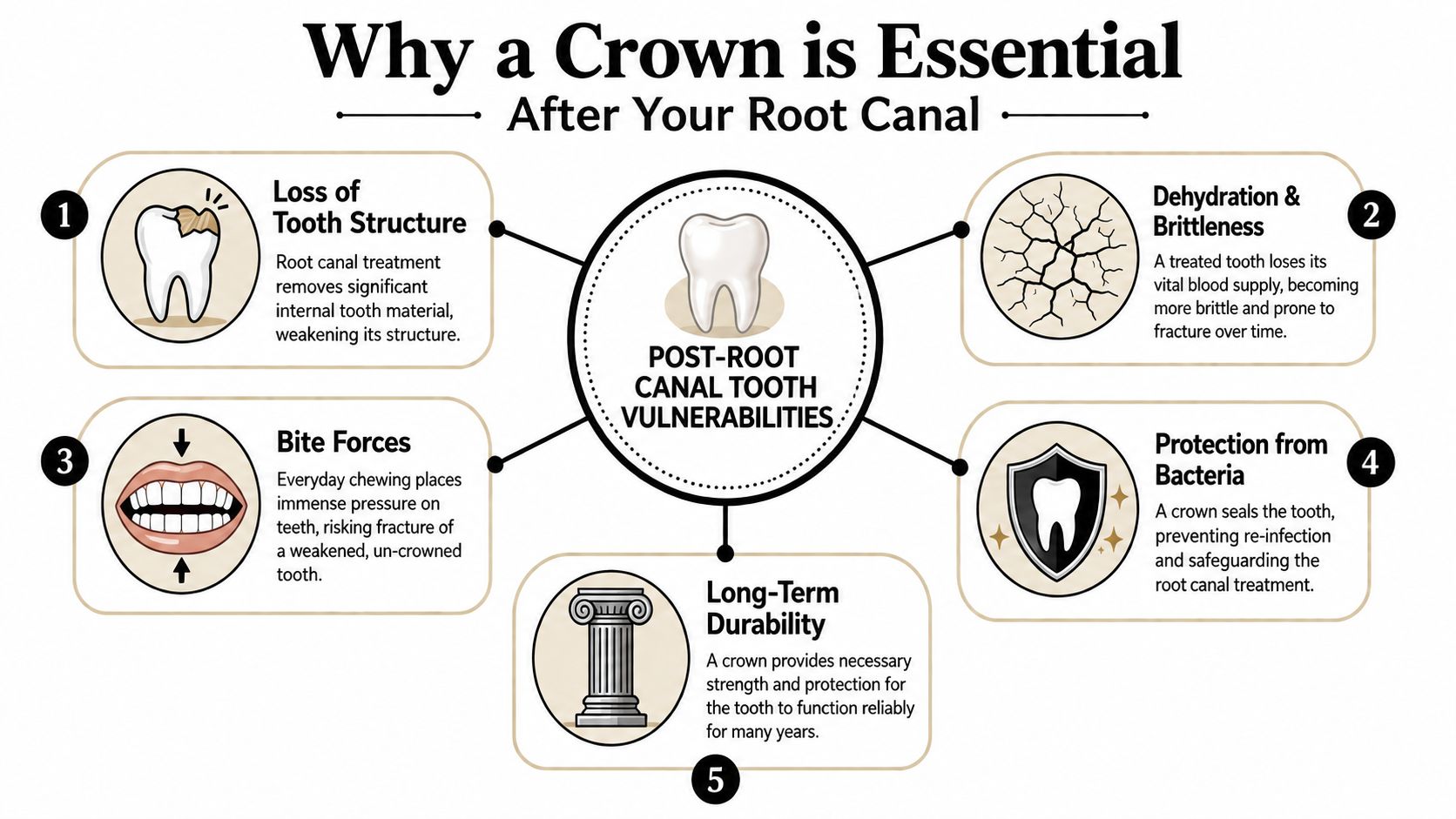
Why a Crown Is Essential After Your Root Canal
A tooth that has had a root canal often looks fine from the outside. Inside, it's a different story. The infected or damaged tissue has been removed, and the dentist has created access through the top of the tooth to clean and seal the root canal system. That process saves the tooth, but it also leaves the remaining structure less able to handle force on its own.
The tooth is weaker after treatment
A helpful way to think about it is a hollowed wooden post. It may still stand upright, but it won't tolerate pressure the way a solid one does. Root canal-treated teeth can become more brittle, and they're often dealing with previous decay, old fillings, or fractures that weakened them before treatment even started.
Back teeth face the biggest risk because they absorb heavy chewing forces every day. That's where a root canal cap becomes less of a cosmetic upgrade and more of a structural necessity.
What happens without a crown
After endodontic treatment, posterior teeth have a 24.2% failure rate when left without a crown, and full coronal coverage helps prevent cusp fracture under chewing forces (clinical review on crowns after endodontic treatment).
That's why dentists are usually direct about this recommendation. If the treated tooth is a molar or premolar, waiting too long can turn a saveable tooth into a cracked tooth. Once the fracture extends too far, the plan may shift from restorative dentistry to tooth extraction and, later, replacement options such as dental implants near me.
A crown doesn't just sit on top of the tooth. It redistributes bite pressure around the tooth so the weaker remaining walls aren't carrying the full load alone.
What the crown actually does
A well-made crown helps in several ways at once:
- Protects against fracture: It wraps and supports the remaining tooth.
- Restores chewing strength: The tooth can return to normal function more predictably.
- Seals the tooth: That reduces exposure of vulnerable tooth structure.
- Stabilizes the bite: A properly shaped crown helps the upper and lower teeth meet correctly.
This is why the cap is often described as the final step, not an add-on.
It's not only about appearance
Patients sometimes assume a crown is mainly for looks because it's visible above the gumline. Aesthetic benefit is real, especially when color-matched porcelain is used, but function comes first. The goal is to preserve the natural tooth in a form that can handle daily use.
When considering a cosmetic dentist near me, it's worth knowing that the best-looking crown is still designed around strength, fit, and protection. A pretty crown that doesn't support the tooth correctly won't solve the underlying problem.
Choosing the Right Material for Your Dental Crown
Once the need for a crown is clear, the next question is material. At this point, treatment becomes more personal. The right choice depends on where the tooth sits in the mouth, how visible it is when smiling, how much force it takes during chewing, and the condition of the remaining tooth structure.
The main trade-offs patients should know
Some crown materials prioritize appearance. Others prioritize strength. Some do both fairly well, but every option involves compromise.
A front tooth usually calls for the most natural translucency. A back molar often needs a material that can stand up to stronger grinding forces. Patients who are also interested in cosmetic dentistry, teeth whitening, or a broader smile upgrade often want the crown to blend smoothly with adjacent teeth.
Dental Crown Material Comparison 2026
| Material | Best For | Aesthetics | Durability |
|---|---|---|---|
| Zirconia | Back teeth, heavy bite pressure, patients who want strength | Natural-looking, though often slightly less lifelike than high-end porcelain in certain lighting | Very strong and dependable for molars |
| All-Porcelain or E-MAX | Front teeth and visible areas | Excellent shade matching and translucency | Strong, but chosen more often when appearance is the top priority |
| Porcelain-Fused-to-Metal | Patients who want a balance of strength and appearance | Good appearance, though metal underneath can affect the look over time in some cases | Durable and time-tested |
| Full Metal or Gold Alloy | Back molars where appearance matters less | Limited cosmetic appeal | Excellent wear characteristics and strong function |
How dentists usually guide the decision
A root canal cap on a front tooth is different from a crown on a molar. The decision often comes down to these factors:
- Smile visibility: If the tooth shows when speaking or smiling, porcelain-forward materials usually become more attractive.
- Bite force: If the tooth does most of the grinding, zirconia or another high-strength option may make more sense.
- Space available: Some materials require different amounts of tooth reduction.
- Overall smile goals: A patient already planning veneers, whitening, or other restorative dentistry may want the crown selected with that larger plan in mind.
For patients who want a broader overview of options, this guide to types of dental crowns can help clarify the differences.
Decision rule: Front teeth usually reward beauty. Back teeth usually reward strength. Many treatment plans try to balance both.
What works well and what doesn't
What works is matching the material to the tooth's job. A highly aesthetic material on a high-stress molar may not be the smartest long-term call if durability is the top concern. On the other hand, choosing the strongest-looking option for a front tooth may leave a patient disappointed with how the smile looks.
What doesn't work is treating all crowns like interchangeable caps. They aren't. The crown material, bite design, and fit all affect whether the final result feels comfortable, looks natural, and lasts well.
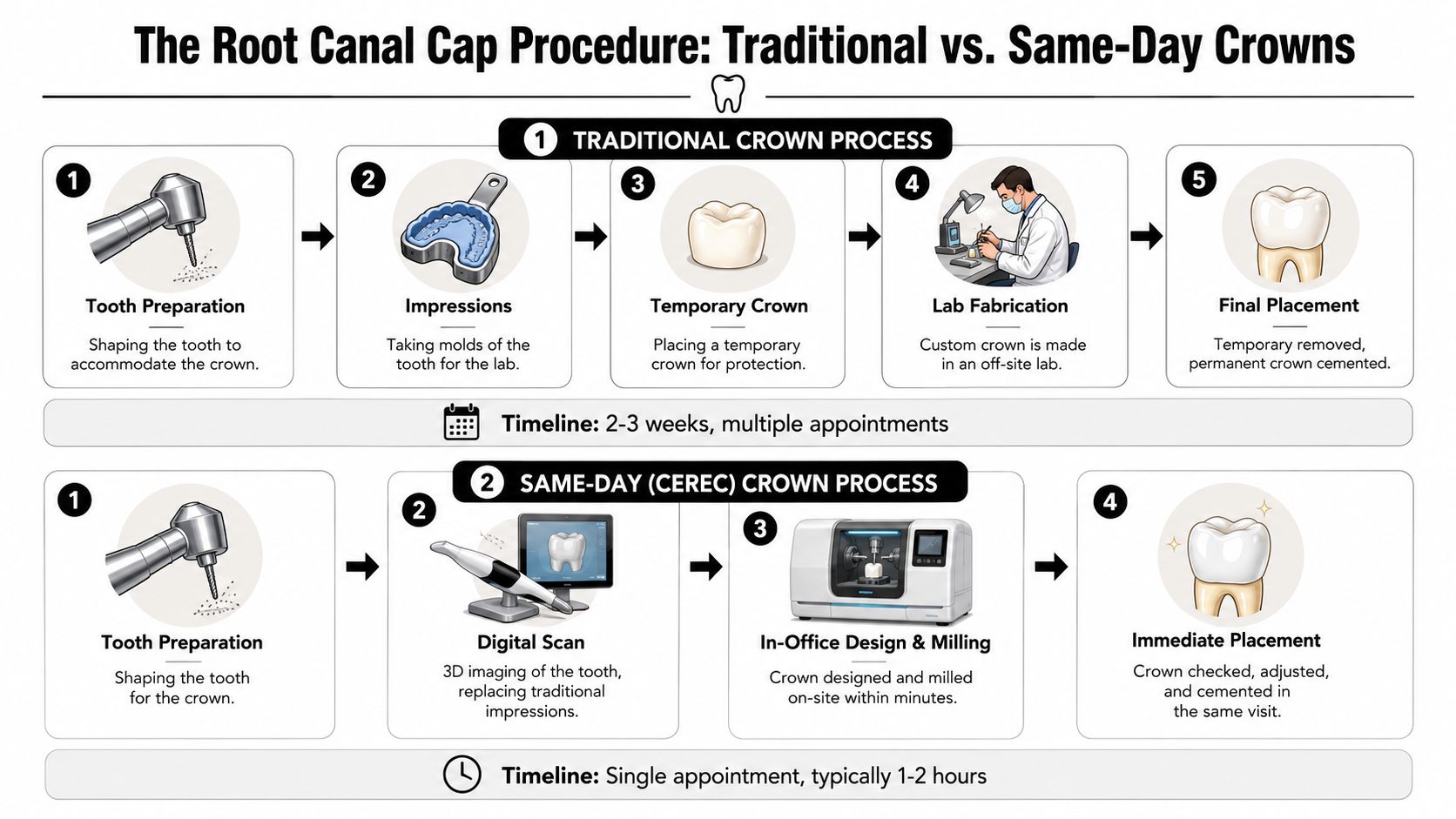
The Root Canal Cap Procedure Traditional vs Same-Day Crowns
Patients often ask whether getting the cap is a long process. The answer depends on whether the crown is made the traditional way or with same-day digital technology.
The traditional crown process
The standard approach usually involves more than one visit. The tooth is shaped so the crown can fit precisely, impressions are taken, and a temporary crown is placed while the final restoration is made by a dental lab.
That temporary phase is functional, but it's not the finish line. Temporary crowns can feel less refined, and patients still need to return for the permanent crown to be checked, adjusted, and cemented.
A clear walkthrough of the dental crown procedure helps explain how each stage fits together.
The same-day crown option
For many patients in Miami, especially those balancing work, family, and packed schedules, same-day CEREC crowns are appealing because they reduce the waiting period. Instead of using traditional impression material, the tooth is scanned digitally. The crown is then designed and milled in-office.
That means the patient can often leave with the final restoration the same day, rather than wearing a temporary and coming back later. For professionals trying to avoid multiple interruptions in their week, that convenience matters.
Same-day treatment doesn't mean rushed treatment. It means the design, fabrication, and placement happen in one coordinated visit.
A short video can make the process easier to picture:
Why preparation quality matters
The crown only performs well if the tooth underneath is prepared correctly. One important principle is the ferrule effect, which requires a continuous band of dentine at least 2.0 mm high to improve fracture resistance and support long-term stability (dental crown ferrule reference)).
That detail sounds technical, but the patient benefit is simple. Precise shaping helps the crown grip and protect the tooth more effectively. Digital scanning can also improve planning and fit, which supports comfort during placement and function afterward.
What patients can expect during the appointment
Whether the crown is traditional or same-day, the appointment usually includes:
- Evaluation and imaging: The dentist checks the tooth, the root canal result, and the surrounding bite.
- Preparation: The tooth is shaped to receive the crown safely.
- Capture of the shape: Either a digital scan or a traditional impression is used.
- Placement: A temporary or final crown is placed, depending on the method.
- Bite adjustment: The dentist checks how the tooth contacts the opposing teeth.
What patients usually notice most is not the technology itself. It's that the tooth feels protected again.
Long-Term Benefits of Capping Your Root Canal Tooth
A few months from now, the goal is simple. You want to chew without hesitation, stop thinking about that tooth, and keep your smile intact without being pulled into a bigger treatment plan.
That is the long-term value of capping a root canal tooth. A well-made crown helps the treated tooth stay useful, stable, and comfortable in daily life. For many patients, keeping the natural tooth is the most conservative option, provided the remaining tooth structure is sound and the restoration is planned carefully.
Keeping your natural tooth working
After a root canal, the tooth often has less internal support and a higher risk of breaking under pressure. The crown acts as the protective outer restoration that helps the tooth handle normal function over time.
In practice, this matters most during ordinary moments. Chewing lunch during a workday. Eating on both sides again. Biting without that quiet concern that the tooth could crack if you are not careful.
A protected tooth is often a more straightforward solution than losing it and replacing it later.
Better function with fewer future complications
Patients usually notice two long-term improvements first. The tooth feels more dependable, and daily eating feels less limited.
Without a final crown, a root canal tooth is more vulnerable to fracture, especially in the back of the mouth where bite forces are higher. If that fracture extends too far below the gumline, the choices become narrower and more costly. At that point, treatment may involve:
- Tooth extraction
- Bone loss concerns over time
- Implant replacement or a bridge
- More appointments and higher overall expense
This is one of the trade-offs I discuss often with patients. A crown adds treatment now, but it can reduce the chance of a much larger problem later.
A more natural look and a more settled feeling
Long-term success is not only about chewing strength. Appearance and peace of mind matter too.
A properly matched crown restores the tooth's shape and color so it blends with the rest of your smile instead of drawing attention. Just as important, it gives the tooth a finished, secure feel. Patients often describe real relief once the final crown is in place because the tooth no longer feels temporary or fragile.
At Ultra Smile DentalSpa, that benefit is even more practical for busy professionals in Miami. With same-day CEREC crowns in the right case, patients can complete the final step efficiently in a calm, comfort-focused setting and get back to work, meetings, and normal meals with less disruption.
Experience a New Standard of Care in Miami
Many adults avoid treatment because they expect a dental appointment to feel tense, noisy, and uncomfortable. That expectation often comes from older experiences, not from what modern care can offer today.

Comfort matters during restorative treatment
Patients coming in for a crown after a root canal are often already tired of dealing with the tooth. They may have gone through pain, emergency visits, temporary restorations, or weeks of chewing carefully. The environment of care can make a real difference.
In a modern Miami dental setting, patients often expect more than basic treatment. They want clear communication, a calm pace, and amenities that reduce stress rather than adding to it. Features such as refreshments, custom aromatherapy, streaming entertainment, noise-canceling headphones, and a soothing hot towel finish can shift the experience from something patients dread to something they can get through comfortably.
Technology supports a gentler experience
Comfort isn't only about atmosphere. It also comes from accuracy. Primary root canal treatments performed by specialists using surgical microscopes and 3D CBCT imaging show success rates exceeding 95%, reflecting the value of enhanced visualization and precise planning (advanced endodontic technology and success rates).
For patients in Downtown Miami, Midtown Miami, and Hallandale Beach, that matters because precise imaging can help the clinical team evaluate the tooth carefully before the final crown is placed. Better visibility supports cleaner planning, better fit, and fewer surprises.
What many anxious patients want most
It usually comes down to three things:
- Predictability: They want to know what's happening and why.
- Efficiency: They don't want unnecessary repeat visits if a same-day solution is appropriate.
- Reassurance: They want to feel that the team is paying attention to comfort, not just the tooth.
That combination is especially important for patients searching for a dentist in Miami, FL, emergency dentist, or cosmetic dentist near me who want both technical quality and a more personal experience.
Frequently Asked Questions About Root Canal Caps
Is getting the crown painful
Most patients find the crown appointment manageable, especially after the infected tissue has already been treated. The area is numbed, the tooth is prepared carefully, and the bite is adjusted so the final crown feels natural. Patients with dental anxiety often do best when the appointment is explained step by step beforehand.
How long will a root canal cap last
Longevity depends on the tooth, the bite, the material, and how well the tooth was restored. As noted earlier in this guide, properly restored root canal-treated teeth can remain in function for many years, and long-term survival data is strong when the tooth is protected appropriately.
What happens if someone delays getting a crown
Delay increases the risk that the treated tooth will crack, especially if it's a back tooth used for chewing. A tooth that might have been saved predictably with a crown can become a bigger restorative problem if the remaining structure breaks down.
A temporary restoration is not the same as a long-term protective crown.
Are there alternatives to a crown after a root canal
Sometimes the answer depends on how much healthy tooth structure remains and where the tooth is located. In some limited situations, another type of restoration may be considered. For many back teeth, though, a full-coverage crown remains the most reliable option.
Should patients choose a same-day crown or a traditional crown
That depends on the case. Same-day CEREC crowns are attractive for convenience and efficiency, especially for busy adults in Miami. Traditional crowns may still be appropriate in some situations depending on material choice, bite demands, or treatment planning needs.
When should someone call right away
Call promptly if the treated tooth feels painful when biting, if a temporary crown comes off, if part of the tooth breaks, or if there's swelling. Those symptoms can turn into a larger problem if they're ignored.
If a treated tooth needs protection, the next step shouldn't wait. Ultra Smile DentalSpa provides advanced, comfort-focused care for patients in Miami, Downtown Miami, Midtown Miami, and Hallandale Beach who need a root canal cap, same-day crowns, emergency dentist support, restorative dentistry, cosmetic dentistry, or a complete treatment plan. To schedule a consultation with Dr. Neda Bahmadi and get clear answers about the best way to protect your tooth, contact the office today.