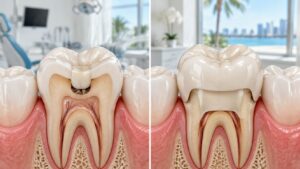
Grinding teeth doesn't directly cause cavities, but it can reduce enamel thickness by up to 30% and untreated bruxism can wear enamel about 2.5 times faster than normal, which makes teeth much easier targets for decay. If waking up with jaw soreness, tooth sensitivity, or morning headaches feels familiar, the good news is that this problem is treatable, and patients in Miami can protect their teeth once they understand what grinding is doing.
A lot of adults don't realize they're grinding until a partner hears it at night, a cold drink suddenly stings, or a routine dental exam shows flattened edges and tiny cracks. In a busy city like Miami, stress, sleep disruption, and packed schedules often push these habits into the background. The concern isn't just wear. It's how wear changes the surface of the teeth and gives bacteria new places to settle.
The question Can grinding teeth cause cavities? needs a careful answer. The connection is indirect, but it's real. Bruxism weakens enamel, creates rough areas and micro-cracks, and can turn a smooth tooth surface into a sheltered spot for plaque and cavity-causing bacteria. The sections below explain how that happens, what signs to watch for, and what treatment tends to work best.
Table of Contents
- Your Trusted Dentist in Miami for Tooth Grinding Concerns
- How Teeth Grinding Creates a Pathway for Cavities
- Common Signs That You Are Grinding Your Teeth
- Protect Your Smile with Custom Treatment Options
- Your New Patient Experience at Our Miami Dental Spa
- Schedule Your Consultation with Our Miami Dentist Today
Your Trusted Dentist in Miami for Tooth Grinding Concerns
A common Miami pattern looks like this. Someone with a full work calendar wakes up with a tight jaw, shrugs off a temple headache, grabs coffee, then notices the coffee feels sharp on one side of the mouth. By the time sensitivity starts showing up with cold water or sweets, grinding has often been happening for a while.
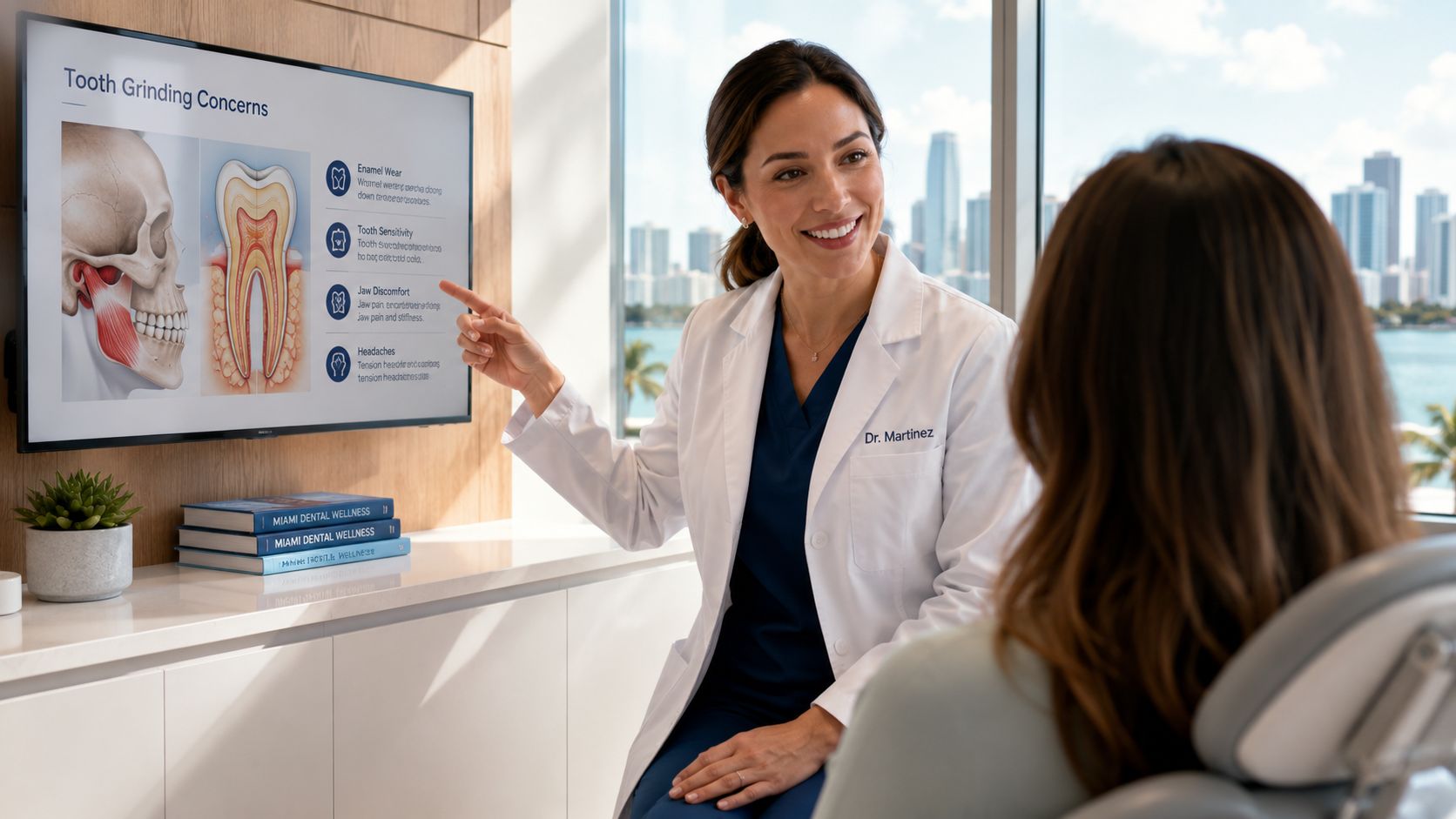
Bruxism is common enough that many people in Miami, Downtown Miami, and Hallandale Beach are dealing with it without knowing the name for it. According to this overview of grinding and cavity risk, approximately 10 to 15% of Americans moderately to severely grind their teeth, and while grinding doesn't directly cause cavities, it significantly increases cavity risk by progressively eroding the protective enamel layer, making teeth thin, fragile, or even shattered.
Why patients often miss it
Grinding usually happens during sleep or during focused stress. That means the person doing it may not notice the habit itself. What they notice instead is the aftermath.
Some of the earliest complaints sound unrelated at first:
- Morning jaw fatigue that's blamed on sleep position
- Headaches at the temples that feel like tension
- Sharp sensitivity with cold drinks or sweet foods
- A rough or chipped edge felt with the tongue
- Facial soreness that comes and goes
Many patients don't come in saying, "I grind my teeth." They come in saying, "My teeth suddenly feel sensitive," or "My jaw feels tired every morning."
Why local care matters
For patients searching for a dentist near me or a dentist in Miami, FL, bruxism care works best when the exam is detailed and the treatment is personalized. Grinding affects more than one area at once. It can involve enamel wear, bite pressure, cracked fillings, sensitivity, and jaw strain.
That is why an effective visit often includes more than a quick look. It may involve a full review of worn edges, bite marks, pressure patterns, existing restorations, and whether any damage already needs restorative dentistry, cleaning and exams, or updated dental x-rays. If a tooth has been weakened enough, the conversation may also include crowns, cosmetic repair, or even emergency care if a crack has turned painful.
How Teeth Grinding Creates a Pathway for Cavities
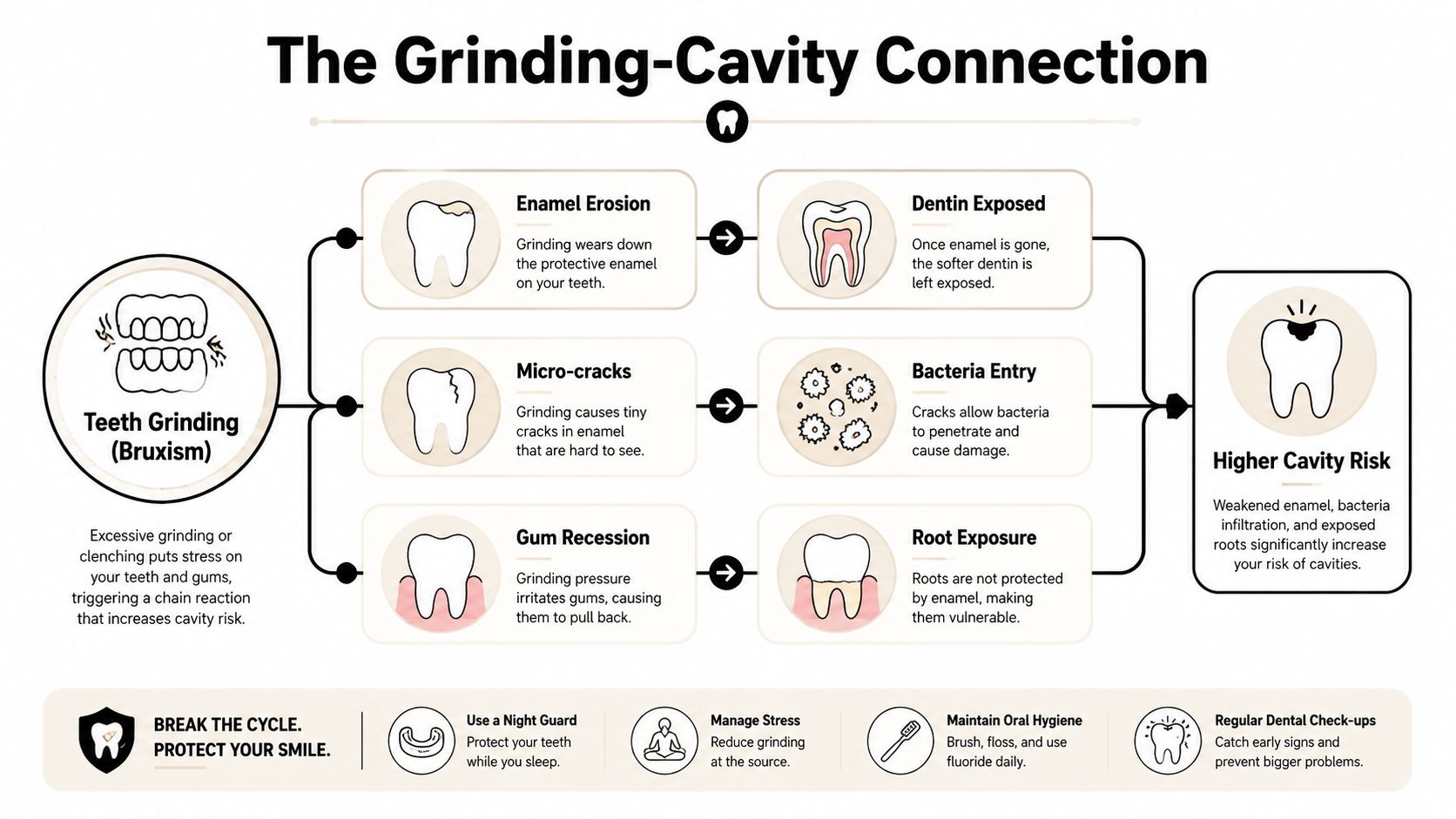
The short version is simple. Grinding changes the surface of a tooth from smooth and protective to worn, cracked, and easier for bacteria to colonize.
What grinding does to enamel first
Enamel is the hard outer shell of the tooth. It works like a protective glaze on ceramic. Once that glaze gets thinned down, the structure underneath becomes easier to irritate and easier to damage.
According to this bruxism explanation, chronic bruxism can reduce enamel thickness by up to 30%, and people with untreated bruxism experience enamel wear rates approximately 2.5 times faster than those without the condition. That matters because a thinner outer layer gives bacteria less distance to travel before they can affect deeper tooth structure.
A worn tooth also stops behaving like a polished tooth. The more surface damage there is, the more likely plaque is to cling to rough areas.
Practical rule: Smooth enamel is easier to keep clean. Rough, damaged enamel gives plaque more places to stay put.
A short video can help make that easier to visualize.
The Biofilm Trap inside tiny cracks
This is the part many articles skip.
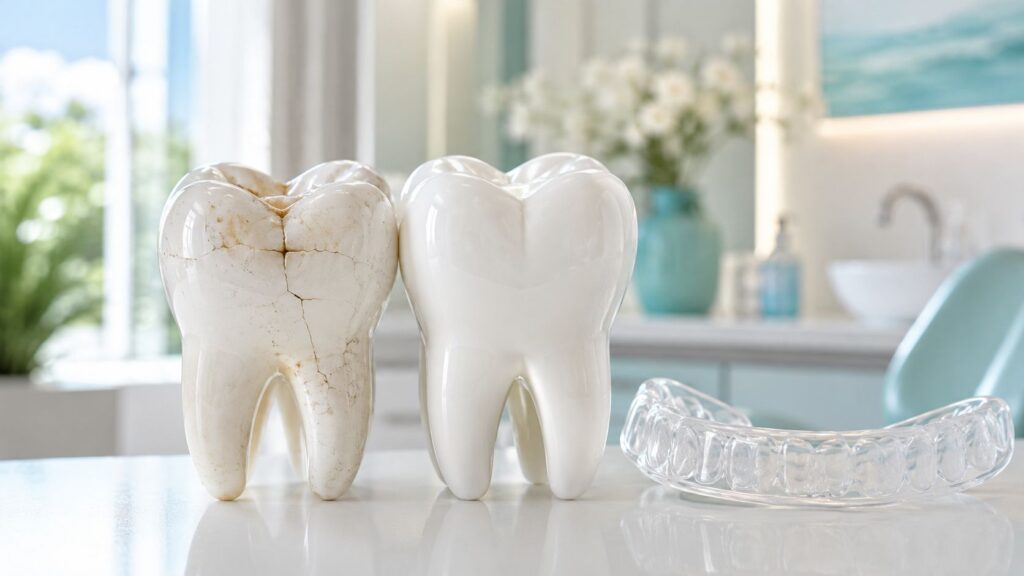
Grinding doesn't just flatten teeth. It can create micro-cracks, chips, and micro-abrasions. Those tiny defects act like cracks in a sidewalk where weeds keep returning. Even if the visible surface looks clean, the sheltered spaces below can hold onto bacteria.
The indirect pathway is described well in this discussion of permanent damage from grinding, which notes that structural vulnerabilities from bruxism serve as niches for plaque accumulation and accelerate demineralization. A more specific explanation appears in this article about grinding-related tooth damage, which highlights how harmful bacteria can hide in grinding-induced cracks and create a localized decay zone.
That hidden bacterial shelter is the Biofilm Trap. Regular brushing does a good job on open surfaces. It doesn't always disrupt bacteria tucked inside a fine crack where the toothbrush bristles and toothpaste can't fully reach.
Why this matters for cavity risk
Once bacteria remain protected in these defects, acid stays in closer contact with weakened tooth structure. That combination is what shifts a patient from "worn teeth" to "worn teeth plus decay risk."
A straightforward way to understand is:
| Change from grinding | What it means clinically |
|---|---|
| Enamel gets thinner | The tooth loses part of its natural shield |
| Surface gets rougher | Plaque sticks more easily |
| Micro-cracks form | Bacteria gain protected hiding spots |
| Sensitivity starts | The tooth is already less defended |
This is why the answer to can grinding teeth cause cavities is nuanced. Grinding is not the bacteria. It is the damage that makes bacterial decay more likely.
Common Signs That You Are Grinding Your Teeth
Some signs are obvious. Others are subtle enough that patients explain them away for months.
Symptoms many patients notice first
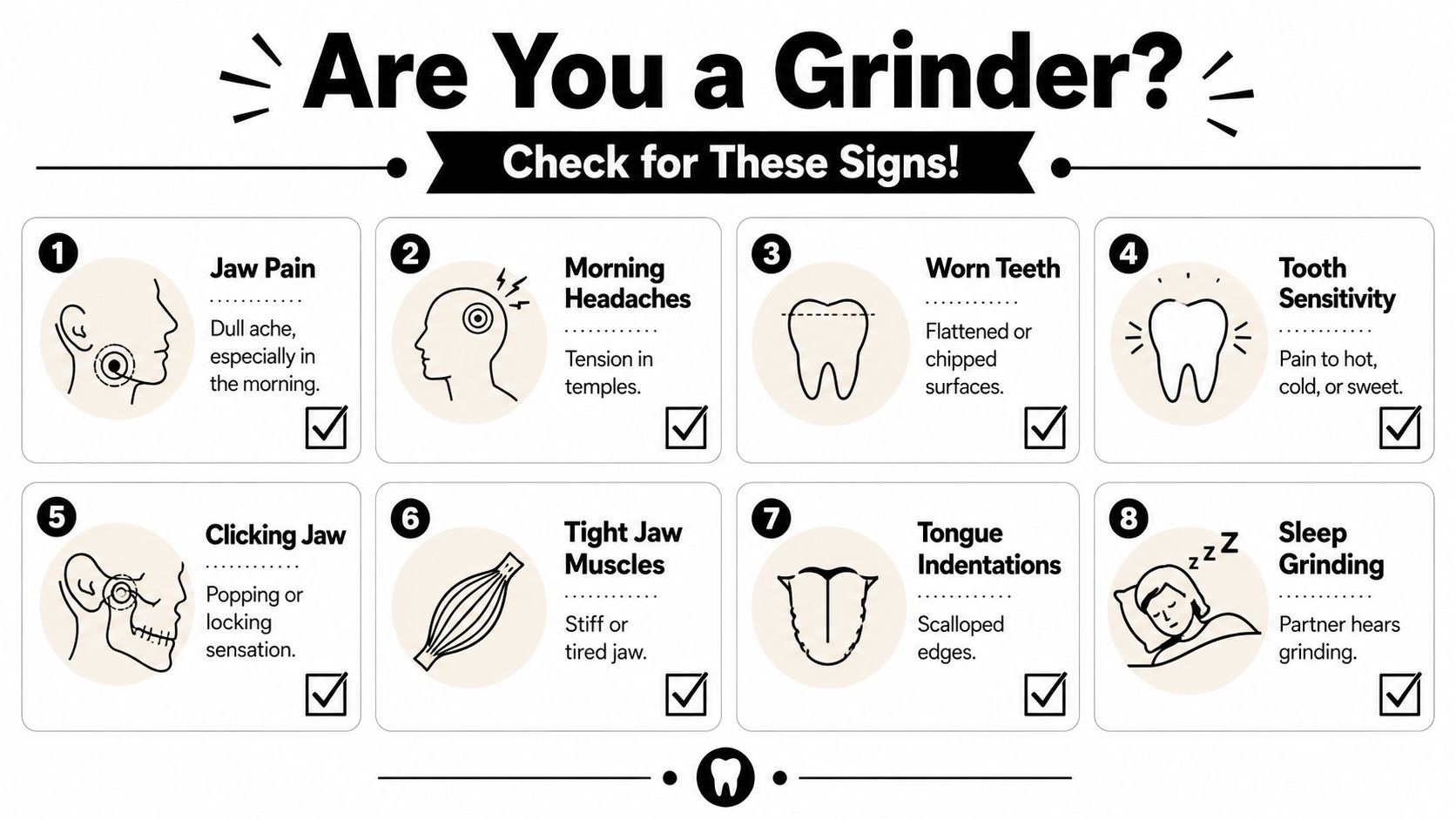
Grinding often announces itself through discomfort rather than noise. The first clue may be a dull headache, a tight face, or a tooth that suddenly reacts to cold.
Common symptoms include:
- Jaw pain in the morning because the jaw muscles have been working overnight
- Temple headaches from repeated clenching pressure
- Tooth sensitivity when enamel has been worn down
- A tired or heavy feeling in the jaw after sleep
- Clicking or popping near the jaw joint
- Interrupted sleep if grinding is intense enough to wake the person or a partner
- Ear-area discomfort even though the ear itself is healthy
For patients who want a deeper checklist, this guide on how to know if you grind your teeth at night walks through the signs in more detail.
If hot coffee, ice water, or sweets suddenly start feeling sharper than they used to, worn enamel should be on the list of possible reasons.
Signs a dentist may spot during an exam
Patients usually feel the symptoms. A dentist sees the pattern.
A clinical exam may show:
| What a patient notices | What may be visible during an exam |
|---|---|
| Sensitivity | Smooth, flattened biting edges |
| A chipped corner | Fine cracks or larger fractures |
| Morning soreness | Wear facets from repeated contact |
| "My bite feels off" | Changes in how upper and lower teeth meet |
Other visual clues can include scalloped edges on the tongue from pressing against the teeth, wear on older fillings, and tiny chips that catch the light differently than healthy enamel.
Some cases stay mild for a long time. Others move quickly once stress, sleep issues, or bite pressure increase. That is why a new patient exam, routine cleaning and exams, and updated dental x-rays can be helpful even when the pain still feels manageable. In more advanced cases, the same process that causes sensitivity may also weaken a tooth enough to require tooth extraction, restorative dentistry, or urgent attention from an emergency dentist.
Protect Your Smile with Custom Treatment Options
The right treatment depends on what grinding has already damaged, how often it is happening, and whether the main problem is wear, pain, fracture risk, or all three. For most patients, the goal is straightforward. Stop the pressure, protect the enamel that remains, and repair anything that has already been compromised.
What works best for ongoing protection
A professionally made night guard is usually the cornerstone because it creates a custom barrier between the upper and lower teeth. It doesn't cure the habit itself, but it protects the teeth from the force of that habit.
According to this review of mouthguards and cavity concerns, custom night guards are the most effective treatment for bruxism, reducing enamel wear by 70 to 80% and preventing crack formation in 85% of patients when worn consistently. That level of protection is why custom appliances generally outperform over-the-counter guards, which can feel bulky, fit unevenly, and sometimes encourage clenching because the bite isn't balanced properly.
Patients looking into night guards for bruxism and TMJ disorders usually benefit from a custom fit that matches their bite rather than a one-size-fits-most tray from a drugstore shelf.
Night guard hygiene matters more than most people think
A night guard doesn't cause cavities by itself. A dirty one can become part of the problem.
The same source notes a frequently overlooked issue. Biofilm accumulation on improperly cleaned guards can accelerate decay if it isn't managed with proper cleaning protocols. In a humid place like Miami, that point matters even more because appliances stored damp in closed containers can develop odor and buildup quickly.
A practical cleaning routine is simple:
- Rinse right away after removal so saliva and debris don't dry onto the surface
- Brush the guard gently with a soft toothbrush
- Let it dry fully before storing it
- Bring it to dental visits so it can be checked for wear, rough areas, or buildup
What doesn't work well is dropping the guard into a case while it's still wet, skipping cleaning for days, or assuming that brushing the teeth alone is enough.
A clean guard protects teeth. A neglected guard can hold onto the same film of bacteria patients are trying to keep off their teeth.
When damaged teeth need restorative or cosmetic care
Some patients catch bruxism early and only need protection. Others already have cracked edges, worn fillings, or cavities that need repair.
Treatment may involve different services depending on the damage:
- Small areas of decay may be treated with tooth-colored fillings.
- Cracked or weakened teeth may need crowns to restore strength.
- Visible front-tooth wear may be improved with cosmetic dentistry such as veneers when the bite is stable and the teeth are protected.
- Missing or unsalvageable teeth may lead to a discussion about dental implants near me if replacement is needed after extraction.
Patients searching for a cosmetic dentist near me often discover that appearance and function are tied together. A beautiful repair won't last well if the grinding pressure underneath hasn't been addressed first.
Your New Patient Experience at Our Miami Dental Spa
For many adults, the hardest step isn't treatment. It's booking the first visit because they're expecting a rushed, clinical, uncomfortable experience. A calmer setting changes that expectation before the exam even begins.

What the first visit feels like
A thoughtful dental visit should feel organized and unhurried. Patients are welcomed into an environment designed to reduce tension rather than add to it. That matters for bruxism because stress and jaw tension often travel together. A calm reception area, personalized attention, and a less sterile atmosphere can help patients settle before anyone looks at a tooth.
For adults in Miami who have postponed care, that first impression counts. Many are balancing work, family schedules, and lingering dental anxiety. When the setting feels gentler, patients are usually more willing to talk openly about headaches, clenching, or fear of needing extensive treatment.
How bruxism is evaluated gently and thoroughly
A bruxism exam is not complicated for the patient, but it should be thorough for the clinician. The visit often starts with symptoms. Morning soreness, broken fillings, cold sensitivity, worn edges, and whether anyone has heard nighttime grinding.
The clinical review may include:
- Visual wear assessment of the biting edges and chewing surfaces
- Checks for tiny fractures or existing dental work under pressure
- Bite evaluation to see how the teeth meet
- Jaw joint and muscle review when clenching or TMJ symptoms are present
- Dental x-rays when deeper cracks, infection, or structural damage need evaluation
Some of the most important signs of grinding are quiet ones. A polished flat spot on a tooth, a small edge chip, or a pattern of repeated wear can say a lot before severe pain ever starts.
If there is active decay, a cracked tooth, or advanced sensitivity, the visit may shift from prevention into treatment planning. That can include restorative dentistry, a custom appliance, replacing damaged fillings, or discussing whether urgent care is needed from an emergency dentist.
What happens after the exam
Patients should leave with clarity, not confusion. The next steps are usually explained in plain language. Which teeth are showing wear, whether a cavity is already present, whether a custom night guard is recommended, and whether any restorative work should happen first.
A strong treatment plan is personalized rather than generic. One patient may only need monitoring and a night guard. Another may need a filling, crown, or cosmetic repair because grinding has already changed the shape of the smile. If a tooth has been lost or can't be saved, the conversation may also include replacement options such as dental implants.
That transparency makes a difference for busy families and professionals in Downtown Miami, Midtown Miami, and Hallandale Beach. Patients usually feel much better when they know exactly what is happening, what can wait, and what should be addressed now.
Schedule Your Consultation with Our Miami Dentist Today
Grinding doesn't have to stay a mystery and it doesn't have to keep damaging teeth in the background. If jaw soreness, tooth sensitivity, chipped edges, or morning headaches have become part of daily life, a dental evaluation can identify whether bruxism is involved and whether cavities or cracks are already forming.
When it is time to book
It is worth scheduling a visit if any of these sound familiar:
- Cold drinks sting suddenly
- The jaw feels tight in the morning
- A tooth edge looks flatter or chipped
- A partner hears grinding at night
- A filling or crown keeps feeling stressed
- A tooth has become painful enough to wonder about emergency care
Patients often search for a dentist near me, dentist in Miami, FL, cosmetic dentist near me, or emergency dentist when the discomfort starts interfering with normal life. That is the right time to get answers. Waiting often gives grinding more time to wear enamel, deepen cracks, and complicate treatment.
Care that supports comfort and long term protection
Bruxism care isn't just about stopping damage. It also improves daily comfort. Protected teeth are less likely to become sensitive. A balanced bite can feel more relaxed. Restored teeth function better when chewing, and cosmetic repair can rebuild confidence when front teeth have become worn or uneven.
The right combination of dental care, cleaning and exams, dental x-rays, restorative dentistry, and custom night guard therapy can protect the smile before larger treatment becomes necessary. If a tooth is already beyond repair, care may also include tooth extraction and replacement planning.
For adults in Miami who want a calmer experience, prompt care can feel like relief rather than one more thing on the calendar.
Patients who are ready to address grinding, tooth sensitivity, cracked teeth, or cavity risk can schedule a consultation with Ultra Smile DentalSpa to explore personalized care in Miami, Downtown Miami, Midtown Miami, and Hallandale Beach. Dr. Neda Bahmadi and the team provide a wide range of dental care in a soothing setting, including exams, dental x-rays, custom night guards, restorative dentistry, cosmetic dentistry, emergency dental services, tooth extraction, and dental implant planning.