Mild bad breath after wisdom teeth removal usually fades within about a week, while odor that worsens with escalating pain around days 2 to 4 points to possible dry socket and needs a dentist's review. Why does a bad smell cause so much worry when the more useful clue is whether pain is improving or getting worse?
For adults searching for a dentist in Miami, FL, that distinction helps separate routine recovery from a problem that needs attention. Ultra Smile DentalSpa provides a calm, patient-focused setting for discussing post-extraction concerns, including an unpleasant taste, lingering odor, or discomfort that isn't settling.
Table of Contents
- Is Bad Breath After Wisdom Teeth Removal Normal?
- What Causes Bad Breath After Wisdom Tooth Surgery
- How to Clean Your Mouth Without Disturbing the Clot
- When Bad Breath Needs a Dentist the Same Day
- Keeping Your Breath Fresh After Your Gums Heal
- Book Your Post-Extraction Check in Miami, FL
Is Bad Breath After Wisdom Teeth Removal Normal?
A mild, temporary odor can be part of normal healing. Blood, healing tissue, and less thorough cleaning near the surgical area can change how the mouth smells. Odor alone doesn't establish that an infection is present.
The more useful questions concern the direction of recovery. Is discomfort easing? Is swelling settling? Is the smell becoming less noticeable, or has it appeared alongside new, stronger pain?
Postoperative malodor can increase during the first week and return toward the preoperative level by about day 15, according to clinical research indexed by PubMed. That describes a recovery pattern, not a deadline that makes worsening symptoms safe to ignore.
Timing Helps, but Symptoms Matter More
Early healing can involve an unusual taste and some swelling. Food retention may then contribute to odor while the socket remains open. A patient whose breath smells slightly stale but whose discomfort keeps easing has a different situation from someone whose pain suddenly becomes deep and throbbing.
Imperial College Healthcare's wisdom-tooth surgery guidance says postoperative bad breath usually lasts less than one week, describes dry socket as usually appearing 2 to 4 days after surgery, and identifies infection symptoms that can appear 3 to 7 days afterward. These windows overlap, so the calendar can't establish the diagnosis by itself.
Normal healing, dry socket and infection compared
| Sign | Normal healing | Dry socket | Infection |
|---|---|---|---|
| Timing | Improving within about a week, fading toward pre-surgery level by day 15 | Usually days 2 to 4 | Often days 3 to 7 or later |
| Pain | Mild and easing | Worsening, throbbing, constant | Increasing pain and swelling |
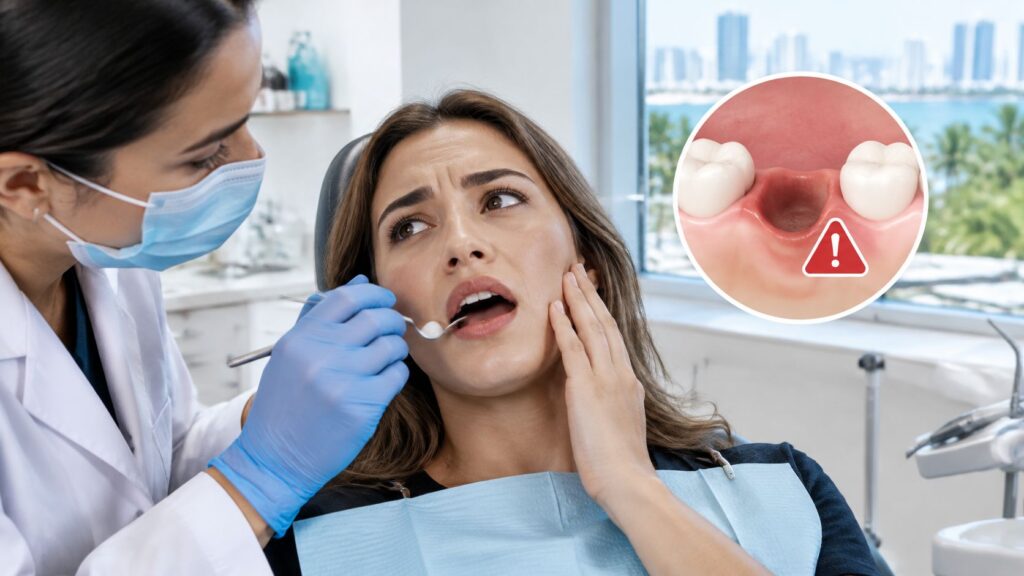
| Taste and smell | Mild odor that fades | Foul taste, bad breath, empty-looking socket | Bad taste, possible pus |
| Fever or feeling unwell | No | Usually no | Often yes |
| Usual treatment | Home care and time | Professional flush and medicated dressing, usually no antibiotics | Clinical review, antibiotics if the dentist judges they are needed |
The timing ranges above describe typical patterns, not a substitute for an examination. Fever isn't required for an infection to be present, and an apparently empty socket shouldn't be explored at home.
Dry Socket Isn't Automatically an Infection
Dry socket is a delayed-healing inflammatory problem, rather than a conventional infection. The distinction matters because antibiotics don't automatically address the cause of the pain. A dentist may instead gently flush the socket and apply a medicated dressing.
Infection requires an in-person assessment, particularly when swelling increases, pus appears, or the patient feels unwell. Antibiotics may be appropriate when the dentist identifies a clinical need, but leftover antibiotics shouldn't replace that evaluation.
Practical rule: An improving smell with easing discomfort is more reassuring than a strong smell accompanied by worsening pain.
Written post-extraction care guidance can help patients keep the recovery routine consistent. For general hygiene away from the wound, DentalHealth.com's resource on tongue care for fresher breath provides additional context, but tongue cleaning isn't a treatment for a painful socket.
Before calling, patients can note the day after surgery, whether pain is mild or severe, and whether the odor is improving. Symptoms matching dry socket or infection, especially several concerning signs together, warrant a call rather than another day of waiting.
What Causes Bad Breath After Wisdom Tooth Surgery
The socket isn't the only possible source of postoperative odor. Several factors can occur together, which explains why brushing the teeth may improve general freshness without resolving a painful extraction site.
The most important distinction is between a healing complication and material accumulating around the wound. A strong smell doesn't reveal which one is responsible.
- Dry socket: The protective clot fails to form or is lost, leaving the socket exposed. This is particularly relevant after lower wisdom-tooth removal and can produce a foul taste alongside significant pain, as described in NHS Inform's wisdom-tooth removal guidance.
- Trapped food and debris: Small food particles can settle in an open socket and contribute to odor as they break down. Digging them out with a fingernail, toothpick, or cotton swab risks injuring the healing area.
- Plaque and tartar: Avoiding nearby teeth entirely can allow plaque to accumulate along the gumline. Tartar is hardened plaque that regular brushing and flossing can't remove; dental hygienists remove it during professional cleaning.
- Infection: This is less common than ordinary postoperative odor and is more concerning when accompanied by increasing swelling, pus, fever, or a persistent unpleasant taste.
- Dry mouth: Reduced drinking, mouth breathing, and some pain medicines can leave the mouth feeling dry. With less saliva available to clear food and bacteria, breath may become less fresh.
- Smoking: Tobacco adds its own odor and interferes with clot stability and wound healing. Smoking-related breath changes shouldn't distract from a new painful socket.
A Useful Way to Sort the Possibilities
A patient who notices food collecting after meals needs advice about safe cleaning. A patient who develops severe pain despite taking prescribed pain relief needs an examination, even if food is also visible.
Matching the timing, pain pattern, and accompanying symptoms is more useful than trying to identify the cause by smell alone. The comparison table provides a practical guide, but a dentist must confirm a suspected complication.
How to Clean Your Mouth Without Disturbing the Clot
The goal isn't to scrub the socket clean. It's to keep the rest of the mouth clean while protecting the healing wound and removing trapped food only when the treating clinician says it's safe.
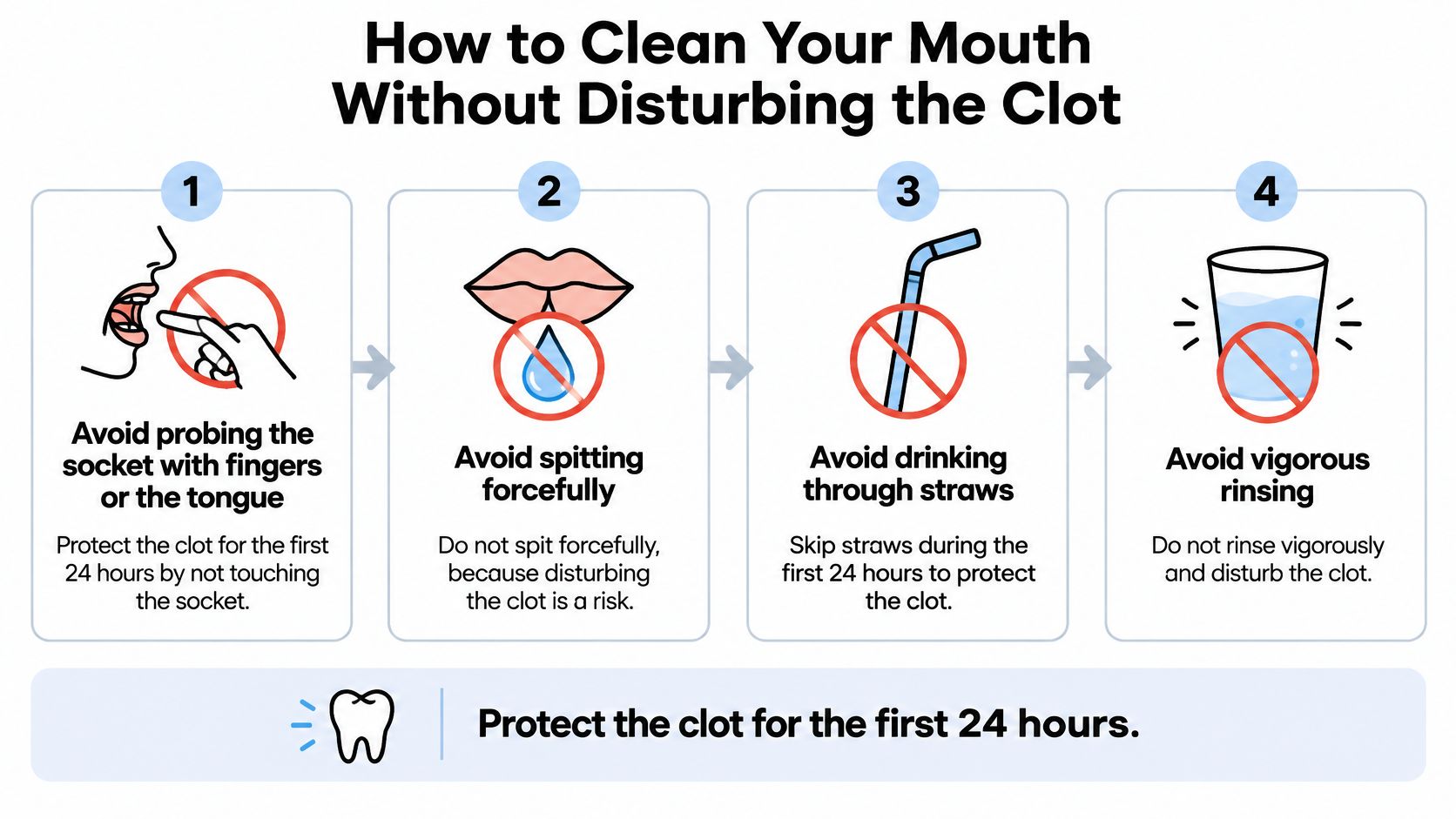
The following illustration highlights the actions most likely to disturb a newly formed clot.
A Gentle Cleaning Sequence
Protect the newly formed clot. During the first 24 hours, patients shouldn't probe the socket or rinse forcefully, according to Frimley Health's dry-socket management guidance. Forceful spitting and drinking through straws should also be avoided during this early period.
Brush the unaffected teeth carefully. A soft toothbrush can clean the rest of the mouth without passing over the surgical sites. Skipping all brushing because the socket feels sensitive allows plaque to remain elsewhere.
Use the instructed rinse gently. If warm salt water or a prescribed rinse is recommended, patients should follow the treating clinician's timing and method. Vigorous swishing isn't a stronger version of gentle rinsing; it creates a different risk.
Wait for permission before syringe irrigation. Starting too early can injure the healing area. Boston Children's Hospital's postoperative instructions begin warm salt-water syringe irrigation at about one week, but the operating clinician's instructions take priority.
Flush only with the prescribed technique. Once cleared, patients can use the oral syringe and recommended solution after meals, without forcing the tip into tissue. The clinician should demonstrate the direction of the stream and explain how long irrigation should continue.
Avoid smoking and vaping during healing. Neither is a suitable way to manage stress or an unpleasant taste after surgery. Patients who find stopping difficult can discuss practical support with the treating team.
Why Approved Irrigation Can Help
In a randomized controlled trial of 155 patients undergoing lower wisdom-tooth removal, patients instructed to irrigate their sockets had lower halitosis scores than non-irrigating controls. Greater food packing was associated with worse odor, while more frequent irrigation was associated with better scores.
That finding supports properly timed cleaning, not immediate or forceful flushing. Additional guidance on preventing dry socket can help patients avoid common clot-disrupting habits.
A syringe is a cleaning tool, not a tool for testing whether the socket has healed.
As recovery progresses, the open space should gradually shrink, food should collect less readily, and odor should ease. New pain or bleeding during irrigation is a reason to stop and contact the office, not increase the pressure.
When Bad Breath Needs a Dentist the Same Day
Mouthwash may briefly change how the mouth tastes, but it can't replace treatment for dry socket or infection. A painful, worsening socket needs an examination rather than repeated attempts to cover the smell.
The Health Service Executive's wisdom-tooth recovery guidance describes professional flushing and medicated dressing for dry socket. Persistent pain and signs of infection also warrant prompt assessment.
Match the Symptoms to the Right Level of Care
- Call the dental office the same day: Odor occurs with worsening pain, an empty-looking socket, a foul taste that doesn't improve, or a medicated dressing that has come out. Pain that isn't controlled by the recommended medicine also deserves a call.
- Request urgent dental assessment: Fever, feeling unwell, increasing swelling, pus, foul drainage, or worsening difficulty opening the mouth suggest more than a freshness problem. The caller should describe these symptoms explicitly.
- Seek emergency medical care without delay: Trouble breathing, trouble swallowing, bleeding that won't stop, or swelling spreading into the neck or throat requires immediate care. Patients shouldn't wait for a routine dental appointment.
At a dental visit, the clinician examines the wound and determines whether debris, dry socket, infection, or another issue explains the symptoms. Treatment may include gentle flushing, a medicated dressing when appropriate, and a pain-control plan.
Before the call: Having the surgery date, symptom history, and names of medicines taken helps the team assess urgency.
Patients in Miami, FL can contact Ultra Smile DentalSpa about urgent post-extraction concerns and request emergency dentist assessment. If the operating surgeon is available, contacting that team is also useful because it already knows the details of the procedure.
Prompt review isn't an overreaction. It gives the clinician an opportunity to identify the cause and choose treatment instead of leaving the patient to guess.
Keeping Your Breath Fresh After Your Gums Heal
Once the socket has closed and the treating clinician confirms that normal cleaning can resume, attention can shift from protecting the wound to maintaining the whole mouth. A comfortable routine should clean the teeth and gumline without leaving the former extraction area neglected.
Gentle, consistent brushing remains central to that routine.

Daily Habits After Recovery
- Brush with fluoride toothpaste: Clean all accessible tooth surfaces and the gumline with a soft toothbrush.
- Clean between the teeth: Floss carefully once the clinician confirms it's safe near the healed area.
- Include the tongue: Gentle tongue cleaning can remove coating without aggressive scraping.
- Keep water available: Regular drinking helps prevent the dry, sticky feeling that can accompany stale breath.
Plaque can accumulate along the gumline and around teeth beside the healed socket. If it hardens into tartar, more forceful home brushing won't solve the problem and may irritate the gums.
Regular cleanings help prevent tartar buildup, bone loss, bad breath, and cavities. At Ultra Smile DentalSpa, the hygiene process includes removing deposits that home care can't remove, while the examination provides an opportunity to check the healed area and neighboring teeth.
The following video offers additional oral-care context.
Persistent breath changes after the surgical site feels normal deserve a broader dental assessment rather than an assumption that the extraction remains responsible. Gum health, plaque retention, and dry mouth may need attention.
Patients can check whether a cleaning is due and ask the office when the next visit should be booked. Recovery is a useful opportunity to establish a manageable long-term routine.
Book Your Post-Extraction Check in Miami, FL
Is bad breath lingering after wisdom teeth removal, or are pain and swelling getting worse? A dental professional can examine the area and help identify what may be causing the change.
Ultra Smile DentalSpa, led by Dr. Neda Bahmadi, DMD, offers wisdom teeth extraction and dental cleaning, allowing patients to discuss follow-up needs with a local team. The practice serves Downtown Miami, Midtown Miami, and Hallandale Beach.
What a Post-Extraction Visit May Involve
- Review of healing: The clinician examines the socket and considers possible causes of discomfort.
- Cleaning when indicated: Gentle flushing may help remove food or debris from the area.
- Relief for dry socket: A medicated dressing may be considered when dry socket is causing pain.
- Follow-up guidance: The dental team explains care steps and whether another assessment is needed.
If recovery doesn't feel right, an examination can help determine an appropriate next step. Ultra Smile DentalSpa offers wisdom teeth extraction and dental cleaning. Patients with lingering bad breath, pain, or swelling can visit Ultra Smile DentalSpa to request a post-extraction consultation in Miami, FL, or call the office to discuss follow-up needs.