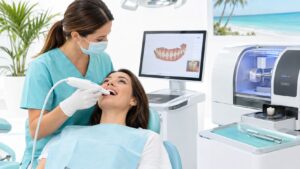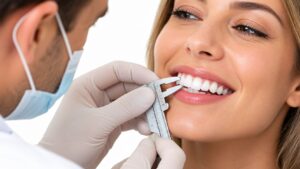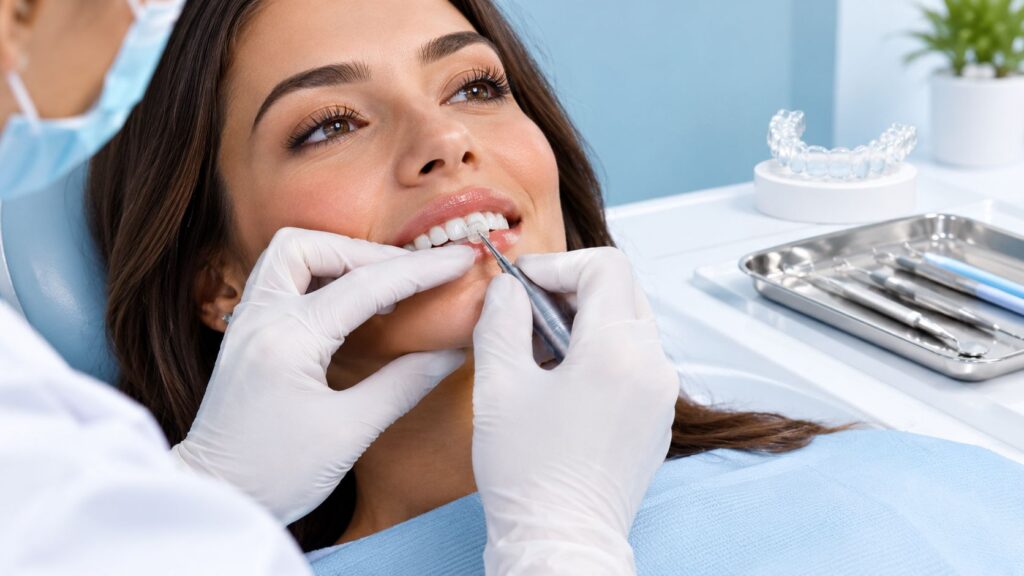
Invisalign attachment removal is a quick, gentle dental procedure in which the dentist carefully files away the tooth-colored bumps bonded during treatment, then polishes the enamel smooth. The process is designed to protect the natural tooth surface and usually feels more like pressure, vibration, and polishing than pain.
For a patient sitting in the final Invisalign appointment, the moment can feel both exciting and unfamiliar. The trays come out, the attachments are still visible, and the smooth smile underneath is close. A dentist in Miami, FL can make this last step predictable by explaining what will be felt, heard, and seen before treatment begins.
Attachment removal isn't a do-it-yourself cosmetic service. It requires controlled instruments, careful inspection, and finishing that leaves the enamel clean and comfortable. Patients searching for a dentist near me, a cosmetic dentist near me, or a Miami practice for Invisalign care should expect removal to be treated as a clinical procedure, not a quick pop-off appointment.
Table of Contents
- Understanding Invisalign Attachments Before Removal
- The Step-by-Step Removal Process at the Dentist
- Why Enamel Preservation Matters During Removal
- Pain, Sensitivity, and Recovery After Removal
- Risks of At-Home Removal and When to Call
- Cost and Insurance for Attachment Removal
- Your Visit to Ultra Smile DentalSpa in Miami
Understanding Invisalign Attachments Before Removal
At the final Invisalign visit, the patient settles into the chair with the last tray removed and the tooth-colored bumps still bonded to selected teeth. These small shapes are made from dental composite and are placed on specific surfaces so the aligner can grip the tooth and guide movements that would be difficult with the tray alone.
Attachments can help with movements such as rotation, extrusion, and root control. Their shape and position depend on the treatment plan. Some cases use only a few attachments, while more involved bite or tooth-position corrections may require many more. The attachment isn't part of the natural tooth, and it isn't intended to remain permanently after active tooth movement is complete.
The Invisalign treatment timeline helps place this appointment in context. The orthodontist checks that the teeth have reached their planned positions, removes the bonded composite, and may complete a new digital scan so retainers can be made. Manufacturer information describes SmartForce attachment removal as a gentle, non-invasive part of the transition from active treatment to retention, not as a surgical procedure. Invisalign's explanation of attachments and their removal provides the patient-facing overview.
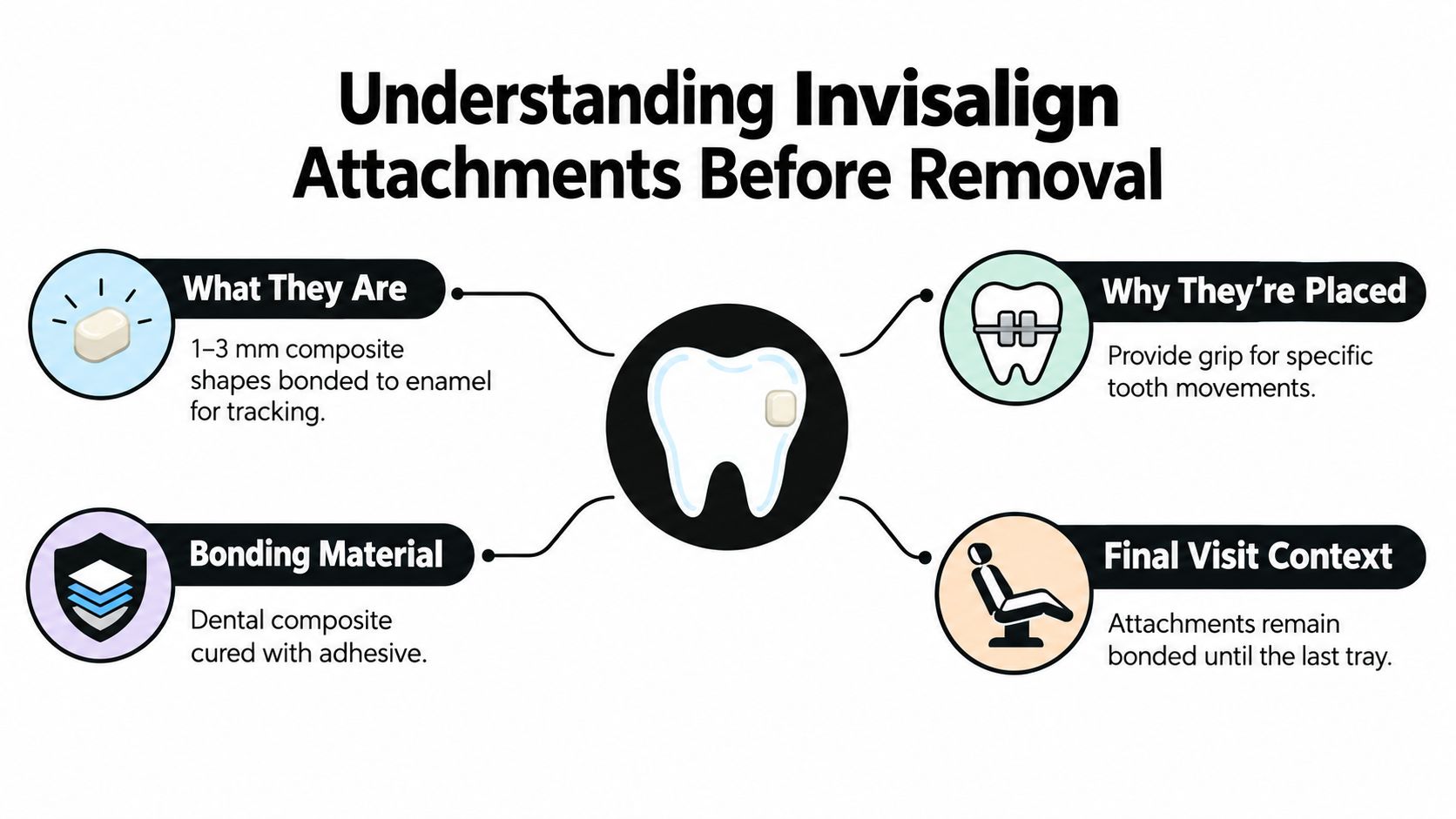
The important distinction is simple: the dentist isn't scraping away enamel to change the appearance of the teeth. The dentist is reducing bonded composite while preserving the enamel underneath. That makes this a planned final visit, not an emergency appointment like a broken tooth, sudden swelling, or a problem requiring an emergency dentist.
The Step-by-Step Removal Process at the Dentist
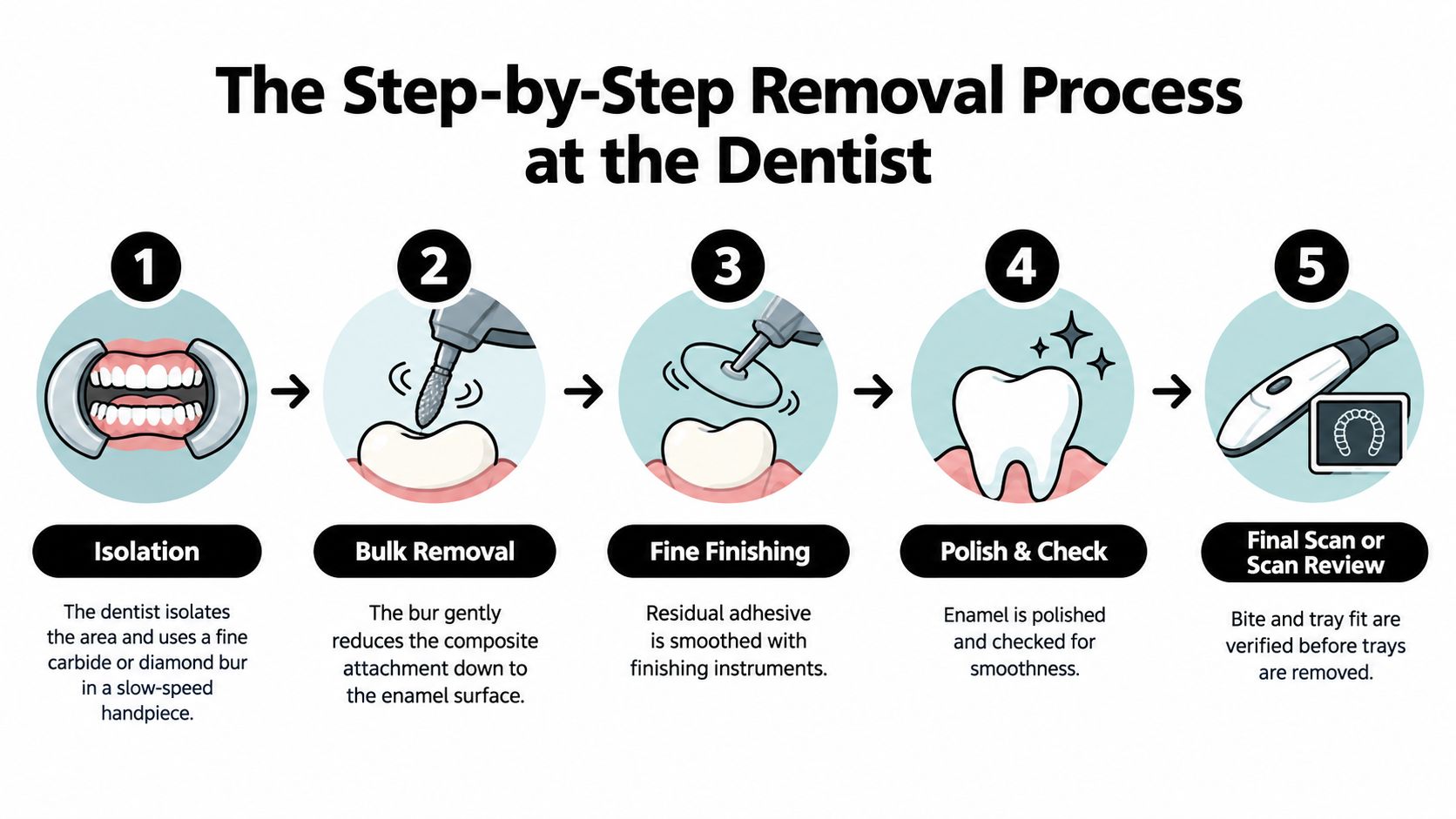
The appointment follows a controlled sequence. The dentist first examines the teeth, confirms which attachments are ready to come off, and protects the cheeks and lips from the working area. The patient may hear a soft handpiece sound, but the experience is generally closer to a careful dental polish than a filling procedure.
Bulk reduction comes first
The first stage removes the raised outer portion of each attachment. A fine carbide or diamond bur may be used in a slow-speed handpiece, with water cooling directed over the tooth. The dentist stays above the enamel while reducing the bulk of the composite, rather than pressing aggressively against the natural surface.
A published clinical evaluation found that removing the bulk with a multifluted tungsten-carbide bur and then treating the remaining layer with Stainbuster was safe and minimally invasive in its laboratory and clinical assessment. The final resin layer is the delicate part because the instrument is working close to enamel. The clinical study on combined composite-removal techniques explains why the last thin layer deserves particular control.
Inspection changes the pace
After the visible bump has been reduced, the dentist checks the surface with direct vision, tactile feedback, and magnification where available. A loupe can make a subtle resin edge easier to identify, especially on front teeth where a tiny remnant may affect the way the surface feels or reflects light.
The dentist doesn't need to keep cutting just because the tooth doesn't look perfectly uniform under the operatory light. The decision is based on whether composite remains and whether the enamel surface is intact.
Practical rule: The safest removal is controlled enough to stop cutting when the composite is gone, not when the tooth has been unnecessarily abraded.
Finishing and polishing complete the procedure
A finishing instrument smooths the remaining surface, followed by progressively finer polishing discs, rubber points, or polishing paste. The aim is a clean, glossy enamel surface without a rough edge that catches the tongue or floss.
The dentist then flosses around the treated teeth and checks the bite. If a new scan is needed for retainers, it may be completed after the attachments are removed. Patients often notice a quiet whirring, brief vibration, water, and suction. Sharp pain isn't expected, and anesthetic usually isn't needed for this surface procedure.
Why Enamel Preservation Matters During Removal
The purpose of Invisalign attachment removal isn't merely to make the bumps disappear. It is to remove the composite while leaving the enamel beneath smooth, strong, and easy to keep clean. That distinction matters because the final resin layer sits directly at the boundary between bonded material and natural tooth.
Laboratory research has detected measurable enamel changes during attachment removal. A 2025 study found that fiberglass-based debonding produced a smoother-looking surface than carbide burs, but micro-computed tomography detected greater enamel demineralization with the fiberglass approach. The researchers also observed scratches, cracks, and grooves from residual composite removal, while polishing reduced surface roughness after both tested approaches. The laboratory comparison of attachment-removal methods supports careful technique followed by polishing, while also warning that laboratory findings don't prove routine clinical removal causes significant enamel loss in patients.
A systematic review reported estimated enamel loss from approximately 15 to more than 50 micrometers, with a pooled mean of 22.7 ± 29.4 micrometers. Residual composite covered approximately 20% to 40% of treated enamel surfaces, with an average reported coverage of 34.4%. The review also associated magnification loupes of at least 2.5× with more precise removal and lower residual-composite levels. The systematic review of clear-aligner attachment removal emphasizes that the evidence is largely laboratory or ex-vivo, so patients shouldn't interpret these findings as a prediction of clinical damage.
| Technique | Enamel impact | Surface finish |
|---|---|---|
| Fiberglass-based debonding | May produce greater demineralization in laboratory testing | Smoother-looking before polishing |
| Carbide-bur removal | Can create surface scratches or grooves if technique is uncontrolled | Requires careful finishing |
| Carbide bur followed by a silicone or finishing polisher | Offers a favorable balance in the available review evidence | Smooth after the finishing stage |
| Polishing after removal | Reduces surface roughness after either tested approach | Glossy, cleaner-feeling enamel |
The two-stage approach, bulk reduction followed by finishing and polishing, gives the dentist a way to preserve enamel without leaving bonding behind. A careful appointment shouldn't feel rushed, especially when attachments sit on visible front teeth.
Pain, Sensitivity, and Recovery After Removal
Most patients find the hours after removal uneventful. The teeth may feel different because the raised composite is gone, and the tongue may notice a smoother surface immediately. Mild tenderness or a temporary increase in cold sensitivity can occur, particularly when the teeth were already sensitive during aligner treatment.
The sensation usually settles as the enamel surface adjusts to its newly polished texture. A rough or gritty feeling should improve after the finishing stage, which is one reason polishing isn't an optional cosmetic extra. It removes surface irregularities and helps the teeth feel natural again.
What patients may notice
- Tenderness: Mild pressure-related tenderness can occur after the bonding material has been reduced.
- Temperature sensitivity: Cold drinks may feel sharper for a short time, but persistent or worsening sensitivity deserves a call to the dental office.
- A change in color: Teeth can appear yellower than expected because the attachments had covered small areas during treatment. A professional teeth-whitening consultation is safer than immediately using aggressive over-the-counter strips.
- A smoother smile: The first view of the teeth without trays or attachments can feel like a meaningful milestone after months of treatment.
Normal brushing can generally continue with a soft toothbrush, and room-temperature drinks may be more comfortable while sensitivity settles. Retainers matter at this stage because active tooth movement has ended, but the new positions still need to be maintained according to the dentist's plan.
A patient who experiences sharp pain, worsening symptoms, or an unusual change in the bite shouldn't assume that discomfort is normal. The dental team can inspect the surface and address a remaining resin edge or another unrelated tooth problem.
Risks of At-Home Removal and When to Call
A nail file, pumice paste, metal tool, or other household object cannot tell the difference between Invisalign composite and enamel. Removing a visible bump may scratch the tooth, irritate the gum, or leave bonding material behind. That remaining resin can require professional instruments to remove safely.
Attachment removal is a controlled, two-stage procedure. During bulk reduction, the dentist lowers most of the composite with measured pressure, water cooling, good illumination, and magnification. You may hear the handpiece and feel vibration, but you should not feel the dentist cutting into the tooth. During finishing and polishing, the clinician changes instruments and smooths the enamel boundary. This stage is more like refining a surface than taking off a sticker.
Visual inspection alone is unreliable because a thin resin film can blend into the enamel. The experimental study of enamel preservation during attachment removal explains why dentists combine magnified inspection, tactile checks, and staged polishing instead of continuing to cut when the surface looks nearly clear. At home, you cannot judge the pressure, angle, or stopping point for each tooth.
A same-day call is appropriate for
- Persistent sharp pain when biting: The bite may be contacting a rough area, or another dental problem may need attention.
- A rough patch that catches floss: A remaining resin edge or surface irregularity should be checked rather than filed down.
- Localized gum swelling: Swelling around one treated tooth deserves an examination.
- A visible chip on the biting edge: A chip needs professional assessment, not home smoothing.
A mild pressure sensation or temporary sensitivity can occur after removal. Call if symptoms persist, intensify, or make chewing uncomfortable. The dental team can inspect the enamel, bite, gum, and any remaining composite, then decide whether polishing or another treatment is appropriate.
Cost and Insurance for Attachment Removal
The cost of attachment removal depends on whether it is part of an existing Invisalign treatment plan or billed as a separate dental visit. A final appointment may also include a retainer scan, bite review, polishing, or other services, so the front desk should explain what the fee covers before the appointment is booked.
Insurance treatment varies. Some plans classify the service under orthodontic care, while others may process related services through general restorative or dental benefits. Cosmetic-only coverage may decline the procedure, particularly when the removal is considered part of elective smile treatment. A detailed receipt can help patients determine whether a flexible spending or health savings account may reimburse an eligible expense, but the plan administrator makes the final decision.
| Attachment removal scenario in Miami | Typical cost | Insurance coverage |
|---|---|---|
| Included in the original Invisalign treatment | Confirm with the treating office | Often depends on the original orthodontic benefit |
| Completed during a final refinement visit | Confirm whether removal is bundled | May be processed with the orthodontic episode |
| Stand-alone removal appointment | Ask for a written estimate | Coverage varies by plan and classification |
| Removal with a same-day retainer scan | Ask whether scanning adds a separate fee | Depends on the scan and retainer benefits |
Before booking, patients can ask three direct questions:
- Is removal included in the original treatment estimate, or is it billed separately?
- Would the appointment count toward an annual maximum or orthodontic benefit?
- Can the retainer scan be completed during the same visit, and would that change the patient's out-of-pocket cost?
Patients comparing payment options for broader dental care can review Invisalign payment plans. The same office can also clarify whether a cleaning and exam, dental X-rays, teeth whitening consultation, restorative dentistry, tooth extraction, or dental implants near me search would involve separate billing.
Your Visit to Ultra Smile DentalSpa in Miami
At Ultra Smile DentalSpa, the final Invisalign visit is designed to feel like a comfortable milestone rather than a rushed procedure. Patients arrive at the Miami practice, receive a warm welcome, and can choose comfort features such as noise-canceling headphones, a neck pillow, refreshments, and ceiling-mounted entertainment.
The clinical team begins with a brief review of the treatment result. The dentist checks that the teeth are ready for the next stage, identifies the attachment locations, and adapts the removal sequence to each tooth. Front teeth may call for especially careful inspection because even a small remaining edge can be noticeable to the tongue or visible in reflected light.
What happens before checkout
The dentist reduces the composite, examines the enamel, completes the finishing and polishing stage, and reviews the bite. If retainers are ready to be planned, the team can confirm whether a final digital scan is needed. Written aftercare instructions help patients understand sensitivity, cleaning, and retainer use after the appointment.
Ultra Smile DentalSpa serves patients in Miami, including Downtown Miami and Midtown Miami, with bilingual staff, flexible scheduling, and same-day availability for Miami residents when appointments permit. Easy parking and a calming setting can be especially helpful for patients who have dental anxiety or who are looking for a dentist in Miami, FL with a gentle approach.
The practice also provides broader general, cosmetic, restorative, and emergency dental services. Patients who need teeth whitening, veneers, crowns, root canal care, wisdom teeth extraction, bone grafting, dental implants, or other emergency dental services can discuss those needs during a separate consultation. Attachment removal itself remains focused and conservative, with the final polish and retainer planning completing the Invisalign transition.
Ultra Smile DentalSpa offers careful Invisalign attachment removal, final polishing, retainer planning, and personalized dental care in Miami. Patients ready to finish treatment comfortably can visit Ultra Smile DentalSpa to request an appointment or contact the Miami team about the next step.