Plaque can begin hardening into tartar within 24 to 72 hours, and some clinical summaries note that it may become fully calcified in about 10 to 14 days. Once plaque has hardened, it cannot be removed at home, only a dentist or dental hygienist can safely remove it during a professional cleaning.
That answer challenges the most popular advice about how to remove tartar buildup. Brushing harder, scraping with a household tool, or trying a dissolving product won't restore hardened calculus to removable plaque. For patients searching for a dentist near me, a dentist in Miami, FL, or an emergency dentist because buildup is causing bleeding or discomfort, the important decision is knowing when home care has reached its limit.
At Ultra Smile DentalSpa in Miami, professional cleaning provides a controlled way to remove deposits while the dental team evaluates the gums, tooth surfaces, and areas that are difficult to see at home. The same visit may also identify needs involving dental care, dental x-rays, restorative dentistry, cosmetic dentistry, or other services such as tooth extraction and dental implants.
Table of Contents
- Why You Cannot Remove Tartar at Home
- Daily Habits That Prevent Plaque From Hardening
- What Happens During Professional Tartar Removal
- Your Experience at Ultra Smile DentalSpa in Miami
- Warning Signs You Need Professional Scaling Now
- Aftercare and Long-Term Tartar Prevention
Why You Cannot Remove Tartar at Home
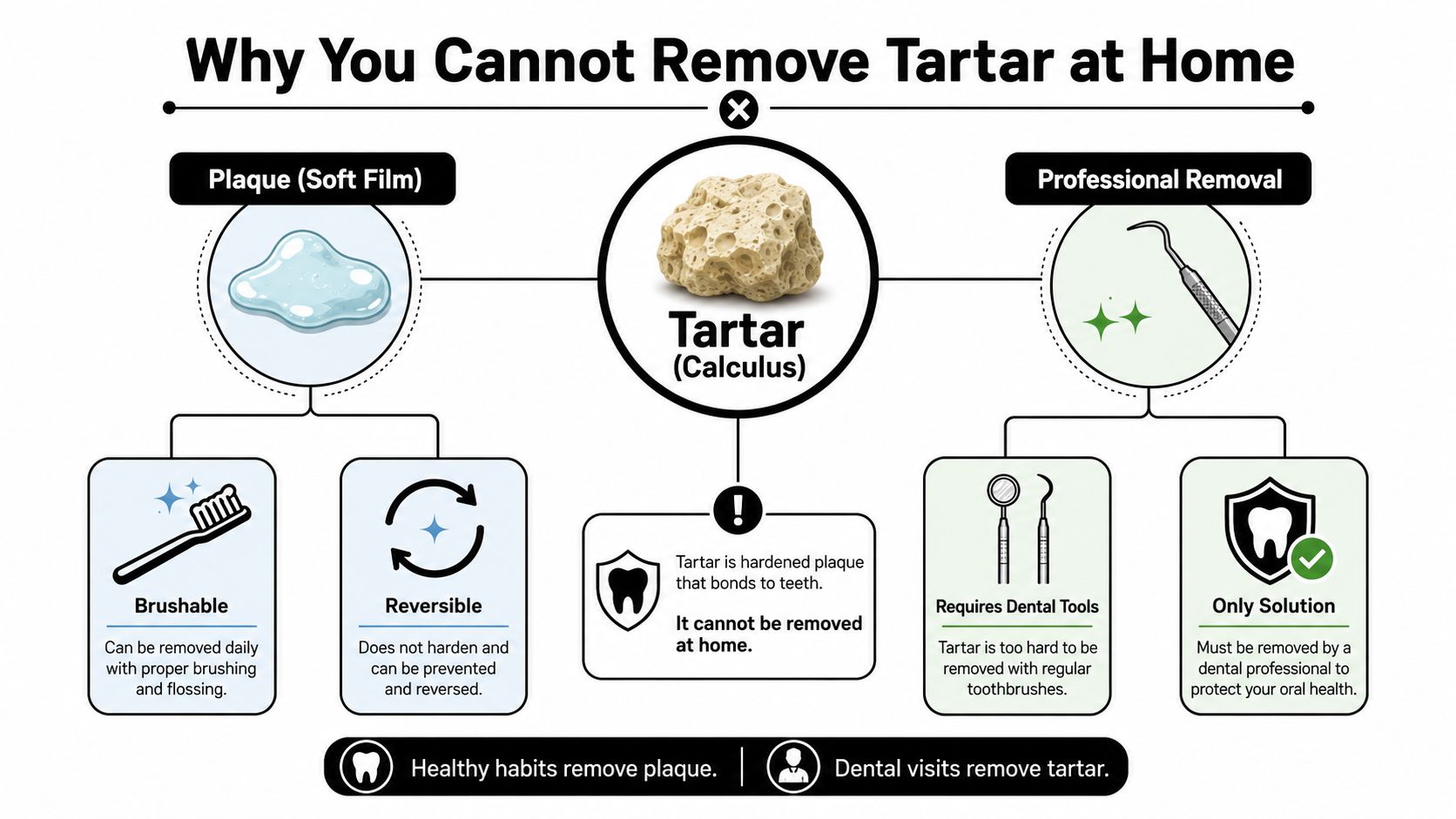
Tartar isn't “dirty plaque. Plaque is a soft, sticky film, while tartar, also called dental calculus, is plaque that has mineralized and bonded to the tooth surface. A toothbrush and floss can disrupt plaque before it hardens, but they can't safely break away calculus once it has become a firm deposit.
The transformation can happen quickly. Plaque mineralization may begin within 24 to 72 hours, and some clinical summaries describe full calcification in about 10 to 14 days if the deposit isn't removed. The exact speed varies by person and by location in the mouth, especially around the gumline, between crowded teeth, and behind the lower front teeth.
What home care can and cannot do
Home care is still essential, but its job is prevention rather than removal of established calculus.
- Brushing: Removes soft plaque from accessible tooth surfaces.
- Flossing: Clears plaque and food debris from spaces a toothbrush can't reach.
- Tartar-control products: May help limit new deposits, but they won't detach hardened calculus.
- Household scraping: Can scratch enamel, injure gum tissue, or push debris below the gumline.
The National Institute of Dental and Craniofacial Research explains that only a dentist or dental hygienist can remove tartar during a cleaning. That boundary protects patients from turning a manageable cleaning appointment into a gum injury or an avoidable dental emergency.
Practical rule: If a deposit feels hard, raised, and firmly attached, stop scraping and schedule professional care.
A professional cleaning removes calculus with dental instruments designed for tooth surfaces and gumline access. Patients in Miami who have delayed care don't need to feel embarrassed. The dental team can assess the buildup calmly, explain the findings, and select the appropriate level of cleaning.
Daily Habits That Prevent Plaque From Hardening
Tartar often starts along the inner surfaces of the lower front teeth and around the gumline, where saliva, plaque, and missed brushing overlap. A steady routine removes plaque while it is still soft, before it can harden into calculus that home care cannot lift.
Build a gentle, complete routine
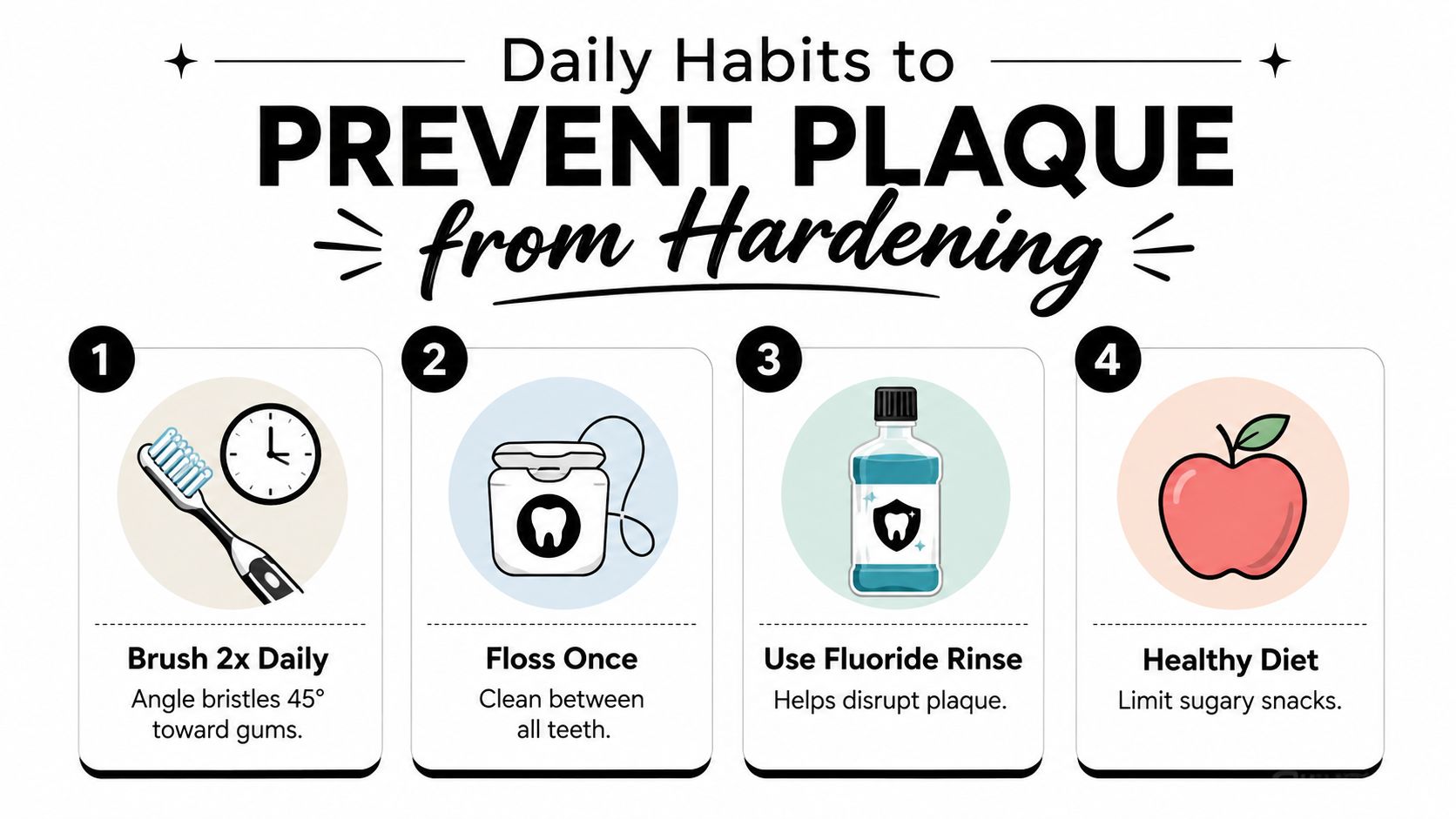
Brush twice daily with fluoride toothpaste. Angle the bristles about 45 degrees toward the gums, then use light pressure and short, controlled movements. Cover the gumline, inner surfaces, and back molars instead of rushing over the visible front teeth. Scrubbing harder can irritate the gums without cleaning missed areas more effectively.
An electric toothbrush can help patients maintain consistent coverage, especially when excessive pressure or repeated missed spots is a problem. A manual brush can work just as well when it reaches every tooth surface and the patient uses careful technique.
Floss once daily. Curve the floss around each tooth in a C shape and guide it gently below the gumline, rather than snapping it into the tissue. Interdental brushes or a water flosser can suit patients with orthodontic appliances, bridges, implants, or tightly arranged teeth. The right choice depends on the mouth's anatomy and the spaces available for cleaning.
Reduce the conditions that feed plaque
Diet affects how often plaque-forming bacteria encounter fermentable carbohydrates. Frequent sugary snacks and sweet drinks create repeated exposure, while choosing water between meals, reducing grazing, and rinsing with water after sweet foods makes daily cleaning easier.
Some tartar-control toothpastes contain pyrophosphate compounds that interfere with mineral buildup on the tooth surface. They can help limit new deposits, but they cannot remove calculus that has already hardened. Product choice also matters for patients with sensitivity or other dental concerns, so ask your Miami dental team which formula fits your routine.
A useful standard: Home care should leave teeth feeling clean and smooth. A fixed rough edge near the gumline needs professional evaluation, not extra pressure.
What Happens During Professional Tartar Removal
A professional cleaning is more controlled than a simple polishing appointment. The clinician first examines where plaque and calculus have accumulated and assesses the depth of the periodontal pockets. This evaluation helps determine whether routine scaling is appropriate or whether deeper treatment is needed.
The clinical sequence
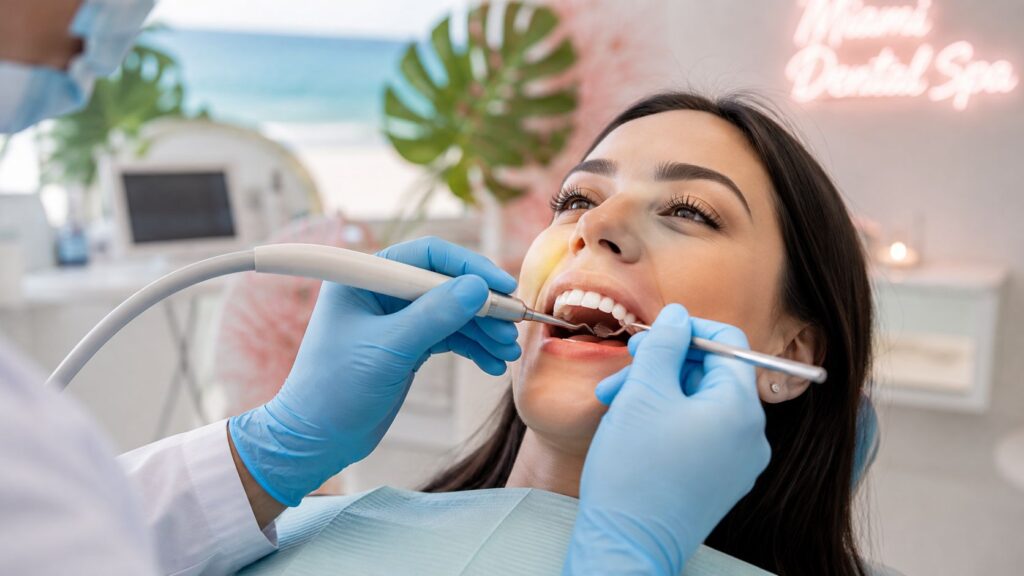
Bulk deposits are commonly addressed with an ultrasonic scaler. The instrument uses vibration and water to loosen calculus from tooth surfaces while the clinician works carefully around the gums. Hand instruments, including curettes, then allow more precise removal of stubborn deposits and calculus below the gumline.
Polishing follows scaling. It smooths the cleaned surfaces and removes residual surface staining, leaving the teeth more comfortable to the tongue and easier to maintain. The final rinse clears loosened material and leaves the mouth refreshed.
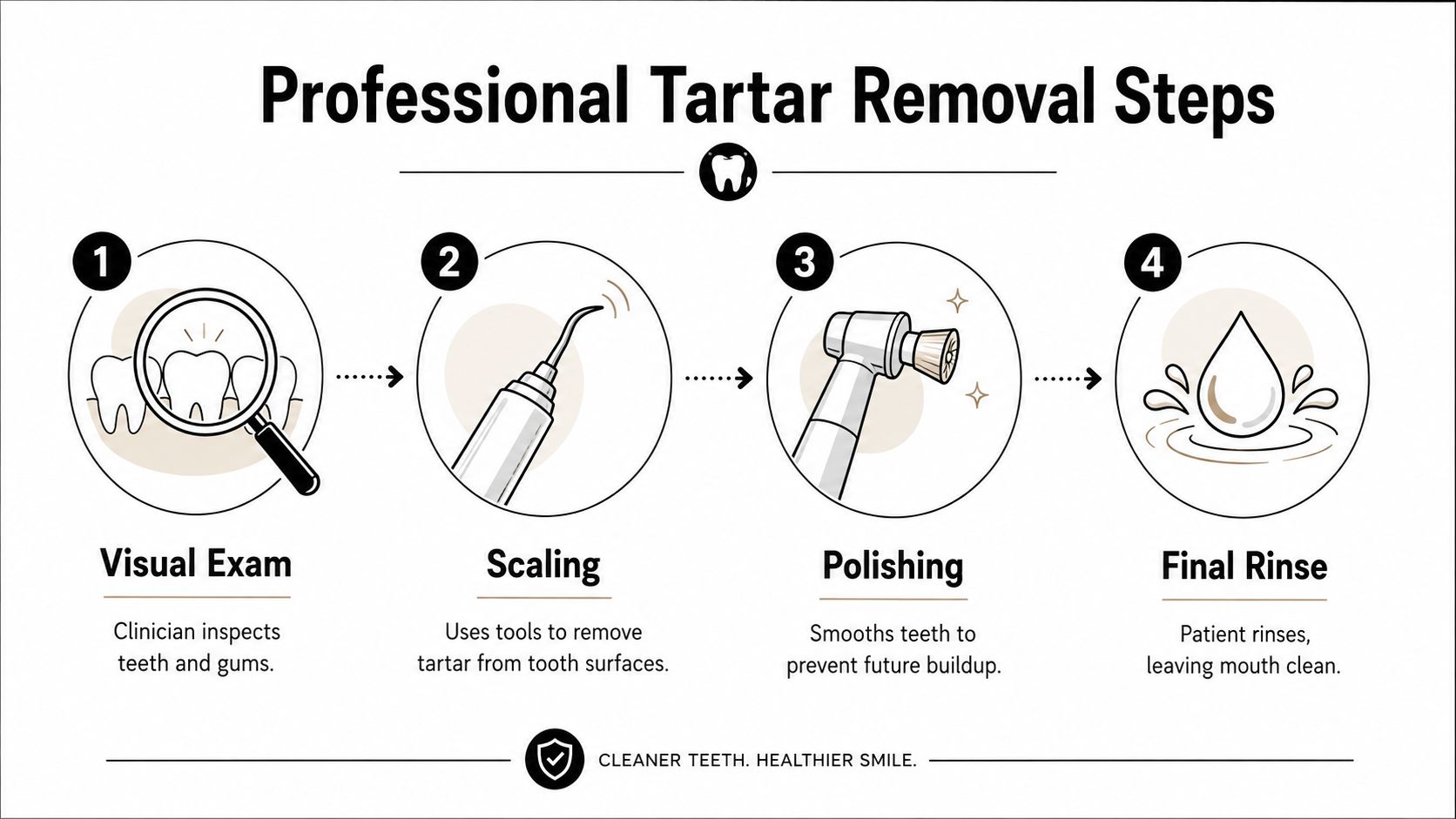
The clinical overview of calculus removal describes this stepwise approach, including examination, ultrasonic scaling, hand instrumentation, and polishing. Accessible deposits may be managed during early periodontal therapy, while deeper deposits can require root planing during separate visits.
Routine cleaning versus deeper therapy
Scaling and root planing removes plaque and tartar above and below the gumline, including the bottom of periodontal pockets. It is the standard professional approach when calculus has extended beneath the gums and the surrounding tissues need more thorough treatment.
Patients can watch the following educational video to become familiar with the general cleaning process before an appointment:
For patients interested in an alternative-feeling cleaning experience, high-pressure water teeth cleaning may be discussed as part of the practice's available approach. The clinician still decides which instruments and treatment depth are appropriate after examining the teeth and gums.
Your Experience at Ultra Smile DentalSpa in Miami
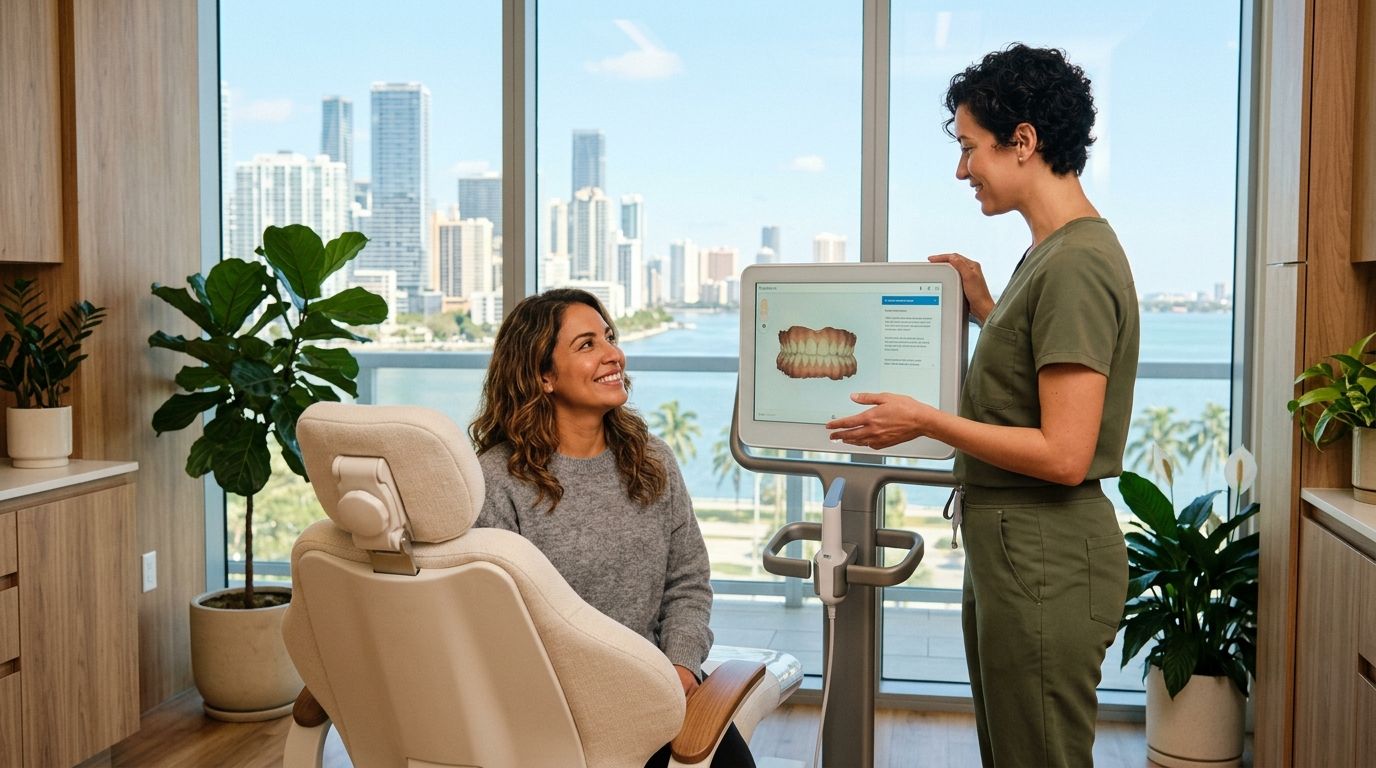
A tartar removal visit at Ultra Smile DentalSpa is designed to combine clinical assessment with a calmer atmosphere. Patients arriving near Downtown Miami, Midtown Miami, or Hallandale Beach can expect a dental setting that addresses the practical need for cleaning without making the appointment feel rushed or impersonal.
The visit begins with a conversation about concerns, sensitivity, prior dental experiences, and treatment priorities. Bilingual staff can help communication feel easier, while transparent treatment planning gives patients a clear explanation of recommended care. Accepted insurance options and choices for patients without coverage can also be discussed before treatment proceeds.
Comfort during the appointment
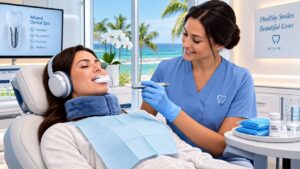
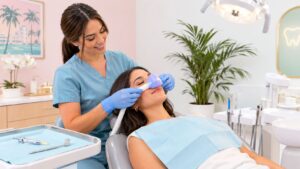
The practice's spa-inspired details include refreshments, custom aromatherapy, and streaming entertainment during procedures. These touches don't replace careful dental work, but they can help anxious patients remain more relaxed while the hygienist removes plaque and tartar.
Dr. Neda Bahmadi leads care with attention to comfort, modern technology, and individualized planning. A soothing hot towel finish adds a refreshed feeling at the end of the visit, particularly for patients who associate dental appointments with tension or discomfort.
The same practice provides broader services when a cleaning reveals another need. Depending on the examination, patients may ask about dental x-rays, new patient exams, teeth whitening, invisible braces or Invisalign, crowns and bridges, root canals, wisdom teeth extraction, restorative dentistry, or dental implants near me. Cosmetic dentistry, including whitening and smile-focused treatment, works best when the teeth and gums have a stable, clean foundation.
Warning Signs You Need Professional Scaling Now
Visible calculus is a reason to book a cleaning, but several symptoms make postponing care less sensible. Bleeding gums, persistent bad breath, yellow or brown deposits near the gumline, and gum recession can indicate that plaque and tartar are irritating the tissues or hiding in areas home care can't reach.
Gum-pocket depth provides another important clinical clue. Healthy gum pockets are usually 1 to 3 millimeters deep, while pockets deeper than 4 millimeters may indicate periodontitis, according to Mayo Clinic's explanation of scaling and root planing. Pockets deeper than 5 millimeters cannot be cleaned well with routine care, so more intensive treatment may be necessary when tartar contributes to the depth.
When a routine cleaning may not be enough
A patient who notices mild surface buildup may need a standard professional cleaning. A patient with bleeding, recession, persistent odor, or deeper pockets may need periodontal evaluation and possibly scaling and root planing.
The difference between gingivitis and periodontal disease helps explain why early symptoms shouldn't be dismissed. Gingivitis can be associated with inflammation around the gumline, while deeper periodontal problems require a more careful assessment of the supporting tissues.
Book promptly if: bleeding continues, deposits feel attached, gums are receding, or cleaning at home can't reach the affected areas.
Severe pain, swelling, a loose tooth, or sudden trauma may call for an emergency dentist rather than waiting for a routine cleaning. Tartar itself often develops without dramatic pain, which is why visible changes and gum symptoms deserve attention before they become urgent.
Aftercare and Long-Term Tartar Prevention
After professional tartar removal, the mouth may feel cleaner immediately, but the gums can remain tender for a short period. Patients should follow the clinician's specific advice, choose comfortable foods if the teeth feel sensitive, and drink water rather than exposing irritated tissues to very hot, cold, or strongly acidic choices.
Normal brushing usually remains important after cleaning, although a soft-bristled brush and gentle pressure may feel better if the gumline is sensitive. Flossing should resume according to the hygienist's guidance, with careful movements rather than force. Increasing discomfort, swelling, or other unexpected symptoms should be reported to the dental office.
Keep new plaque manageable
Professional cleaning removes existing calculus, but daily plaque control determines how quickly new deposits accumulate. A useful long-term plan includes:
- Morning and evening brushing: Reach the gumline, inner tooth surfaces, and back molars.
- Daily interdental cleaning: Remove plaque where bristles can't reach.
- Regular examinations: Dental exams and x-rays can help evaluate areas that aren't visible during home care.
- Personalized cleaning intervals: Many adults are advised to receive routine cleanings every six months, while patients with periodontal concerns may need a different schedule.
A 2018 systematic review found little or no difference over two to three years between routinely scheduled six-monthly scale-and-polish care, 12-monthly cleaning, or no scheduled cleaning for several measures in adults without severe periodontitis, although six-monthly care produced a small reduction in calculus levels. The systematic review in the Cochrane Library supports individualized scheduling rather than assuming that one interval suits every patient.
Once the mouth is clean and stable, patients can also discuss teeth whitening, cosmetic dentistry, Invisalign, restorative care, tooth extraction, or dental implants as appropriate. A clean, healthy foundation makes planning these services more predictable.
Ultra Smile DentalSpa offers professional cleaning and tartar removal for patients in Miami, including Downtown Miami, Midtown Miami, and Hallandale Beach, with gentle care and personalized treatment planning. Schedule a cleaning or consultation by visiting Ultra Smile DentalSpa and let the team determine the safest next step for your teeth and gums.