Are Dental Implants a Lifetime Solution? Understanding Their Longevity
When you are investing time, money, and effort into replacing a missing tooth, it is natural to ask how long the result will last. Dental implants are frequently described as a permanent or lifetime tooth replacement, but that wording can create unrealistic expectations.
A well-planned and properly maintained dental implant can remain functional for decades. In some cases, the implant fixture may last for the rest of the patient’s life. However, no dentist can guarantee that every implant will last forever.
It is also important to distinguish between the implant placed in the jaw and the crown, bridge, or denture attached to it. These components have different responsibilities and may not have the same lifespan.
At Ultra Smile DentalSpa, we provide dental implant treatment, bone grafting, CBCT imaging, crowns, bridges, and other restorative options for patients with missing or failing teeth. Our goal is to help patients understand both the long-term benefits of implants and the maintenance required to protect them.
What Is a Dental Implant?
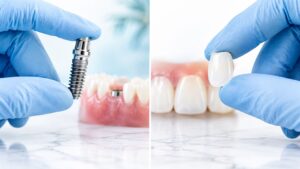
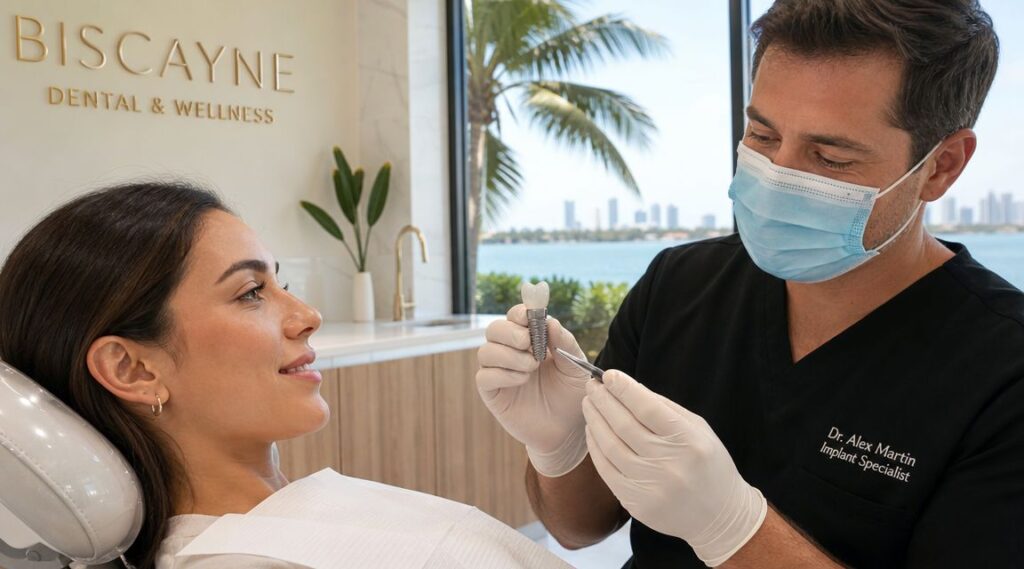
A dental implant is a small fixture placed into the jawbone to replace a missing tooth root. Most implants are made from biocompatible materials such as medical-grade titanium.
After placement, the surrounding bone gradually forms a close connection with the implant surface. This healing process creates a stable foundation for the replacement tooth.
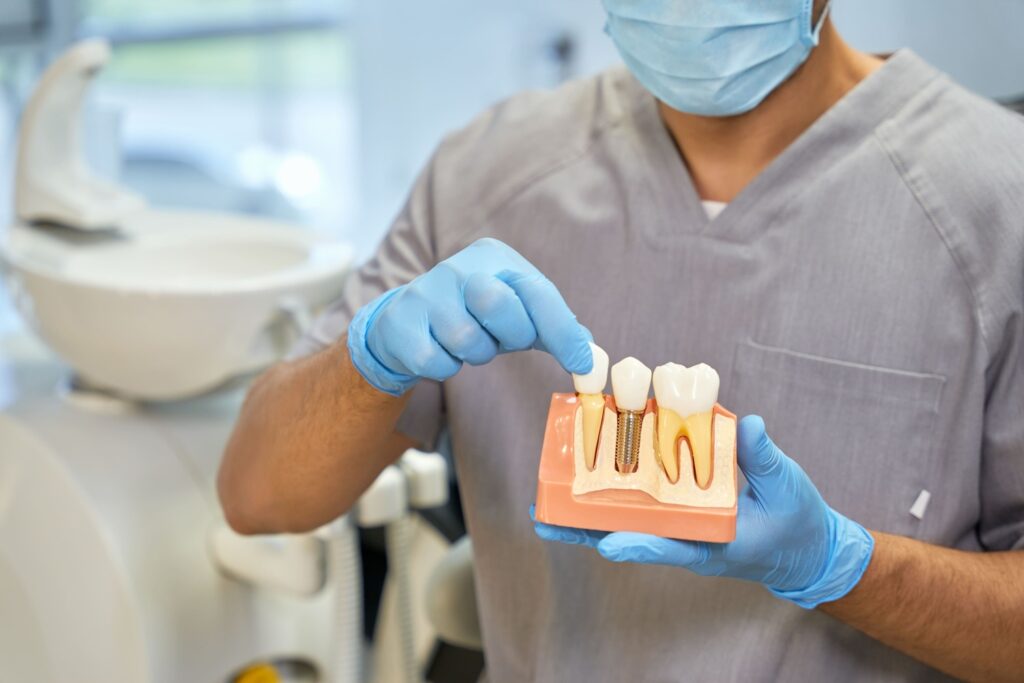
A complete implant restoration generally has three parts:
- The implant fixture placed in the jaw
- The abutment connecting the implant to the restoration
- The crown or prosthetic tooth visible above the gums
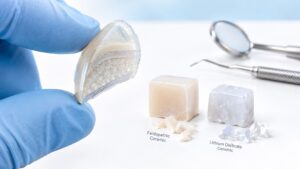
Ultra Smile DentalSpa uses CBCT technology to create three-dimensional images of the jaw and teeth. These images help our doctors evaluate available bone and plan the position, depth, and angle of medical-grade titanium implant fixtures. The visible restoration may be made from materials such as zirconia or porcelain to provide durability and a natural appearance.
Can the Implant Fixture Last a Lifetime?
The implant fixture is the component most likely to remain in place for decades. Once it has successfully integrated with healthy bone, it can provide a durable foundation that does not experience decay like a natural tooth.
Long-term research supports the durability of implant treatment. One systematic review and meta-analysis estimated an implant survival rate of approximately 96.4% after 10 years. However, survival means the implant remained in place. It does not necessarily mean that every implant was completely free of biological or technical complications.
Some individual implants have remained functional for considerably longer than 10 years. At the same time, studies differ in patient health, implant design, treatment location, maintenance, and the way success is measured. It is therefore more accurate to describe implants as a long-term solution with the potential to last a lifetime, rather than a guaranteed lifetime treatment.
The Crown May Not Last as Long as the Implant
The crown is the part of the implant restoration that looks and functions like a visible tooth. It experiences pressure every time you chew, bite, or clench.
Even when the implant fixture remains healthy, the crown may eventually need repair or replacement because of normal wear, chipping, changes in the bite, gum recession, or damage from grinding.
The abutment or connecting screw may also occasionally loosen or require attention. These situations do not automatically mean the implant itself has failed. In many cases, the restoration or connecting component can be repaired while the implant remains stable in the jaw.
At our practice, we provide customized crowns and bridges as part of comprehensive restorative care. We consider tooth shape, shade, bite forces, neighboring teeth, and the patient’s long-term maintenance needs when designing a restoration.
Why Some Dental Implants Last Longer Than Others
Implant longevity is influenced by several connected factors. The quality of the planning and placement matters, but the patient’s health and daily care are equally important.
Healthy bone and accurate placement
An implant needs sufficient bone to provide stability. If the bone is too thin or has been damaged by infection or long-term tooth loss, bone grafting may be recommended before or during implant placement.
The location and angle of the implant must also support the final tooth. Poor positioning can make the crown difficult to design, place excessive force on the implant, or create areas that are hard to clean.
At Ultra Smile DentalSpa, we use CBCT imaging to evaluate jaw anatomy and plan implant placement. Bone grafting is also available for patients who need additional support for predictable treatment.
Gum health
Dental implants cannot develop cavities, but the tissues around them can become inflamed.
Peri-implant mucositis affects the soft tissue around an implant. If inflammation progresses and begins damaging the supporting bone, the condition is known as peri-implantitis. Significant bone loss can reduce implant stability and eventually contribute to failure.
Research has identified a history of periodontal disease, poor plaque control, and cigarette smoking as important risk indicators for peri-implant disease. More recent evidence also supports periodontitis and smoking as significant concerns when evaluating long-term implant risk.
General health
Certain medical conditions may affect healing or the health of tissues around an implant. Diabetes, particularly when it is not well controlled, has been associated in some research with a greater risk of peri-implantitis. Patients should provide a complete medical history and discuss medications, healing concerns, previous surgeries, and ongoing health conditions before treatment.
Having a medical condition does not automatically prevent someone from receiving an implant. It may mean that additional planning, medical coordination, or risk management is needed.
Smoking
Smoking can affect blood flow, wound healing, inflammation, and the health of the gums and bone. It has repeatedly been identified as a risk factor for peri-implant complications.
Patients who smoke should discuss their habits honestly with the dentist. Reducing or stopping tobacco use may improve both healing and the long-term outlook for the implant.
Grinding and clenching
Implants are strong, but they do not have the same shock-absorbing periodontal ligament found around natural teeth. Heavy grinding or clenching can place excessive force on the implant crown, abutment, connecting screw, and surrounding bone.
Signs of excessive pressure may include worn natural teeth, chipped restorations, jaw soreness, or repeated loosening of dental work. A custom night guard may be recommended to protect the implant and the rest of the smile.

Daily Care Is Essential
An implant should be cleaned every day even though the restoration cannot decay.
Plaque can collect around the gumline and between the implant and neighboring teeth. Depending on the type of restoration, patients may need to use floss, interdental brushes, a water flosser, or another cleaning aid recommended by the dental team.
Implant-supported bridges and full-arch restorations may require different cleaning techniques from a single implant crown. Patients should receive specific instructions instead of assuming that every implant restoration is maintained in the same way.
Good home care should be combined with professional dental examinations and cleanings. Long-term supportive therapy can help dental teams identify inflammation, plaque accumulation, bite changes, or technical problems before they become more difficult to manage.
Warning Signs That an Implant Needs Attention
An implant may not produce the same type of sensitivity as a natural tooth, so problems are not always obvious at first.
Contact a dentist if you notice:
- Bleeding, swelling, or tenderness around the implant
- A bad taste or drainage near the restoration
- Gum recession or exposed implant components
- Pain when biting
- A crown that feels loose
- Movement in the implant restoration
- Difficulty cleaning underneath or around the implant
- Changes in the way your teeth come together
A loose crown or screw may be repairable when treated promptly. Waiting can allow movement, inflammation, or bite pressure to cause additional damage.
Does Bone Grafting Affect Implant Longevity?
Bone grafting can improve the foundation available for implant treatment when natural bone is limited.
A graft may be recommended after an extraction, before implant placement, or during the implant procedure. The exact approach depends on the location of the missing tooth, the amount of bone present, and the type of restoration being planned.
Bone grafting adds healing time, but it may improve the dentist’s ability to place the implant in a position that supports long-term function and a natural-looking result. At Ultra Smile DentalSpa, implant and bone graft planning is based on detailed imaging and an evaluation of the patient’s current oral health.
What Happens If an Implant Fails?
Implant failure can occur early or many years after treatment.
An early failure may happen when the implant does not integrate successfully with the bone. A later failure may be associated with bone loss, infection, excessive force, smoking, poor maintenance, or changes in the patient’s health.
Failure does not always mean that the area can never receive another implant. Depending on the cause and remaining bone, the dentist may remove the implant, allow the tissues to heal, perform bone grafting, and consider replacement later.
Other tooth replacement options, including bridges and removable dentures, may also be discussed when another implant is not recommended.
How We Plan for Long-Term Implant Success
At Ultra Smile DentalSpa, implant treatment begins with a comprehensive evaluation rather than a standard procedure for every patient.
We consider the number and location of missing teeth, jawbone volume, gum health, remaining teeth, bite forces, medical history, appearance, and ability to maintain the restoration. Our doctors then develop a personalized treatment plan and provide a written estimate so patients can understand the recommended care before moving forward.
We provide implant dentistry, bone grafting, crowns, bridges, dentures, and restorative care through our Downtown Miami, Midtown Miami, and Hallandale Beach locations.
Are Dental Implants Worth the Long-Term Investment?
Dental implants are among the longest-lasting options available for replacing missing teeth. They can provide stable chewing function, support natural-looking restorations, and replace teeth without relying on neighboring teeth for support.
However, “long-lasting should not be confused with “maintenance-free. The implant fixture may last for decades or potentially a lifetime, while the crown, bridge, or connecting components may require repair or replacement over time.
The best opportunity for long-term success comes from careful planning, healthy bone and gums, precise placement, a well-designed restoration, good daily hygiene, and regular professional care.
At Ultra Smile DentalSpa, we help patients understand what implant treatment involves, what may affect its longevity, and how to protect the result. A personalized consultation can determine whether dental implants are appropriate for your health, smile, and long-term tooth replacement goals.