7 Signs You May Be Ready for Dental Implants
Living with a missing tooth can affect more than the appearance of your smile. You may notice changes in how you chew, avoid certain foods, feel uncomfortable in photographs, or become more aware of the open space every time you speak.
Dental implants are one of the most established options for replacing missing teeth. Unlike a removable appliance that rests on the gums, an implant is placed in the jawbone and serves as a foundation for a customized replacement tooth. Depending on the patient’s needs, implants may replace one tooth, several missing teeth, or support a larger restoration.
However, deciding whether you are ready for dental implants involves more than simply having a gap in your smile. Your gums, jawbone, general health, oral hygiene habits, treatment expectations, and willingness to complete the process all matter.
At Ultra Smile DentalSpa, we evaluate each patient individually using a comprehensive examination and modern imaging. Here are seven signs that it may be time to ask whether dental implants are right for you.
1. You Have One or More Missing Teeth
The most obvious sign that you may be ready for dental implants is that you are living with one or more missing teeth.
A tooth may be lost because of decay, gum disease, an accident, a failed restoration, or an infection that made extraction necessary. Whatever the reason, leaving the space untreated can affect both the appearance and function of your smile.
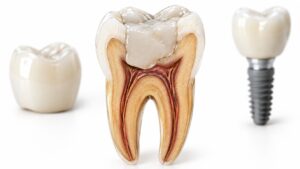
A dental implant replaces the missing root as well as the visible portion of the tooth. The implant fixture is placed in the jawbone, where it can support a crown or another type of dental restoration after healing. Ultra Smile DentalSpa uses medical-grade titanium implant fixtures designed to integrate with the surrounding bone.
Not every missing tooth must be replaced with an individual implant. When several teeth are absent, implants may sometimes be positioned strategically to support a bridge or full-arch restoration. The correct approach depends on the number of missing teeth, their location, available bone, bite forces, and the condition of the remaining teeth.

2. A Damaged Tooth Can No Longer Be Predictably Restored
Dental treatment should generally focus on preserving natural teeth whenever possible. Fillings, crowns, root canal treatment, and other restorative procedures can often save teeth that have been weakened by damage or decay.
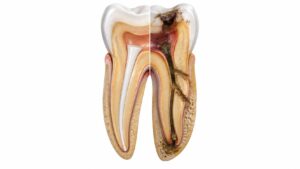
Sometimes, however, a tooth is too fractured, infected, decayed, or structurally compromised to provide a dependable long-term result. If your dentist has explained that a tooth cannot be predictably restored, an implant may be considered after the tooth is removed.
This decision should not be made based on appearance alone. Detailed imaging and a clinical examination are needed to evaluate the tooth root, surrounding bone, gums, nearby teeth, and other important structures.
At our practice, implant planning begins with understanding the complete situation. We want patients to know why a tooth may need to be removed, whether other treatment options remain, and what steps would be required to replace it.
In selected cases, implant placement may be coordinated with extraction. Other patients need time for the area to heal before implant treatment begins. The timeline is determined by bone quality, infection, tissue health, and the individual treatment plan.
3. You Are Tired of an Unstable Removable Denture
Removable dentures can restore missing teeth and remain an appropriate option for many patients. However, some people struggle with movement, pressure, food collecting beneath the appliance, or a feeling that the denture is not secure enough during meals and conversations.
If you have become frustrated with a loose or uncomfortable denture, implant-supported treatment may be worth discussing.
Because dental implants are anchored in the jawbone, they can provide a more stable foundation for replacement teeth. Ultra Smile DentalSpa explains that this stability can help reduce the slipping and movement patients may experience with traditional removable dentures.
The right solution depends on your current denture, jawbone, gum health, and expectations. Some patients may benefit from several implants supporting a removable overdenture, while others may qualify for a fixed full-arch restoration.
Implant-supported teeth still require cleaning and professional maintenance. They should not be described as maintenance-free or identical to natural teeth. The goal is to improve stability, function, and confidence while creating a restoration that you can care for properly.
4. You Want a Replacement That Does Not Depend on Healthy Neighboring Teeth
A traditional dental bridge can replace a missing tooth by using the teeth on either side of the space for support. It remains a valuable option, particularly when those neighboring teeth already need crowns.
However, when the adjacent teeth are healthy, some patients prefer a solution that does not require reshaping them simply to support the replacement.
A single dental implant can stand independently in the missing-tooth space. Once restored with a customized crown, it does not rely on neighboring teeth as anchors.
This can be an important consideration if your goal is to preserve as much healthy tooth structure as possible. It does not automatically mean that an implant is better in every situation. A bridge may still be recommended based on your health, bone, treatment timeline, or the condition of nearby teeth.
At Ultra Smile DentalSpa, we offer both implants and customized crowns and bridges. Our role is to explain the benefits, limitations, maintenance needs, and anticipated treatment process for each option so you can make an informed decision.
5. Your Gums Are Healthy or You Are Willing to Treat Gum Disease First
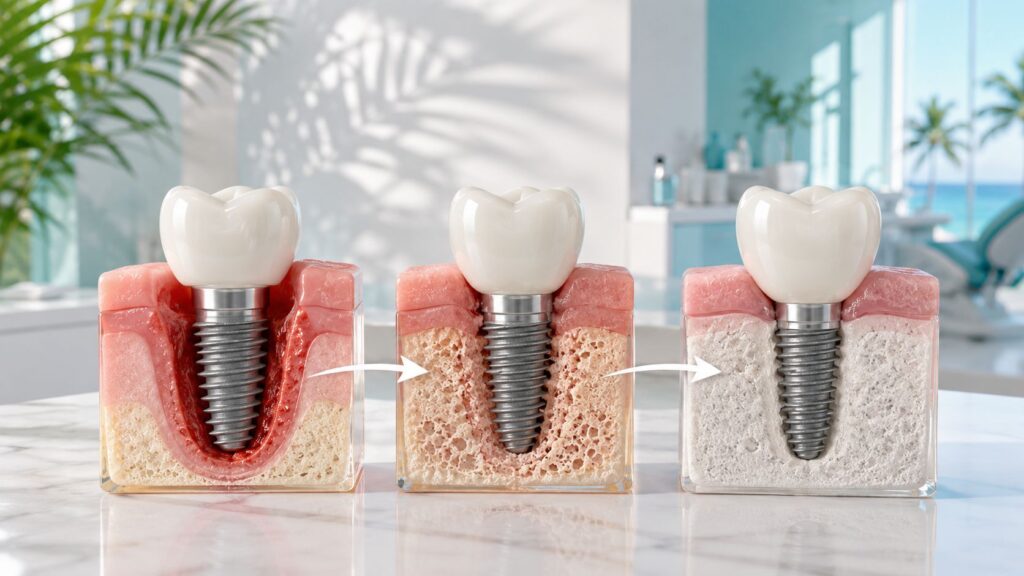
Healthy gum tissue is an important part of successful implant treatment. Implants depend on the surrounding gums and bone for long-term support, just as natural teeth do.
Redness, swelling, bleeding gums, persistent bad breath, loose teeth, or a history of bone loss may indicate gum disease. The National Institute of Dental and Craniofacial Research explains that advanced periodontal disease can damage the bone and tissues that support teeth.
Having gum disease does not necessarily mean you can never receive implants. It does mean that active infection and inflammation may need to be controlled before implant placement.
You may be ready for dental implants when you are willing to complete any necessary periodontal care and maintain regular dental visits afterward. Implant treatment is most successful when patients understand that the gums around the restoration need ongoing attention.
Daily brushing, cleaning between the teeth, and professional maintenance remain essential after the implant crown or prosthesis has been placed.
6. You Have Adequate Jawbone or Are Open to Bone Grafting
Dental implants need enough bone to provide a stable foundation. After a tooth is lost, the bone in that area may gradually change in shape and volume. The amount of bone remaining varies from person to person.
You cannot accurately judge bone availability by looking in the mirror. Detailed imaging is needed to evaluate the height, width, density, and anatomy of the jaw.
At Ultra Smile DentalSpa, we use cone beam computed tomography, commonly known as CBCT, to create three-dimensional images of the teeth and jaw. These images help our doctors evaluate the available bone and plan the angle, depth, and position of an implant.
If there is not enough bone initially, bone grafting may help rebuild or strengthen the area. Bone grafting is one of the services offered at our practice and may be completed before or during implant placement, depending on the case.
Being told that you have experienced bone loss does not automatically rule out implants. It may simply mean that your treatment requires an additional stage and a longer healing period.
7. You Are Prepared for the Treatment Process and Long-Term Maintenance
Dental implants are not usually a one-appointment solution. The process may include examination, imaging, extraction, bone grafting, implant placement, healing, and fabrication of the final restoration.
Not every patient needs all of these steps. Even so, it is important to understand that the implant must have time to become stable within the bone before it can support the final tooth in many cases.
You may be ready for treatment when you understand the expected timeline, can attend follow-up appointments, and are committed to caring for the implant after the procedure is complete.
General health is also important. The American Dental Association notes that overall health may be more relevant to implant candidacy than age alone. Patients should discuss medical conditions, medications, smoking, previous surgeries, and healing concerns with their dentist before treatment begins.
At Ultra Smile DentalSpa, we provide patients with a personalized treatment plan and written estimate following their evaluation. We also encourage patients to ask questions so they understand the recommended care before moving forward.
A patient who is informed, prepared, and willing to maintain good oral hygiene is in a stronger position to protect the long-term health of the implant.
Are Dental Implants Right for Everyone?
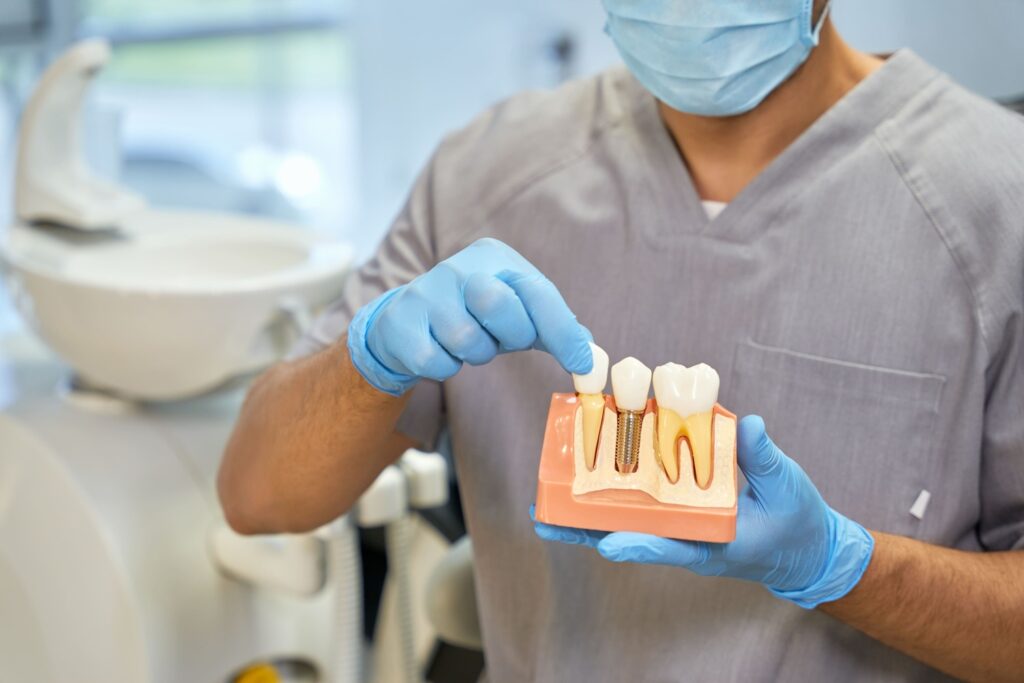
Dental implants can be an excellent solution, but they are not appropriate for every patient or every missing tooth.
Some individuals may be better served by a bridge, partial denture, full denture, or another restorative option. Others may need gum treatment, bone grafting, medical clearance, or changes in oral hygiene habits before becoming candidates.
A consultation should include a review of your oral health, medical history, medications, bite, remaining teeth, gum condition, and jawbone. Your personal goals also matter. Some patients prioritize a fixed replacement, while others prefer a less involved treatment process.
At Ultra Smile DentalSpa, our goal is not to recommend implants automatically. We evaluate the full picture and explain the available options so that treatment supports your comfort, function, appearance, and long-term oral health.
Take the Next Step Toward Replacing Missing Teeth
You may be ready for dental implants if you have missing or failing teeth, want greater stability than a removable appliance provides, have healthy gums, and are prepared to complete the necessary treatment and maintenance.
The only way to know for certain is to receive a professional evaluation.
Ultra Smile DentalSpa provides implant dentistry, bone grafting, CBCT imaging, dental crowns, bridges, dentures, and comprehensive restorative care at our Downtown Miami and Midtown Miami locations. Our practice combines advanced technology with personalized planning and a spa-inspired environment designed to make dental care feel more comfortable.
If missing teeth are affecting the way you eat, speak, or feel about your smile, an implant consultation can help you understand what is possible and which treatment option best fits your needs.
Ultra Smile DentaSpa
https://maps.app.goo.gl/aZyhKAnrJbTXqQFv8
(305) 676-5330
111 NE 32nd St, Miami, FL 33137, United States
https://www.ultrasmilemiami.com/