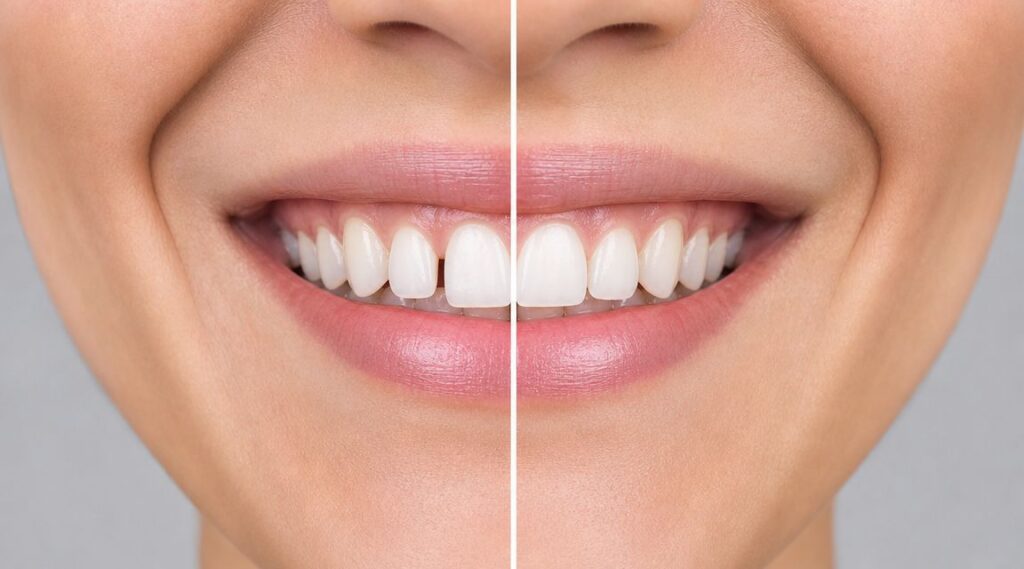
A small gap between the front teeth can feel much bigger than it looks. Many adults in Miami notice it every time they smile in photos, speak in meetings, or look in the mirror before heading out. Some have had the space for years. Others see it appear gradually after dental changes, gum problems, or a missing tooth.
The good news is that there usually is a solution. The right answer depends on why the gap is there, how wide it is, and whether the goal is a fast cosmetic improvement or a more structural correction. For patients searching for a dentist in Miami, FL, a cosmetic dentist near me, or even dental implants near me because a missing tooth created spacing, the first step is getting a diagnosis that matches the treatment to the cause.
Table of Contents
- Understanding Why Gaps Appear Between Teeth
- Comparing Your Cosmetic and Orthodontic Solutions in Miami
- Your Treatment Journey From Consultation to Final Smile
- Beyond Cosmetics The Health Benefits of Closing Tooth Gaps
- What to Expect at Your Miami Cosmetic Dentistry Consultation
- Schedule Your Personalized Smile Consultation in Miami Today
Understanding Why Gaps Appear Between Teeth
A gap between teeth has a clinical name: diastema. That term describes the space itself, but it doesn't explain why the space formed. According to the Cleveland Clinic overview of diastema and treatment options, treatment depends on the cause and may involve dental bonding, porcelain veneers, braces, clear orthodontic aligners, frenectomy, dental bridge, or dental implant therapy. If gum disease caused the spacing, periodontal treatment comes first.
Diastema is the name, not the diagnosis
That distinction matters. A small gap between otherwise healthy, well-positioned front teeth can often be handled very differently from a gap caused by infection, tooth loss, or an unstable bite.
Patients are often relieved to hear that a space between teeth doesn't automatically mean braces. At the same time, a quick cosmetic fix isn't always the right choice. The gap has to be evaluated in context.
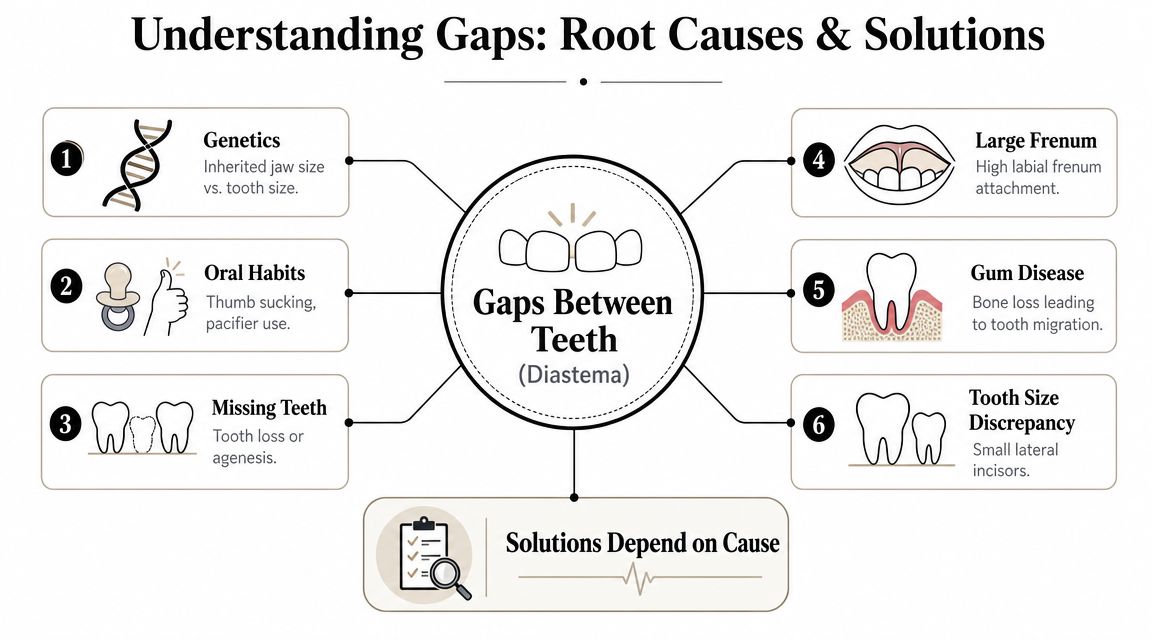
The cause changes the treatment
Several issues can create spacing:
- Genetics and natural spacing: Some people have a jaw-to-tooth size mismatch that leaves room between teeth.
- A prominent labial frenum: Thick tissue between the upper lip and gums can keep the front teeth apart.
- Missing teeth: When a tooth is absent, neighboring teeth can drift and leave visible spaces.
- Gum problems: If gum disease affects support around the teeth, spacing can develop over time.
- Tooth size differences: Teeth that are naturally narrow can create visible gaps even when alignment is otherwise good.
- Bite or position problems: Teeth may look like they only need cosmetic reshaping when they need movement.
Practical rule: The wider the gap and the more the teeth are tipped, rotated, or drifting, the less likely a purely cosmetic fix will look natural or stay stable.
A proper exam looks beyond the mirror view. The dentist checks gum health, bite forces, root position, tooth proportions, and whether the spacing is isolated or part of a larger alignment issue. This is especially important for adults who are trying to figure out how to fix gaps between teeth without choosing something that looks bulky or needs to be redone sooner than expected.
For patients in Downtown Miami, Midtown Miami, or Hallandale Beach, this diagnostic step often saves time. It narrows the choices quickly and helps avoid the two most common mistakes: treating a structural problem like a cosmetic one, or over-treating a small, simple gap that could be corrected conservatively.
Comparing Your Cosmetic and Orthodontic Solutions in Miami
A common Miami scenario goes like this: a patient comes in asking for the fastest way to close a front gap before a wedding, work event, or set of family photos. The right answer depends on what is causing the space, how wide it is, and whether the teeth need to move or look fuller.
At Ultra Smile DentalSpa, I usually frame the decision around four questions. Do you want the quickest cosmetic change, the most natural tooth positioning, the longest-lasting ceramic result, or a replacement for a missing tooth. Once those priorities are clear, the treatment plan gets much easier to choose.
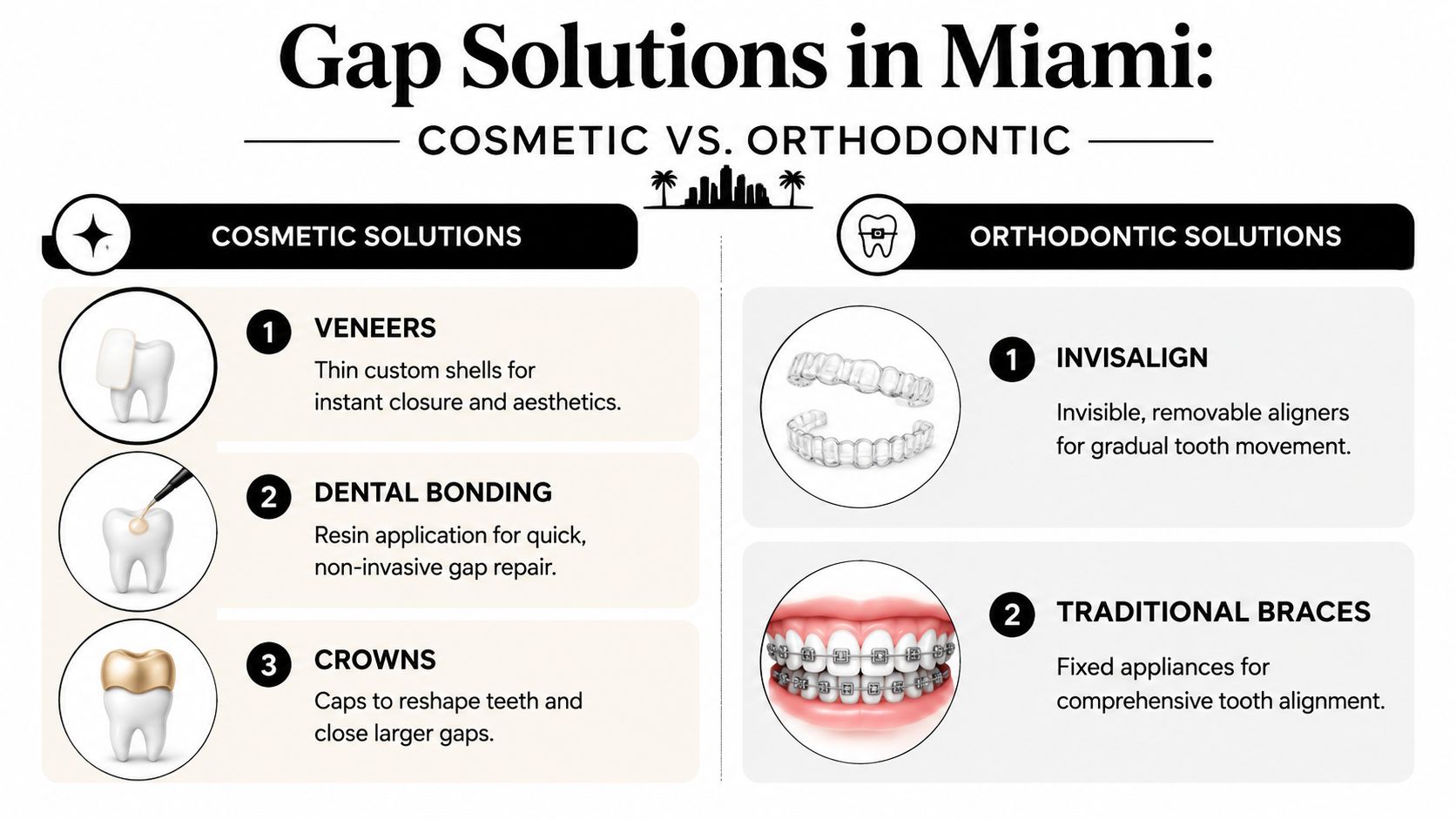
A useful overview from this explanation of speed versus durability in gap treatment compares the main categories well. Bonding is often the fastest and most conservative cosmetic option. Veneers can last longer and improve more than one aesthetic issue at once. Aligner treatment closes spaces by moving teeth instead of covering them.
Dental bonding for small cosmetic spaces
Bonding is often the simplest choice for a small gap between front teeth when the teeth are already well positioned. Composite is added carefully, shaped from both sides, and polished so the space closes without making the teeth look too wide.
Patients like bonding because it is conservative and usually completed in one visit. It is also a good fit for someone who wants to improve the smile without committing to porcelain or orthodontics right away.
The trade-off is design discipline. Wider spaces can look bulky if too much material is added, and bonding requires maintenance over time, especially for patients who bite hard, grind, or drink a lot of coffee, tea, or red wine.
- Good fit for: Small cosmetic gaps, healthy gums, stable bite
- What patients like: Quick treatment, conservative approach, lower upfront cost
- What to think about: May chip or stain over time, and it does not correct tooth position
Porcelain veneers when shape and color matter too
Veneers work well when the gap is only part of the concern. If the teeth are also narrow, worn, uneven, or darker than you would like, veneers can improve proportion, color, and symmetry in the same treatment plan.
This option requires more planning than bonding. The final smile has to match the face, lip line, and neighboring teeth. In my experience, veneers look their best when they solve a full proportion problem, not just a space in isolation.
For many adults in Miami, this becomes the better cosmetic route when they want a brighter, more polished smile overall, not just a closed gap.
Veneers can close a space beautifully, but the result still has to look believable when you talk, smile, and see the teeth in motion.
Clear aligners and braces when teeth need to move
When spacing shows up in more than one area, or the front teeth are tipped or rotated, orthodontic treatment usually gives the most natural-looking result. It closes the space by putting teeth in a better position instead of making them appear larger.
That approach takes more patience. Success depends on wearing aligners as directed and keeping up with retainers after treatment. Patients who want a stable correction often decide that trade-off is worth it, especially if they have had relapse after braces years ago.
Alternatives to braces, such as teeth straightening without braces, can be a strong option for spacing cases that need controlled movement with a more discreet look.
- Good fit for: Mild to moderate spacing, multiple gaps, bite issues, relapse after past orthodontics
- What patients like: Clear trays, removable design, more natural tooth proportions at the end
- What to think about: Requires consistency, follow-up, and retention after treatment
Dental implants when a missing tooth caused the gap
Sometimes the visible space is not a cosmetic gap between healthy teeth. It is the result of a missing tooth. In that situation, adding width to neighboring teeth usually does not address function, bite support, or long-term stability.
An implant replaces the missing tooth itself. That makes it a very different solution from bonding, veneers, or aligners used to close a small diastema. Some patients need tooth movement first to create the right space for the implant. Others need the replacement completed first so the smile and bite can be stabilized properly.
A quick side by side view
| Option | Best for | Main advantage | Main limitation |
|---|---|---|---|
| Bonding | Small cosmetic gaps | Fast, conservative, often one visit | Can look bulky in wider spaces |
| Veneers | Gaps plus shape or color concerns | Improves smile design and color together | Doesn't move teeth |
| Clear aligners or braces | Spacing caused by position or bite | Moves teeth into place | Requires compliance and retention |
| Dental implant | Gap caused by missing tooth | Replaces missing tooth | Not a cosmetic patch for intact teeth |
Your Treatment Journey From Consultation to Final Smile
A new patient in Miami often arrives with one simple question: “Can you close this gap without making my teeth look too wide? That question shapes the whole visit, because the right answer depends on why the space is there, how your bite functions, and how natural you want the final result to look.
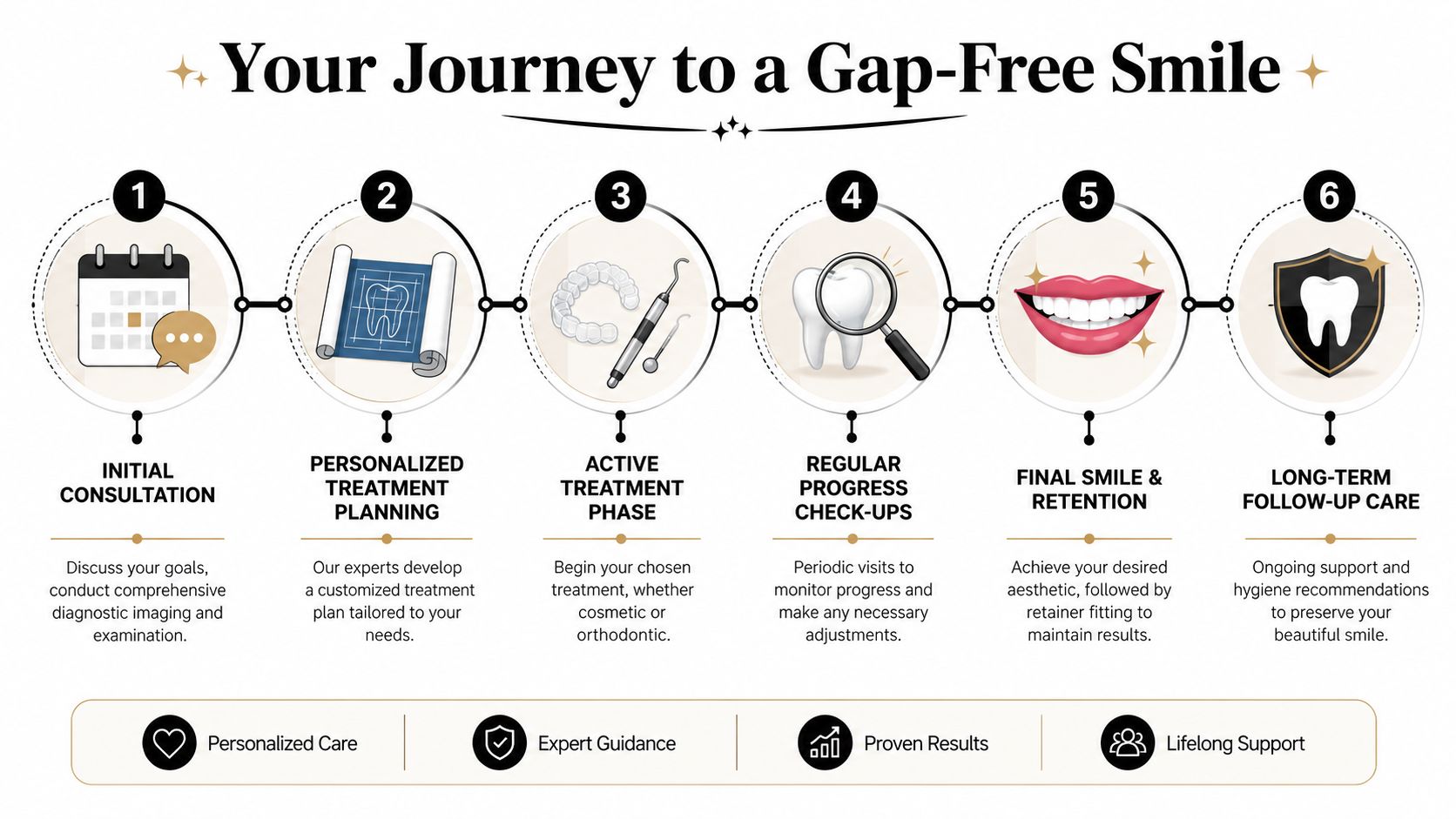
The first visit focuses on clarity
At Ultra Smile DentalSpa, the consultation is where the plan gets specific. I examine the width and position of the gap, the gumline, the contact points between the teeth, and the way your upper and lower teeth come together. A small space at the front can be a simple cosmetic concern, or it can be a sign of tooth movement, a missing tooth, or a bite pattern that needs more than a surface fix.
Digital photos, scans, and x-rays help confirm what is happening below the visible part of the smile. Sometimes a gap that looks minor from the front has root positions that make bonding a poor choice. In other cases, the teeth are healthy and well positioned, which makes a conservative cosmetic option more appealing.
Three decisions usually guide the plan early on:
- Are we improving appearance only, or also correcting function and stability
- Does the space need tooth movement, added width, or both
- What kind of upkeep fits your routine after treatment
Treatment timing depends on the method
Bonding often has the shortest path. If the proportions are favorable and the enamel is healthy, the gap may be closed in one visit with careful shade matching, composite placement, contouring, and polish. The trade-off is that the result has to be designed with restraint. Close the space too aggressively, and the teeth can start to look broad or artificial.
Aligner treatment takes longer, but it gives more control when the issue is position rather than shape. Records are taken first. Then the teeth are moved in stages, followed by refinement if needed. Patients who do well with aligners usually wear them as directed and understand that retention is part of treatment, not an afterthought.
Some of the best cosmetic results come from combining approaches.
A patient may straighten the teeth first, then return for small bonding adjustments to improve symmetry and close any remaining black triangles or uneven edges. That sequence usually produces a more natural finish than trying to solve everything with added material on day one.
The final result has to hold up in daily life
Long-term success depends on what happens after the gap is closed. Teeth can drift back if the original cause is not addressed or if retainers are not worn as instructed. Soft tissue can matter too. If a prominent frenum is pulling between the front teeth, that may need to be managed as part of the plan so the space does not reopen.
The last appointment is not only about how the smile looks in the mirror. It is also about comfort, speech, bite contact, and maintenance at home. Patients should leave knowing how to clean around the result, what to expect over time, and when to return for follow-up so the smile stays stable and natural.
Beyond Cosmetics The Health Benefits of Closing Tooth Gaps
People often start this conversation because of appearance. That's understandable. A visible gap can change the way someone smiles, speaks, and feels in social settings. But the benefits of treatment often go beyond the cosmetic part.
Appearance matters, but function matters too
When teeth are positioned properly and shaped appropriately, they are often easier to keep clean. That can make routine brushing, flossing, and professional dental care more effective. A better-fitting bite can also reduce the sense that food is constantly trapping in one spot.
Spacing can also affect how neighboring teeth behave over time. If a gap is related to a missing tooth or unstable alignment, nearby teeth may continue to drift. Closing the space the right way can support a more balanced arrangement.
- Cleaner contours: Properly finished restorations and aligned teeth are generally easier to maintain than bulky, plaque-trapping shapes.
- More stable bite: When the plan fits the actual cause, treatment can help reduce unwanted movement.
- Stronger confidence: Many adults stop hiding their smile once the gap no longer draws their attention.
When leaving a gap alone is not the simple option
The decision to treat spacing should still start with the cause. As explained in Brocks Gap Dental Group's discussion of why tooth gaps form, a prominent labial frenum, a missing tooth, or underlying gum disease each call for very different treatment approaches than a simple cosmetic gap.
That point matters because not every gap needs to be closed for the same reason. Some people want cosmetic improvement. Others need to restore support, improve hygiene access, or keep the bite from changing further.
A good plan doesn't just make the smile look more even. It makes the result easier to live with day after day.
For patients already looking for dental care, restorative dentistry, or cleaning and exams in Miami, this broader health view is worth keeping in mind. A space between teeth can be a cosmetic concern, a functional concern, or both.
What to Expect at Your Miami Cosmetic Dentistry Consultation
You notice the gap every time you smile in a photo, but the bigger question is what it will take to fix it. At a consultation, the goal is to replace guesswork with a clear plan that fits your teeth, your timeline, and the kind of result you want.
A first appointment should feel calm and informative

A cosmetic dentistry consultation in Miami usually starts with a conversation. I want to know what you see in the mirror, what bothers you about the space, whether the gap has changed over time, and how conservative or dramatic you want the final result to be. Some patients want the fastest cosmetic improvement possible. Others would rather take longer if it means correcting tooth position instead of covering the space.
At Ultra Smile DentalSpa, that discussion is paired with the details that make patients feel more at ease once they walk through the door. Dr. Neda Bahmadi and the team care for patients from Downtown Miami, Midtown Miami, and Hallandale Beach with bilingual support, modern imaging, refreshments, and a setting that feels more comfortable than a typical dental office.
Questions that help shape the right plan
The exam is where the treatment options become more specific. We check the size and location of the gap, the bite, the tooth proportions, the condition of the enamel, and whether the issue is purely cosmetic or tied to movement, a missing tooth, or gum concerns.
That distinction matters. A small space between otherwise healthy front teeth may respond well to bonding or veneers. A wider gap, shifting bite, or spacing caused by missing structure may point toward aligners or restorative treatment instead.
For patients comparing veneer treatment with other cosmetic options, this Miami veneers cost guide often helps frame the discussion around appearance, longevity, and budget.
Useful questions to ask during the visit include:
- How natural will the teeth look once the gap is closed
- Will this option move teeth or only change their visible shape
- How long should I expect the result to last with good care
- Will I need to change anything about flossing, retainers, or maintenance visits
- How will this affect the way my bite feels day to day
Seeing the process makes it easier
Patients usually feel more confident once they can see the plan, not just hear about it. Photos, scans, and side by side option comparisons make it easier to understand the trade-offs between a same-day cosmetic fix and a treatment plan that takes more time but changes the underlying position of the teeth.
That kind of clarity is especially helpful when the gap is only one part of the concern. Some patients are also dealing with a chipped edge, uneven tooth size, old dental work, or discomfort when biting. In those cases, the consultation is not just about closing space. It is about choosing a result that looks right, feels comfortable, and holds up well once treatment is complete.
Schedule Your Personalized Smile Consultation in Miami Today
A gap between teeth can be a small detail that affects confidence every day. It can also be a sign that the smile needs more than a cosmetic touch-up. Either way, the right plan starts with a professional evaluation, not guesswork.
Patients across Miami often compare bonding, veneers, aligners, and implants without knowing which category their case falls into. A consultation helps sort that out. It shows whether the better path is a same-day cosmetic improvement, a tooth-moving solution, or restorative treatment that replaces missing structure. For patients also considering related cosmetic work, this veneers cost page for Miami patients can help frame part of that discussion.
There isn't one universal answer to how to fix gaps between teeth. There is a right answer for each smile. That answer depends on the cause, the appearance goals, the bite, and how the patient wants the result to hold up over time.
For adults in Downtown Miami, Midtown Miami, and Hallandale Beach who want clear guidance, the next step is simple. Schedule a consultation, ask direct questions, and get a plan built around why the gap is there. That approach usually leads to better results and fewer surprises.
Ready to take the next step with Ultra Smile DentalSpa? Schedule a personalized consultation to discuss gap closure, veneers, Invisalign, implants, or other cosmetic and restorative options in Miami. The team can help patients understand their choices, feel comfortable from the first visit, and move toward a healthier, more confident smile.