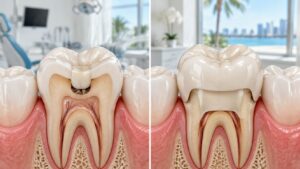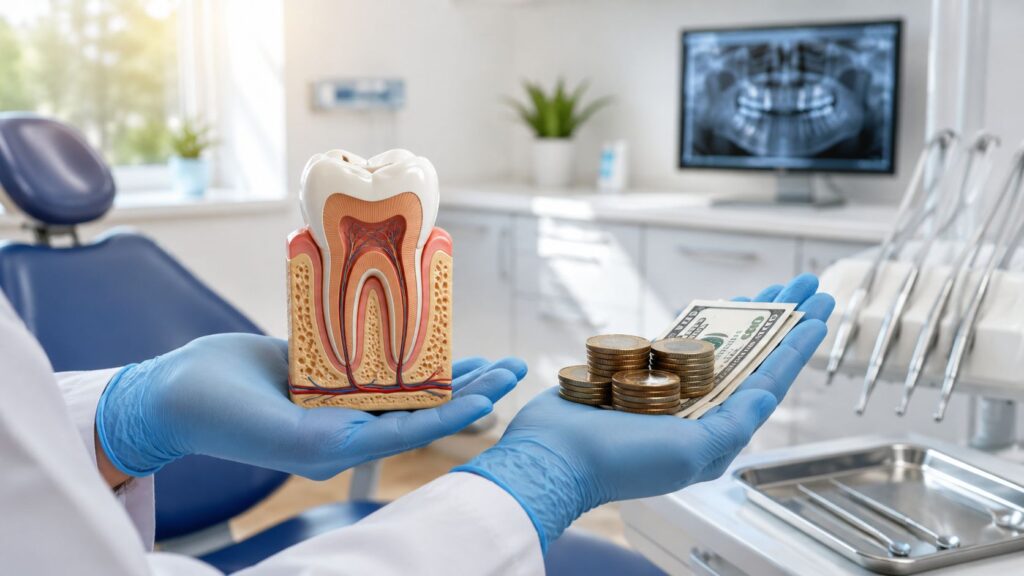
A root canal in Miami typically falls in the same broad range seen nationally: about $620 to $1,100 for a front tooth, $720 to $1,300 for a premolar, and $890 to $1,500 for a molar, with the final crown often billed separately and frequently necessary to protect the tooth. In many cases, that crown adds another major cost, which is why the full treatment plan matters more than the procedure fee alone.
When a tooth starts throbbing at night, reacts sharply to cold, or hurts every time chewing pressure lands on one side, cost becomes part of the stress almost immediately. Most patients aren't only asking whether they need treatment. They're also asking what the bill will look like, whether insurance will help, and whether the process will be uncomfortable.
For patients searching for a dentist in Miami, FL, an emergency dentist, or even a dentist near me because the pain can't wait, root canal cost usually feels unclear until someone breaks it down in plain language. That's what this guide does. It explains what drives the fee, why back teeth usually cost more, when a crown becomes part of the plan, and what to expect from a comfort-focused dental visit in Miami.
Table of Contents
- Understanding Your Root Canal Cost in Miami
- Root Canal Price Breakdown by Tooth Type
- What Determines the Final Price of Your Treatment
- The Dental Crown An Essential Part of Your Root Canal
- Navigating Insurance and Payment Options in Miami
- Your Comfortable Root Canal Experience in Miami
- Common Questions About Root Canal Treatment
Understanding Your Root Canal Cost in Miami
A painful tooth creates two urgent problems at once. One is clinical. The tooth may be infected, cracked, or inflamed. The other is financial, because it is necessary to know the likely cost before a calm decision can be made.
In Miami, that question comes up often among busy professionals, families, and patients looking for an emergency dentist after pain flares without warning. The answer depends first on which tooth needs care, then on how difficult the treatment is, and finally on whether the tooth will need additional rebuilding after the canal is cleaned and sealed.
A local cost question with real variables
Patients often expect one flat number, but root canal fees don't work that way. A front tooth is generally simpler to treat than a back molar, and a straightforward case is different from a tooth with challenging anatomy, previous dental work, or extensive structural damage.
That matters because the procedure isn't just about stopping pain for today. It is part of a larger restorative plan meant to keep the tooth functional for chewing, protect surrounding teeth, and reduce the chance that the situation turns into a larger restorative problem later.
Practical rule: Ask for the cost of the root canal and the cost of the final restoration separately. That's the clearest way to understand the true financial picture.
Why comfort matters as much as the estimate
Cost conversations are easier when the setting doesn't add more anxiety. Many patients who search for a dentist near me or a dentist in Miami, FL aren't only comparing fees. They're trying to find a team that explains treatment clearly, moves gently, and doesn't make them feel rushed while they're already in pain.
A spa-like approach changes the experience in a practical way. A calmer environment, thoughtful communication, and a comfort-first workflow can help patients move forward sooner instead of delaying care because of fear.
For anyone also weighing related services such as tooth extraction, restorative dentistry, or even future replacement options like dental implants near me, the best first step is still a proper exam. A root canal can often preserve the natural tooth, and preserving the natural tooth is usually the cleaner, simpler path when the tooth is still restorable.
Root Canal Price Breakdown by Tooth Type
The most useful place to start is with tooth type. National dental references show a consistent pattern. Front teeth usually cost the least, premolars fall in the middle, and molars cost the most because they tend to have more canals and are harder to reach.
The main cost range patients should know
According to Delta Dental's root canal cost guide, the average out-of-network cost for a root canal ranges from about $620 to $1,500, with front teeth around $620 to $1,100, premolars about $720 to $1,300, and molars roughly $890 to $1,500. Delta Dental also notes that the final restoration is a separate expense.
For Miami patients, these same bands are a practical starting point for budgeting. Exact office fees can vary, but the underlying pattern stays consistent because tooth anatomy doesn't change by zip code.
Estimated Root Canal Cost in 2026 Procedure Only
| Tooth Type | Number of Canals (Typical) | National Average Cost | Typical Miami Cost Range |
|---|---|---|---|
| Front tooth | 1 | $620 to $1,100 | $620 to $1,100 |
| Premolar | 1 to 2 | $720 to $1,300 | $720 to $1,300 |
| Molar | 3 or more | $890 to $1,500 | $890 to $1,500 |
Why molars cost more
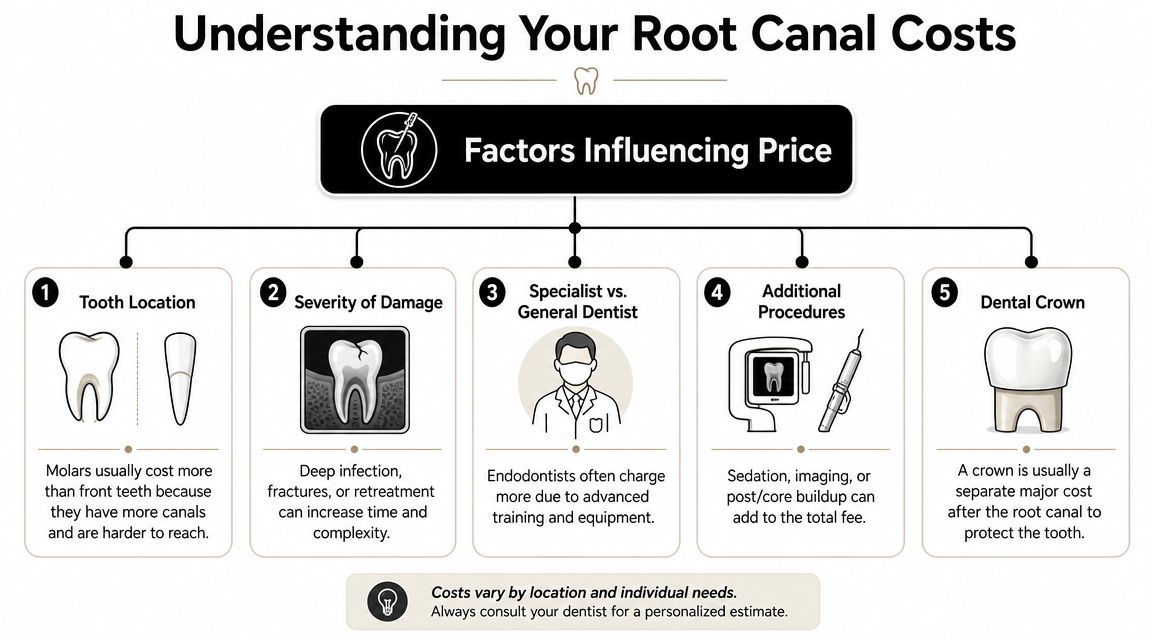
The price difference isn't arbitrary. Front teeth typically have one canal. Premolars often have one to two. Molars commonly have three or more, which means more time locating, cleaning, shaping, and sealing the inside of the tooth.
A molar also sits farther back in the mouth, where access is tighter. That makes isolation, visibility, and instrumentation more demanding. From the patient side, it may feel like "just one tooth." From the clinical side, a back molar can be a much more intricate procedure than a front tooth.
Here is the simple version of what works and what doesn't when comparing estimates:
- Compare like with like. A front tooth estimate shouldn't be compared with a molar estimate and treated as the same service.
- Ask whether the quote is procedure-only. Many misunderstandings happen when a patient assumes the crown is already included.
- Look for itemization. A detailed estimate is easier to understand than one bundled figure with no explanation.
A lower starting number isn't always the lower total. If the estimate doesn't show what happens after the canal is completed, it may not reflect the full treatment plan.
Patients looking for restorative dentistry, new patient exams, dental x-rays, or urgent pain relief in Miami benefit from seeing the full path clearly before treatment begins. Tooth type gives the first answer. The rest of the bill comes from the details of the case.
What Determines the Final Price of Your Treatment
Two Miami patients can both hear the words "you need a root canal" and still receive meaningfully different estimates. The reason is usually not the office changing prices at random. It is the condition of the tooth, the difficulty of the case, and what the tooth needs before and after the canal is completed.
Who performs the treatment matters
A general dentist may treat many straightforward root canals. An endodontist limits practice to this type of procedure and often takes on the harder cases, including retreatment, calcified canals, and teeth with unusual anatomy.
According to CareCredit's root canal cost overview, endodontists may charge up to 50% more than general dentists, and average procedure-only costs can range from $776 to $1,911 for front teeth and $1,030 to $2,471 for molars, depending on complexity and who performs the procedure. In practice, that higher fee often reflects added training, specialized equipment, and the extra chair time difficult cases require.
Specialist care is not automatically better for every tooth. It is often the better value when the anatomy is difficult, the diagnosis is uncertain, or the tooth has already been treated once.
What may be listed separately on an estimate
The procedure itself is only one line item. A clear estimate should also show the services needed to diagnose the problem accurately, keep the tooth protected between visits, and rebuild it so it can function safely afterward.
Common cost drivers include:
- Diagnostic imaging. Standard dental x-rays are often enough, but some teeth need more detailed imaging to show hidden canals, infection patterns, or nearby structures.
- Build-up or foundation work. If decay or fracture has removed too much tooth structure, the tooth may need internal support before the final restoration.
- Temporary sealing or protection. Some cases require a temporary restoration to keep the tooth stable and comfortable until the next step.
- Sedation or comfort options. Patients with anxiety, a strong gag reflex, or difficulty getting numb may choose added comfort measures that affect the total fee.
- Retreatment. Reopening a tooth that already had a root canal is often more technique-sensitive than treating it the first time.
- Final restoration planning. If you want a clearer sense of what that last phase may cost, this guide to a dental crown cost in Miami helps set expectations.
I advise patients to ask for the estimate in plain categories: diagnosis, root canal treatment, buildup, temporary restoration, and final restoration. That format makes the choices easier to understand. It also shows which items are needed right away and which belong to the next phase of care.
At Ultra Smile DentalSpa, that kind of transparency matters because cost conversations are easier when a patient is comfortable, informed, and not being rushed through a painful visit.
If a quote feels hard to follow, ask what each line item does for the tooth, what can wait, and what creates risk if delayed.
The Dental Crown An Essential Part of Your Root Canal
Many patients think the root canal ends the treatment. Clinically, that is often only half of the plan. Once the inside of the tooth has been cleaned and sealed, the tooth still needs durable protection on top.
Why the crown isn't an extra luxury
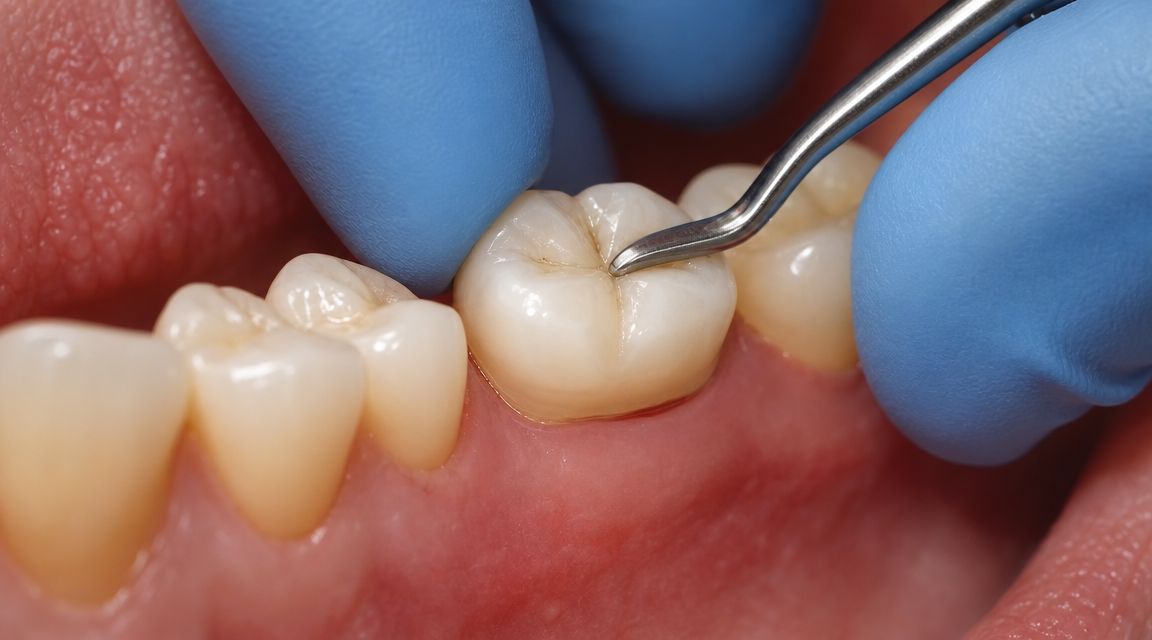
A root-treated tooth is more likely to fracture, especially if a large amount of tooth structure has already been lost. That is why the final restoration often matters as much as the endodontic treatment itself.
According to this dental crown and root canal cost discussion, a permanent crown adds roughly $1,100 to $1,700 and can bring the full root canal plus crown total to about $2,000 to $3,200 or more. The same source notes that this final restoration is critical because a root-treated tooth is more prone to fracture and needs coverage to reduce failure risk.
That point is especially important for back teeth. Molars absorb heavy chewing force. If the tooth has been hollowed out by decay or access for treatment, leaving it unprotected can undo the value of saving it in the first place.
Saving the tooth but skipping the protection is often where patients run into trouble later.
What to review before approving the restoration
Not every restored tooth is identical, and not every estimate includes the same steps. Patients should review whether the plan includes only the root canal, or the complete rebuild.
A clear crown discussion usually includes:
- Whether a crown is recommended now. For many root-treated teeth, the answer is yes.
- Whether the tooth needs a core build-up first. Some teeth need additional internal support before a crown can be seated.
- How the restoration will be made. Workflow affects timing and convenience.
- What the total sequence looks like. Knowing each step reduces surprises.
Patients who want more detail on local crown pricing can review this guide to dental crown cost in Miami. For busy Miami schedules, same-day crown technology can also reduce the number of separate visits needed to finish the case.
Navigating Insurance and Payment Options in Miami
Once the treatment plan is clear, the next question is usually what insurance will pay and what the patient will owe. Understanding these figures helps many estimates become much clearer.
How insurance usually applies
According to GoodRx's overview of root canal costs, the average root canal costs about $1,200 without insurance, and dental insurance commonly covers 50% to 80% of the procedure after the deductible is met. The same source explains that the procedure alone often runs about $900 to $1,500 per tooth, while a permanent crown can add $1,100 to $1,700, bringing the combined total to roughly $2,000 to $3,200 or more.
The key issue isn't only the coverage percentage. It is also how the policy applies that percentage. Deductibles, waiting periods, annual maximums, and separate coverage for the crown can all change the final out-of-pocket amount.
Questions worth asking before treatment starts
Insurance works better for patients when the conversation is specific. These are the questions that usually matter most:
- What portion applies to major restorative care? Root canals and crowns are often not covered the same way as cleanings and exams.
- Has the deductible been met? That can change the estimate immediately.
- Will the crown hit the annual maximum? A plan may contribute to part of treatment and leave the remainder to the patient once the maximum is reached.
- Is pre-treatment documentation needed? Some offices submit estimates in advance when appropriate.
- What if there is no insurance? Many patients use phased care or third-party financing to avoid delaying treatment.
For Miami patients trying to sort through plan details, this page on insurance information can help clarify how coverage is handled and what options may exist for patients without traditional dental insurance.
A practical approach is to request two numbers before treatment begins. One estimate for the procedure itself, and one estimate for the complete case after insurance is applied. That tends to answer the budgeting question more accurately than a single headline fee.
Your Comfortable Root Canal Experience in Miami
Cost matters, but comfort shapes whether patients move forward. Many people still associate root canals with old fears instead of modern technique, local anesthesia, and a much more thoughtful patient experience.
What the visit usually feels like
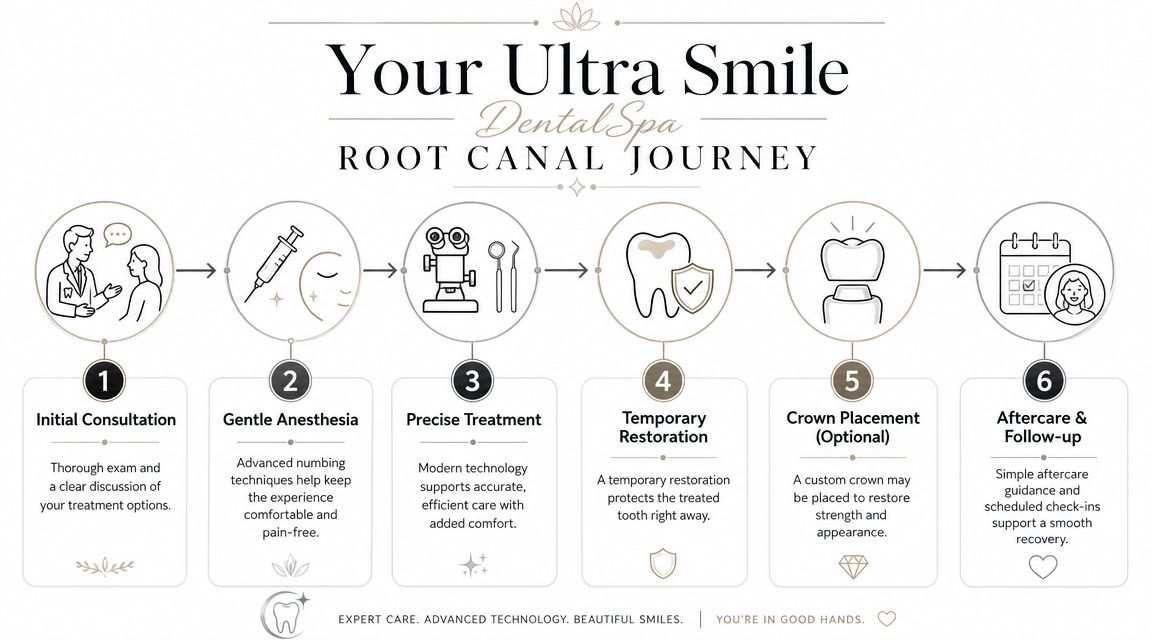
For most patients, the appointment begins with an exam, updated imaging, and a discussion about whether the tooth can be saved predictably. The dentist reviews the condition of the tooth, explains the recommended approach, and outlines what happens the same day versus what may happen at a follow-up visit.
Then comes anesthesia and treatment. The area is numbed, the infected or inflamed tissue is removed from inside the tooth, and the canals are cleaned and sealed. After that, the tooth is protected with a temporary or interim restoration until the final restorative phase is complete.
In a comfort-focused setting, those clinical steps happen alongside details that lower stress. At a spa-like Miami office, that may include refreshments on arrival, custom aromatherapy, streaming entertainment during treatment, and a soothing hot towel finish before the visit ends. For anxious patients, those small touches can make the experience feel manageable instead of overwhelming.
This video offers a simple visual overview of the procedure:
Why saving the tooth is often the better path
When a painful tooth is restorable, preserving it is usually preferable to removing it. Extraction can stop pain, but it also creates a new decision about replacement. That may lead to future restorative choices such as a bridge or dental implants near me, each with its own treatment timeline and cost.
For the right tooth, root canal treatment keeps the natural tooth in place and helps maintain normal chewing. It can also avoid the larger restorative chain that sometimes begins after tooth extraction. That doesn't mean every tooth should be saved. Some teeth are too damaged. But when the tooth is salvageable, preserving it often remains the more conservative path.
The easiest tooth replacement is the tooth that didn't have to be replaced.
Common Questions About Root Canal Treatment
Is a root canal painful
The goal of a root canal is to treat pain from infection or inflammation, not add to it. With modern numbing techniques, many patients say the procedure feels similar to having other restorative dental care done. Anxiety is still common, which is why a calm environment, clear communication, and gentle technique matter.
How many appointments does it take
Some cases are completed in one visit, while others need more than one step because the tooth needs additional disinfection, temporary protection, or a separate restorative appointment. The final crown phase may also be scheduled independently unless the office offers a workflow that shortens that timeline.
What signs suggest a root canal may be needed
Common warning signs include lingering sensitivity to heat or cold, pain when biting, spontaneous toothache, swelling near the tooth, or a tooth that feels different from the ones around it. A cracked tooth, deep cavity, or old restoration can also lead to pulp damage that requires treatment. A proper exam and dental x-rays are what confirm the diagnosis.
Is extraction better than a root canal
Not usually, if the tooth can be saved predictably. Removing a tooth can solve the infection, but it creates a replacement problem and may lead to more restorative treatment afterward. If the tooth is restorable, saving it is often the more conservative option for function and long-term planning.
For anyone in Downtown Miami, Midtown Miami, or Hallandale Beach who is searching for a cosmetic dentist near me, an emergency dentist, or a trusted dentist in Miami, FL for urgent tooth pain, the next step is a direct exam. Prompt treatment can clarify whether the tooth needs a root canal, another restorative solution, or in some cases extraction and replacement planning.
If tooth pain is making it hard to eat, sleep, or focus, scheduling a consultation with Ultra Smile DentalSpa is the clearest way to get an exact diagnosis, a written treatment plan, and a transparent cost review for the recommended care.