Can protecting your teeth at night still leave the grinding itself untouched? For many Miami patients, that's exactly the right question to ask before buying a guard from a shelf or requesting dental care from a dentist in Miami, FL. A patient searching for a dentist near me after waking with jaw soreness, a chipped filling, or flat-looking teeth needs a clear answer to how do night guards work, including what they can't do. The short version is reassuring and honest. A guard shields teeth and dental work from force, but it doesn't reliably switch off clenching, and breathing symptoms deserve screening before anyone relies on one.
Table of Contents
- How a Night Guard Works While You Sleep
- When a Night Guard Is Not Safe to Use Alone
- Hard Versus Soft Materials and Why Thickness Matters
- Custom Versus Over-the-Counter Night Guards
- How a Custom Night Guard Is Fitted and Cared For
- How to Tell If Your Night Guard Is Working
- Book a Custom Night Guard Consultation in Miami
How a Night Guard Works While You Sleep
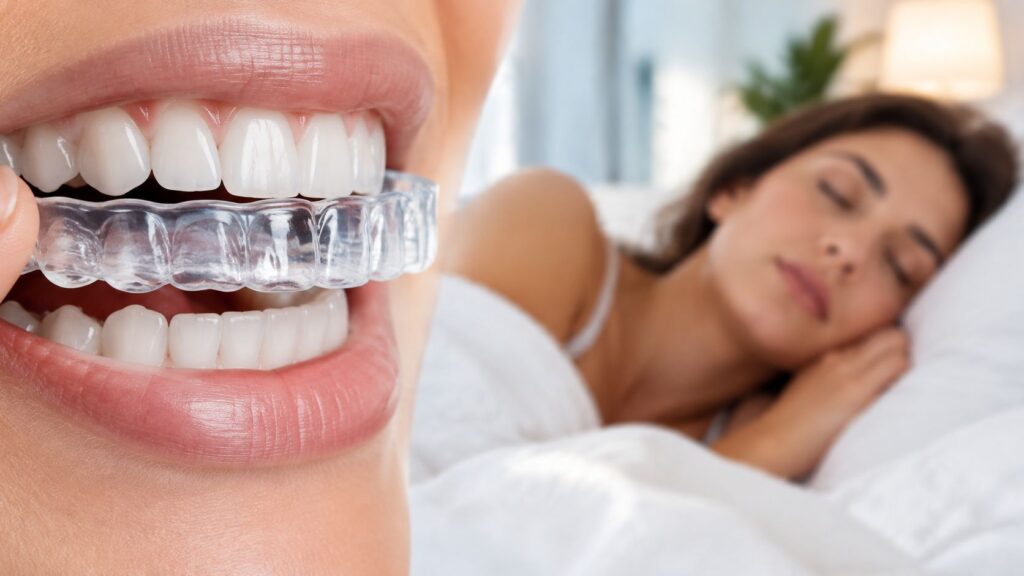
A night guard is a removable appliance worn over the upper or lower teeth during sleep. It creates a barrier between opposing teeth, so top and bottom teeth don't grind directly against each other.
Think of it as a sturdy pad placed between two hard surfaces. Without that pad, enamel meets enamel and fillings or crowns take concentrated hits. With it, contact lands on the appliance first.
Three mechanical jobs
The guard spreads biting force across a wider area instead of leaving one cusp tip or one crown to absorb it. It also provides a replaceable surface, so wear marks appear on the guard rather than on natural teeth. Some designs steady the bite as well, helping pressure sit more evenly across the arch.
That protection matters for restorative dentistry, including crowns, bridges, and dental implants. A person looking for dental implants near me or protecting a recent implant still needs force managed during sleep, because restorations can chip under repeated loading even when they feel fine during the day.
Protection is not the same as a cure. A guard can preserve tooth structure while grinding continues underneath it.
A Cochrane review of occlusal splints for sleep bruxism found insufficient evidence to confirm that occlusal splints reduce the frequency of sleep bruxism, although they may provide benefit by preventing tooth wear. That distinction changes how success should be judged.
What a night guard does for each effect of grinding
| Effect of grinding | What the guard does | What it cannot do |
|---|---|---|
| Enamel wear | Gives the teeth a replaceable surface that absorbs wear | Does not stop the grinding itself |
| Chips and cracks | Spreads biting force across the appliance instead of single teeth | Does not repair teeth that are already weakened |
| Stress on fillings and crowns | Reduces direct loading on restorations | Cannot correct an unbalanced bite on its own |
| Jaw and morning soreness | May ease muscle discomfort for some people | Is not a guaranteed fix; persistent pain needs assessment |
Tonight, three quick checks help. The guard should cover the biting surfaces it's meant to protect, sit fully over the teeth without rocking, and stay seated through the night. A guard found on the pillow each morning isn't shielding anything during the hours that count.
When a Night Guard Is Not Safe to Use Alone
Most guides present guards as harmless protection. A less discussed question comes first for some patients. Could an ordinary guard be the wrong appliance because of breathing during sleep?
A conventional stabilization guard protects teeth. It is not the same as a mandibular-advancement device designed to hold the lower jaw forward for obstructive sleep apnea. Confusing the two can leave a breathing problem unaddressed while teeth get protected.
Warning signs worth mentioning before fabrication
- Loud snoring: Regular, disruptive snoring reported by a partner or family member.
- Gasping or choking: Waking suddenly with a sense of blocked air.
- Witnessed pauses: Breathing that appears to stop, then restart.
- Excessive daytime sleepiness: Feeling unrefreshed or unusually drowsy despite enough hours in bed.
A College of Dental Hygienists of Ontario advisory on sleep apnea notes that obstructive sleep apnea is a contraindication or potential concern for ordinary occlusal splints because some appliances may worsen airway obstruction. A maxillary guard that increases vertical bite height without advancing the lower jaw can aggravate apnea in some patients.
The evidence is mixed, so the calm conclusion is screening, not alarm. Not every guard causes apnea. Patients with both bruxism and apnea symptoms may instead need evaluation for a purpose-designed advancement appliance after medical or sleep assessment.
Other details belong in the same conversation. Jaw joint clicking or locking, implants, crowns, and bridges all influence design because a guard changes how teeth meet. Patients whose main problem is strong jaw-muscle clenching can also read about Botox treatment for jaw clenching as a separate topic to discuss, rather than assuming a thicker guard is always the answer.
Hard Versus Soft Materials and Why Thickness Matters
Material decides how a guard behaves under repeated force. The clear hard guard and softer translucent guard shown here may look similar at a glance, but they flex, wear, and hold their shape differently.
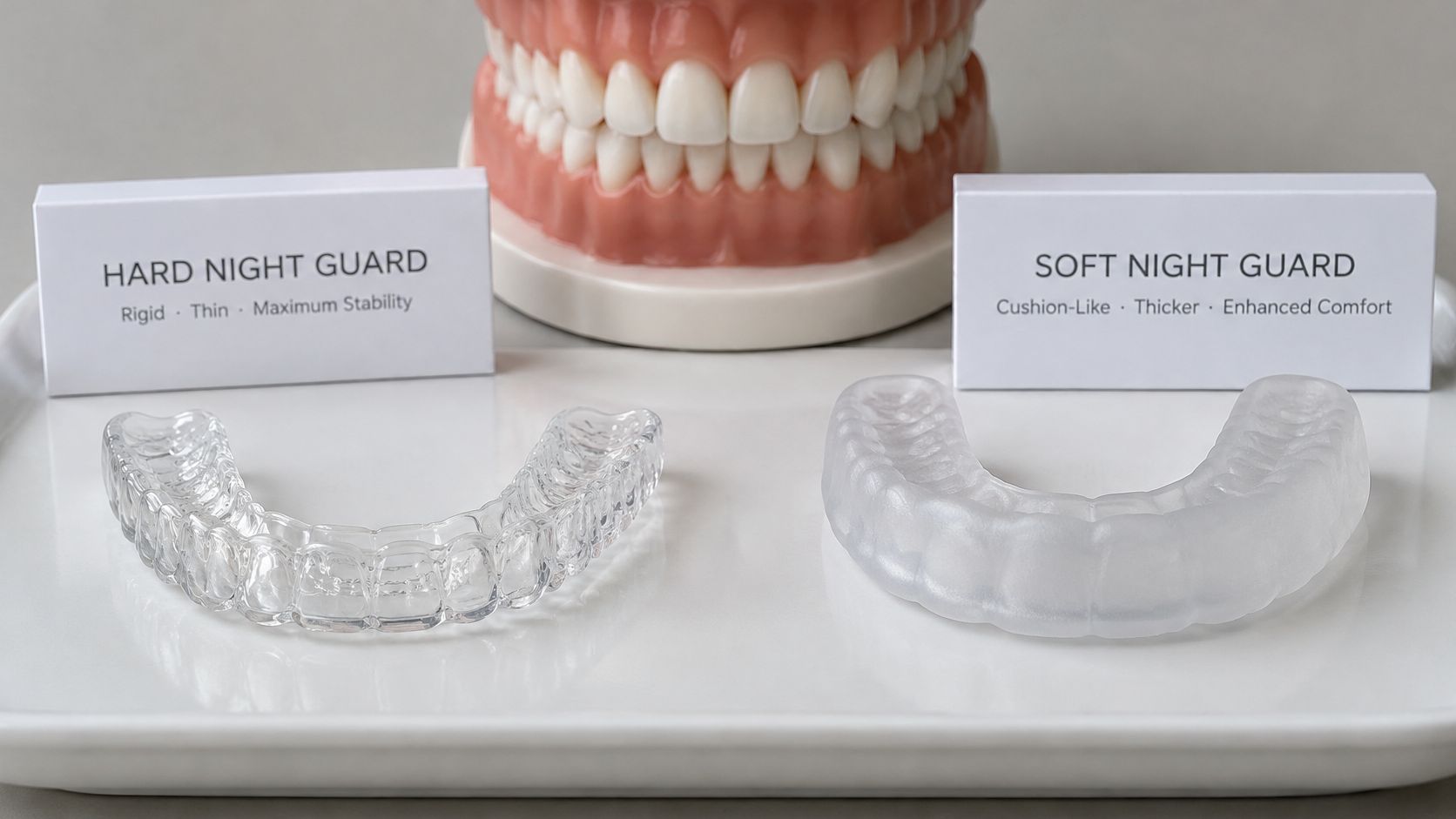
A commonly studied hard-acrylic design is approximately 2 mm thick, with reinforcement up to about 4 mm in the anterior incisor region, according to a clinical review of occlusal splint mechanics. Thickness and stiffness determine how much the appliance flexes, spreads force, and resists wearing through.
A rigid, flat-plane stabilization splint gives the lower teeth a smooth, even platform. Cusps don't lock into their usual grooves, so the jaw can slide without catching on individual inclines. That even contact can reduce concentrated loading on a single tooth or crown.
Three designs patients commonly encounter
Soft appliances often feel comfortable on the first night, yet they can wear faster and fit less precisely. Hard stabilization splints feel firmer and hold their biting surface better. Adjustable splints sit between those poles because a dentist can refine contacts over time.
Night guard designs compared by material and fit
| Design | Typical build | Strengths | Limits |
|---|---|---|---|
| Hard acrylic stabilization splint | About 2 mm thick, up to about 4 mm at the front | Rigid, spreads force, generally preferred | Needs fit checks and adjustment over time |
| Adjustable splint | Bite surfaces can be tuned by a dentist | Reported as more effective than some conventional designs in one review | Needs professional visits to adjust |
| Soft boil-and-bite guard | Softened in hot water and pressed on at home | Comfortable at first and easy to obtain | May increase clenching in some users; fits less accurately and wears faster |
The short demonstration below helps patients visualize fit and thickness before comparing store-bought and custom options.
Even a sound design fails when it is poorly fitted, unevenly worn, or left unadjusted after restorative dentistry or tooth movement. Two simple checks apply at home. The guard should feel firm rather than spongy, and pressure should feel even, without one tight spot doing all the work.
Custom Versus Over-the-Counter Night Guards
Price is the easiest difference to see. Fit, adjustment, and supervision matter more for how a guard performs month after month.
The comparison below contrasts a guard made from a dental impression with a pre-formed tray bought ready-made.
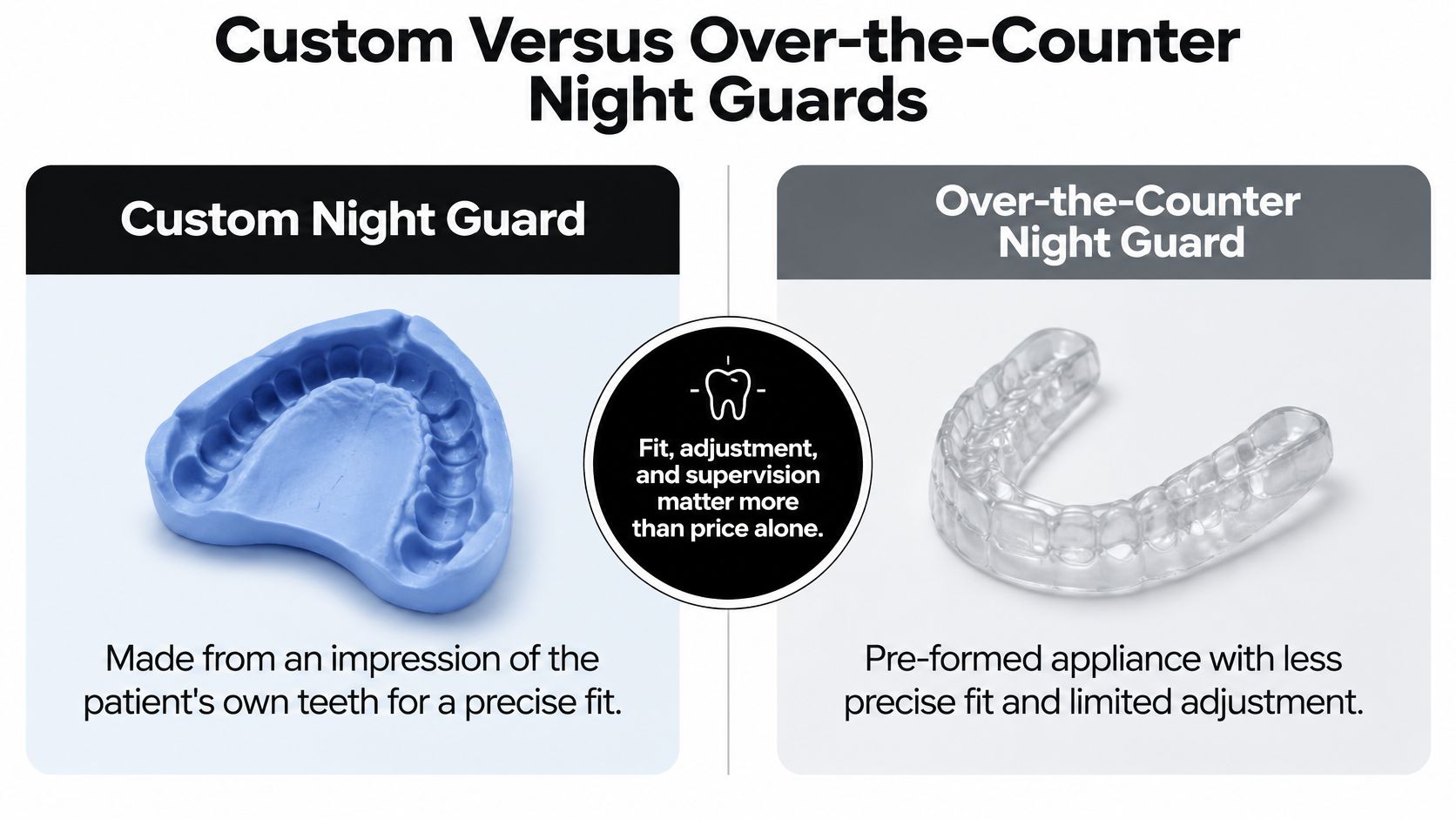
A custom guard starts with an impression of the patient's own teeth. The finished appliance follows that upper or lower arch closely, and a dentist can tune retention and bite contacts at delivery. When a crown is placed, a tooth is repaired, or the bite changes, those contacts can be checked again.
A boil-and-bite kit is softened in hot water, pressed onto the teeth at home, and hoped into shape. Thickness ends up uneven in many mouths, thin where it was bitten hard and bulky where it wasn't. Nobody checks whether one side contacts first.
Pre-formed guards skip even that step. A one-size tray may feel acceptable for a few nights, yet it rarely matches an individual bite, especially for patients with veneers, crowns, or missing teeth.
What comparative evidence suggests
A 2023 systematic review of splints for sleep bruxism evaluated 808 articles but found only 15 studies that met its inclusion criteria. It reported that adjustable appliances were more effective in reducing sleep-bruxism episodes and improving patient-reported symptoms than some conventional designs, while muscle-activity changes varied by splint and individual response.
That small evidence base argues against choosing by softness alone. Someone searching for an emergency dentist after cracking a tooth at night, or for a cosmetic dentist near me to protect veneers and teeth whitening results, benefits from an individualized evaluation first.
Custom, boil-and-bite and store-bought guards compared
| Factor | Custom guard from a dentist | Boil-and-bite kit | Pre-formed store-bought guard |
|---|---|---|---|
| Fit | Made from an impression of your own teeth | Softened and pressed on at home | One-size design that varies widely |
| Bite adjustment | Dentist tunes the bite contacts | Limited to what you can reshape at home | Usually none |
| Professional check | Fit checked at delivery and at follow-up visits | None | None |
| Best for | Ongoing grinding, existing dental work or jaw symptoms | Short-term use | Occasional use when nothing else is available |
Ultra Smile DentalSpa in Miami offers custom night guards for patients from Downtown Miami, Midtown Miami, and Hallandale Beach who want an impression-based fit. Three questions help with any provider. Who checks the fit? How are bite adjustments made? How often is the guard reviewed as teeth and restorations change?
How a Custom Night Guard Is Fitted and Cared For
A custom night guard starts with an impression and ends with a fit check. Each step helps the appliance sit comfortably over the teeth it is made to protect.
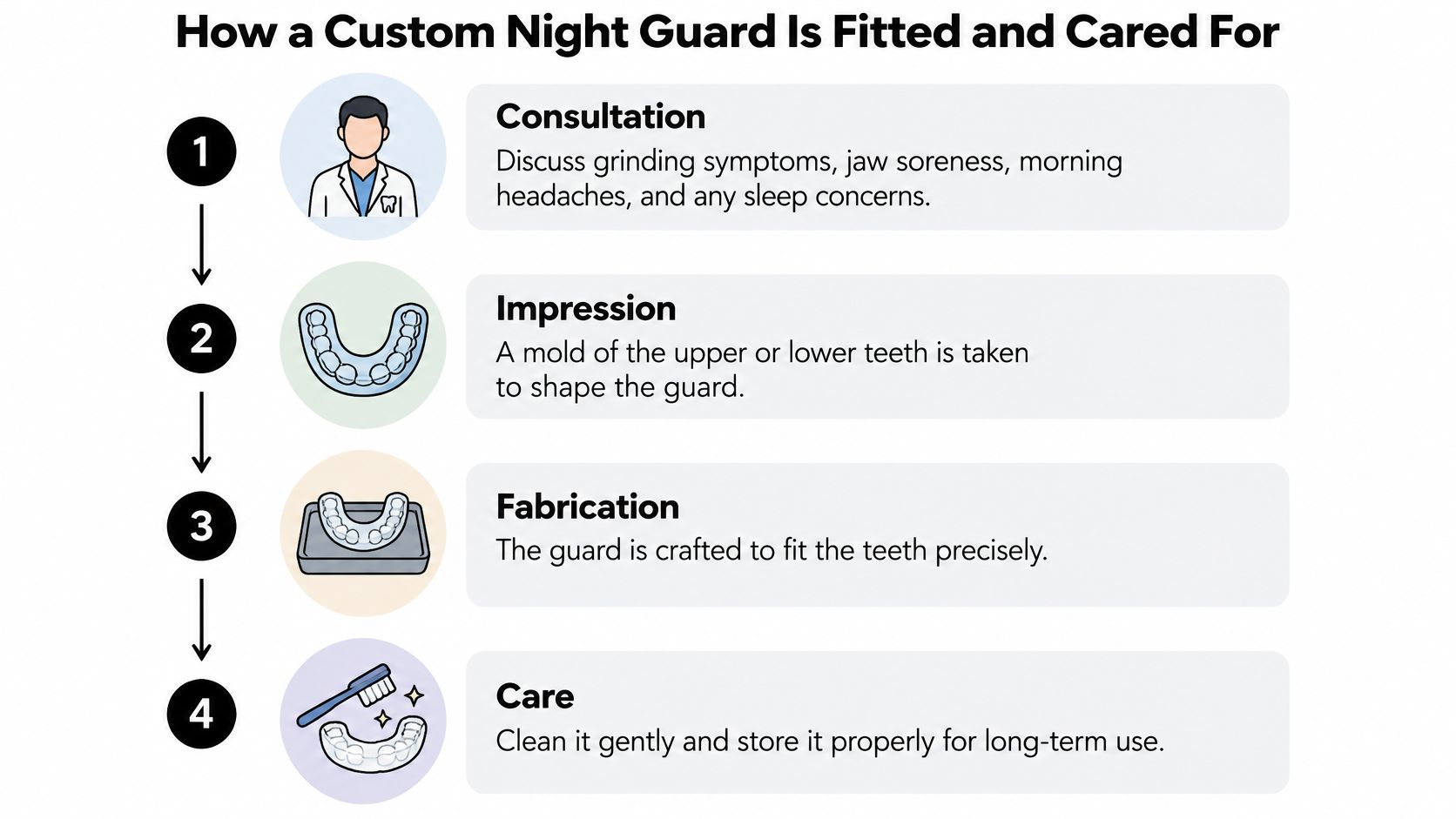
Fitting steps from first visit to first week
- Consultation: The custom night guard process at Ultra Smile DentalSpa begins with a consultation to discuss symptoms and an impression of the patient's teeth.
- Impression: The impression records the shape of the teeth. It is used to make a guard that fits precisely over the upper or lower teeth.
- Fabrication: The guard is made from the impression. A precise fit helps it rest over the chosen teeth as intended.
- Fit check: Once the guard is ready, the team checks that it fits comfortably and makes any necessary adjustments.
- Getting used to the guard: Pay attention to how it feels during use and when removed. If it feels uncomfortable or no longer fits as expected, raise this at a check-up.
Regular check-ups are recommended to assess the fit and condition of a night guard, so wear on the teeth and wear on the guard can be reviewed side by side.
Cleaning and storage that preserve shape
- Cleaning: Rinse the guard after use and clean it gently with cool water. Avoid hot water, which can change its shape.
- Storage: Keep the guard in its case, away from heat and pets. Chewing can damage the appliance and affect its fit.
Care instructions covering cleaning, storage, and usage are provided for each night guard. Follow them to help keep the appliance in good condition.
A well-fitting guard should feel comfortable. If it becomes loose, uncomfortable, or seems to change how your teeth meet, arrange a check-up rather than trying to adjust it yourself.
How to Tell If Your Night Guard Is Working
Success looks quieter than many patients expect. Teeth and restorations stay intact, morning symptoms ease or hold steady, and damage gets caught early on the guard itself. It doesn't require proof that grinding stopped.
A systematic review of adult sleep-bruxism management found that stabilization splints tended to reduce the number of bruxism events, but the difference was not statistically significant when compared with other oral appliances. Against a palatal-coverage control, the greater short-term tendency to reduce events was no longer present after 2 to 6 weeks of follow-up.
The same review concluded that stabilization splints may be considered a standard management approach and appeared relatively safe, while emphasizing limits in study quality. Tracking symptoms therefore matters more than assuming steady improvement. Readers unsure about nighttime signs can review the common indicators in signs of grinding teeth at night before their next dental visit.
Warning signs and what to do about them
| Sign | What it usually points to | Next step |
|---|---|---|
| Thinning, holes or cracks in the guard | Heavy grinding force or a worn appliance | Ask for an inspection and replacement if needed |
| Jaw pain or headaches that persist on waking | Ongoing clenching or jaw-muscle strain | Book a bite and jaw assessment |
| New tooth sensitivity or a chipped tooth | Forces reaching the teeth through or around the guard | Schedule a dental exam soon |
| Guard feels loose or no longer sits evenly | Bite change or the guard has shifted | Request a fit check and adjustment |
A simple weekly self-check
Once a week, note three things. How does the guard seat compared with last month? How does the jaw feel within the first hour after waking? Do front teeth look flatter, or edges look sharper and rougher than before?
Replacement isn't set by a calendar date. Wear, thinning, cracks, and fit decide timing, which is why regular inspection matters more than a reminder in a phone. A guard that feels worse over several weeks needs professional review, not a replacement chosen by packaging claims.
Book a Custom Night Guard Consultation in Miami
Could a custom night guard help protect your teeth from grinding? It can create a barrier between the upper and lower teeth, but it does not reliably stop the grinding itself. If breathing concerns may be involved, a guard should not be relied on alone without appropriate assessment.
Ultra Smile DentalSpa offers custom night guards to protect teeth and the jaw from the effects of bruxism, also known as teeth grinding. The process begins with a consultation to discuss your symptoms and an impression of your teeth. That impression is used to make a guard that fits precisely over the upper or lower teeth. Once it is ready, the team checks that it fits comfortably and makes any necessary adjustments.
Bring a list of what you have noticed, such as morning jaw soreness or headaches, and when they occur. If someone has observed grinding sounds, snoring, or pauses in your breathing, mention that too. These details can help guide the conversation about next steps. A locked jaw, broken tooth, or severe pain calls for prompt dental attention rather than waiting for a routine consultation.
Each patient receives care instructions for cleaning, storage, and use. Regular check-ups are recommended to assess the guard's fit and condition. If you are arranging a visit, dental appointment booking with VoiceAgent is one way to book an appointment.
A consultation can help clarify whether a custom guard suits your situation and what to monitor after you begin wearing it. To discuss symptoms and the impression process, contact Ultra Smile DentalSpa in Miami.