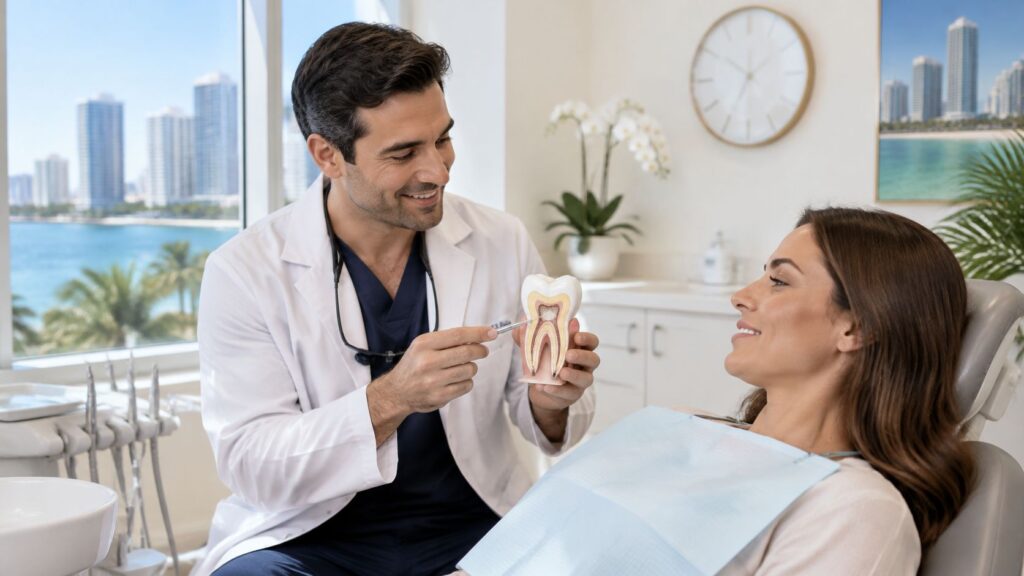
A typical root canal appointment lasts about 60 to 90 minutes, many teeth need one or two visits, and a two-visit course represents roughly 3 hours of total chair time. Tooth anatomy, infection severity, restoration needs, and patient comfort can move that estimate.
But does time in the dental chair tell a Miami patient when treatment is finished? Not necessarily. The full schedule also includes diagnosis, protection of the treated tooth, the final crown or filling, and recovery.
For adults searching for a dentist in Miami, FL because of lingering sensitivity, swelling, or pain when chewing, a clear schedule can make care feel more manageable. Ultra Smile DentalSpa provides a calm local setting where patients can discuss their symptoms, concerns, and practical scheduling needs before treatment begins.
Table of Contents
- How Long a Root Canal Appointment Takes
- What Makes Your Root Canal Take Longer
- Choosing Between One Visit and Two
- Walking Through Each Step of the Appointment
- Recovery Timeline and Long-Term Results
- Comfort Tips and Booking Your Visit in Miami
How Long a Root Canal Appointment Takes
A typical uncomplicated root canal appointment takes about 60 to 90 minutes, with most treatment completed in one or two appointments. The American Association of Endodontists describes roughly 90 minutes per appointment, making a two-appointment course approximately 3 hours of direct clinical time.
These are planning ranges, not promises. A dentist needs enough time to clean the entire canal system and seal it properly, rather than work toward a stopwatch.
Typical root canal time by scenario
| Scenario | Typical chair time | Visits | What changes it |
|---|---|---|---|
| Single-visit root canal on an uncomplicated tooth | 60 to 90 minutes | 1 | Straight canals and no active infection |
| Two-visit root canal | About 90 minutes per visit, roughly 3 hours total | 2 | Infection, complex canals or heavy damage |
| Crown or filling placed after root canal | Separate appointment, time set by the restoration plan | 1 more | Type of crown and whether a post is needed |
| Retreatment of a tooth treated before | Often longer than the first treatment | 1 or 2 | Removal of old filling material and access to the canals |
Chair time isn't the same as total treatment time. A patient may leave with the canals treated but still need a permanent restoration. Check-in, reviewing health information, and discussing aftercare also deserve space in the day's schedule.
Visit count isn't a quality ranking, either. A Cochrane review found no evidence that single-visit treatment is more effective than multiple-visit treatment for permanent teeth. The dentist chooses a schedule that allows thorough treatment and appropriate protection of the tooth.
Planning rule: A useful estimate includes both the expected treatment appointments and the appointment that completes the restoration.
At the exam, dental X-rays help the dentist assess root shape, infection, and the amount of remaining tooth structure. Some details only become clear during treatment, so an initial estimate may need adjustment.
Ultra Smile DentalSpa in Miami offers root canal treatment to help save natural teeth. Patients can request a tooth-specific time estimate before treatment day, including whether the restoration is expected to require a separate booking.
What Makes Your Root Canal Take Longer
Cleaning a root canal is a little like cleaning a house. A single-room flat is simpler to move through than a house with many rooms and narrow hallways. Inside a tooth, extra canals, tight curves, and difficult access create similar challenges.
The visible size of a tooth doesn't reveal everything beneath the gums. A small opening can lead to a complicated internal canal system.
How tooth type affects root canal time
| Tooth type | Typical canals | Typical chair time | Why it takes that long |
|---|---|---|---|
| Front incisors | Usually 1 | Usually the shortest | One relatively straight canal and easy access |
| Canines | Usually 1 | Short to moderate | One canal with a longer root |
| Premolars | 1 to 2 | Moderate | Curved or branched canals |
| Maxillary first molars | Usually 3 to 4 | 35 to 120 minutes in a single-visit protocol | Several canals and complex anatomy |
| Lower molars | Usually 3 to 4 | Often the longest | Several canals with tight curves |
A ClinicalTrials.gov study protocol expected single-visit treatment of maxillary first molars to take approximately 35 to 120 minutes. That's a protocol estimate, not a guaranteed appointment length, but it illustrates the range possible within the same tooth type.
Infection and previous treatment add complexity
Deep decay or a crack can let bacteria reach the pulp, the soft tissue containing nerves and blood vessels inside the tooth. Inflammation or infection there can cause prolonged temperature sensitivity, spontaneous aching, or tenderness when biting. Infection can also affect tissues around the root.
Leeds Teaching Hospitals NHS Trust reports approximate success rates of 96% without inflammation at the root end, compared with about 85% when inflammation is present. These estimates aren't personal guarantees, and they don't mean that a longer appointment automatically improves the outcome.
An infected tooth may need additional cleaning or medication between appointments. A previously treated tooth can require careful removal of old filling material before the dentist can reach and disinfect the canals again.
Narrow or calcified canals also take patience. So can limited mouth opening or difficulty getting a highly inflamed tooth comfortably numb.
Useful consultation questions include:
- Anatomy: Does the X-ray suggest curved, narrow, or difficult-to-reach canals?
- Infection: Is medication between appointments likely?
- Previous work: Will an existing crown, post, or canal filling complicate access?
- Contingency: What findings could change the estimated schedule?
Choosing Between One Visit and Two
The choice isn't just faster versus slower. A straightforward tooth without active infection may suit a single treatment visit, provided the dentist can clean, dry, fill, and seal the canals appropriately.
Staged treatment can make sense when infection, drainage, difficult anatomy, or a need for medication prevents completion. A temporary filling seals the opening between appointments. Infection alone doesn't automatically rule out single-visit care; the clinical findings guide that decision.
One visit versus two visits
| Factor | Single visit | Two visits |
|---|---|---|
| Chair time | One appointment, often 60 to 90 minutes | Two appointments, about 90 minutes each |
| Total appointments | 1 treatment appointment | 2 or more across the care pathway |
| Pain within one week | Higher proportion reported pain in the Cochrane review | Lower proportion reported pain |
| Expected outcome | Comparable overall | Comparable overall |
| Best fit | Straightforward tooth with no active infection and limited time | Infection, complex canals or a need for medication between visits |
A Cochrane review summarized in the full-care timeline notes accompanying Cleveland Clinic's root canal guidance found comparable overall effectiveness, but a higher proportion reported pain within one week after single-visit treatment (RR 1.55; 95% CI 1.14–2.09). That relative risk isn't a prediction of how much pain an individual patient will feel.
A shorter treatment visit doesn't necessarily mean an earlier finish if the tooth still needs its definitive restoration.
The most useful schedule includes diagnosis, treatment, the temporary-restoration period, crown timing, and contingency time. Patients coordinating work in Downtown Miami or family commitments in Midtown benefit from knowing which appointments are essential before making travel plans.
Before agreeing to a schedule, patients can ask:
- Expected visits: How many treatment appointments are anticipated for this tooth?
- Medication: Is medication inside the tooth likely to be needed between appointments?
- Completion: When would the final crown or filling be placed?
Walking Through Each Step of the Appointment
Knowing what happens in the chair helps explain why a dentist can't give every tooth the same appointment length. Preparation, comfort checks, and isolation all support careful treatment.
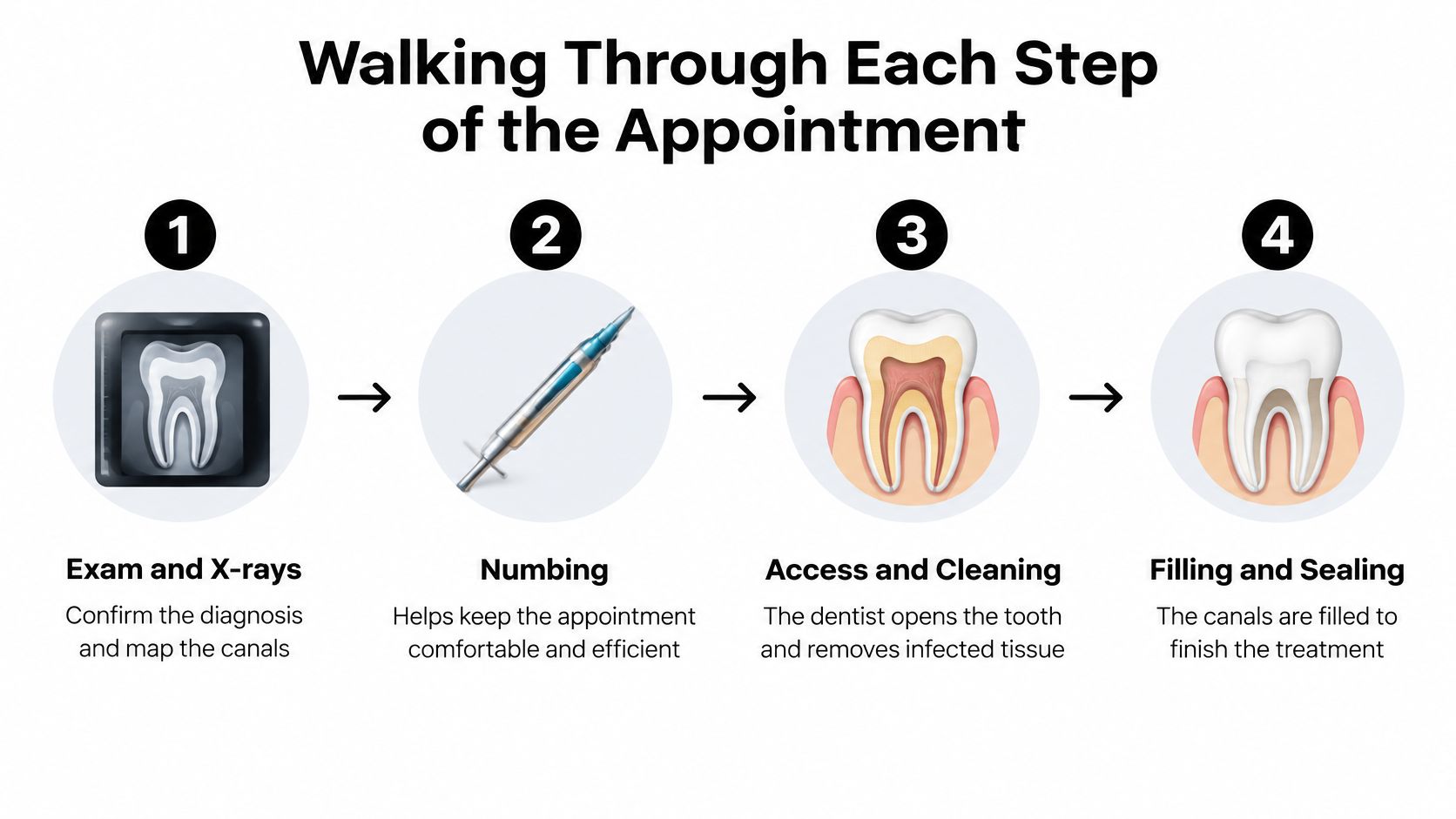
The procedure moves through several phases, with cleaning often requiring the most attention.
From diagnosis to canal cleaning
Exam and X-rays confirm the problem. The dentist reviews symptoms, tests the tooth, and examines images to assess the roots and surrounding bone. Diagnosis may happen at a separate new patient exam or urgent appointment, so it shouldn't automatically be counted as treatment time.
The area is numbed and checked. Local anesthetic helps prevent sharp pain, and the dentist confirms its effect before beginning. An inflamed tooth may need additional anesthetic or more time before work can proceed comfortably.
A rubber dam isolates the tooth. This thin protective sheet keeps saliva away from the treatment area and helps prevent instruments or rinsing solutions from entering the mouth. Placement is a preparation step, not a delay to skip.
The dentist opens the tooth. After preparation, the operative procedure starts by removing decay and infection and opening the crown of the tooth to access the pulp chamber. The pulp is removed so the dentist can reach the canal system without leaving infected tissue behind.
The canals are cleaned, shaped, and rinsed. Fine endodontic files shape the spaces, while irrigating solutions help remove debris and disinfect areas the files can't directly touch. Curves and narrow passages require deliberate work, which is why this phase often occupies most of the appointment.
Sealing and rebuilding the tooth
Staged treatment receives a temporary seal. When another treatment appointment is needed, the dentist may place medication inside the canals and a temporary filling over the opening. The tooth must remain protected while treatment is incomplete.
The canals are filled and the tooth is restored. Once ready, the cleaned canals and pulp chamber are filled and sealed, either during the same appointment or a later visit. A metal or plastic rod or post is often placed when needed to retain the core filling that supports the restoration, usually a crown or filling.
A post isn't necessary in every tooth, and it doesn't replace a crown when protective coverage is needed. Its purpose is to help retain the rebuilding material when too little tooth structure remains.
With effective numbing, patients may notice pressure, vibration, or water movement rather than sharp pain. A patient who feels pain should signal immediately so the dentist can pause, reassess anesthesia, or allow a short break.
Recovery Timeline and Long-Term Results
Consider a Miami professional returning home after treatment. The immediate task isn't testing the tooth with a normal meal. It's allowing sensation to return, following medication instructions, and protecting any temporary restoration.
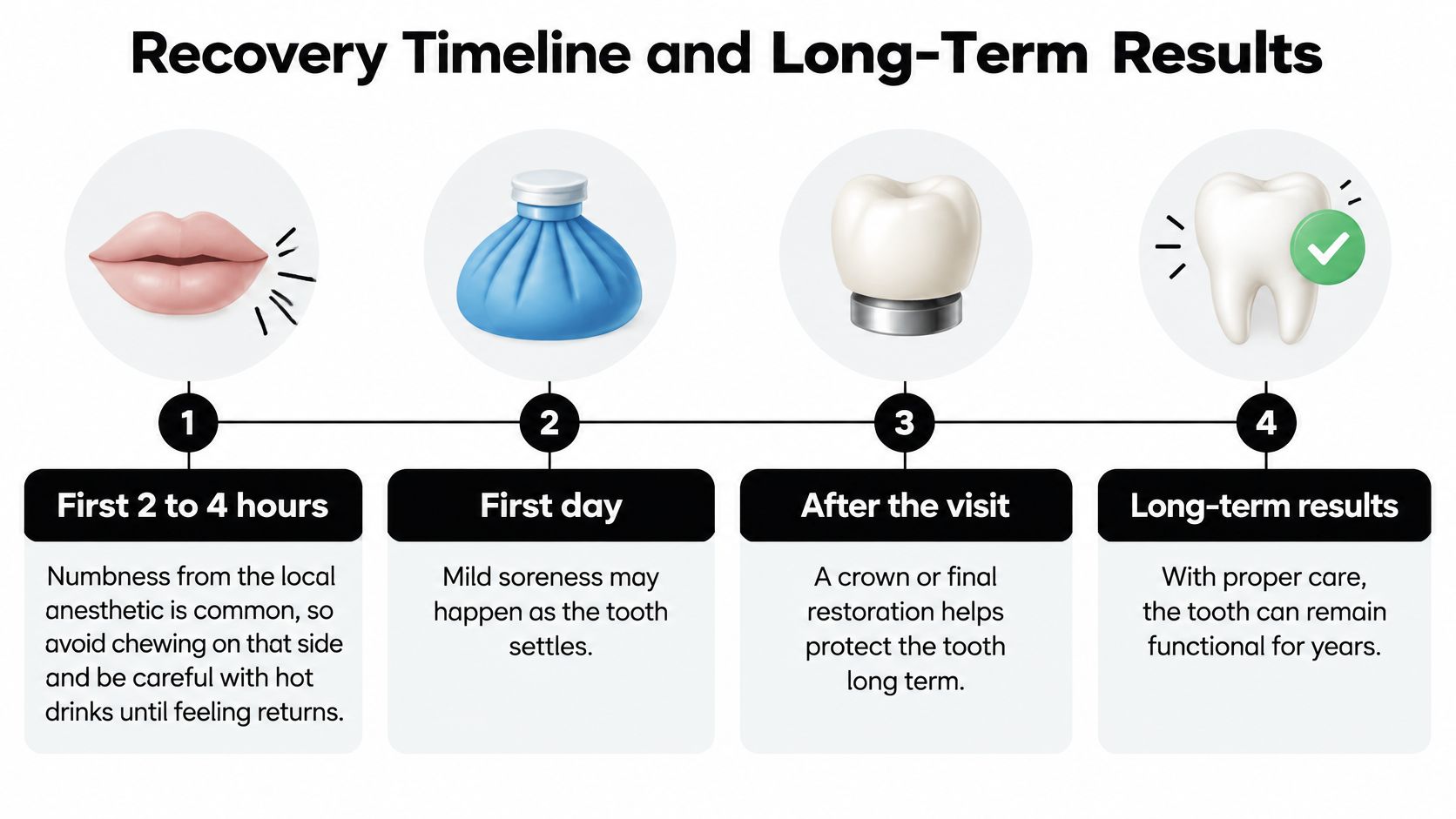
Recovery follows a general sequence, but comfort and readiness for a final restoration aren't identical milestones.
From numbness to comfortable function
First 2 to 4 hours: Local anesthetic numbness commonly persists during this period, according to the American Association of Endodontists patient guidance. Chewing on the numb side and drinking very hot beverages can cause accidental injury.
Days 1 to 3: Mild tenderness when biting can occur as the surrounding tissues settle. Many patients can return to work the same day, although comfort, job demands, and any sedation affect that decision.
Within the first week: Most short-term recovery is complete, but improvement matters more than meeting a deadline. A temporary filling still needs gentle care, and an uncomfortable bite should be checked.
The crown wait and long-term care
The permanent crown or filling is often booked after the canals are sealed. Patients should reserve calendar space for that restoration rather than assume pain relief means the tooth is fully protected.
Most patients can resume more normal eating when the temporary filling is secure and the bite has been checked, subject to the dentist's instructions. Hard or sticky foods can still fracture the tooth or dislodge temporary material before definitive restoration.
After the final crown, regular brushing, flossing, cleaning and exams help maintain the treated tooth. A well-treated, properly restored tooth can remain functional for years. Persistent or returning infection may require retreatment, root-tip surgery, or tooth extraction.
The practice's root canal recovery guidance provides additional aftercare information.
Call promptly: Spreading swelling, fever, worsening severe pain, an uneven bite, or a cracked temporary filling needs dental attention.
Difficulty breathing or swallowing with swelling requires emergency medical care rather than waiting for a routine dental appointment.
Comfort Tips and Booking Your Visit in Miami
An anxious patient benefits from a practical comfort plan, not a promise that nothing will feel unfamiliar. Before treatment, the patient can describe previous difficulties, agree on a hand signal for a pause, and request confirmation that the tooth is numb before drilling starts.
A consultation gives the patient time to discuss those concerns face to face.

Preparing for a calmer appointment
Ultra Smile DentalSpa's spa-style Miami setting includes custom aromatherapy and streaming entertainment during procedures. Patients can ask questions at each stage rather than remain uncertain about what happens next.
Local anesthesia and being asleep aren't the same thing. Patients with that concern can review the practice's explanation of whether patients are put to sleep for a root canal and discuss their health history with the team.
A lighter schedule afterward leaves room for lingering numbness and tenderness. The NHS root canal guide describes treatment commonly taking two or more appointments lasting one to two hours, with a temporary filling between visits, illustrating why schedules shouldn't be assumed identical.
The following video provides another way to prepare for the treatment discussion.
Arranging urgent and planned care
For someone searching for an emergency dentist because of severe pain or swelling, an urgent visit may focus on diagnosis, pain control, and initial cleaning. The complete treatment plan may require a later appointment.
Patients comparing “dentist near me, “cosmetic dentist near me, or “dental implants near me should first establish whether the painful natural tooth can be saved. Cosmetic goals and replacement options can then be considered without overlooking active disease.
To arrange care, patients can call the practice or request a consultation and bring their questions and medication list. Scheduling and insurance details should be confirmed directly with Ultra Smile DentalSpa. Arrival time matters: an appointment is cancelled when a patient is 15 minutes or more late.
Ultra Smile DentalSpa offers root canal therapy and restorative care to help relieve infection-related pain and protect natural teeth. Patients can visit Ultra Smile DentalSpa to request a consultation in Miami and discuss a personalized schedule covering treatment, restoration, and recovery.