72.6% of U.S. adults report some level of dental fear, so feeling nervous about a dental visit doesn't mean you're unusual or beyond help. How to overcome fear of the dentist usually starts with structured support, clear communication, and a setting that feels safe, which is the approach available at Ultra Smile DentalSpa in Miami, where clinical care meets spa-level comfort.
Fear can make a routine cleaning feel as intimidating as a tooth extraction, dental implants, or an emergency dental visit. It can also delay care until discomfort becomes harder to ignore. The right Miami dentist won't dismiss that reaction or expect a patient to just relax. Instead, the team should identify the trigger, explain each step, offer practical control, and build treatment gradually.
Table of Contents
- Why Dental Fear Is So Common in Miami
- Preparing for Your First Visit with Confidence
- Breathing, Distraction, and Comfort Techniques That Work
- Understanding Sedation Dentistry Options
- Why CBT Plus Spa Ambiance Delivers Lasting Results
- Your Next Step Toward Fear-Free Dental Care in Miami
Why Dental Fear Is So Common in Miami
Dental fear isn't a personal weakness. It can develop after a painful appointment, an unpleasant childhood memory, fear of needles, embarrassment about oral health, or uncertainty about what a dentist may find. For some patients, the sounds, smells, chair position, or feeling of losing control are the main problem. Others worry about pain, cost, or whether a procedure such as a root canal, tooth extraction, or dental implant will be difficult.
A 2025 U.S. survey of 1,003 adults found that 72.6% reported some level of fear of going to the dentist, including 45.8% with moderate fear and 26.8% with severe fear, according to NYU's report on widespread dental fear. That finding changes the conversation. A nervous patient isn't an exception who needs to apologize before a new patient exam. The concern is common, and a responsive dental office should be prepared for it.
Fear often has a specific trigger
A patient who fears needles may need a different plan from someone who fears judgment or the sound of a handpiece. Identifying the exact concern makes the first visit more useful.
- Pain anticipation: The patient needs a discussion about numbing, controlled anesthetic delivery, and stopping whenever discomfort appears.
- Needle anxiety: The dental team can explain what will happen before an injection and discuss whether sedation is appropriate.
- Loss of control: A hand signal, planned breaks, and step-by-step explanations can restore a sense of participation.
- Embarrassment: A calm, nonjudgmental exam can focus on current oral health rather than blame for delayed care.
- Sensory overload: Music, streaming entertainment, aromatherapy, and a quieter environment may reduce the intensity of the visit.
A Miami practice can address more than the procedure
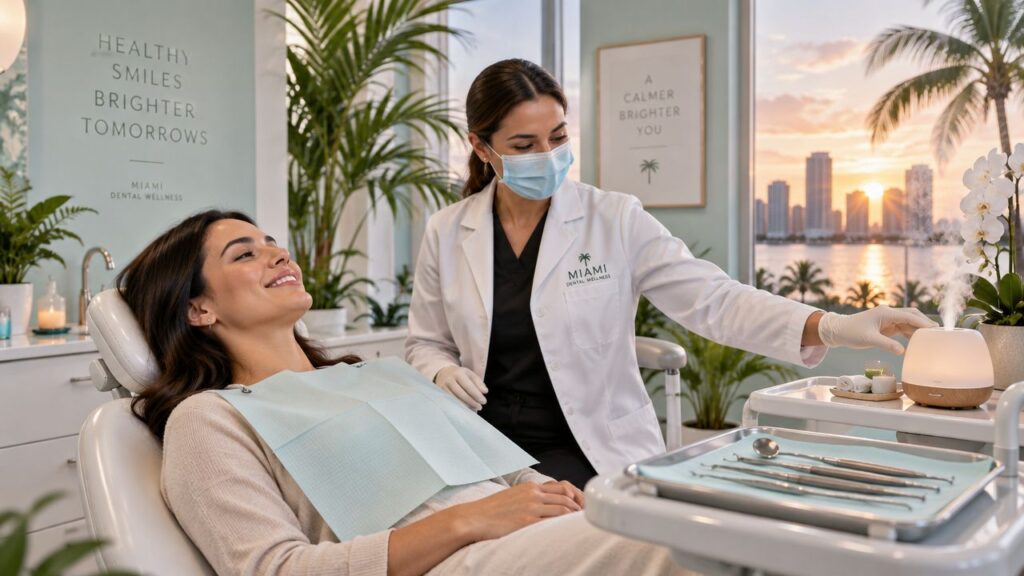
Ultra Smile DentalSpa in Miami combines dental services with comfort measures such as refreshments, custom aromatherapy, streaming entertainment during procedures, and a hot towel finish. Those features don't replace diagnosis, anesthesia, or appropriate treatment. They can, however, reduce the sensory stress that makes communication and cooperation harder for an anxious patient.
Patients searching for a dentist near me, a dentist in Miami, FL, or an emergency dentist should ask how the practice handles fear before booking. A spa-like setting matters most when it supports a clinical plan that respects the patient's pace.
Preparing for Your First Visit with Confidence
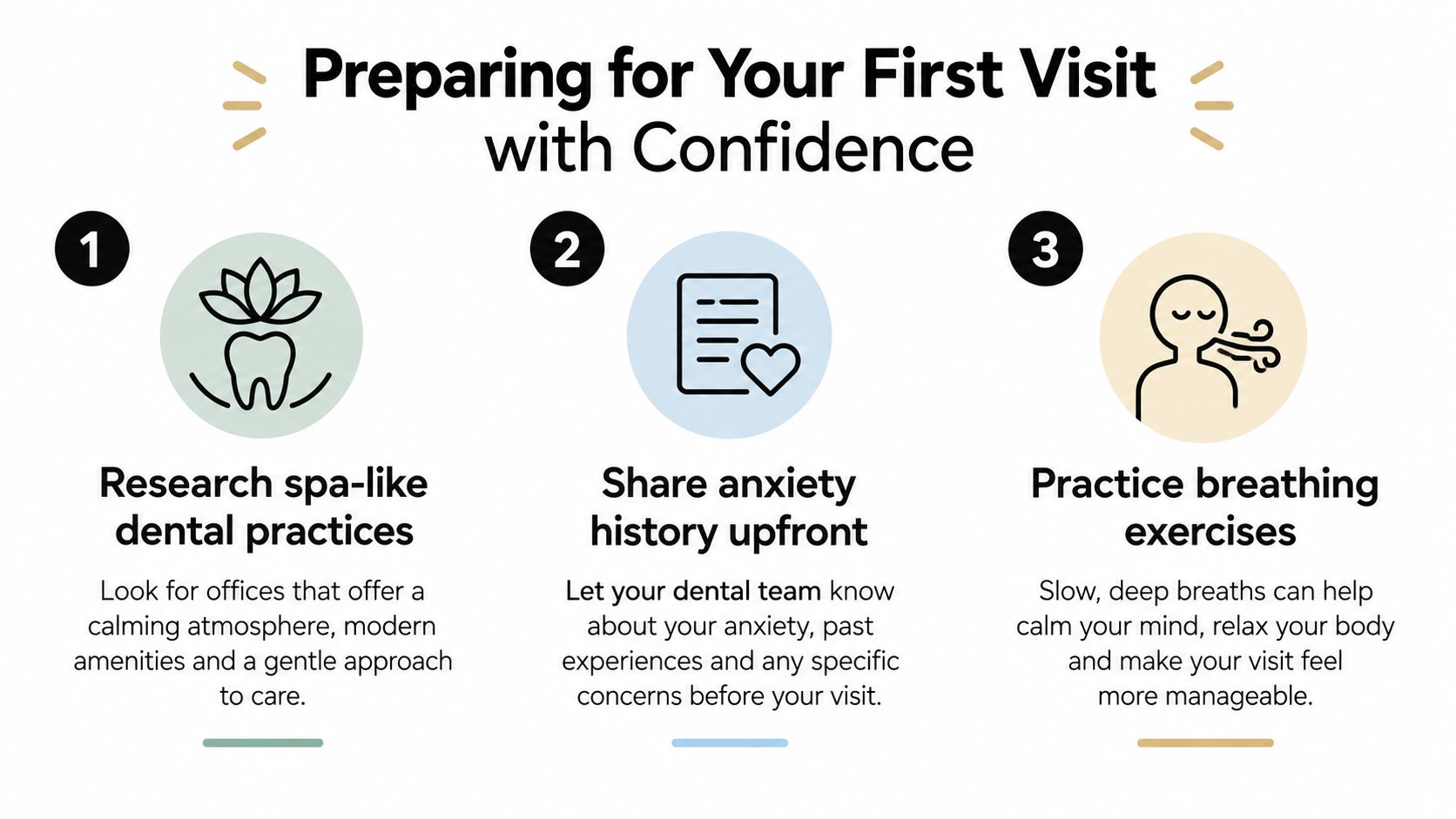
Preparation gives an anxious patient something concrete to do before arriving. The aim isn't to eliminate every nervous feeling. The aim is to prevent uncertainty from controlling the appointment.
Choose a practice that explains its comfort process
Look beyond attractive photos. A suitable practice should be able to explain how it handles anxious patients, whether it offers consultation-focused visits, what sedation options may be available, and how the dentist communicates during treatment.
For example, a professional working near Midtown Miami may prefer an afternoon appointment that leaves enough travel time and avoids adding traffic pressure to an already stressful day. A parent may choose a time when childcare and work responsibilities are settled. The best appointment time is the one that prevents rushing.
Tell the team before sitting in the chair
When scheduling, say that dental fear is a concern. Specific information helps more than a general statement such as “the dentist makes me nervous.
Share:
- The trigger: Explain whether pain, injections, sounds, judgment, or loss of control causes the strongest reaction.
- The history: Mention a previous difficult appointment or a long gap in dental care.
- The preferred pace: Ask for explanations before each step and permission to pause.
- The immediate goal: A first visit may focus on an exam, dental x-rays, and a conversation before treatment begins.
Patients who want to review office information before the appointment can complete the Ultra Smile new patient forms in advance. Having paperwork ready can make check-in feel more predictable.
Build a small comfort checklist
Write down questions about cleaning and exams, fillings, cosmetic dentistry, dental implants, or any treatment being considered. Bring headphones if music helps, and agree on a hand signal for a pause. A trusted friend can also provide support, especially when the visit follows a long period of avoidance.
Practical rule: A patient doesn't need to prove bravery by accepting every procedure immediately. A manageable first step often creates better conditions for the next one.
Breathing, Distraction, and Comfort Techniques That Work
Comfort techniques work best when they match the type and intensity of fear. Breathing can reduce physical tension, while distraction can make sounds and waiting easier to tolerate. Neither approach should be treated as a complete solution for severe phobia or urgent dental disease.
The University of Alabama at Birmingham's guidance on dental anxiety describes the 3-4-5 breathing method. The patient inhales for 3 seconds, holds for 4 seconds, and exhales for 5 seconds. Practicing at home helps make the sequence familiar before the appointment, rather than attempting it for the first time in the chair.
Slow counted breathing is particularly useful when the body reacts before the mind has time to evaluate the situation. The longer exhale encourages a slower rhythm, but a patient who feels lightheaded should stop and tell the dental team.
Match the technique to the trigger
Ultra Smile DentalSpa offers comfort features such as streaming entertainment and custom aromatherapy. These can complement, rather than replace, conversation, local anesthesia, behavioral support, or sedation.
| Fear Profile | Recommended Technique | Why It Works |
|---|---|---|
| Worry about the sound of treatment | Streaming entertainment or music | Gives attention another focus and softens disruptive sounds |
| Physical tension before an exam | 3-4-5 breathing | Creates a repeatable rhythm before and during care |
| Sensory discomfort from smells or a clinical setting | Custom aromatherapy and a calm room | Makes the surroundings feel less threatening |
| Fear of unexpected sensations | Step-by-step explanations and agreed pauses | Restores predictability and patient control |
| Severe fear that prevents attendance | Consultation about behavioral therapy or sedation | Addresses avoidance rather than relying on distraction alone |
A Delta Dental guide to calming dental visits also discusses slow counted breathing, bringing a trusted friend, listening to music, and choosing a time when the patient feels less stressed. Those steps are practical for a routine cleaning and exam, but an anxious patient should still tell the dentist when fear remains intense.
Distraction may help a patient complete care today. Gradual exposure and structured behavioral treatment can help make future care easier. That distinction matters for anyone looking for a cosmetic dentist near me, a provider for dental implants near me, or an emergency dentist after avoiding treatment.
Understanding Sedation Dentistry Options
Some patients can manage a cleaning with communication and breathing. Others need additional support before they can tolerate dental x-rays, restorative dentistry, oral surgery, or treatment for acute pain. Sedation should be selected after reviewing medical history, current medications, anxiety severity, and the planned procedure.

Cleveland Clinic's overview of sedation dentistry identifies three common options used in dentistry: nitrous oxide, oral conscious sedation, and intravenous sedation.
Nitrous oxide
Nitrous oxide, often called laughing gas, is inhaled through a mask. It can help a patient feel calmer while remaining responsive and able to communicate. The dental team will explain how the patient should prepare and how long to wait before normal activities, because recovery instructions depend on the individual and the appointment.
This option may suit a patient with mild or moderate anxiety who wants relaxation without taking an oral medication beforehand. It may be discussed for cleanings, fillings, or other procedures, but suitability depends on the patient's health and the dentist's assessment.
Oral conscious sedation
Oral conscious sedation uses prescribed medication to create a deeper level of relaxation. A patient may feel drowsy and less focused on the procedure, while monitoring and communication remain essential. Because the medication can affect alertness, the office should provide clear instructions about transportation, eating, other medications, and activities after treatment.
This option may be considered when fear is strong enough to interfere with treatment but the patient doesn't require an IV approach. It isn't a universal answer, and the dentist must review health history before recommending it.
Intravenous sedation
IV sedation allows the dental team to deliver medication through a vein and adjust the level during care. It may be appropriate for more significant anxiety or longer procedures, including selected oral-surgery treatment. The appointment requires careful preparation, monitoring, and transportation arrangements.
Before choosing sedation, ask: Which level is appropriate for the planned procedure, what monitoring will be used, what must be arranged for transportation, and which recovery restrictions apply?
A calm setting can make sedation discussions easier, but sedation doesn't remove the need for diagnosis or a longer-term plan. Patients can review anxiety-focused care and consultation options through Ultra Smile's dental anxiety services.
A short educational video may also help a patient prepare questions before speaking with Dr. Bahmadi's team.
Insurance coverage varies by plan and procedure, so the office should confirm benefits and payment expectations before treatment. Patients without coverage can ask about available options rather than postponing care because the financial details feel unclear.
Why CBT Plus Spa Ambiance Delivers Lasting Results
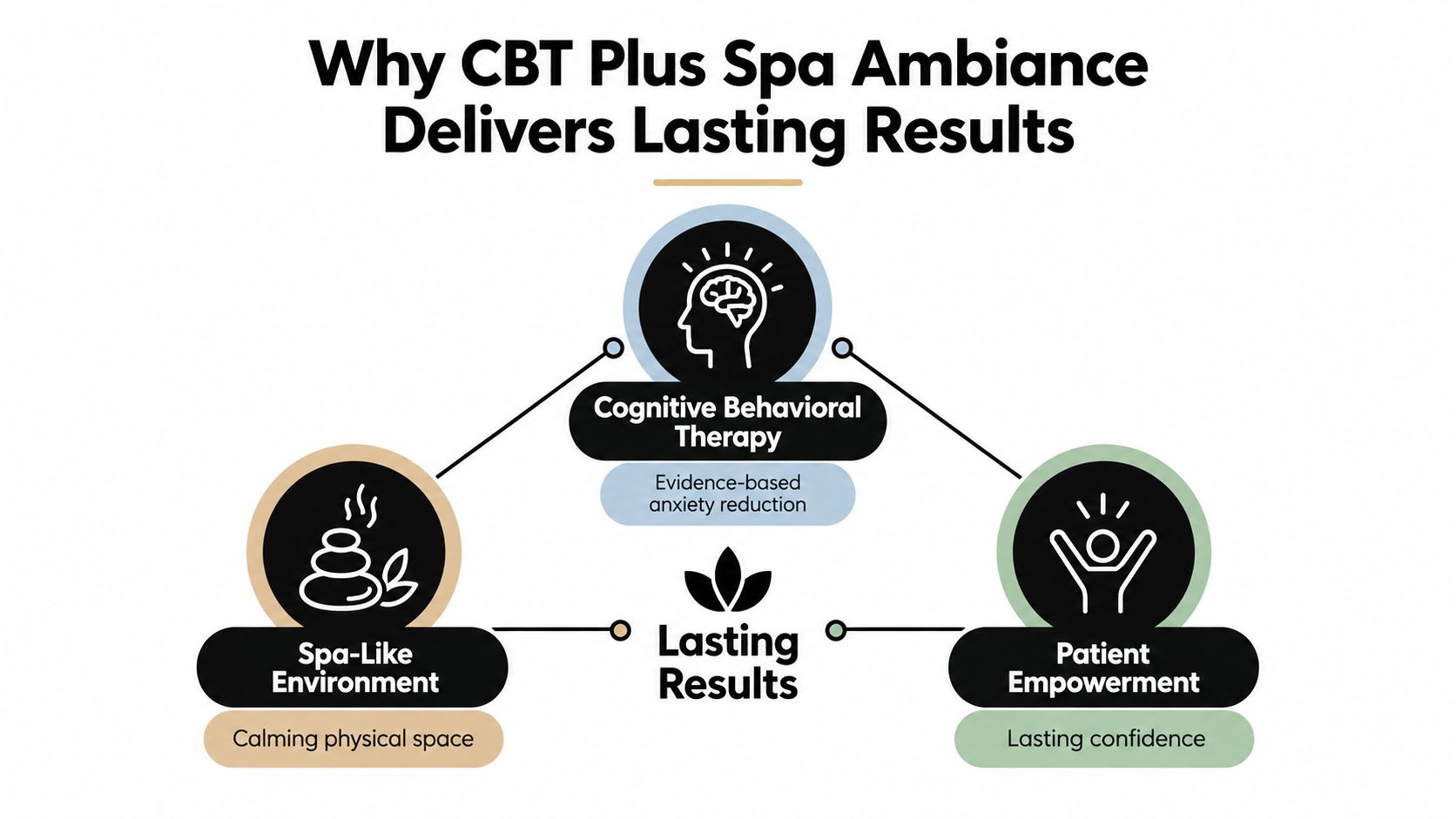
A pleasant room can make a dental appointment easier. It usually can't, by itself, change the thought pattern that drives avoidance. Patients with persistent dental fear often need a plan that addresses both the body's stress response and the beliefs connected to treatment.
Cognitive behavioral therapy, or CBT, has the strongest evidence base among behavioral approaches for reducing adult dental anxiety and avoidance. A systematic review examined treatment trials across approaches including relaxation, medication, music distraction, hypnotherapy, and acupuncture, and found especially strong support for CBT combined with graduated exposure. More recent evidence summarized in the PubMed review of CBT for dental anxiety found moderate-certainty evidence from 173 randomized controlled trials that CBT reduces trait dental anxiety, with an effect size of SMD = -0.65.
What CBT changes
CBT helps a patient identify the prediction behind the fear, such as “the injection will be unbearable or “the dentist won't stop if treatment feels overwhelming. The patient then learns to test that prediction through controlled, gradual steps rather than avoiding every trigger.
A behavioral plan may begin with a conversation about the dental office, continue with an examination or cleaning, and progress toward treatment only when the patient has enough confidence. The pace should reflect the person's response, medical needs, and treatment urgency.
Why the environment still matters
Ultra Smile DentalSpa's aromatherapy, entertainment, refreshments, and hot towel finish can lower sensory friction around an appointment. That comfort can make it easier for a patient to remain present, communicate clearly, and complete the next step in a behavioral plan.
The combination is more useful than either element alone. CBT provides the psychological tools, while a supportive environment reduces avoidable stress during exposure. The result isn't a promise that fear disappears after one visit. It is a practical route toward patient control and more consistent dental care.
Fear management should be measured by what the patient can do next, not only by how calm the patient feels before treatment.
A spa atmosphere also shouldn't obscure clinical decisions. Patients may still need fillings, crowns, root canals, tooth extraction, dental implants, bone grafting, or wisdom teeth extraction. Comfort-focused care works best when it supports timely, medically appropriate treatment.
Your Next Step Toward Fear-Free Dental Care in Miami
The first appointment doesn't have to begin with the most intimidating procedure. A low-pressure consultation can start with a conversation about the patient's history, current symptoms, and specific triggers. The team can then complete a gentle exam, recommend dental x-rays when clinically appropriate, and explain options in clear language.
Dr. Neda Bahmadi and the bilingual team at Ultra Smile DentalSpa serve patients in Downtown Miami, Midtown Miami, and Hallandale Beach. A patient can ask for a comfort plan that includes pauses, explanations, entertainment, aromatherapy, or a discussion of sedation. The plan may support general dental care, cosmetic dentistry, restorative dentistry, teeth whitening, invisible braces, dental implants, or an urgent dental service.
Patients should contact the practice promptly if fear is accompanied by swelling, significant pain, a broken tooth, or another urgent concern. An emergency dentist can determine whether immediate treatment is needed and which comfort measures are appropriate.
Booking a consultation turns an undefined fear into a conversation with specific next steps. Patients don't need to know the final treatment before they call. They only need to explain what has made dental care difficult and request an appointment designed around communication and control.
Ultra Smile DentalSpa offers anxiety-aware dental care, sedation consultations, general and cosmetic services, restorative treatment, dental implants, and emergency evaluations in the Miami area. Visit Ultra Smile DentalSpa to request a consultation and take the first manageable step toward comfortable, consistent dental care.