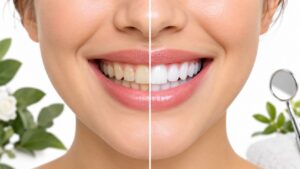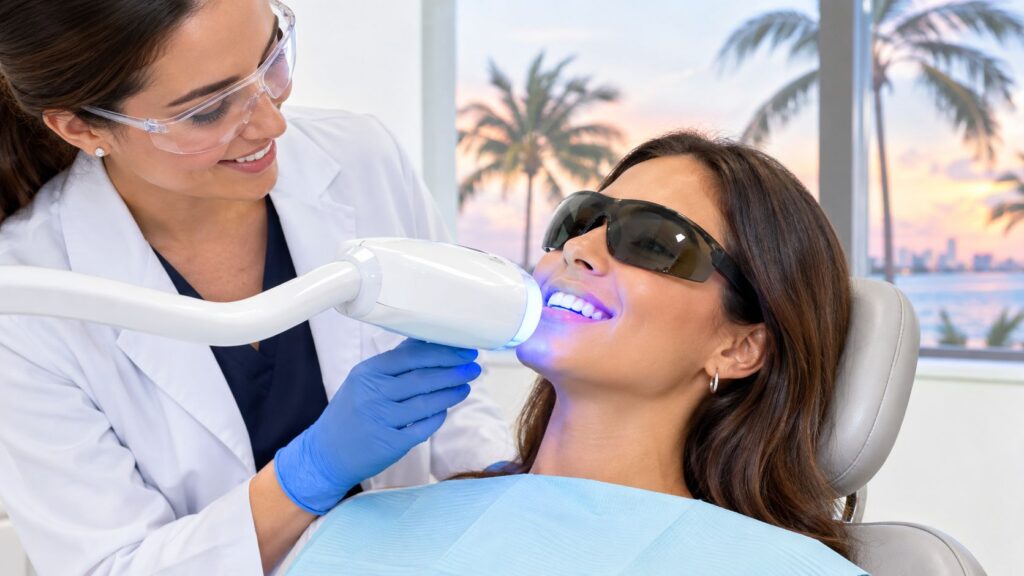
Teeth whitening most often causes short-lived tooth sensitivity rather than true pain, and the level depends on the method chosen. In one study, overall sensitivity affected 31% to 55% of treated patients, with higher rates for some in-office techniques, including 70% with chemical activation and 100% with light activation, while lower-concentration take-home whitening caused less sensitivity (clinical study).
A Miami patient may be asking this after seeing a bright-smile photo online, holding a whitening tray, or considering a cosmetic dentistry appointment before a wedding, interview, or special event. The worry is understandable. Whitening should make a smile feel more confident, not make every sip of iced coffee feel threatening.
At Ultra Smile DentalSpa, patients can discuss comfort before choosing a whitening approach. The same careful evaluation also matters for someone searching for a dentist near me, a cosmetic dentist near me, or a dentist in Miami, FL who can determine whether sensitivity comes from whitening or from an untreated dental problem.
Table of Contents
- Does Teeth Whitening Hurt and What to Expect
- Sensitivity vs Discomfort vs Sharp Pain
- In-Office vs Take-Home Whitening in Miami
- How Long Whitening Sensitivity Lasts
- How to Prevent and Manage Whitening Sensitivity
- When Whitening May Not Be Right for You
- A Comfortable Whitening Experience in Miami
Does Teeth Whitening Hurt and What to Expect
You are seated for your first whitening visit in Miami, watching the tray, gel, and protective materials being prepared. The first sensation is often a brief tingle or “zing when cool air, water, or whitening gel reaches a sensitive spot. It usually passes quickly and feels different from the deep, throbbing pain linked with decay or an injured tooth.
The American Dental Association's whitening guidance identifies temporary sensitivity as the most common side effect and describes it as generally mild and short-lived. A healthy tooth can still react during whitening, so a quick flicker does not automatically mean damage.
What happens during a visit
Before treatment, the dentist or hygienist reviews your dental history, existing sensitivity, fillings, crowns, gum recession, and any symptoms that could make whitening uncomfortable. A cleaning or exam may come first. If pain does not match visible staining, dental x-rays can help investigate problems beneath the surface.
The protocol is then matched to your comfort level and desired result. In-office whitening uses a stronger gel and works faster, while a lower-concentration take-home plan gives you more control over timing and breaks. Research comparing these approaches found greater sensitivity with higher-concentration hydrogen peroxide used in the office, while 10% carbamide peroxide used at home produced the lowest sensitivity with comparable color change (randomized clinical evidence).
Ultra Smile DentalSpa can build comfort measures into either option, including gum protection, controlled application, and adjustments when a patient feels uneasy. The gentlest plan should still be active enough to create a visible result, rather than asking you to endure more discomfort than necessary.
Practical rule: A brief, triggered twinge can be normal. Sharp, spontaneous, localized pain calls for a pause and dental evaluation.
After treatment, cold drinks or air may cause a short reaction. You should not feel pressured to tolerate worsening pain. A carefully planned appointment includes protective gum isolation, timed exposure, and the option to stop or modify treatment if your comfort changes.
Sensitivity vs Discomfort vs Sharp Pain
The question “does teeth whitening hurt becomes easier to answer when three sensations are separated. Sensitivity is usually brief and triggered. Discomfort is broader and often comes from the gums, tray, or jaw. Sharp pain is different because it may indicate a tooth problem that whitening has exposed rather than caused.
Mild sensitivity can feel like a quick electric flicker after cold water touches one or two teeth. It often fades within seconds. A patient may notice it during treatment or after the appointment, especially around areas with enamel wear, exposed dentin, or previous sensitivity.
General discomfort is less sudden. Gums may feel tender if whitening gel contacts them, and the jaw can become tired from staying open during an appointment or from wearing a tray. The NHS explanation of professional whitening notes that cold or sweet sensitivity, sore gums or throat, and temporary white patches on the gums can occur. Dentists use protective shields or paste to reduce gum exposure, although short-lived side effects can still happen.
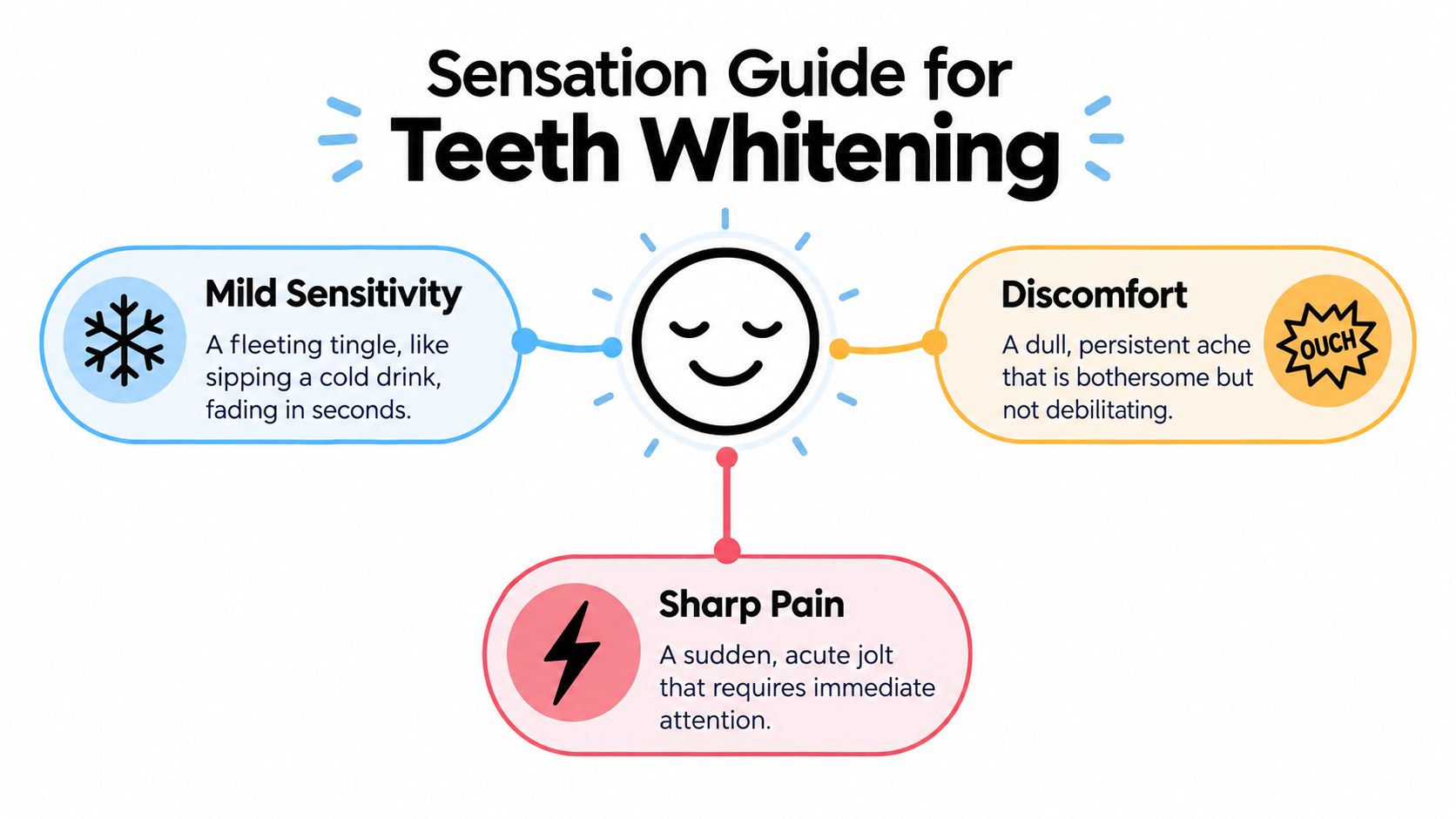
Sharp pain is sudden, localized, or throbbing. It may appear in one tooth, occur without a cold or sweet trigger, hurt during biting, or keep worsening. A cracked tooth, leaking filling, cavity, exposed root, or gum infection can produce that pattern. Whitening should stop until a dentist checks the cause.
A simple self-check helps:
- Trigger: Does cold air or water cause a brief zing?
- Location: Is the sensation spread across several teeth or fixed in one?
- Duration: Does it fade quickly, or does it continue?
- Pattern: Does it happen only after treatment, or does it start on its own?
- Tissue response: Are the gums swollen, bleeding, or increasingly sore?
A short reaction usually calls for comfort measures and monitoring. Pain that is spontaneous, persistent, or concentrated in one tooth calls for the dental office.
In-Office vs Take-Home Whitening in Miami
Miami patients generally choose among professional in-office whitening, dentist-supervised take-home trays, and over-the-counter products. The best option for comfort isn't automatically the fastest one. It depends on peroxide concentration, how evenly the product contacts teeth and gums, and how much control the patient has over timing.
Comparing comfort and control
In-office whitening uses a stronger gel under professional protection and monitoring. It can produce faster cosmetic changes, but stronger peroxide tends to create more sensitivity. Light activation can also increase the sensitivity risk in some protocols, as shown in the clinical evidence cited earlier.
Custom take-home trays use molds designed for the patient's teeth. A lower-concentration gel can be worn according to a dentist's schedule, and the patient can pause between applications if sensitivity appears. This gradual approach often suits patients who feel anxious about a sudden sensation or who already describe their teeth as sensitive.
Over-the-counter strips, pens, and generic trays give patients the least individualized control. A strip may fold, a pen may spread unevenly, and a generic tray may allow gel to reach the gumline. Those fit problems can create irritation even when the product itself is used as directed.
| Method | Typical Sensitivity Level | Gum Irritation Risk | Dentist Supervision |
|---|---|---|---|
| In-office whitening | Higher with stronger peroxide or light activation | Managed with professional isolation | Direct monitoring |
| Custom take-home trays | Usually milder and more gradual | Lower when trays fit correctly | Prescribed and reviewed |
| Over-the-counter strips, pens, or generic trays | Varies with fit and product strength | More difficult to control | None unless separately arranged |
Patients interested in the mechanics of light-based treatment can review laser teeth whitening options in Miami, then discuss whether that approach fits their sensitivity profile. A dentist can also recommend a lower-concentration plan, shorter exposure, or desensitizing support.
A 2024 updated systematic review found that at-home bleaching had significantly lower sensitivity intensity than in-office bleaching, with an SMD of -0.78 and a 95% confidence interval of -1.53 to -0.03, but the risk of sensitivity itself wasn't significantly different, with an RR of 0.82 and a 95% confidence interval of 0.61 to 1.10. The review rated the evidence quality as low (systematic review). In practical terms, home whitening may feel gentler without eliminating sensitivity completely.
How Long Whitening Sensitivity Lasts
You may leave a whitening appointment feeling fine, then notice brief “zingers later when you sip cold water or step into cool Miami air. That delayed response is common because whitening temporarily makes the tooth's nerve more reactive. It should feel like a quick sensitivity, not ongoing pain.
A practical timeline
Immediately after treatment: Teeth may feel normal, mildly tingly, or slightly reactive. Gums can feel tender if gel touches the soft tissue.
During the first day: Cold drinks, cool air, and sweet foods may trigger short reactions. Lukewarm water and room-temperature foods are often easier to tolerate.
Between twenty-four and seventy-two hours: Sensitivity is often most noticeable during this window. The sensation should come and go, like a brief spark, then settle rather than build.
By the third to seventh day: Temporary reactions generally fade as comfort returns. If symptoms are easing, the whitening response is usually following a normal course.
A randomized clinical trial comparing 10% and 16% carbamide peroxide found both concentrations effective and generally safe. The 16% gel caused more sensitivity during the first and third weeks of treatment, although the side effect was mostly mild and temporary. A stronger gel can whiten effectively, but it may not be the gentlest choice for every patient.
Your whitening plan should match your sensitivity history and the result you want. Ultra Smile DentalSpa can build comfort measures into either a shorter in-office session or a more gradual take-home routine, rather than treating every patient with the same intensity.
Sensitivity that lingers, worsens, occurs without a trigger, or centers on one tooth deserves a call to a dentist in Miami, FL. This guide to sensitive teeth after whitening explains which reactions are expected and when a dental evaluation makes sense.
How to Prevent and Manage Whitening Sensitivity
Comfort planning begins before the whitening gel touches your teeth. If cold drinks already cause a quick jolt, tell the dentist during your consultation. That detail helps the team choose a gentler concentration, shorter exposure time, and suitable protection instead of waiting for discomfort to appear.
Before treatment
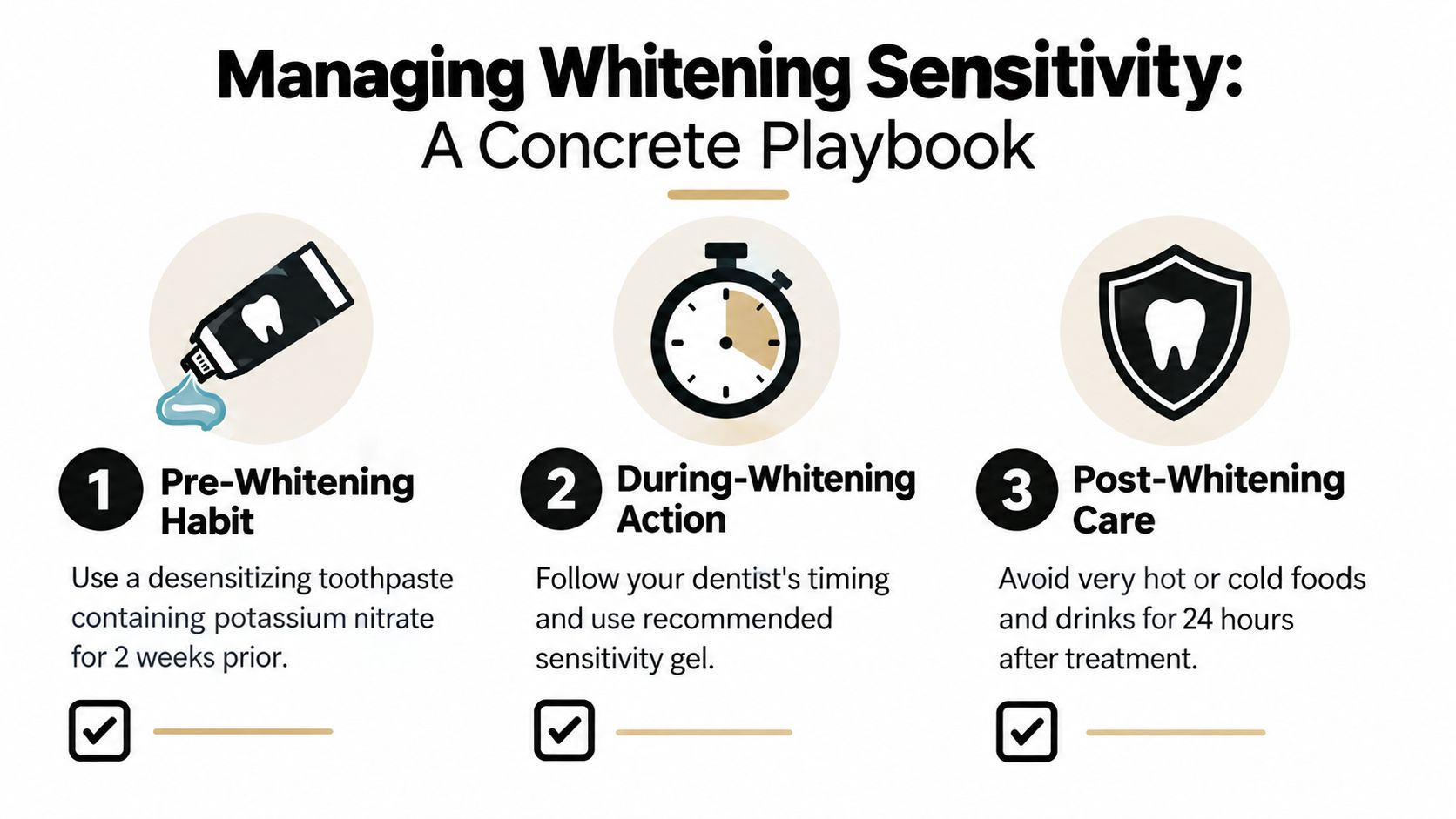
A desensitizing toothpaste with potassium nitrate may be used for two weeks before whitening, according to the dental practice's directions. A cleaning can also reveal plaque buildup, inflamed gums, exposed roots, or a cavity that should be addressed first. When appropriate, the dentist may consider fluoride varnish during the cleaning visit.
Whitening should not cover an active cavity. You may need a filling, crown, or root canal before cosmetic treatment. Patients looking for a tooth extraction or emergency dentist should handle urgent symptoms first, since unexplained dental pain is different from ordinary whitening sensitivity.
During treatment
The mildest plan that can still produce a visible result may use a lower-concentration gel, a shorter first session, or take-home applications spaced apart rather than used on consecutive days. Clinical research on whitening protocols reports that desensitizing agents, including potassium nitrate and sodium fluoride, can help reduce bleaching-related sensitivity while maintaining whitening results. (review of whitening protocols)
The dentist may also protect the gums with barriers, provide a carefully fitted tray, or apply a desensitizing gel. At Ultra Smile DentalSpa, these comfort measures can be built into an in-office or take-home plan, so the protocol matches both your sensitivity history and your whitening goal. Adding extra gel or wearing a tray longer usually increases exposure, not the value of the result.
After treatment
During the early recovery period, you can make your teeth more comfortable by:
- Choosing mild temperatures: Lukewarm drinks and room-temperature foods are often easier on reactive teeth than icy or steaming items.
- Limiting acidic choices: Citrus drinks, sparkling beverages, and other acidic foods may aggravate enamel that already feels sensitive.
- Using fluoride support: A fluoride rinse before bed may support enamel care when used as directed by your dental team.
- Brushing gently: A soft-bristled toothbrush and light pressure reduce extra irritation near the gumline.
- Asking before taking medication: Over-the-counter pain relief may suit some adults, but allergies, pregnancy, medical conditions, and other medications affect that decision.
If brief zingers continue beyond a week, the office may suggest professional desensitizing gel or examine the tooth for another cause. Never place aspirin directly on a tooth, because it can injure gum tissue and enamel.
When Whitening May Not Be Right for You
Whitening works on many surface stains, but it isn't a universal answer for every dark tooth or every smile. The safest cosmetic appointment begins with a check for conditions that could make peroxide more irritating or make the treatment ineffective.
Untreated cavities, cracked teeth, receding gums, active gum infections, and worn enamel can expose more sensitive inner structures. Peroxide may then create a stronger reaction, while an ill-fitting tray can irritate inflamed gums. A dental exam can identify these concerns before cosmetic treatment begins.
Reasons to pause first
A patient should request an evaluation before whitening if there is:
- Unexplained tooth pain: Spontaneous or throbbing pain may indicate decay, a crack, or infection.
- Gum inflammation: Swelling, bleeding, or soreness needs attention before gel is applied.
- Exposed root surfaces: Recession can make cold and peroxide feel more intense.
- Worn or eroded enamel: Acid exposure, clenching, or reflux can weaken the protective surface.
- Extensive dental work: Crowns, veneers, fillings, and implants don't whiten in the same way as natural enamel.
Whitening may also disappoint when the discoloration comes from inside the tooth. Trauma, tetracycline staining, and fluorosis can respond poorly to bleaching and may require bonding, veneers, or another cosmetic dentistry plan instead. A cosmetic dentist near me search is only the first step. The consultation determines whether whitening matches the actual source of discoloration.
Lifestyle factors can complicate results and comfort. Smoking can re-stain teeth, frequent acidic drinks can challenge enamel, clenching can worsen cracks or sensitivity, and uncontrolled reflux can continue the erosion process. Pregnancy and breastfeeding are commonly treated as deferral windows, so patients should discuss timing with a dental professional.
A patient with urgent swelling, severe pain, or a damaged tooth should seek an emergency dentist rather than booking whitening first. Stabilizing the mouth protects comfort and makes any later smile treatment more predictable.
A Comfortable Whitening Experience in Miami
A comfortable whitening visit begins with listening. A dental professional should ask what the patient felt during past whitening, which teeth react to cold, whether gum recession is present, and whether any pain occurs without a trigger. A shade assessment and sensitivity review help match the cosmetic goal with a realistic comfort plan.
The clinical portion may include a desensitizing gel or varnish before whitening, careful gum isolation, and a controlled session length. Custom take-home trays can be calibrated to the patient's tolerance rather than treated as a one-size-fits-all prescription. Concentration and timing drive the whitening response, so reducing unnecessary exposure doesn't mean the plan has to abandon its cosmetic purpose.
Comfort can be built into the appointment
A spa-style practice can also reduce the strain of sitting through treatment. Neck pillows, warm towels, noise-cancelling headphones, streaming entertainment, refreshments, aromatherapy, and a calm pace can make it easier for an anxious patient to relax. Patients should be able to signal for a pause between cycles or ask questions before the next step.
Ultra Smile DentalSpa offers whitening alongside cleanings and exams, restorative dentistry, veneers, Invisalign, dental implants, bone grafts, root canals, night guards, and wisdom teeth extraction. The practice also provides care for patients seeking a dentist near me in Downtown Miami, Midtown Miami, or Hallandale Beach, with treatment planning centered on individual comfort and dental needs.
A whitening consultation can lead to an in-office session, custom take-home trays, or a combined plan. For patients with sensitive teeth, the most sensible choice is usually the gentlest protocol that still addresses the type of staining present. Patients who need fillings, gum care, a tooth extraction, or other restorative dentistry first can complete that care before considering cosmetic whitening.
The question isn't only “does teeth whitening hurt? It's also “what does this patient's mouth need, and which method gives a controlled result with manageable sensations? A careful Miami dental evaluation provides that answer.
Ultra Smile DentalSpa offers personalized teeth whitening consultations, in-office care, and custom take-home options with comfort measures for patients who are nervous or prone to sensitivity. Visit Ultra Smile DentalSpa to discuss a gentle whitening plan and schedule a complimentary consultation in Miami.