If you are missing a tooth, your dentist may present two proven paths: a fixed bridge or a dental implant with a crown. Understanding the dental bridge vs implant choice matters because each option restores chewing and appearance differently, with distinct timelines and maintenance. At Ultra Smile Dental Spa in Miami, patients often ask which solution will still be performing well a decade from now. This guide explains how each treatment works, what typically affects longevity, and how to think about the trade-offs in plain language. For a broader look at how our team approaches crowns and bridgework, see our dental crowns in Miami guide and our overview of the dental crown procedure.
In this guide: dental bridge vs implant overview · traditional bridge · implant and crown · which lasts longer · FAQ
Dental bridge vs implant: what this guide covers
When you compare dental bridge vs implant treatment, you are really comparing two ways to replace a missing tooth: one that uses adjacent teeth as anchors, and one that uses a root-form fixture in the bone. Both can look natural when planned well. This section sets up the rest of the article so the dental bridge vs implant vocabulary matches what you will hear in a Miami consultation—whether you visit our Downtown, Midtown, or Hallandale location.
How a Traditional Dental Bridge Works
A conventional bridge replaces one or more missing teeth by anchoring an artificial tooth (pontic) to crowns placed on the neighboring teeth.
The dentist prepares those adjacent teeth, takes impressions, and a lab fabricates a single restoration that spans the gap. Bridges can look natural and restore bite function quickly, which makes them appealing when patients want a fixed solution without surgery. The American Dental Association offers a straightforward overview of how bridges replace missing teeth for readers who want a neutral, educational reference.
Because a bridge depends on neighboring teeth for support, long-term success is tied to the health of those abutments. Decay, gum problems, or fracture on a supporting tooth can compromise the entire restoration. Good home care and regular professional cleanings are essential to protect the margins where plaque tends to collect.
How a Dental Implant and Crown Works
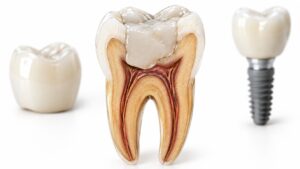
A dental implant replaces the root of the missing tooth with a small titanium post integrated into the jawbone. After healing, an abutment and custom crown attach to that foundation. The implant stands alone and does not require reshaping adjacent teeth, which many patients prefer when those teeth are healthy and unrestored.
For context on how implants compare with removable options, our article on dental implants vs traditional dentures walks through candidacy and lifestyle factors. MedlinePlus also publishes plain-language notes on dental health and tooth replacement as an additional trusted resource.
Implant longevity is strongly influenced by bone quality, bite forces, oral hygiene, and whether the patient smokes or has uncontrolled systemic conditions that affect healing. When those factors are favorable, implants are often discussed as a long-term investment rather than a short-term fix.
Dental bridge vs implant: which lasts longer?
When patients search dental bridge vs implant, they usually want a simple winner. Clinically, the answer depends on definitions. A well-maintained implant crown may last many years, but the crown on top can still wear or chip and need replacement while the implant fixture remains integrated. A bridge may also serve well for years, yet the supporting teeth bear extra load and may eventually need intervention.
Studies and clinical reviews frequently report high survival rates for implants in healthy patients, but bridges remain a valid choice when surgery is not desired, when bone is limited without grafting, or when time and budget favor a faster non-surgical pathway. The “longer-lasting option for you is the one that matches your anatomy, habits, and willingness to maintain the result—not generic marketing. The National Institute of Dental and Craniofacial Research summarizes basic facts about dental implants for patients who want a government science overview before discussing specifics with their dentist.
Factors that influence longevity for both options
- Oral hygiene and professional maintenance: Plaque control protects both bridge margins and implant surrounding tissue.
- Bite balance and grinding: Heavy forces or bruxism may shorten the life of any fixed restoration; a night guard is sometimes recommended.
- Gum health: Periodontal disease threatens supporting teeth for bridges and peri-implant tissues for implants.
- Overall health: Conditions such as uncontrolled diabetes can affect healing and maintenance outcomes.
- Material and lab quality: The ceramics and alloys used, together with precise fit, influence wear and leakage over time.
Which option might be right for you?
Choosing between a bridge and an implant is a personalized decision. A bridge may be preferable when adjacent teeth already need crowns or when you wish to avoid a surgical phase. An implant may be preferable when neighbors are healthy and you want to avoid preparing them, or when bone and systemic health support predictable integration.
At Ultra Smile Dental Spa—with offices serving Downtown Miami, Midtown Miami, and Hallandale—we combine clinical examination, imaging, and your goals before recommending a plan.
Treatment timeline and follow-up care
Bridges often move from preparation to cementation in a smaller number of visits, though temporary protection of the prepared teeth is required along the way. Implants usually involve a surgical appointment, a healing period for bone integration, and later placement of the final crown—so the calendar looks different even when the long-range outcome is excellent.
Neither path ends when the permanent restoration is delivered: both require consistent brushing, flossing or adjunctive cleaning under the bridge or around the implant, and routine exams so small issues are caught early. If you are comparing only on “speed, a bridge can feel faster upfront. If you are comparing on “preserving neighboring tooth structure and you are a candidate for implants, many patients lean toward implants after discussing risks and benefits.
FAQ: dental bridge vs implant
Does every missing tooth require choosing between a dental bridge vs implant?
Not always. Sometimes a removable partial is appropriate, or space maintenance is discussed if other treatment is planned later. Still, fixed options often come down to a dental bridge vs implant discussion when you want a non-removable tooth replacement.
Which option is faster: bridge or implant?
A bridge can often be completed in fewer overall appointments because it avoids the surgical and osseointegration phase. Implants take longer in calendar time for many cases, even when the long-term mechanics are excellent.
How should I clean under a bridge or around an implant crown?
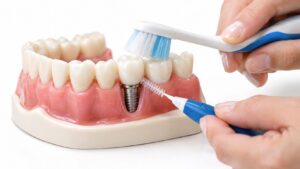
Floss threaders, superfloss, or interdental brushes help clean under a bridge; implants benefit from careful plaque control around the crown margin. Ask our team for a home routine tailored to your restoration type.
Conclusion
The dental bridge vs implant decision is not about trends; it is about matching treatment to your mouth, timeline, and maintenance commitment. Both can be excellent when planned carefully. If you are in Miami and want a clear, honest comparison after a thorough evaluation, contact Ultra Smile Dental Spa today to schedule a consultation. We will explain your options, answer questions about longevity and care, and help you move forward with confidence.