For most root canals in Miami, you do not go to sleep. Local anesthesia is standard, and sedation is available when anxiety makes treatment difficult.
A painful tooth, a recommendation for root canal therapy, and the question “root canal, do they put you to sleep? can create a stressful morning. Many patients worry about hearing the drill, feeling every step, or losing control during treatment. Modern root canal care is designed around a different experience: the tooth is numbed, the patient remains responsive, and additional sedation can be considered when fear is the main concern.
The practical distinction matters. Local anesthesia controls pain, while sedation helps control anxiety, tension, and distress. A patient searching for a dentist near me, an emergency dentist, or a dentist in Miami, FL can ask for both concerns to be addressed before treatment begins.
Table of Contents
- Understanding Root Canal Anesthesia Options in Miami
- How Local Anesthesia Keeps You Comfortable
- Sedation Choices for Anxious Patients
- Safety and General Anesthesia Considerations
- The Ultra Smile DentalSpa Comfort Experience
- Questions to Ask Your Miami Dentist
Understanding Root Canal Anesthesia Options in Miami
A patient with a throbbing molar may arrive at a Miami dental office expecting to be unconscious for the entire appointment. Instead, the dentist usually begins by reviewing symptoms, medical history, medications, and the tooth's condition. Local anesthetic is then used to numb the tooth and surrounding tissue, while sedation may be discussed if the patient feels overwhelmed.

For routine root canal therapy, being awake is generally useful. The patient can answer questions, open or close slightly when asked, and signal if anything feels uncomfortable. Staying responsive doesn't mean feeling pain. With effective local anesthesia, the expected sensations are pressure, vibration, and movement rather than sharp pain. Mayo Clinic explains that numbing medicine is used to control pain during root canal treatment.
A prospective cohort study involving mandibular molar root canal therapy found that 73% of patients reported no procedural pain, 95% felt adequately numb, and 14% required supplemental anesthesia (study details and clinical context). These findings support the everyday approach used in modern dentistry, local numbing first, with additional anesthetic techniques when a tooth remains sensitive.
Why the old root canal image persists
Root canals once had a reputation for being painful because anesthesia wasn't always predictable, especially when a tooth was severely inflamed. A review reported anesthesia failure in 13% of general practitioners' practices over a five-day period, and 10% of dental procedures could not continue because of those failures (review of pain-free root canal strategies).
Current care focuses on checking numbness before treatment and responding if the first injection isn't enough. The patient shouldn't feel pressured to tolerate sharp pain. A raised hand or agreed signal gives the dental team an opportunity to pause, assess, and improve comfort.
How Local Anesthesia Keeps You Comfortable
Local anesthesia is the foundation of most root canal appointments. The dentist places anesthetic near the tooth and surrounding tissues so the nerves that transmit sharp pain are temporarily blocked. The patient remains conscious, but the treated area becomes substantially less sensitive.
The process usually follows a straightforward sequence:
- The area is prepared. The dentist may dry the gum and apply a topical anesthetic before the injection. This helps reduce the sensation from the needle.
- The tooth is numbed. Local anesthetic is delivered near the relevant nerves and tissues. The cheek, lip, or tongue may also feel numb, depending on the tooth and injection site.
- Numbness is tested. The dental team checks the tooth and discusses what the patient feels. A numb lip alone doesn't always prove that the tooth itself is ready.
- Additional anesthesia is considered if needed. Inflamed teeth can be harder to numb, so the dentist may use supplemental techniques rather than begin while the tooth remains sensitive.
- Treatment starts only after a comfort check. The patient and dentist agree on a signal for stopping, which preserves communication during the appointment.
A randomized study cited by Harvard Medical School found that, among 83 adults, patients who couldn't feel a cold stimulus on an anesthetized tooth were about 80% less likely to feel pain during root canal treatment than patients whose numbness was judged only by soft-tissue signs such as a numb lip or tongue. The practical lesson is important: testing the tooth itself gives the dentist more useful information than relying only on whether the surrounding tissues feel numb.
Pressure isn't the same as pain
During treatment, a patient may notice pushing, vibration, tapping, or the movement of instruments. Those sensations can feel strange, but they aren't the same as the sharp sensation local anesthesia is intended to prevent. If a patient feels anything sharp, intense, or alarming, the dentist should stop and reassess.
Practical rule: Patients shouldn't “tough out sharp pain during a root canal. A simple signal lets the dentist pause before continuing.
The goal isn't to make the patient unaware of the appointment. The goal is to make the appointment tolerable, controlled, and clinically safe. Local anesthesia addresses the tooth's pain pathways, while the patient's ability to communicate helps the team adjust care in real time.
Sedation Choices for Anxious Patients
A patient can be fully numb and still feel unable to tolerate a root canal. The sounds, reclined position, or memory of a difficult dental visit may trigger intense anxiety. Sedation addresses that distress. It usually works alongside local anesthesia, which remains responsible for controlling pain from the tooth.
Comparing the main options
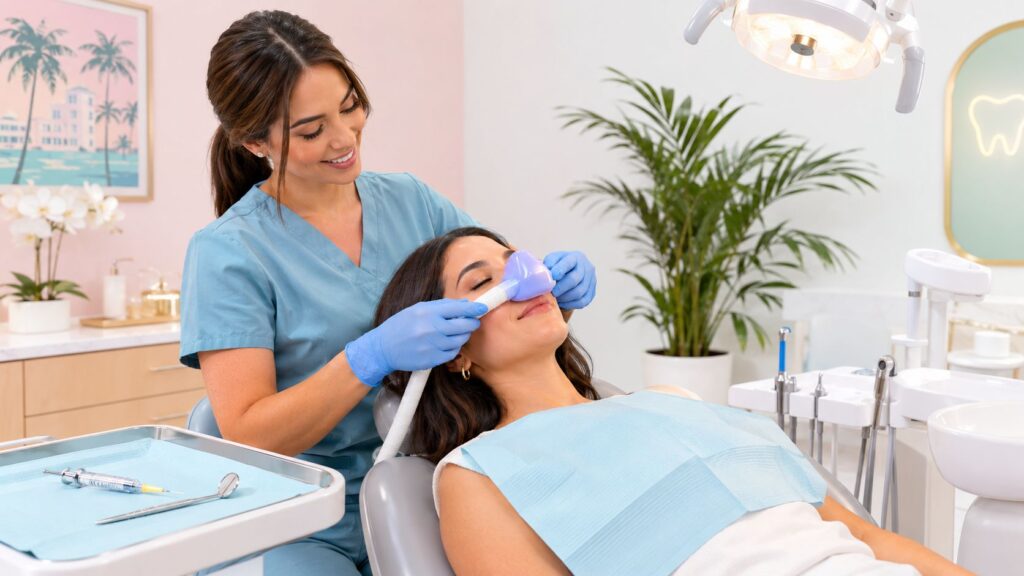
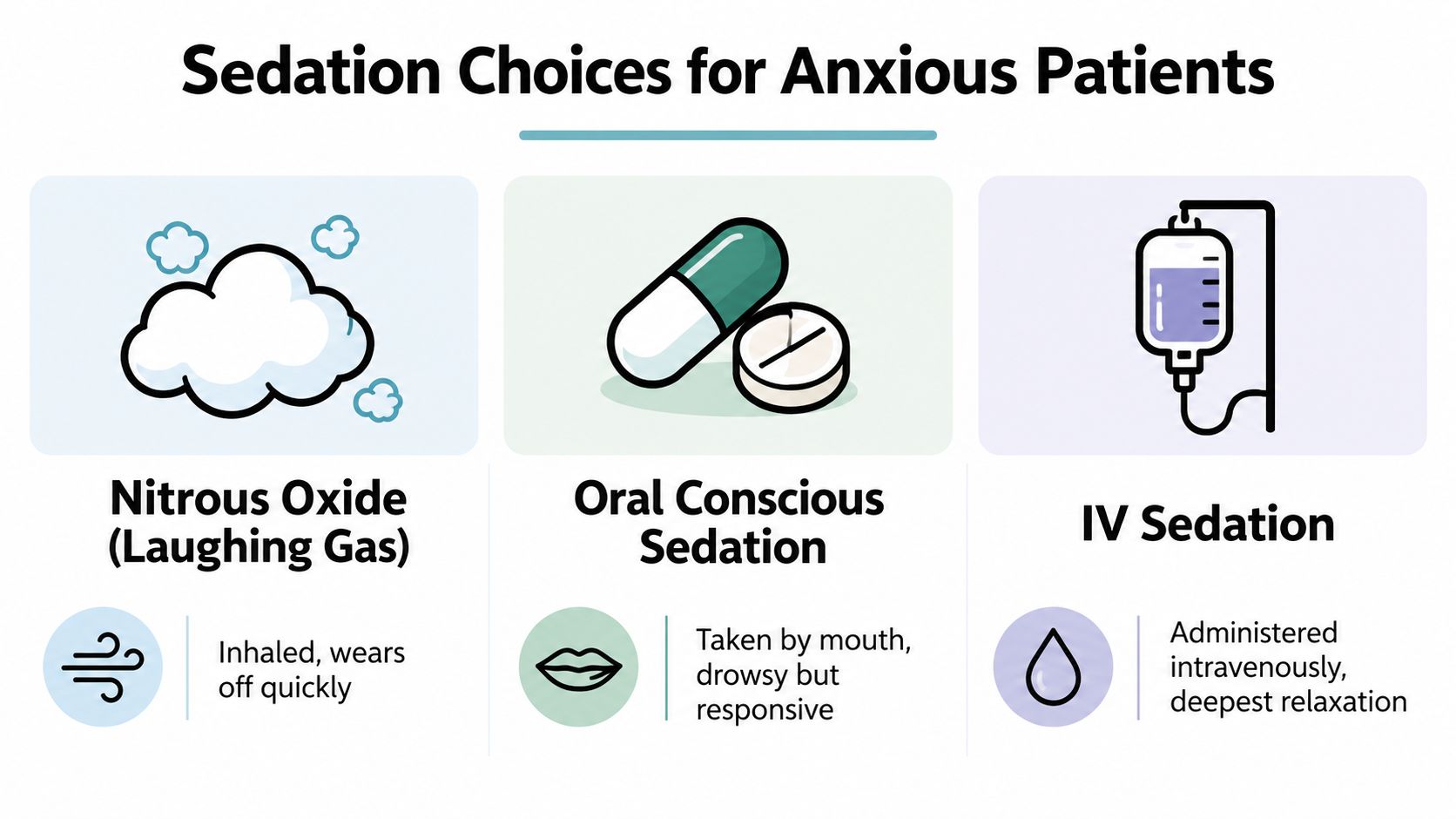
Nitrous oxide, commonly called laughing gas, is inhaled through a mask. It produces a lighter, calmer feeling while the patient remains responsive and able to follow instructions. Guidance on sedation for root canal treatment notes that its effects can wear off within minutes after the mask is removed. The dental team still confirms that the patient is ready to leave.
Oral conscious sedation involves a prescribed medication taken before the visit, commonly about an hour beforehand. Drowsiness and reduced anxiety are expected, although the patient may still respond to the dentist. Alertness can remain impaired afterward, so the practice must explain transportation requirements and which activities to avoid.
IV sedation delivers medication through a vein, allowing the dental team to adjust relaxation more directly. It generally produces deeper sedation than nitrous oxide and requires closer monitoring. It does not automatically mean general anesthesia. Depending on the planned depth, the patient may remain responsive.
Sedation options comparison
| Type | How It Works | Recovery Time |
|---|---|---|
| Nitrous oxide | Inhaled through a mask to promote light relaxation while the patient remains responsive | Effects often wear off within minutes after removal, with discharge based on the dental team's assessment |
| Oral sedation | A prescribed tablet is taken before treatment and may cause drowsiness | Alertness may remain affected, so transportation and activity instructions apply |
| IV sedation | Medication is administered intravenously for deeper relaxation with closer monitoring | Observation and a responsible escort may be required according to the dentist's instructions |
The choice depends on anxiety severity, medical history, treatment complexity, and the patient's plans afterward. Someone seeking relaxation with a quicker return to normal activities may discuss nitrous oxide. A patient with intense fear may ask about oral or IV sedation and the related escort and monitoring requirements.
Ultra Smile DentalSpa's guidance on managing dental fear can help patients prepare for a comfort-focused discussion in its Miami practice. A spa-like setting may reduce environmental stress, but it does not replace clinical assessment or pain control.
Sedation does not promise unconsciousness or complete amnesia, and it does not eliminate the need for local anesthesia. The safest plan matches the sedation depth to the patient's health and the planned treatment.
Safety and General Anesthesia Considerations
General anesthesia makes a patient fully unconscious, so it requires more planning than local anesthesia or conscious sedation. It is not the routine answer to “root canal, do they put you to sleep? For most patients, dentists reserve it for special circumstances rather than standard root canal care.
A dentist or dental specialist may discuss general anesthesia when a patient has severe, uncontrollable dental phobia, cannot cooperate safely, or has medical or behavioral factors that make ordinary treatment unsuitable. The decision also depends on whether local anesthesia and lighter sedation can provide adequate pain control and a workable appointment. Clinical guidance generally describes general anesthesia as uncommon for root canals, while distinguishing lighter inhaled sedation from deeper IV sedation that requires intensive monitoring.
What the evaluation involves
A safe plan starts before treatment. The dental team reviews medical conditions, medications, allergies, prior anesthesia reactions, and the patient's ability to follow preparation instructions. The team also confirms informed consent, monitors breathing and circulation appropriately, and remains prepared to respond if sedation becomes deeper than intended.
The practical trade-off is straightforward. Deeper sedation may help a highly fearful patient receive necessary care, but it adds monitoring, recovery planning, and restrictions on driving or normal activities that day. Local anesthesia controls pain, while lighter sedation may reduce anxiety. General anesthesia adds unconsciousness and a greater medical burden, so it needs a clear clinical reason.
Patients can review expected healing and aftercare in Ultra Smile DentalSpa's root canal recovery guidance. Anyone with significant medical concerns, previous anesthesia complications, or uncertainty about medications should share those details before scheduling treatment. A Miami dentist can then explain which level of pain control and anxiety relief is appropriate, what monitoring will be used, and how recovery will be managed.
The Ultra Smile DentalSpa Comfort Experience
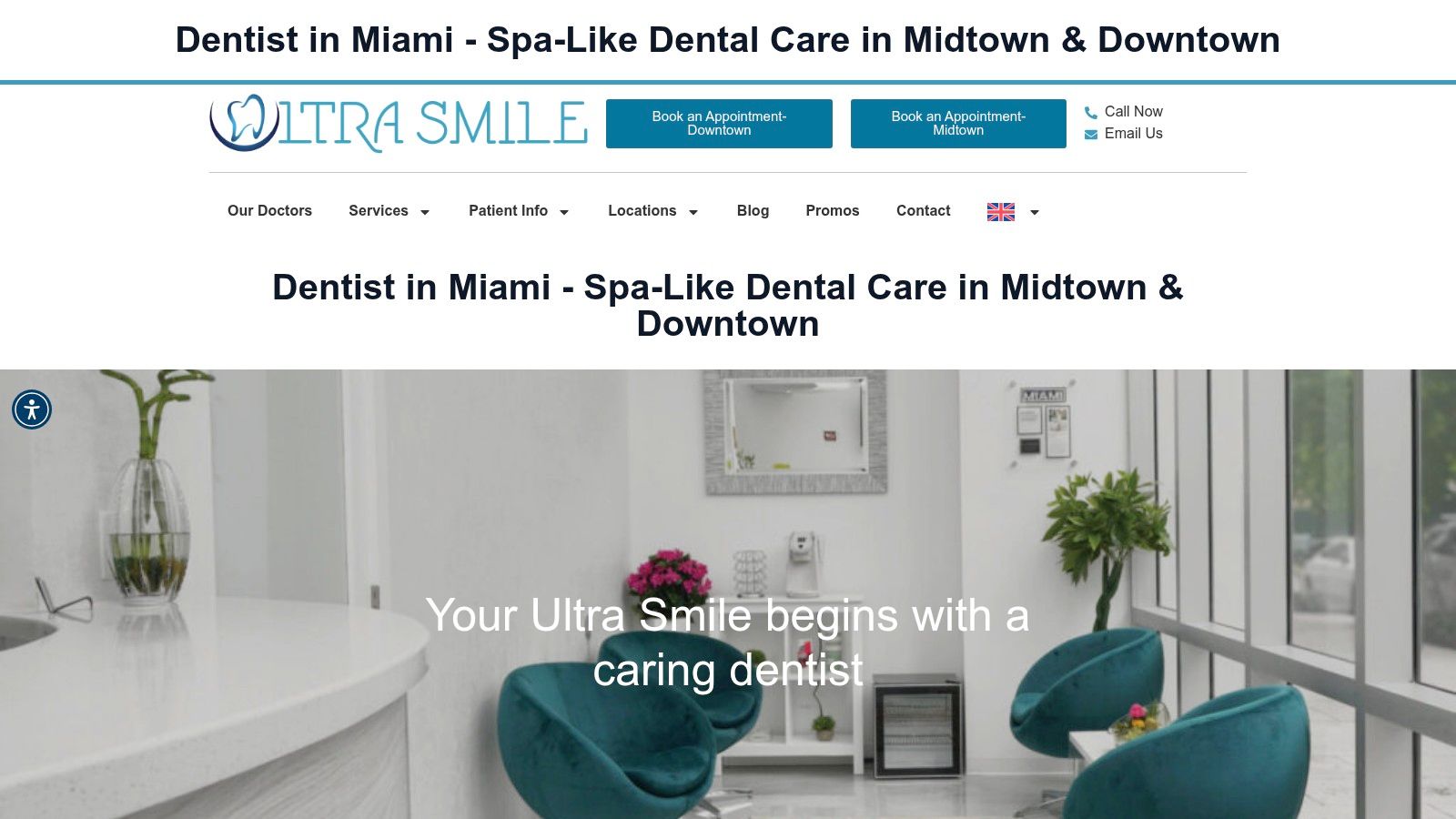
A clinical plan and the surroundings both shape how a patient experiences a root canal. Ultra Smile DentalSpa in Miami combines local anesthetic care and sedation discussions with a calmer environment that includes refreshments, custom aromatherapy, streaming entertainment during procedures, and a soothing hot towel finish. These details don't replace appropriate anesthesia, but they can reduce the sensory stress that makes dental appointments feel intimidating.
A patient can discuss the difference between pain control and anxiety relief before treatment begins. The dentist can explain how the tooth will be tested for numbness, establish a stop signal, and review whether nitrous oxide, oral conscious sedation, or IV sedation is appropriate. That conversation is especially useful for someone who has delayed care because of fear.
The practice provides general, cosmetic, restorative, and emergency dental services in the Miami area, including cleanings and exams, dental X-rays, fillings, crowns and bridges, same-day crowns, veneers, teeth whitening, Invisalign, dental implants, bone grafts, root canals, night guards, and wisdom teeth extraction. Patients researching dental implants near me, a cosmetic dentist near me, or an emergency dentist may benefit from having their wider oral health needs assessed in one setting.
A patient may also need a tooth extraction if the tooth can't be predictably restored. When a missing tooth later requires replacement, restorative planning can include dental implants. These decisions depend on examination findings and imaging, not on fear alone.
The following video gives prospective patients another way to become familiar with the practice environment before contacting the office.
For people in Downtown Miami, Midtown Miami, Hallandale Beach, and nearby areas, comfort planning can be part of a broader dental visit. A new patient exam, dental X-rays, cleaning, or urgent evaluation can clarify whether root canal therapy is appropriate and whether another service, such as an extraction or restorative treatment, is needed.
Questions to Ask Your Miami Dentist
A short conversation before treatment can turn an uncertain appointment into a predictable plan. Patients don't need to know every anesthesia technique, but they should feel comfortable asking direct questions.
- How will the tooth be tested for numbness? This clarifies whether the dentist checks the tooth itself rather than relying only on a numb lip or tongue.
- What happens if the tooth is still sensitive? The answer should explain how the team pauses and uses supplemental anesthesia when appropriate.
- Which sedation options are available? Ask whether nitrous oxide, oral sedation, or IV sedation is offered, and what each option means for responsiveness and recovery.
- What should be disclosed before sedation? Medical conditions, medications, allergies, prior anesthesia reactions, and pregnancy status can affect planning.
- Will an escort be required? Oral and IV sedation may affect alertness after treatment, so transportation instructions should be clear.
- What symptoms require urgent attention? Ask how to contact the office if pain, swelling, or another concern develops after the procedure.
- Can the appointment include breaks or a stop signal? Agreeing on communication helps the patient retain a sense of control.
Patients searching for a dentist in Miami, FL shouldn't wait until the procedure starts to mention severe anxiety or a previous difficulty becoming numb. Sharing those concerns during scheduling gives the dental team time to review comfort options, treatment timing, and recovery requirements.
Ultra Smile DentalSpa offers root canal care with local anesthesia, sedation options for appropriate patients, and a comfort-focused environment in Miami. Schedule a consultation with Ultra Smile DentalSpa to discuss pain control, anxiety relief, and the safest plan for a calmer dental visit.