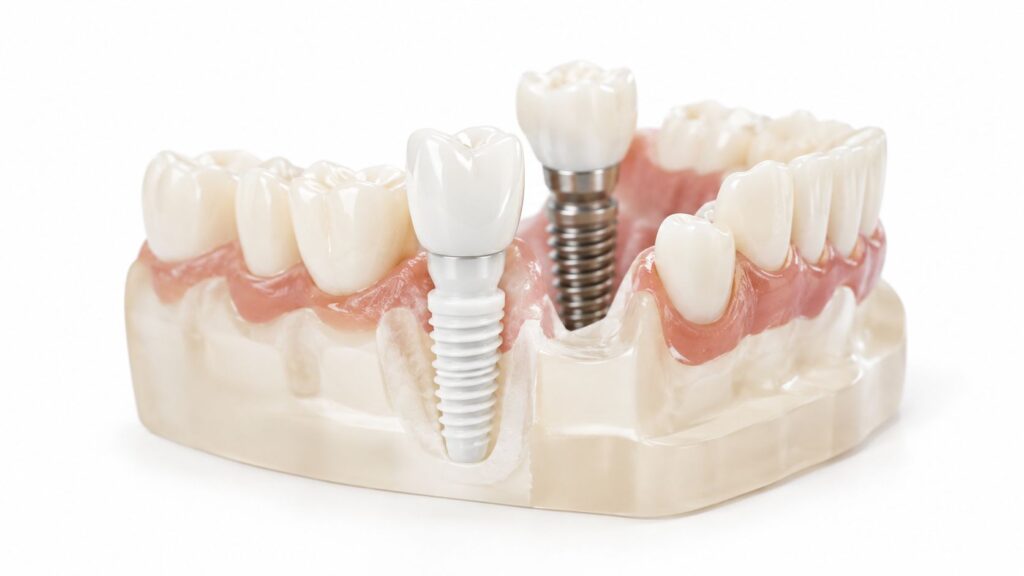
A Miami patient with a missing front tooth often arrives with two priorities that seem to compete: the replacement must look natural, and it must hold up to everyday chewing. After hearing about dental implants zirconia, that patient may wonder whether a white ceramic implant is automatically healthier or more modern than titanium. The honest answer is more useful than a sales pitch. Zirconia can be an excellent choice for selected esthetic cases, but titanium remains the safer option for many high-load and complex situations.
For someone searching for a dentist in Miami, FL, dental implants near me, or a cosmetic dentist near me, the material decision should follow a clinical examination, dental X-rays, a CBCT scan, and a careful discussion of bone, gum thickness, bite forces, and long-term goals. Ultra Smile DentalSpa serves patients seeking implant, restorative, cosmetic, and emergency dental services in Miami, including Downtown Miami and Midtown Miami, with treatment planning built around the individual tooth and the surrounding biology.
Table of Contents
- What Zirconia Dental Implants Are and Why Patients Ask About Them
- How Zirconia Works as an Implant Material
- Zirconia vs Titanium Implants Side by Side
- What the Clinical Evidence Actually Shows
- The Zirconia Implant Treatment Workflow
- Who Is a Good Candidate for Zirconia Implants
- What to Expect at Ultra Smile DentalSpa in Miami
- Making Your Decision and Next Steps
What Zirconia Dental Implants Are and Why Patients Ask About Them
A single missing tooth in the smile zone creates a problem that patients can see every time they look in a mirror. A Miami patient may have enough bone for an implant, healthy neighboring teeth, and a strong desire to avoid a gray shadow beneath thin gum tissue. That conversation often leads to zirconia, a tooth-colored ceramic alternative to titanium.
Zirconia dental implants are made from zirconium dioxide, usually in a form called yttria-stabilized tetragonal zirconia polycrystal, or Y-TZP. Manufacturers machine this medical-grade ceramic into threaded implant fixtures designed to support a replacement tooth. Earlier ceramic implant materials, including aluminum oxide, were limited by brittleness. Modern zirconia became the leading ceramic alternative because its engineered structure offers substantially better mechanical performance.
Why the design matters
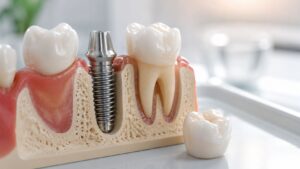
Many zirconia systems use a one-piece design, meaning the implant and abutment are formed as one continuous component. Current systems may also use two-piece designs that provide more restorative flexibility. To improve the way bone interacts with the implant, manufacturers may use sandblasted, acid-etched, or hydrophilic surface treatments rather than leaving the implant completely smooth.
Patients commonly ask about zirconia for several different reasons:
- Appearance: The white ceramic color can reduce the chance of a gray margin showing through thin or receding gums.
- Metal concerns: A patient with documented titanium sensitivity or a strong preference for metal-free dentistry may want a ceramic option.
- Personal values: Some patients prefer a metal-free approach even when no allergy has been diagnosed.
- Visible tooth replacement: A single front tooth places greater emphasis on soft-tissue color and translucency than a hidden molar.
The motivation matters, but it doesn't decide the treatment by itself. The best material still depends on implant position, bone volume, gum characteristics, bite pressure, and the restorative plan. A patient looking for an emergency dentist after a fractured tooth may first need stabilization or tooth extraction before the implant discussion becomes appropriate.
How Zirconia Works as an Implant Material
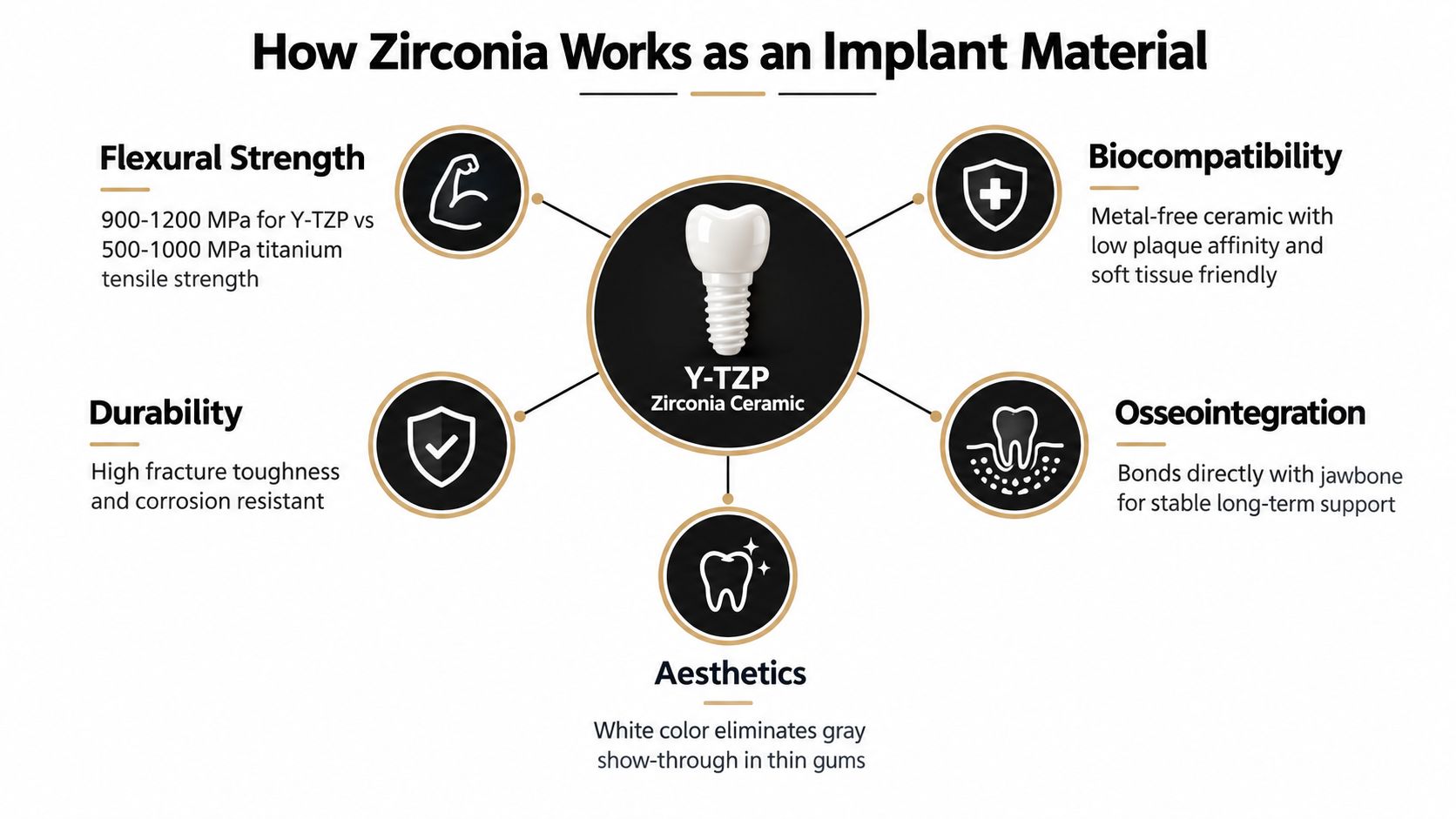
Zirconia's strength is impressive, but patients need to understand what that strength does and doesn't mean. Modern Y-TZP zirconia is commonly described with a flexural strength around 900–1200 MPa, compressive strength near 2000 MPa, Young's modulus around 210 GPa, and fracture toughness of 7–10 MPa·m1/2, as summarized in a review of zirconia implant materials and surface behavior.
Strength isn't the same as flexibility
Flexural strength describes how much bending pressure a material can tolerate before it breaks. A coffee mug rim can handle pressure up to a point, but it doesn't bend like a spoon. It chips or cracks. Zirconia behaves in a similarly rigid way. Its transformation-toughening mechanism helps resist crack growth, yet the ceramic doesn't absorb stress exactly as titanium does.
That distinction matters for a patient who clenches, grinds, has a heavy posterior bite, or needs a very narrow implant. High strength doesn't make zirconia immune to fracture. Implant diameter, placement position, bone support, occlusion, and surface design all influence the clinical result.
Bone contact depends on the surface
The implant body isn't the only factor. Untreated zirconia doesn't automatically produce superior osseointegration because the material is ceramic. Research reviews report that modified zirconia surfaces achieve faster osseointegration than untreated surfaces, while acid-etched or sandblasted-plus-etched surfaces tend to show stronger bone response and lower marginal bone loss. Early experimental work also found mean bone-implant contact above 60% in almost all animal study groups, with zirconia comparable to or better than titanium in studies that included titanium controls, according to the 2007 systematic review of zirconia implant evidence.
A polished transmucosal portion can remain stable while the bone-facing portion receives a biologically active texture. Patients considering advanced ceramic restorations can review advanced dental materials with the treating team, but the key question remains clinical: does the chosen surface and design fit the planned site?
Zirconia vs Titanium Implants Side by Side
Patients don't experience implant materials as laboratory numbers. They experience a smile, a bite, a healing process, and the maintenance required afterward. The comparison below focuses on the decisions that affect everyday treatment planning.
| Criterion | Zirconia (Y-TZP) | Titanium (Grade 4/5) |
|---|---|---|
| Esthetics | White ceramic can reduce gray show-through in thin or receding gums | Metallic color may become visible if soft tissue recedes |
| Metal-free preference | Suitable for patients seeking a ceramic, metal-free implant | Not appropriate for a patient committed to avoiding metal |
| Surface and gum response | Modified surfaces support tissue interaction; comparative evidence doesn't establish a universal biological advantage | Extensive clinical history and well-established surface options |
| Mechanical behavior | Rigid and strong, but fracture remains a concern under excessive stress | More forgiving under load and available in many narrow and complex designs |
| Design flexibility | Frequently one-piece, with fewer options for correcting angulation | Two-piece systems offer broader restorative and prosthetic flexibility |
| Long-term evidence | Growing clinical evidence, but shorter and more heterogeneous than titanium's | Longer and broader clinical validation |
| Posterior and complex cases | Requires careful selection, especially with heavy bite forces or narrow anatomy | Often the safer choice for high-load, angled, grafted, or full-arch cases |
| Cost | Often carries a higher upfront fee in local treatment planning | Usually less expensive than a comparable zirconia fixture |
A practical verdict
Zirconia wins on appearance at the gumline when a patient has a thin gingival biotype, gum recession risk, or a highly visible front tooth. It also fits a documented concern about titanium sensitivity or a personal metal-free preference. That doesn't mean zirconia automatically improves gum health. Recent comparative evidence has not shown a clear biological advantage over titanium, as reported in a systematic review and meta-analysis of zirconia implant outcomes.
Titanium wins on track record, narrow-diameter availability, posterior load management, and retrievability. The right choice isn't the material featured in the most attractive brochure. It's the material that fits the tooth position and the patient's biology.
What the Clinical Evidence Actually Shows
The clinical evidence has moved zirconia beyond the experimental stage, but it hasn't erased the differences between zirconia and titanium. A 2023 systematic review and meta-analysis pooled 25 clinical studies involving 4,017 implants in 2,083 patients. It reported 172 implant failures, with a mean failure time of 12.0 ± 16.1 months. Of those failures, 47 were early failures, and 26 were attributed to implant fracture, mostly in narrow-diameter implants. The review estimated a 10-year cumulative survival rate of 95.1%, according to the 2023 zirconia implant meta-analysis.
What patients should take from the numbers
The evidence supports zirconia as a clinically durable option when the indication is appropriate. Another systematic review reported 1-year survival of 92%, with a 95% confidence interval of 87–95, while a 2024 review found one-piece zirconia implant success and survival rates ranging from 95% to 98.4% in prospective studies with moderate risk of bias. That review also found better outcomes with acid-etched roughened surfaces than with smoother or less roughened designs, as detailed in the 2024 review of one-piece zirconia implants.
The early healing period deserves attention. A separate systematic review reported 182 implant failures, with the great majority occurring during the first year. It also recorded 24 implant fractures, and 62.5% of those fractures occurred in narrow-diameter implants, according to the review of zirconia implant survival and fracture patterns.
Practical rule: A narrow zirconia implant in a high-load location deserves more caution than a properly supported implant replacing a single front tooth.
What remains unsettled
A later meta-analysis reported a 10-year cumulative survival rate of 88.1% and observed that most failures occurred during the first year, as shown in the long-term review of zirconia implant-supported restorations. These results don't mean zirconia is unsuitable. They show why survival figures vary with design, indication, placement site, follow-up period, and study population.
The evidence proves that zirconia can be predictable in selected cases. It doesn't yet prove equal performance to titanium across every posterior, full-arch, narrow-ridge, or complex grafting situation over multiple decades. That distinction should guide the consultation.
The Zirconia Implant Treatment Workflow
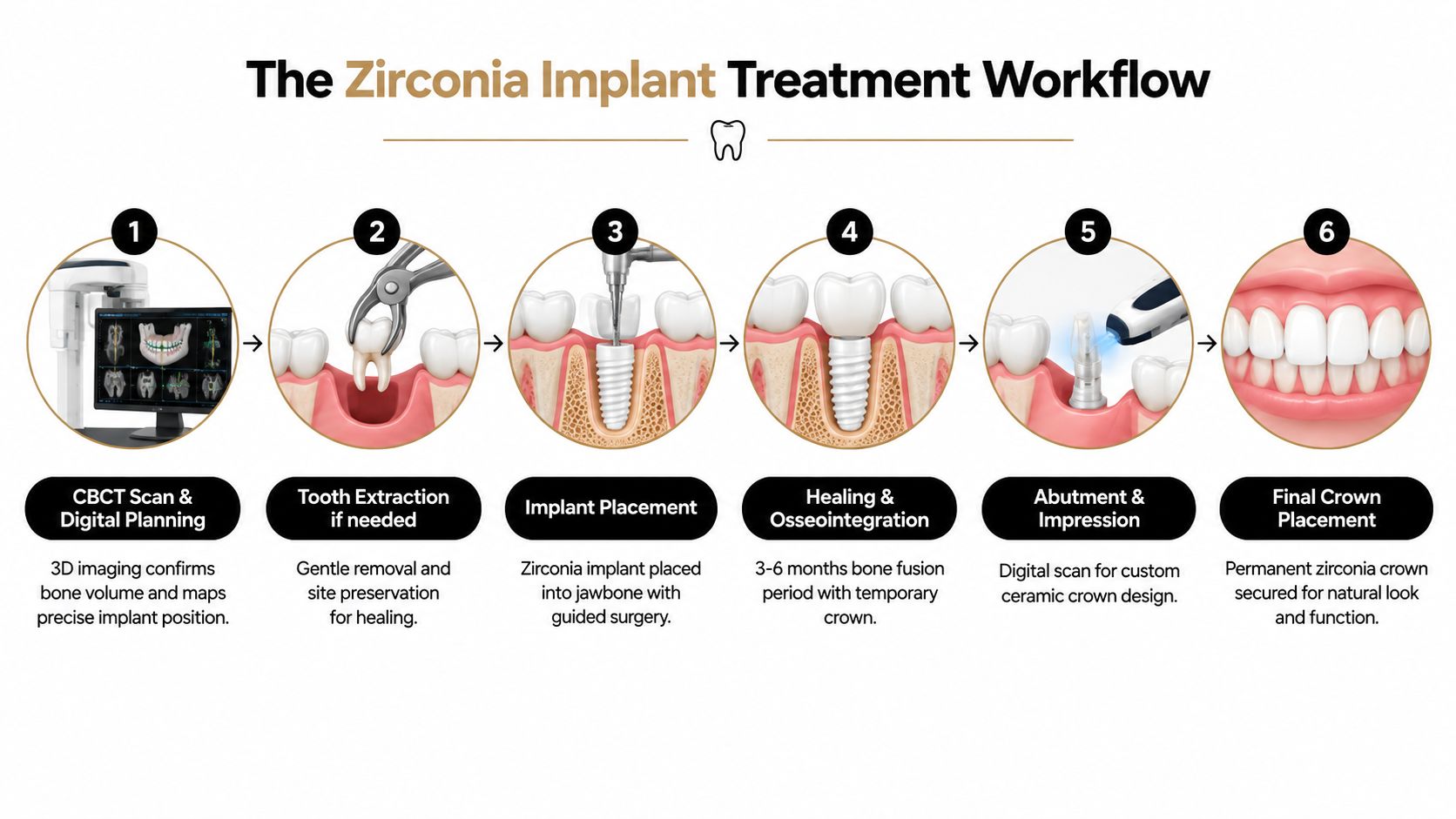
A successful implant begins before surgery. The first appointment usually includes a clinical examination, dental X-rays, photographs, and a CBCT scan that shows bone height, width, anatomy, and the proposed implant position in three dimensions. If a damaged tooth remains, the plan may include gentle tooth extraction and site preservation before implant placement.
Six stages from planning to the final tooth
- Digital planning: The clinician evaluates bone volume, gum contours, neighboring roots, and the planned crown position. A digital surgical guide can help transfer that plan accurately.
- Site preparation: If the tooth cannot be saved, extraction and grafting may be needed before an implant can be placed.
- Guided placement: Zirconia is often placed with a fully guided protocol because the ceramic requires careful handling during insertion. The clinician must protect primary stability and avoid excessive forces.
- Healing and osseointegration: Healing depends on bone quality, location, surface treatment, and overall health. Zirconia cases may require a substantial healing period before final loading.
- Impression or digital scan: Once the implant is ready for restoration, the dental team records the implant position and designs the crown.
- Crown delivery: A laboratory fabricates the all-ceramic crown, then the clinician checks contacts, shade, bite, and gum contours before final seating.
One-piece zirconia avoids an abutment junction, but it offers less flexibility for correcting an implant that emerges at an unfavorable angle. Two-piece systems provide more restorative control, although the design introduces a connection that must be planned and maintained. The total journey can extend over several months, particularly when extraction, grafting, or staged healing is necessary.
The following video gives patients a visual overview of implant treatment and the stages involved:
Who Is a Good Candidate for Zirconia Implants
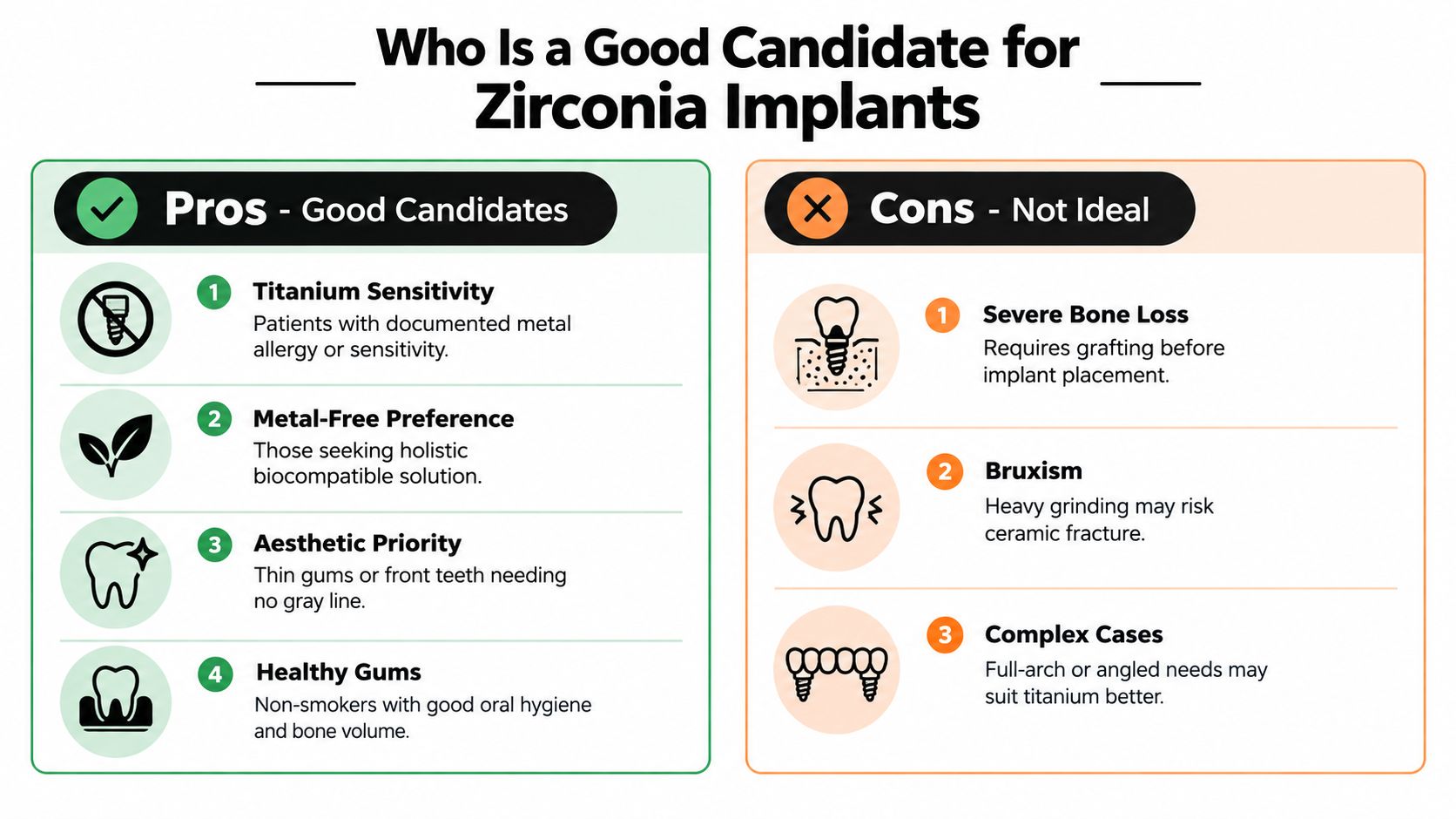
The strongest zirconia candidate usually has a single missing tooth in the anterior region, adequate bone, healthy gums, manageable bite forces, and a clear reason to value a metal-free or tooth-colored implant. The material can be especially appealing when thin tissue could reveal the darker color of titanium.
Profiles that may fit zirconia well
- Documented metal sensitivity: A patient with a confirmed concern about titanium may prefer a ceramic implant after a full medical and dental review.
- High esthetic demand: A front-tooth replacement with thin gums or a high smile line places the white color of zirconia at a meaningful advantage.
- Metal-free preference: Some patients choose ceramic materials for personal reasons, even without a diagnosed allergy.
- Stable oral health: Good hygiene, sufficient bone volume, and healthy soft tissue create a more favorable environment for any implant material.
Zirconia is less compelling when the primary challenge is not appearance but load, angulation, or surgical complexity. A patient with a posterior molar replacement, heavy bruxism, a narrow ridge, or a full-arch treatment may benefit from titanium's broader design range and longer clinical validation.
When titanium deserves serious consideration
Narrow ridges can require small-diameter implants, and the published fracture pattern described earlier is particularly relevant to narrow zirconia fixtures. Significant bone loss may also require staged grafting and a design with greater prosthetic flexibility. Patients who smoke or have compromised healing need individualized risk assessment rather than a material selected from a general online checklist.
Patients should also ask about the clinician's experience with ceramic implant placement and restoration. Zirconia's learning curve, the higher upfront cost, and the less settled long-term evidence for some two-piece systems belong in the treatment conversation. A CBCT-based approach to implants with bone loss can clarify whether the issue is material choice, bone preparation, implant position, or all three.
The best candidate isn't simply someone who wants a metal-free implant. The best candidate has anatomy and bite forces that let the ceramic design perform predictably.
What to Expect at Ultra Smile DentalSpa in Miami
A typical implant visit starts with a conversation, not an incision. At Ultra Smile DentalSpa, the consultation can include a complimentary implant or cosmetic evaluation, CBCT imaging, and intraoral photographs so the team can assess bone volume, gum contours, and the proposed restoration before recommending zirconia or titanium.
The surgical appointment follows the approved plan. Depending on the patient's needs and medical history, sedation options may include IV or oral sedation. A surgical guide supports precise placement, while platelet-rich fibrin, or PRF, may be used to support soft-tissue healing around the implant. The team can also discuss whether an extraction, graft, temporary tooth, or staged approach is needed.
The patient experience
The practical details matter to patients who feel anxious about dental treatment. Comfort features may include massage chairs, blankets, streaming entertainment, refreshments, custom aromatherapy, and a hot towel finish. These amenities don't replace sound diagnosis or careful surgery, but they can make a long treatment process feel more manageable.
After placement, the patient may wear a provisional tooth while the implant integrates with the jawbone. The treating clinician determines the healing interval according to the site, stability, bone quality, and surface design. Once healing is adequate, the team completes the digital scan or impression and coordinates the final zirconia abutment and e.max or zirconia crown.
Financing pathways and accepted insurance can be reviewed before treatment begins. Patients should request an itemized plan that separates the consultation, imaging, extraction, grafting, implant, abutment, crown, sedation, and follow-up components. That approach makes it easier to compare treatment options without focusing only on the fixture material.
Making Your Decision and Next Steps
Zirconia is most compelling for a single anterior implant when esthetics, thin gum tissue, or a documented titanium concern matters most. Titanium remains the safer choice in many posterior load situations, narrow-diameter cases, immediate-loading plans, complex grafting, and full-arch restorations because it offers more design flexibility and a deeper long-term evidence base.
Patients should ask questions that online comparisons often leave unanswered. Does insurance cover a ceramic implant or only part of the overall restorative treatment? What is the plan if the implant fractures years later? If titanium implants are already stable, is there a clinical reason to replace them? In most cases, replacement isn't justified because zirconia is newer or tooth-colored.
A consultation should connect the material to the patient's bone, bite, gum biology, tooth position, and restorative goals. A dentist near me search can locate an office, but only a clinical examination and CBCT-based plan can determine whether zirconia is appropriate. Patients with pain, swelling, trauma, or a recently lost tooth should also seek prompt evaluation through an emergency dentist or restorative consultation rather than delaying care.
Ultra Smile DentalSpa provides implant consultations, CBCT-based planning, tooth extraction, bone grafting, and zirconia or porcelain crown options for patients in Miami. Visit Ultra Smile DentalSpa to schedule a consultation and bring any current imaging so the team can evaluate the most predictable material for the missing tooth.