Professional Teeth Whitening vs. Store-Bought Products: What Really Makes the Difference?
Walk through almost any pharmacy or browse online, and you will find dozens of products promising a brighter smile. Whitening toothpastes, strips, pens, rinses, LED kits, and gel trays are widely available, often making teeth whitening seem like a simple do-it-yourself process.
Some store-bought products can improve mild surface staining when used correctly. However, they are not the same as professional teeth whitening performed or supervised by a dentist. The most important differences involve the strength of the whitening formula, the speed and consistency of the results, the fit of the treatment, and the ability to evaluate your oral health before whitening begins.
At Ultra Smile DentalSpa, we provide professional teeth whitening for patients who want to brighten their natural teeth through a personalized cosmetic treatment plan. Before recommending whitening, we consider the cause of the discoloration, existing dental work, tooth sensitivity, gum health, and the result the patient hopes to achieve.
Understanding these differences can help you decide whether a store-bought product is enough or whether professional care may offer a safer and more predictable experience.
How Teeth Whitening Products Work
Most bleaching treatments rely on hydrogen peroxide or carbamide peroxide to break apart stain-causing compounds within the teeth. The type and concentration of the active ingredient vary depending on the product and whether it is intended for professional or at-home use.
Whitening toothpaste works somewhat differently. It generally relies on mild abrasives and polishing ingredients to remove stains from the outer surface of the enamel. It may help reduce discoloration caused by coffee, tea, tobacco, or certain foods, but it does not necessarily change the deeper natural color of the tooth.
Whitening strips and gel-based products contain bleaching ingredients that can penetrate beyond the surface. However, over-the-counter products generally use a lower concentration of bleaching agents than those used by a dentist, so visible changes may develop more slowly.
This does not mean every patient needs the strongest product available. The appropriate concentration should depend on the condition of the teeth, history of sensitivity, treatment method, and professional recommendations.

Professional Whitening Begins With an Oral Health Evaluation
One of the most important differences between professional and store-bought whitening happens before any whitening gel touches the teeth.
When you purchase a product from a store, the package cannot examine your mouth. It does not know whether you have a cavity, exposed root surface, cracked tooth, leaking filling, gum recession, infection, or another condition that could contribute to discomfort.
Patients with untreated cavities, active infections, or areas of gum recession may experience greater irritation or sensitivity during whitening. The American Dental Association advises patients to consider a dental evaluation and professional cleaning before beginning treatment.
At Ultra Smile DentalSpa, we evaluate the teeth and gums before recommending cosmetic care. This gives us an opportunity to identify concerns that should be treated first and determine whether whitening is likely to address the type of discoloration present.
A dark tooth caused by trauma or internal damage, for example, may not respond like teeth with ordinary surface staining. Whitening should not be used to cover up a color change until the cause has been evaluated.
Professional Treatment Uses a More Controlled Approach
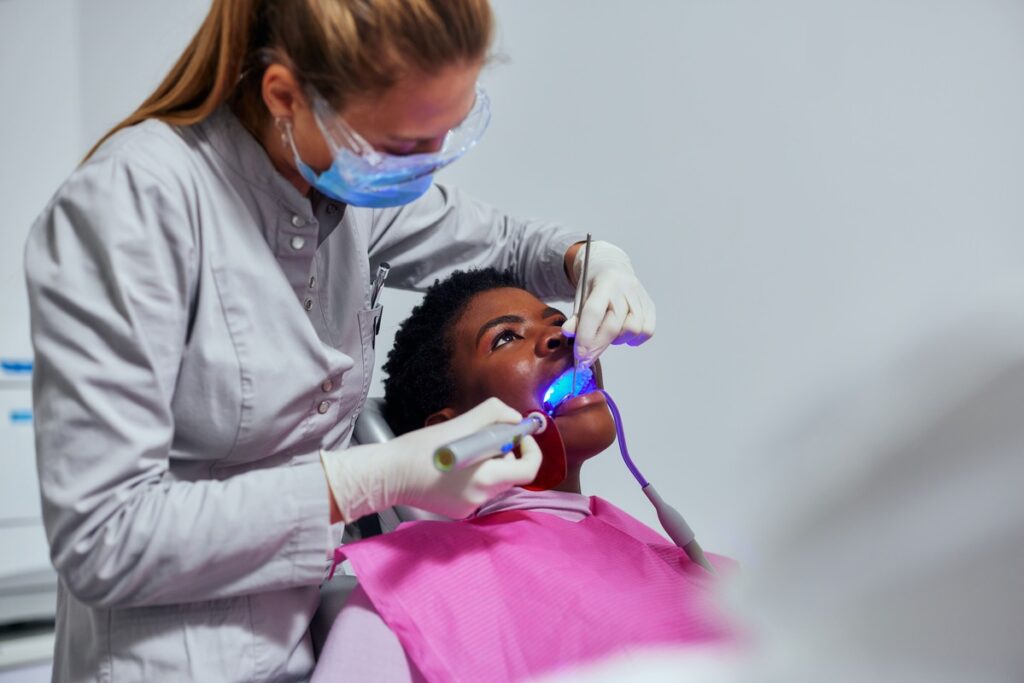
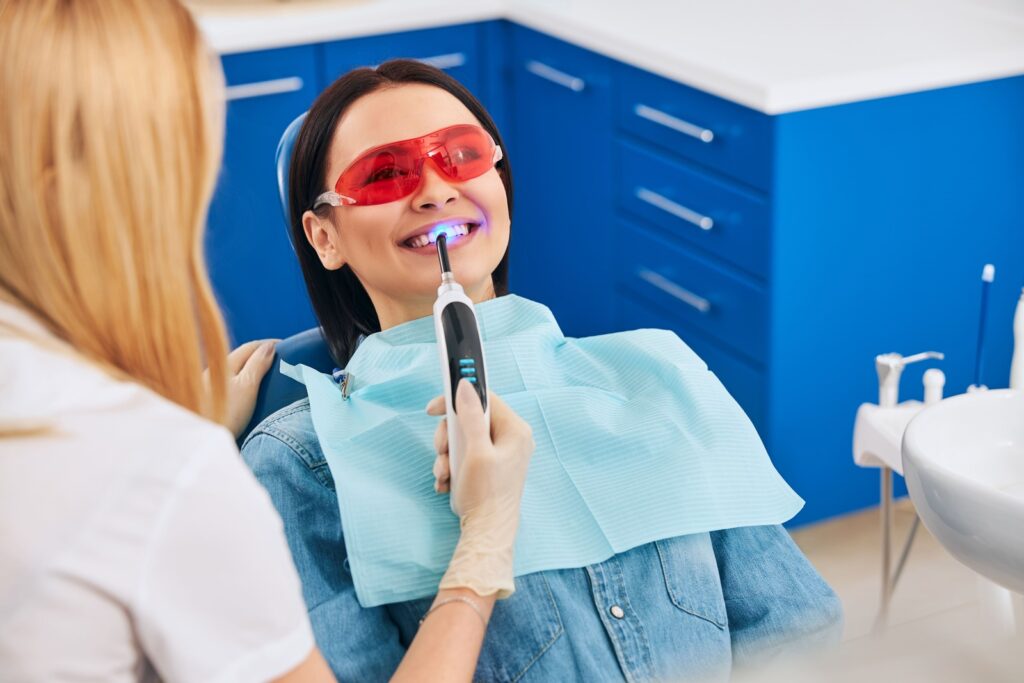
Professional whitening is performed with products and techniques selected for the individual patient. The dentist or trained dental team controls where the whitening material is placed, how long it remains on the teeth, and how the surrounding gums and soft tissues are protected.
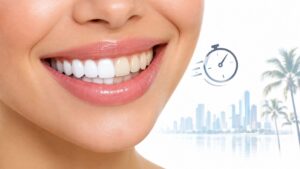
Ultra Smile DentalSpa offers Boost professional whitening. According to our treatment information, this option is designed to produce a noticeable improvement in approximately 40 minutes, making it appealing to patients who want efficient in-office treatment.
The faster result is partly related to the professional-strength whitening formulation. By comparison, store-bought strips or trays may need to be worn repeatedly over several days or weeks before reaching their maximum result.
Speed should not be the only goal, however. A responsible treatment plan balances effectiveness with sensitivity, enamel condition, and the patient’s expectations.
Store-Bought Products Are Designed for the General Public
Over-the-counter whitening products must be designed for a broad range of consumers. They are not customized for the shape of your teeth, the position of your gums, or the location of your existing dental restorations.
Whitening strips come in standard shapes and may not contact every tooth evenly. They can sometimes miss recessed areas, rotated teeth, or spaces near the gumline. Generic trays may fit loosely, allowing gel to move onto the gums or creating uneven contact with the enamel.
Results can therefore vary across the smile. The front teeth may brighten more than teeth positioned slightly behind them, and some areas may remain darker because the whitening material did not reach them consistently.
Store-bought products may still be useful for mild staining, gradual brightening, or occasional maintenance. Patients should follow the directions carefully and consider choosing products that have earned the ADA Seal of Acceptance.
Using more product, wearing strips longer than directed, or repeating treatment too frequently does not necessarily create a better result. Overuse can increase irritation and sensitivity and may damage the gums or enamel.
Professional Whitening Offers More Predictable Results
Every patient’s teeth respond differently to whitening. The starting shade, enamel thickness, age, type of staining, previous treatments, and daily habits can all affect the final result.
Professional care allows the dental team to evaluate these factors and set realistic expectations. At Ultra Smile DentalSpa, our whitening approach may include documenting the starting shade and discussing how much improvement is reasonable for the patient’s natural teeth. Our current whitening information also describes the use of shade guidance to track progress and support natural-looking results.
The goal is not always to produce the brightest shade possible. Teeth that become dramatically lighter than the patient’s complexion, facial features, or existing restorations may look artificial.
A professionally guided result can be adjusted to match the patient’s cosmetic goals. Some people want a noticeable transformation, while others prefer a modest improvement that looks refreshed but subtle.
Crowns, Veneers, and Fillings Will Not Whiten
One of the most common reasons patients are disappointed with whitening products is that they expect dental restorations to change color along with their natural teeth.
Whitening products work on natural tooth structure. Porcelain veneers, dental crowns, bridges, bonding, and tooth-colored fillings generally remain their existing shade. This can create a mismatch if the surrounding natural teeth become lighter.
A dentist can identify visible restorations before treatment and explain how whitening may affect the overall smile. In some cases, whitening is completed first so that future dental crowns, veneers, or fillings can be matched to the new tooth shade. Existing restorations may need to be replaced if they become noticeably darker than the whitened teeth.
At our practice, cosmetic treatment planning considers the complete smile rather than the tooth color alone. Whitening may be an individual service or one stage of a broader plan involving dental bonding, veneers, crowns, or other cosmetic care.
Sensitivity Can Occur With Either Option
Tooth sensitivity is one of the most common side effects of whitening. It can occur with professional treatment, dentist-provided trays, or over-the-counter products.
Peroxide may temporarily irritate the inner portion of the tooth, creating sensitivity to cold air, drinks, or food. Gum irritation can also occur if whitening material contacts the soft tissues. These effects are generally temporary, although their intensity differs from person to person.
Higher concentrations are not automatically better for every patient. The American Dental Association notes that sensitivity can be influenced by the bleaching concentration, contact time, existing restorations, and other treatment factors.
Professional supervision is especially valuable for patients who already experience sensitivity. The dentist can determine whether whitening is appropriate, recommend a desensitizing strategy, adjust the treatment, or suggest a slower approach.
With a store-bought product, patients must recognize problems and decide whether to stop treatment themselves. Persistent pain, pain focused on one tooth, or irritation that does not improve should be evaluated by a dentist.
Whitening Toothpaste Is Better for Surface Maintenance
Whitening toothpaste can be helpful, but it should not be confused with professional bleaching.
Because it primarily polishes away external staining, whitening toothpaste may help maintain a cleaner appearance between dental visits. It is unlikely to produce the same degree of shade change as peroxide-based professional whitening.
It may be a reasonable choice for someone who has very mild surface stains or wants to maintain results after treatment. Patients should avoid aggressive brushing in an attempt to make the toothpaste work faster. Brushing too hard can irritate the gums and contribute to wear near the gumline.
A professional cleaning may also remove plaque, tartar, and certain surface stains that make the teeth appear dull. Some patients discover that their smile looks noticeably brighter after a cleaning even before whitening is considered.
Which Option Is Right for You?
A store-bought product may be appropriate when you have healthy teeth and gums, mild staining, realistic expectations, and no visible restorations that could create a color mismatch. It may also appeal to patients who prefer gradual treatment at home.
Professional whitening may be a better fit when you want faster results, have a specific event approaching, have experienced sensitivity in the past, or want guidance about the safest way to brighten your smile.
It is also worth choosing professional care when:
- Your teeth have uneven discoloration
- One tooth is significantly darker
- You have crowns, dental veneers, bonding, or fillings in visible areas
- Previous whitening products caused pain or gum irritation
- You are unsure whether the staining will respond
- You want whitening coordinated with other cosmetic treatment
The right choice depends on your oral health and the type of result you expect, not simply on which product has the strongest marketing claim.
Maintaining Your Whitening Results
No whitening treatment permanently prevents new stains. Coffee, tea, red wine, tobacco, dark sauces, and normal aging may gradually affect tooth color again.
Good brushing and flossing, regular dental cleanings, and moderation with staining foods and drinks can help preserve the result. Rinsing with water after dark beverages may also reduce how long pigments remain in contact with the enamel.
Some patients eventually choose a professional touch-up or a dentist-recommended home maintenance option. The frequency should be based on individual needs rather than constant whitening.
At Ultra Smile DentalSpa, we provide professional whitening alongside general and cosmetic dental care at our Downtown Miami, Midtown Miami, and Hallandale Beach locations. Our practice combines modern treatment with a spa-inspired environment designed to help patients feel comfortable throughout their visits.
The Real Difference Is Personalization
Store-bought whitening products can improve mild staining, and they may be effective when used correctly. Professional whitening, however, provides something a box cannot offer: an examination, personalized recommendations, controlled application, and guidance based on your actual teeth.
At Ultra Smile DentalSpa, we do not begin with the assumption that every patient needs the same whitening treatment. We consider the cause of the discoloration, the condition of the enamel and gums, existing dental work, sensitivity, and the patient’s cosmetic goals.
Professional teeth whitening is not simply about using a stronger product. It is about creating a treatment plan that brightens the smile while protecting oral health and producing a result that looks natural for the individual patient.