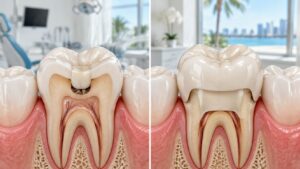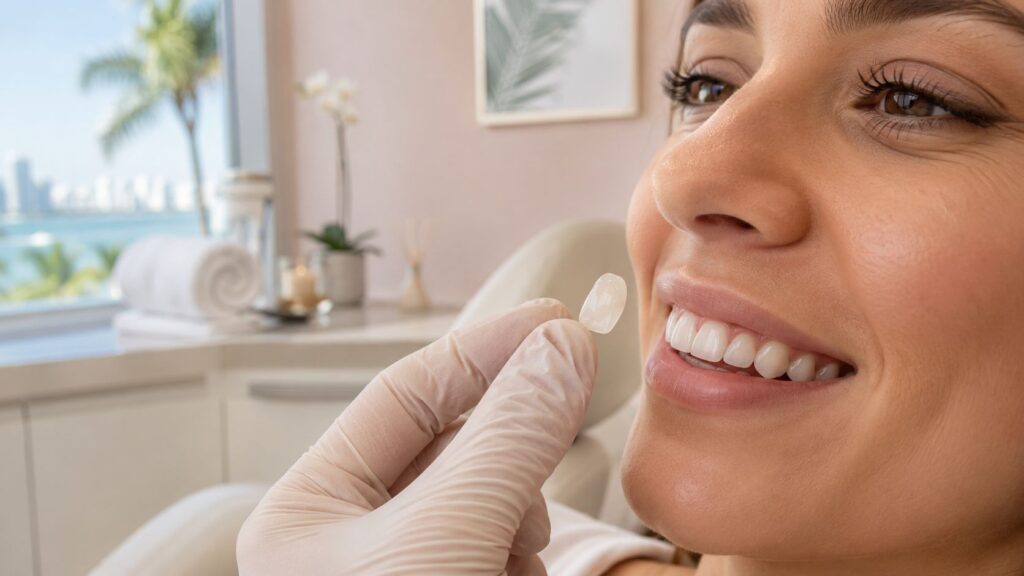
Porcelain veneers in Miami typically cost $972 to $2,700 per tooth and usually last 10 to 15 years with proper care. For many adults comparing veneers in Miami, FL, those two facts matter most because they shape both the short-term budget and the long-term commitment.
A lot of people looking for a cosmetic dentist near me or a dentist in Miami, FL start in the same place. They smile less in photos, notice chips or deep stains in the mirror, or feel self-conscious during work meetings and social events. Veneers can be a strong option when the goal is to improve the look of front teeth in a way that feels polished, natural, and predictable.
In Miami, that decision often comes with extra questions. What's the difference between porcelain and composite. Will teeth look fake. How many visits does it take. What does the process feel like. Those questions matter just as much as the final result, especially for patients who also care about comfort, privacy, and a calm setting.
This guide walks through veneers step by step, with a focus on what patients in Downtown Miami, Midtown Miami, and Hallandale Beach usually want to know before booking a consultation.
Table of Contents
- What Are Dental Veneers and What Can They Fix
- Types of Veneers Porcelain Composite and Minimal-Prep
- The Veneer Treatment Process at Our Miami DentalSpa
- A Guide to Veneers Cost in Miami FL for 2026
- Veneers vs Bonding Crowns and Teeth Whitening
- Candidacy Risks and How to Care for Your Veneers
- Your Comfort-Focused Cosmetic Dentist in Miami
- Frequently Asked Questions About Miami Veneers
What Are Dental Veneers and What Can They Fix
Dental veneers are thin coverings placed on the front surface of teeth to improve how they look. A simple way to think about them is this: they work a bit like a custom-made outer layer for the visible part of a tooth, creating a cleaner shape, brighter color, and more balanced smile.
People often search for veneers in Miami, FL when the issue isn't pain, infection, or an emergency dentist visit. It's appearance. The teeth may be healthy enough to keep, but the smile still doesn't feel right.
What veneers are designed to improve
Veneers are commonly chosen for cosmetic concerns such as:
- Chips and small edge wear: A veneer can rebuild the visible outline of a front tooth so it looks smooth again.
- Stains that don't respond well to whitening: Some discoloration sits deeper than surface stain, so whitening alone may not create the color change a patient wants.
- Small gaps: Veneers can make teeth appear slightly wider, which can visually close spaces.
- Uneven shapes: If one tooth is short, narrow, or irregular, a veneer can help create symmetry.
- Mild misalignment: Veneers can improve the appearance of slight crowding or rotation when the main goal is cosmetic balance.
Why people choose veneers instead of doing nothing
A smile affects more than photographs. It can affect confidence at work, in dating, and during everyday conversation. That doesn't mean every cosmetic concern needs veneers, but it does explain why this treatment remains popular in a city where appearance and self-presentation matter.
Practical rule: Veneers change the front-facing look of teeth. They don't replace routine dental care, cleanings and exams, or treatment for active decay and gum disease.
That's where a thorough evaluation matters. If a patient also needs restorative dentistry, a broken tooth may need a crown instead. If the main concern is color only, professional teeth whitening may be enough. If there's major crowding, invisible braces may make more sense before cosmetic finishing.
For the right patient, veneers offer something simpler to understand than the technical language suggests. They create a new visible surface, and that new surface can hide flaws that have bothered someone for years.
Types of Veneers Porcelain Composite and Minimal-Prep
Choosing veneers is a little like choosing the finish for a room you see every day. The result has to look right, hold up well, and fit the structure underneath. With veneers, that means balancing appearance, durability, budget, and how much natural enamel should be touched.
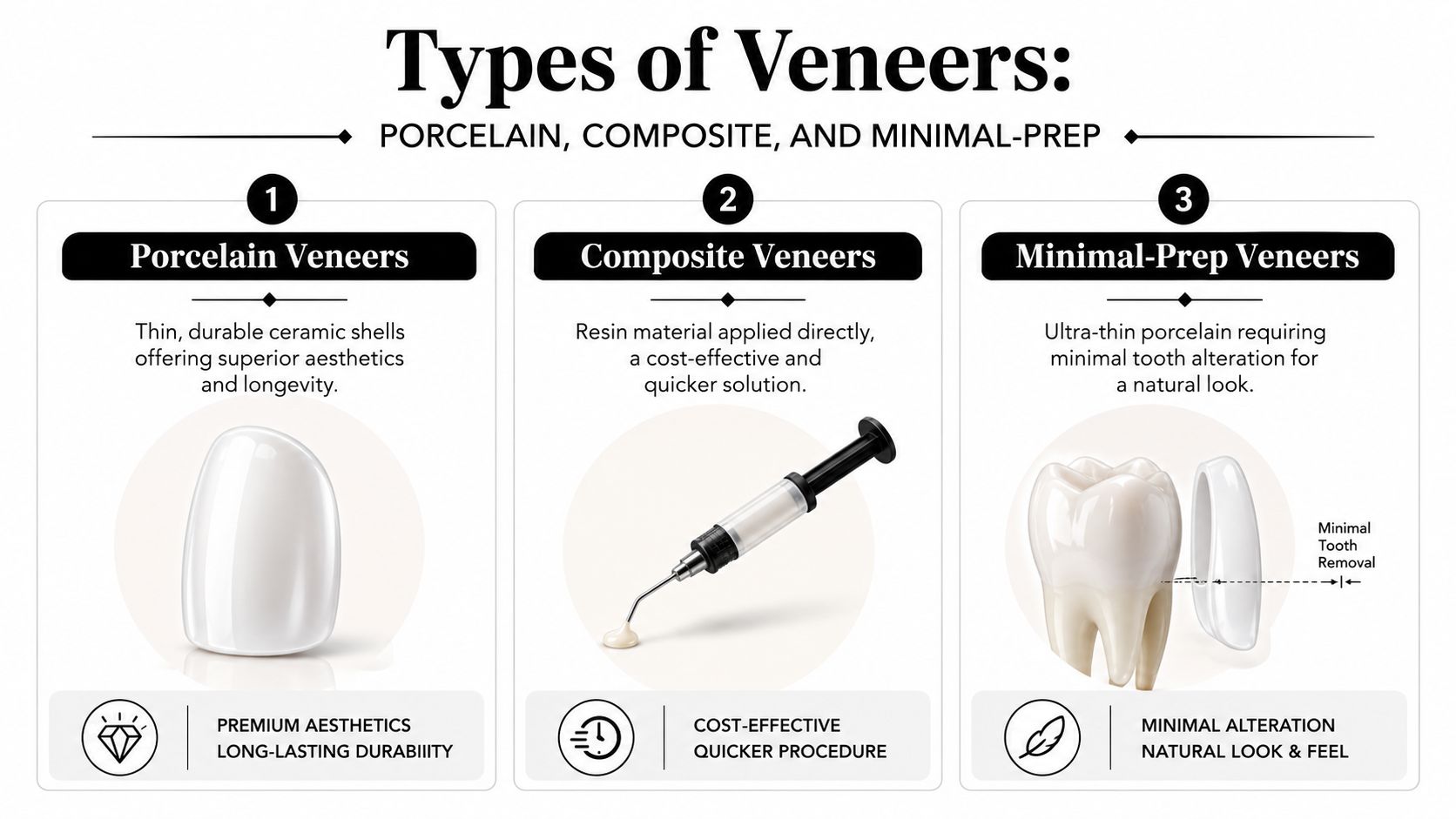
Porcelain veneers
Porcelain veneers are lab-made ceramic shells bonded to the front of the teeth. They are usually the option patients choose when they want the most refined color, light reflection, and long-term stain resistance. If you want to compare how this material is used in real cosmetic cases, our page on porcelain veneers for smile correction in Miami shows where porcelain fits best.
Porcelain often works well for patients who want a larger cosmetic change, such as reshaping several front teeth at once or blending color and contour into a more uniform smile. The trade-off is that porcelain is a bigger upfront investment, and it usually involves more planning and lab work than composite.
From a patient comfort standpoint, porcelain also tends to feel reassuring because the process is highly customized. At Ultra Smile DentalSpa, that matters. Patients are not just asking how veneers look. They also want to know how decisions are made, how temporaries feel, and whether the final smile will look natural in Miami sunlight, office lighting, and close conversation.
Composite veneers
Composite veneers are made from tooth-colored resin that is shaped directly on the tooth or created in a more limited lab process. They usually cost less upfront than porcelain, which makes them appealing for patients who want visible cosmetic improvement without starting with the highest initial fee.
The trade-off is maintenance over time.
Composite can chip, stain, and lose surface gloss faster than porcelain, so the lower starting price does not always mean the lower lifetime cost. A patient who needs repairs, polishing, or earlier replacement may spend more over the years than expected. That long-view conversation matters, especially for anyone comparing veneer options in Miami by price alone.
Composite is often a good fit for smaller corrections, short-term cosmetic goals, or cases where a patient wants to improve a few details first and consider porcelain later.
Minimal-prep veneers
Minimal-prep veneers use very thin ceramic and are designed for cases where little to no enamel reduction may be needed. The basic idea is conservative treatment. Keep as much healthy tooth structure as possible, then add a carefully designed front surface only where it improves the smile.
Patients usually understand this option best when they hear what it feels like in practical terms. In the right case, the process can feel lighter and less invasive because there may be less drilling and less alteration of the natural tooth. That does not make it a shortcut. It only means the case selection has to be more precise.
Minimal-prep veneers are case-dependent. Bite position, enamel quality, tooth shape, and the amount of color or contour change needed all affect whether this approach will work well.
A patient with very dark staining, bulky teeth, or a bite that places heavy pressure on the front teeth may not be a strong candidate for minimal-prep treatment. Someone with healthy enamel, smaller teeth, or mild shape concerns may be.
How to compare the three
A simple way to sort the options is to ask three questions.
How important is maximum polish and stain resistance? How much tooth preservation matters to you? Are you comparing only the starting fee, or are you also looking at the likely cost of maintenance and replacement over time?
Porcelain often leads on longevity and surface quality. Composite lowers the entry cost but may need more upkeep. Minimal-prep appeals to patients who want the most conservative approach possible, but only when the teeth and bite allow it.
The right veneer is not the fanciest one. It is the one that matches your smile goals, your bite, and the experience you want from treatment. In a DentalSpa setting, that conversation should feel clear and unhurried, not like a sales pitch or a rushed cosmetic recommendation.
The Veneer Treatment Process at Our Miami DentalSpa
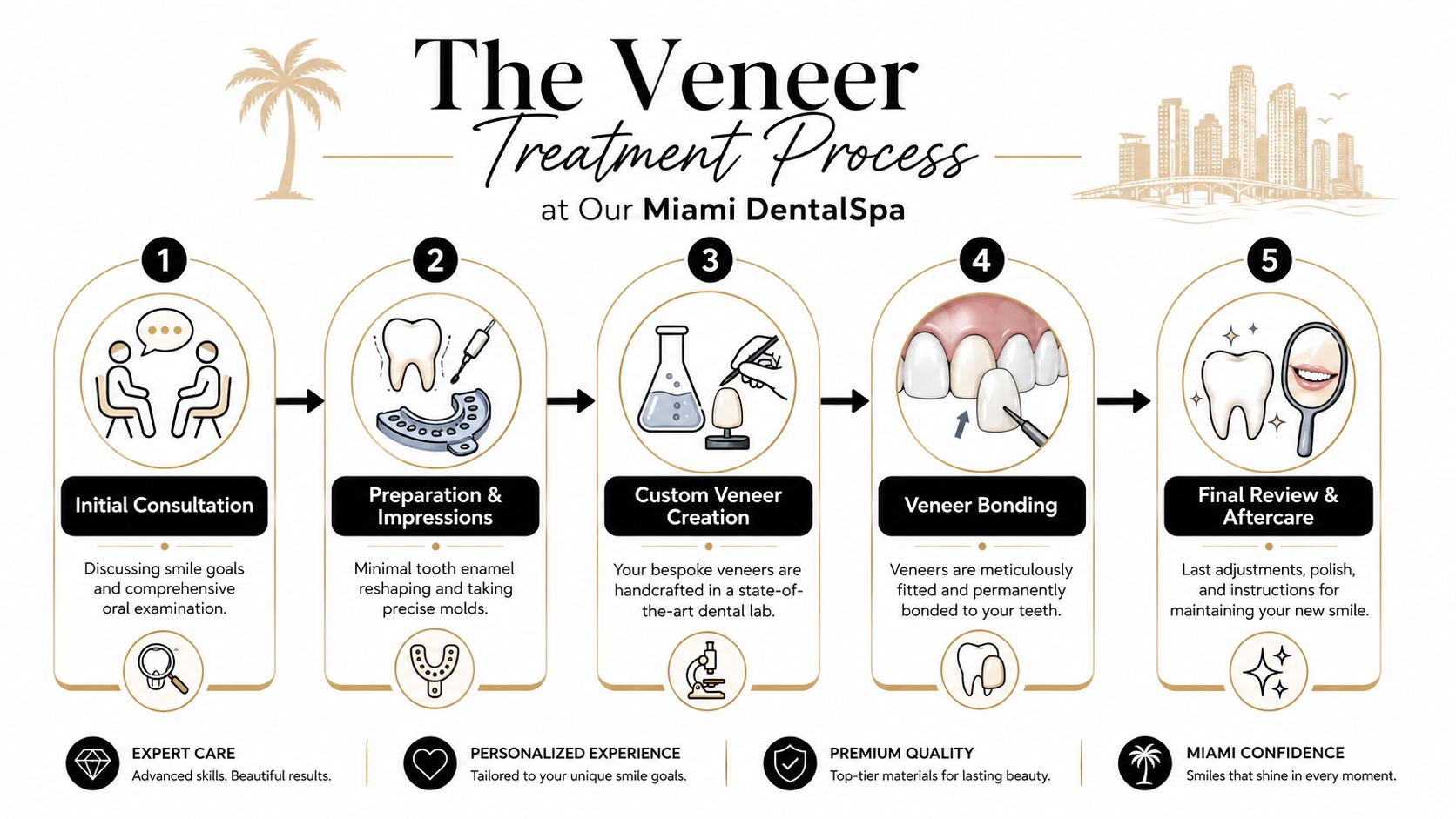
Most patients feel less anxious once the veneer process is broken into clear steps. The experience isn't a single mysterious appointment. It's a planned sequence with decisions made along the way.
A visual overview helps before getting into the details.
The first visit and smile planning
The process starts with a consultation. At that appointment, the dentist evaluates teeth, gums, bite, and smile goals. While veneers are cosmetic, they still must function well when a patient talks, chews, and smiles naturally.
For minimal-prep veneers, one Miami clinical guide notes that treatment typically takes 2 to 3 visits over a 3 to 4 week period and may include digital smile design imaging, lab fabrication, and final bonding, as described in this minimal-prep veneer workflow summary.
Comfort also matters during this planning phase. At a DentalSpa setting, many patients want more than technical precision. They want the visit to feel calm. That can include refreshments at arrival, custom aromatherapy, and a quieter pace during discussions so decisions don't feel rushed.
Later in the visit, photos, impressions, or digital records may be taken. Those records guide shape, size, and shade choices.
Preparation lab work and final bonding
The next phase depends on the veneer type. Some patients need little to no enamel adjustment. Others need more traditional preparation so the final veneers sit naturally and don't look bulky.
During preparation appointments, comfort features can make a real difference for anxious patients. Streaming entertainment helps pass time during longer visits, and a soothing hot towel finish can make the appointment feel more like a reset than a procedure.
This short video gives added context on the treatment journey.
Once the veneers return from the lab, the dentist checks fit, edges, color, and bite before bonding them in place. Small adjustments may be made so the smile looks balanced and feels comfortable.
A good veneer result should look intentional but not obvious. The goal isn't “perfectly white at any cost. The goal is a smile that fits the face.
After bonding, patients receive care instructions and follow-up guidance. That's also the point where many people realize the process felt more manageable than they expected, especially when the environment supports comfort instead of adding stress.
A Guide to Veneers Cost in Miami FL for 2026
A patient may walk into a Miami cosmetic consult expecting one simple price, then hear a range that feels surprisingly wide. That happens because veneers are priced more like a custom suit than an off-the-shelf item. The final fee reflects the material, the number of teeth being improved, the design work behind the smile, and the level of planning needed to make the result look natural in motion, not just in photos.
Porcelain veneers in Miami often cost more than composite veneers. Porcelain usually involves more detailed lab fabrication, shade layering, and finishing, while composite is shaped more directly and often with fewer lab steps. The difference is not only what the veneer is made of. It is also how it is designed, built, and expected to hold up over time.
The number of veneers matters too. Many smile makeover patients treat only the teeth that show when they speak or smile, not every tooth in the mouth. A quote for four veneers can feel very different from a quote for eight, even if the per-tooth fee stays similar.
Case complexity changes the fee in quieter ways that patients do not always see at first. Matching one veneer to neighboring teeth, correcting visible asymmetry, refining edges so speech feels natural, or adjusting bite details can add planning time. In a practice like Ultra Smile DentalSpa, the experience side also matters to some patients. Extended consultations, digital smile planning, comfort amenities, and a calmer setting may not change the clinical goal, but they do change how the process feels from the chair.
What usually affects the price
A veneer proposal often includes several layers of work:
- Material used: Porcelain usually costs more than composite.
- How many teeth are treated: Front smile zone cases are common, but the exact count varies by face shape and smile width.
- Design and customization: Shade selection, symmetry correction, and bite refinement all take time.
- Lab quality and dentist experience: Highly customized esthetic work often involves more detailed planning and finishing.
- Comfort and workflow: The overall experience can differ between a high-volume office and a more comfort-focused cosmetic setting.
Insurance usually provides little or no help because veneers are often considered cosmetic. For that reason, many patients compare monthly payment options as carefully as they compare the total fee. Financing can make treatment easier to budget, but it still helps to understand the full amount first, then decide whether the monthly payment fits comfortably.
The lifetime cost patients often miss
The first fee is only the starting point.
Porcelain veneers often last many years, but they do not last forever. If enamel was reduced to place them, future replacement is part of the long-term plan. That is the part many short pricing guides skip. A smile that feels affordable at the start can cost much more over one or two decades if replacement, repairs, or maintenance are needed.
A simple way to think about it is to compare veneers with a kitchen renovation. The upfront investment covers the visible transformation. Years later, upkeep and replacement can become part of ownership. That does not make the original decision a mistake. It means the smart question is broader than, “What do veneers cost today?
A better question is this: what is the initial cost, what maintenance is likely later, and how much value does the cosmetic change bring to daily life, confidence, and function. Patients who ask all three usually feel more comfortable with their decision because there are fewer surprises.
For a closer look at Miami veneers cost, payment options, and what can change your final quote, it helps to review a detailed local breakdown before booking.
Veneers vs Bonding Crowns and Teeth Whitening
Veneers aren't the only cosmetic option. They sit in the middle of a larger menu of treatments that includes bonding, crowns, and whitening. Choosing correctly depends on the problem being solved.
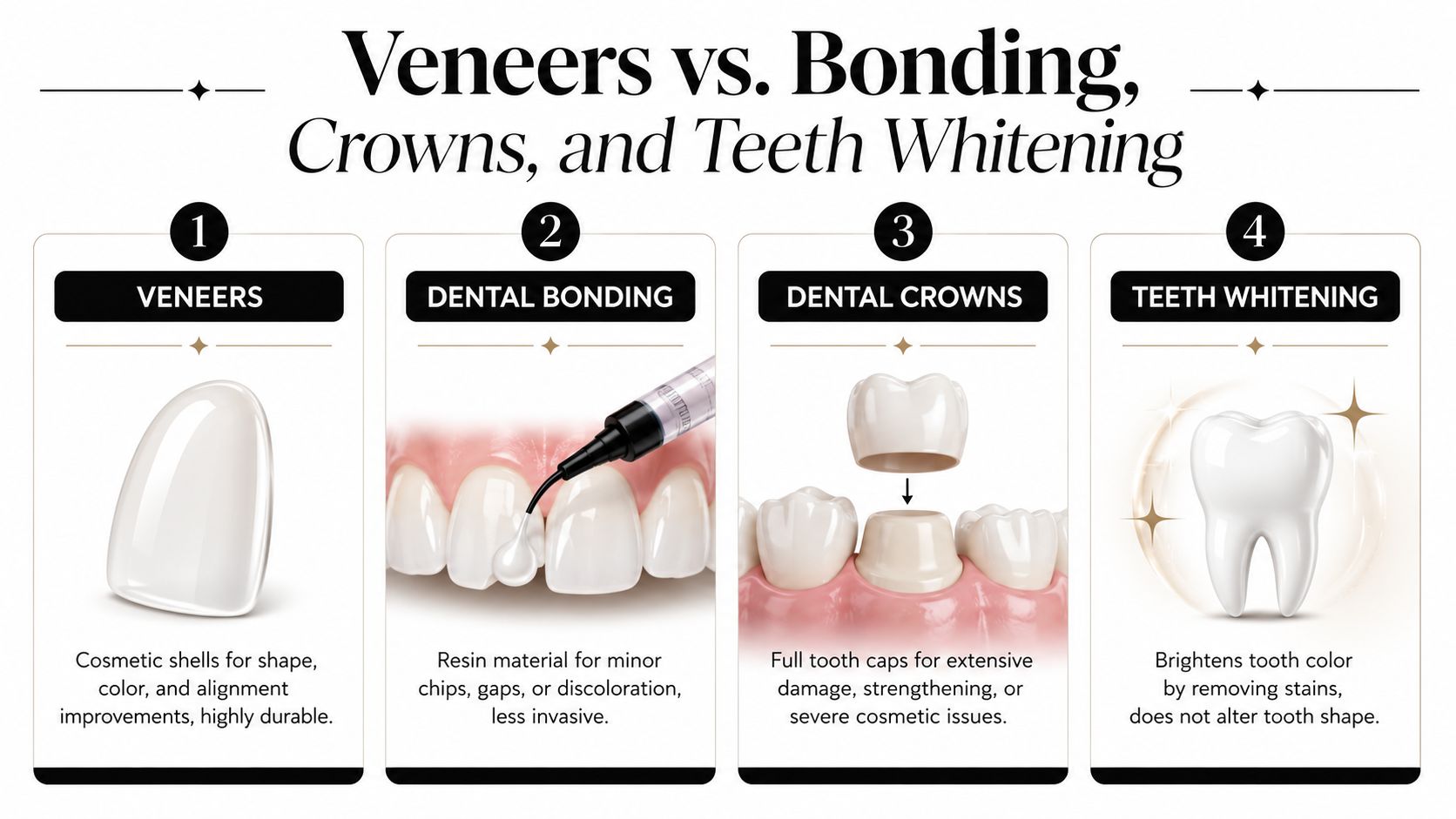
Cosmetic Treatment Comparison
| Treatment | Best For | Average Lifespan | Average Cost (per tooth) |
|---|---|---|---|
| Veneers | Stains, chips, gaps, uneven shape, mild cosmetic alignment concerns | Porcelain typically 10 to 15 years | Porcelain in Miami typically $900 to $2,500 per tooth according to this Miami veneer cost reference |
| Dental Bonding | Minor chips, small gaps, limited reshaping | Varies by case | Often treated as a lower-commitment cosmetic option |
| Crowns | Teeth with more extensive damage or structural weakness | Varies by case | Depends on material and treatment needs |
| Teeth Whitening | Color improvement only | Varies by stain habits and maintenance | Depends on system and number of sessions |
How to think about the right choice
Choose veneers when the goal is a broader front-tooth transformation. Veneers can improve color, shape, and visible balance at the same time.
Choose bonding when the fix is small. A tiny chip on one edge or a narrow gap may not require the commitment of veneers.
Choose crowns when the tooth needs strength as much as beauty. A crown covers the entire tooth, so it's more restorative than cosmetic.
Choose whitening when shape isn't the problem. Whitening brightens existing enamel but won't change tooth length, close spaces, or mask chips.
A patient searching for a dentist near me may not know which category fits. That's normal. The useful question isn't “Which treatment is better? It's “Which treatment matches the actual problem.
If the issue is only shade, whitening may be enough. If the issue is shape plus color plus symmetry, veneers usually make more sense.
For some adults, invisible braces or Invisalign may also come before cosmetic finishing if alignment is the main concern. For others, restorative work comes first. A practice that also handles dental implants near me, tooth extraction, routine dental x-rays, new patient exams, and emergency dentist needs can evaluate the whole mouth instead of looking at the smile in isolation.
Candidacy Risks and How to Care for Your Veneers
Veneers work best when the cosmetic plan starts with healthy teeth and realistic expectations. Not everyone is an ideal candidate on day one, and that's not a bad thing. Sometimes a patient needs gum care, bite protection, or a different treatment first.
Who may be a good candidate
A veneer consultation often goes more smoothly when these boxes are checked:
- Healthy gums: Veneers sit at the visible front of the teeth, so inflamed gums can affect both appearance and comfort.
- Enough enamel: Traditional veneer bonding depends on enamel quality.
- Stable bite habits: People who clench or grind may need a night guard to protect the final result.
- Cosmetic goals that fit the treatment: Veneers are strong for shape and color improvement, but they won't replace orthodontics in every case.
- Commitment to maintenance: Daily brushing, flossing, and regular dental care still matter after cosmetic treatment.
In Miami, most patients who want a fuller smile makeover don't place veneers on every tooth. One local source notes that 6 to 8 veneers are often used to transform the visible front smile, with total porcelain veneer costs of $5,400 to $15,000 for that front set, based on this Miami smile makeover cost guide. That can help patients picture what “a complete look often means in practice.
Risks and long-term care
The main risk patients should understand is permanence with traditional prep veneers. If enamel is removed, the tooth usually remains dependent on a restoration going forward. Some patients also notice temporary sensitivity after preparation or bonding.
Composite and minimal-prep options may reduce how aggressive the process is in selected cases, but candidacy still has to be evaluated carefully. A conservative option isn't the same as a universal option.
A simple aftercare routine goes a long way:
- Brush gently but consistently: Veneers still depend on healthy surrounding teeth and gums.
- Floss every day: Decay can still form around margins if hygiene slips.
- Avoid biting hard objects: Ice, pens, and hard candies can damage natural teeth and restorations.
- Use a night guard if recommended: This matters for patients who grind during sleep.
- Keep recall visits: Cleanings and exams help catch bite changes, edge wear, or bonding issues early.
Veneers don't get cavities, but the teeth holding them can. Cosmetic work still depends on basic oral health.
Patients who want cosmetic improvement should also remember that veneer treatment isn't separate from the rest of dentistry. If pain, infection, or structural damage is present, treatment may need to begin with restorative care, emergency dentist evaluation, or even procedures such as root canals, crowns, or extraction before cosmetic finishing is considered.
Your Comfort-Focused Cosmetic Dentist in Miami
A lot of adults hesitate at the last step. They can picture the smile they want, but the appointment itself feels like the hard part. The sounds, the time in the chair, the worry about being rushed, and the fear of not knowing what will happen next often matter just as much as the veneers.
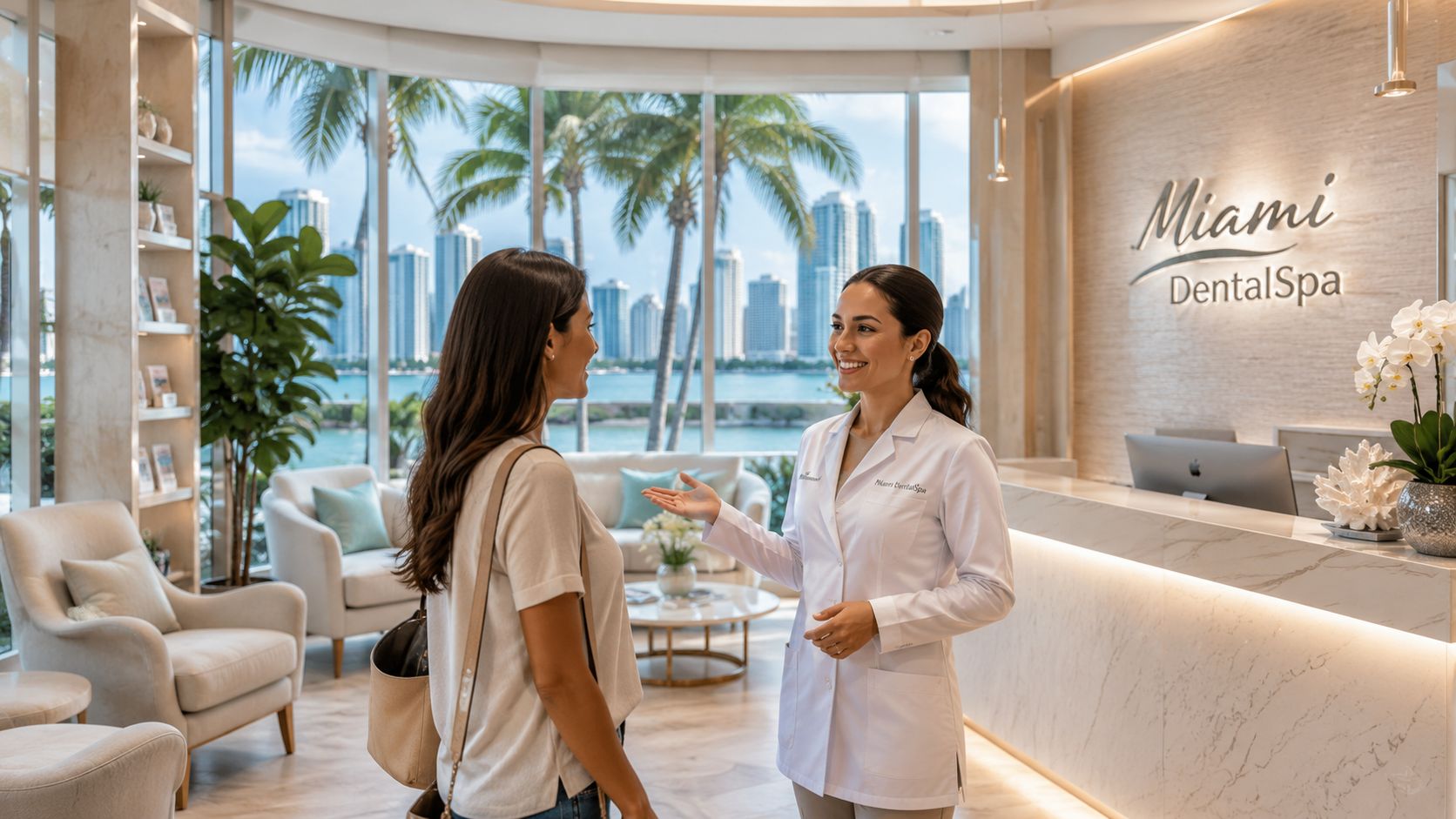
A setting designed for anxious busy patients
Ultra Smile DentalSpa was built for patients who want cosmetic dentistry to feel calm, organized, and respectful of their time. Dr. Neda Bahmadi combines precise smile planning with details that change what the visit feels like in real life. Patients are welcomed with refreshments, can choose custom aromatherapy, and can watch streaming entertainment during treatment. The appointment ends with a hot towel, which is a small touch that often helps the whole experience feel less clinical.
That comfort matters because veneer visits are not only technical. They are personal. You are sitting still, making appearance decisions, and trusting someone with your front teeth. A quieter setting and a team that explains each step can lower the tension many patients bring into the room.
Patients in Downtown Miami, Midtown Miami, and Hallandale Beach often ask for two things at once. They want beautiful work, and they want the process to feel manageable on a weekday.
Care that goes beyond veneers
A veneer consultation is stronger when the dentist can evaluate the full picture of your oral health, bite, and smile goals in one place. Ultra Smile DentalSpa offers cleanings and exams, fillings, crowns and bridges, same-day crowns, whitening, Invisalign, implants and bone grafts, root canals, wisdom teeth extraction, and other restorative treatment. That range matters because the best cosmetic plan is sometimes a sequence, not a single procedure.
For example, a patient may come in asking for veneers after chipping a front tooth. During the exam, the primary question may be whether the tooth needs bonding, a crown, bite adjustment, or veneer treatment after the area is stabilized. Another patient may want a brighter smile but get a better result by whitening first and placing fewer veneers. Good cosmetic dentistry works like tailoring. The final result looks better when the plan fits the person instead of forcing every patient into the same solution.
Dr. Bahmadi's continuing education, association memberships, bilingual team, and clear treatment planning help patients feel informed instead of pressured. That is a meaningful part of comfort too. Comfort is not only a softer environment. It is also knowing the fee, understanding the steps, and hearing honest guidance about what you need now, what can wait, and what your smile may cost over time.
For someone searching dentist in Miami, FL, cosmetic dentist near me, or emergency dentist after a sudden change to a front tooth, that combination matters. Patients usually feel more at ease when skill, communication, and atmosphere all support the same goal.
Frequently Asked Questions About Miami Veneers
Can a patient get just one veneer
Yes, sometimes one veneer is the right solution.
A single veneer works best when one tooth is damaged or misshapen and the neighboring teeth give us a clear model for color and shape. The hard part is not placing the veneer. The hard part is making it disappear into the smile. Front teeth reflect light in subtle ways, so we pay close attention to shade, translucency, surface texture, and the way the tooth lines up with the lip when you speak and smile.
That is why single-tooth cases often need more design work than patients expect.
Will veneers look bulky or fake
Well-made veneers should look like healthy natural teeth, not like caps sitting on top of them. Bulky results usually happen when the veneer is too thick, too opaque, or shaped without enough attention to the patient's facial features and bite.
A good comparison is tailoring a jacket. The material matters, but the fit matters just as much. In veneer treatment, fit means the proportions of each tooth, how the edges follow the smile line, and how the restorations look in both bright Miami sunlight and indoor lighting.
Patients often ask whether thinner veneers can help them avoid a heavy look. In the right case, they can. Minimal-prep veneers may preserve more enamel and create a lighter final appearance, but they are not right for every smile. The decision depends on enamel quality, tooth position, bite pressure, and the result you want.
Do veneers require a special diet
Veneers do not usually require a long-term special diet. Right after placement, softer foods can make the first day or two more comfortable while you get used to the feel of the new surfaces.
After that, daily eating is usually very normal. The main rule is simple. Do not use veneered teeth like tools. Biting ice, cracking hard candy, opening packages, or chewing on pens puts unnecessary stress on the edges.
Porcelain veneers tend to last longer than composite veneers, while composite usually needs more touch-ups over time, as noted earlier. How long they hold up depends on home care, bite habits, whether you grind your teeth, and how regularly you come in for maintenance.
That long view matters. The true cost of veneers is not only the day they are placed. It also includes polishing, night guards if needed, possible repairs, and replacement years later. Patients at Ultra Smile DentalSpa often feel more comfortable once they understand that full timeline, because knowing what to expect makes the decision easier.
Veneers also do not replace routine dental visits. Cleanings, exams, and early checks if something feels rough, loose, or different help protect both the veneers and the teeth underneath.
Patients considering a smile upgrade can schedule a personalized consultation with Ultra Smile DentalSpa to discuss veneer options, cosmetic goals, comfort preferences, and the full treatment plan in Miami, FL.