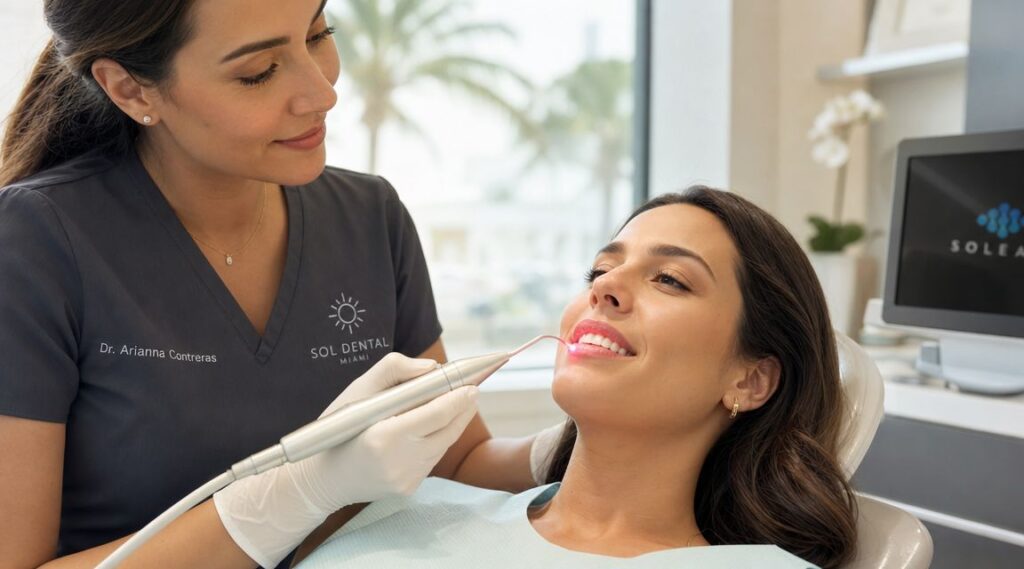
Bleeding gums often start as a small annoyance. A person brushes before work in Downtown Miami, rinses, and sees pink in the sink again. Then flossing feels tender. Then the gums look a little puffy in photos, or the mouth never feels fully clean. That pattern is common, and it often points to gingivitis, the earliest stage of gum disease.
Many patients searching for a dentist near me or a dentist in Miami, FL want something very specific. They want treatment that feels gentle, looks modern, and still stays grounded in real evidence. Laser therapy for gingivitis can fit that need for some patients, but it helps to understand where it shines, where standard cleaning still matters most, and what a comfortable dental visit can look like in Miami.
Table of Contents
- Your Trusted Dentist for Gentle Gum Care in Miami FL
- Understanding Gingivitis and Its Impact on Your Health
- How Laser Therapy Gently Restores Gum Health
- The Patient-Focused Benefits of Laser Gum Treatment
- Laser Therapy Compared to Traditional Gum Treatments
- What to Expect at Your Laser Dentistry Appointment in Miami
- Common Questions About Laser Therapy for Gingivitis
Your Trusted Dentist for Gentle Gum Care in Miami FL
A typical Miami patient doesn't usually book a gum appointment because of severe pain. More often, the trigger is a series of small signs that keep showing up. Gums bleed during brushing. Breath stays off even after mouthwash. The gums feel irritated near the front teeth before a meeting, a date, or a weekend out in Midtown.
That's why gentle gum care matters. Those looking for a dentist near me often want more than a cleaning. They want clarity, less anxiety, and a treatment plan that makes sense for their actual symptoms.
For patients in Downtown Miami, Midtown, and Hallandale Beach, comfort is often part of the decision. A modern dental setting can make early gum treatment feel less intimidating and more manageable. A thoughtful visit may include a clear exam, digital imaging when needed, and a conversation about whether the answer is a routine cleaning, a deeper periodontal approach, or an adjunctive treatment such as laser therapy.
Practical rule: If gums bleed more than once in a while, the smartest next step isn't guessing at home remedies. It's getting a professional exam to find out whether the issue is simple gingivitis or something deeper.
Patients who are also thinking about cosmetic dentistry, teeth whitening, or restorative work often benefit from taking care of the gums first. Healthy gum tissue creates a more stable foundation for a cleaner smile and more comfortable long-term care. The same applies to people comparing options for dental care, cleaning and exams, new patient exams, or even larger treatments such as dental implants near me.
A broad overview of common treatments, from preventive care to restorative and cosmetic services, appears on this Miami dental procedures list. For many patients, that first visit answers the biggest question right away. Is this just irritated gum tissue, or is it time for a more focused plan?
Understanding Gingivitis and Its Impact on Your Health
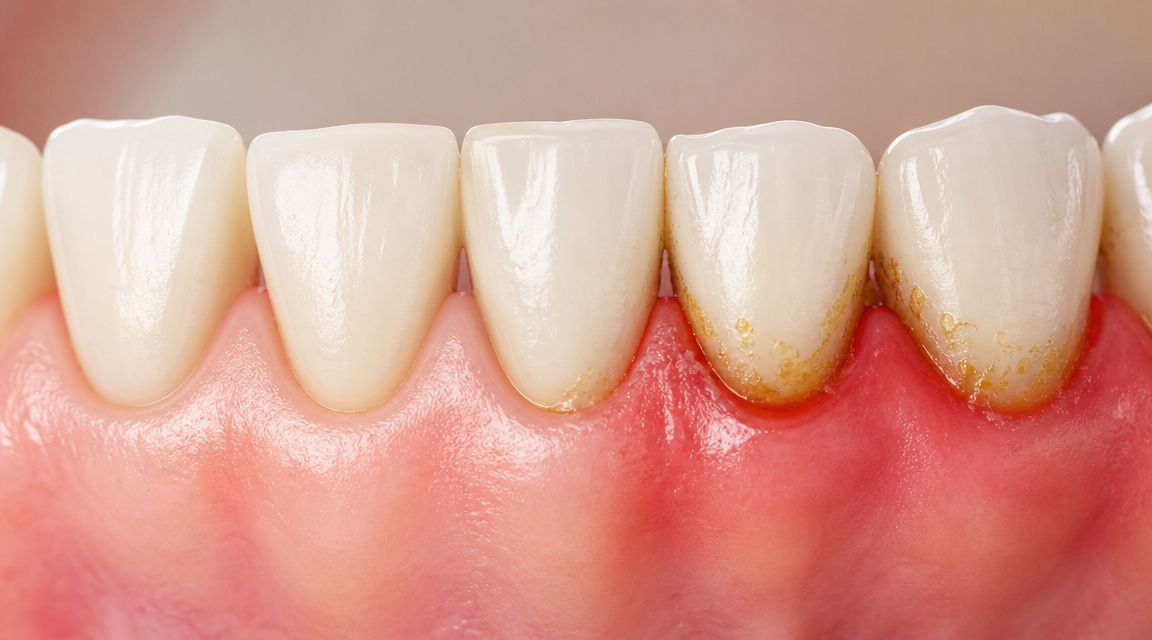
Gingivitis is inflammation of the gums caused by plaque buildup around the gumline. Plaque is a sticky film of bacteria that collects on teeth every day. If it isn't removed well enough at home and during regular professional visits, the gums react by becoming red, swollen, and easier to bleed.
What gingivitis actually is
Many people assume bleeding means they brushed too hard. Sometimes brushing technique plays a role, but frequent bleeding is often a sign that the gums are inflamed, not that they need to be ignored. Inflamed gums can look shiny, feel tender, and pull attention to themselves during brushing and flossing.
A simple way to picture gingivitis is this. The gumline is like the edge where a countertop meets a wall. If debris keeps collecting in that seam, wiping only the middle of the counter won't solve the problem. The edge needs focused cleaning too.
Common signs include:
- Bleeding during brushing or flossing that happens repeatedly
- Swollen or puffy gums instead of firm, pink tissue
- Redness along the gumline especially near crowded teeth
- Bad breath that lingers even after brushing
- Tenderness when floss passes between certain teeth
Why early care matters
Gingivitis is the earliest stage of gum disease, and that matters because early-stage problems are usually easier to manage. Left alone, the inflammation can progress deeper into the structures that support the teeth. At that point, the concern shifts away from surface irritation and toward more serious periodontal disease.
That doesn't mean every patient with bleeding gums is headed for tooth loss. It means early professional care gives the best chance to calm the gums before the problem becomes more complicated.
Healthy gums shouldn't bleed every time a toothbrush or floss touches them.
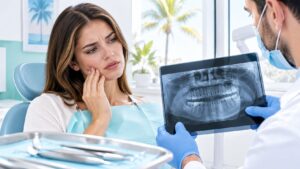
Professional care usually starts with the basics. A dental exam, dental x-rays when appropriate, and a cleaning help identify whether the issue is mild gingivitis or whether deeper pockets and more advanced treatment need attention. For many people in Miami, this step also ties into broader oral health goals such as cleaner breath, less sensitivity, and a smile that looks healthier overall.
How Laser Therapy Gently Restores Gum Health
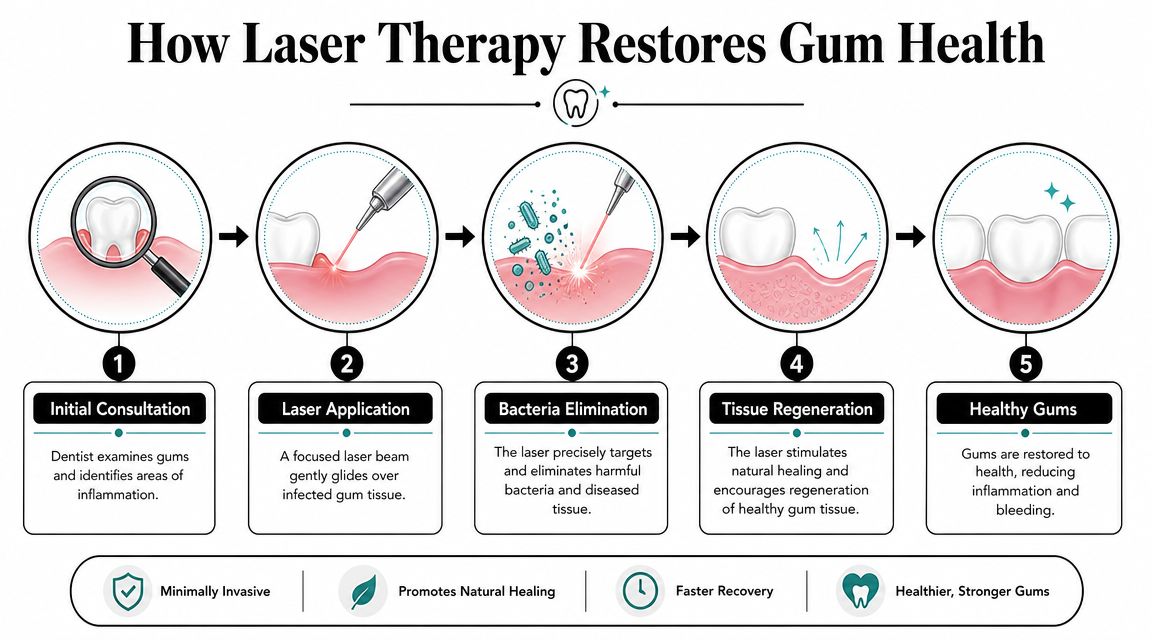
Laser therapy can sound more dramatic than it is. In gum care, the laser is a precise tool used to help reduce harmful bacteria and support healing in inflamed tissue. It isn't a magic light that replaces cleaning. It's better understood as a focused add-on that can help the dentist treat certain gum conditions with a high level of precision.
How the laser targets the problem
A useful comparison is this. Traditional debridement is like carefully scrubbing buildup away from a surface. A dental laser is more like a highly targeted pressure stream that reaches specific inflamed areas and bacterial pockets without treating everything around them the same way.
Research reviews describe the effectiveness of laser therapy for gingivitis and periodontal inflammation as a dual mechanism. Nd:YAG and diode lasers show substantial bactericidal effects in periodontal pockets, and they also support tissue-level biostimulation when used alongside conventional debridement, helping reduce probing pocket depth, improve clinical attachment level, and lower bleeding on probing, according to this periodontal laser review in PMC.
That dual action is the part many patients find easiest to understand once it's translated into plain language:
- The bacteria are targeted. The laser helps reduce the microbial load in inflamed gum areas.
- The tissue is stimulated. The treated area may respond with improved healing behavior.
- The gums can calm down. Less inflammation often means less swelling and less bleeding.
Why patients hear the word biostimulation
Biostimulation sounds technical, but the idea is simple. Certain laser settings don't just interact with bacteria. They also interact with tissue in a way that supports the body's healing response. Patients usually notice the result, not the terminology. The gums may feel less irritated, look less inflamed, and respond better after professional treatment.
A key historical point also helps set expectations. A major turning point came in the 1990s with the development of LANAP, which helped move lasers from an experimental idea into a structured periodontal treatment protocol. Professional reviews still describe laser periodontal therapy as an adjunct to scaling and root planing rather than a replacement, and the American Academy of Periodontology has taken a cautious view of the evidence in that role, as described in its best-evidence consensus summary on lasers.
That's the balanced view patients deserve. Laser therapy for gingivitis can be helpful. It can be gentle. It can support healing. But the foundation of gum treatment is still professional cleaning and good plaque control at home.
The Patient-Focused Benefits of Laser Gum Treatment
For most patients, the biggest question isn't how the technology works. It's whether the visit will feel easier, gentler, and more comfortable than they fear. That's where laser gum treatment often becomes appealing.
Why comfort matters in gum treatment
Patients who feel nervous about dental care often delay treatment until inflammation gets worse. A more conservative, precise approach can lower that barrier. In practical terms, many people are looking for care that feels manageable enough to book now, not months from now.
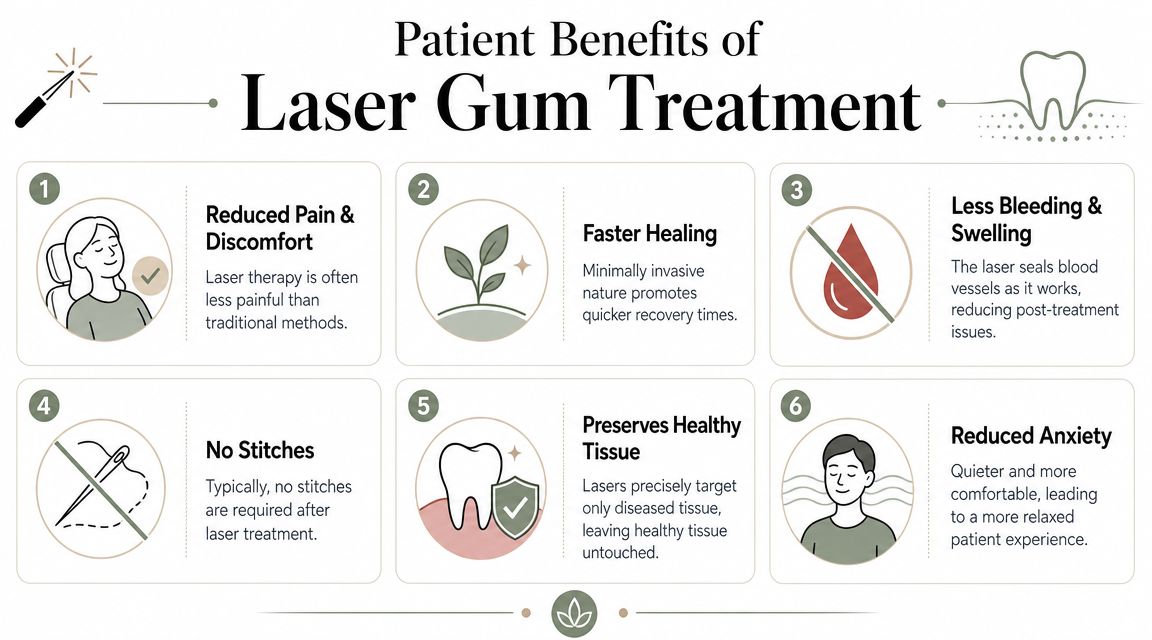
Benefits patients often care about include:
- A gentler experience because laser treatment is designed to work with precision in specific inflamed areas
- Less visible irritation afterward since the treated tissue may not feel as roughed up as patients expect from traditional gum procedures
- A cleaner-feeling mouth when bacterial buildup around the gumline has been reduced
- Support for healing because the laser approach is tied to both bacterial reduction and tissue response
- More confidence during treatment for people who dislike the idea of more invasive gum procedures
Clinical evidence also supports a narrower, more honest benefit. One evidence review found that diode lasers didn't dramatically change pocket depth, but they did offer a small but statistically significant advantage for reducing bleeding on probing and gingival inflammation, which are the primary signs of gingivitis, as summarized in this 2024 PMC review of laser-assisted periodontal therapy.
For patients with gingivitis, reduced bleeding and calmer gum tissue are often the outcomes that matter most in daily life.
Where healthy gums support other dental goals
Gum health doesn't exist in isolation. Patients searching for a cosmetic dentist near me often focus on veneers, whitening, or smile makeovers, but inflamed gums can get in the way of those plans. Healthy gums frame the teeth better and create a stronger foundation for cosmetic work.
The same idea applies to restorative care. Whether someone needs crowns, fillings, or is exploring tooth extraction or implant planning, stable gums make treatment more predictable and easier to maintain. Even patients looking for an emergency dentist sometimes arrive with swelling or bleeding that started as ignored gum inflammation.
Laser treatment won't be the answer for every case. But for the right patient, it can make gum care feel more aligned with comfort, appearance, and long-term oral health.
Laser Therapy Compared to Traditional Gum Treatments
A good comparison starts with the job each treatment is meant to do. If your gums are inflamed, the first question is not which option sounds newer. It is which option removes the cause of the inflammation and which option may add comfort or support along the way.
Why deep cleaning is still the foundation
Scaling and root planing, often called a deep cleaning, removes plaque, tartar, and bacteria from the tooth surface and just below the gumline. That matters because irritated gums do not heal well if those deposits stay in place. Laser therapy cannot scrape away hardened buildup from the roots the way instruments can.
That is the part many patients in Miami find confusing. A laser can help calm tissue and reduce bacteria in selected cases, but it does not replace the careful mechanical cleaning that treats the source of the problem. A simple way to picture it is this: if debris is stuck to a floor, you still need to clean the floor before you worry about freshening the room.
Where laser therapy can add value
Laser therapy is often best viewed as an add-on, not a substitute. A dentist may recommend it when the gums are very inflamed, when a patient is anxious about comfort, or when the goal is to support healing after the deeper cleaning has been done.
Earlier in this article, the research showed a modest benefit for bleeding and gum inflammation in some patients. That is useful, especially for people whose main complaint is tender, puffy gums that bleed easily. It is still a narrower benefit than some advertising suggests.
Laser Therapy vs. Scaling & Root Planing
| Feature | Laser Therapy | Traditional Scaling & Root Planing |
|---|---|---|
| Primary role | Supportive treatment in selected cases | Main treatment for removing plaque and tartar below the gumline |
| What it does best | Helps reduce bacteria and soothe inflamed tissue | Cleans root surfaces where buildup is causing irritation |
| Best fit | Patients who may benefit from added comfort or tissue support | Patients who need the cause of gum inflammation physically removed |
| Effect on gingivitis symptoms | May help reduce bleeding and tenderness | Treats the buildup that triggers bleeding, swelling, and irritation |
| Used alone? | Usually no | Sometimes enough on its own for gingivitis, depending on severity |
| Patient experience | Often feels modern and gentle | Familiar, proven, and still central to gum care |
For many patients, the most reassuring answer is also the most honest one. Traditional treatment remains the starting point because it removes what should not be there. Laser therapy may improve the experience and support healing in the right case.
If you are not sure what a deep cleaning involves, this guide to the process during a dental cleaning can make the appointment feel more predictable and less intimidating.
In a practice that focuses on comfort, the goal is not to push technology for its own sake. The goal is to choose the combination of care that gives you healthier gums with as little stress as possible.
What to Expect at Your Laser Dentistry Appointment in Miami
Many patients worry most about the unknown. They don't know what the room will feel like, whether the visit will be rushed, or if they'll be embarrassed about how long they waited. A well-run appointment should make none of those worries worse.

The first visit experience
A patient seeking help for bleeding gums in Miami will usually start with a consultation, exam, and a conversation about symptoms. The team may ask when the bleeding started, whether flossing has become uncomfortable, and whether there's been swelling, bad breath, or tenderness around certain teeth.
At a modern practice setting, that first visit may also feel more calming than expected. Refreshments, a quieter atmosphere, aromatherapy, and a more personalized pace can make a big difference for someone with dental anxiety. For busy professionals in Downtown Miami, Midtown, and Hallandale Beach, that calmer experience often matters as much as the technology itself.
The clinical side still stays thorough. Dr. Neda Bahmadi and the team may use dental x-rays or periodontal measurements when needed to see whether the problem is limited to gingivitis or extends deeper. From there, the recommendation might be a routine cleaning, scaling and root planing, laser-assisted care, or another form of treatment based on what the gums need.
A closer look at the atmosphere some patients appreciate appears below.
What the procedure day feels like
When laser therapy is appropriate, patients often describe the procedure as more comfortable than they expected. The dentist focuses the laser on the selected gum areas, and the goal is precision rather than aggressive tissue removal. The visit may also include standard periodontal cleaning steps, because laser care and mechanical cleaning often work together.
A comfortable appointment often includes small details that help patients stay at ease:
- Clear explanations before starting so there are no surprises
- Bilingual communication when patients prefer care discussions in English or Spanish
- Streaming entertainment during treatment to reduce stress and keep attention off the procedure
- A soothing finish such as a warm towel that helps the visit end on a calmer note
A good consultation helps answer whether a patient is a strong candidate for laser therapy for gingivitis, or whether a standard cleaning and home-care reset may be the better first step.
Common Questions About Laser Therapy for Gingivitis
A lot of patients in Miami ask the same practical question first. If my gums are bleeding and tender, is a laser the gentlest way to calm them down, or do I still need a cleaning?
Is laser therapy for gingivitis painful?
Laser gum treatment is often comfortable, especially when the gums are inflamed and sensitive to traditional instruments. The laser targets specific areas with precision, which can mean less irritation for some patients.
Comfort still depends on what is happening under the gumline. Mild gingivitis, heavier plaque buildup, and deeper periodontal problems do not all feel the same or call for the same treatment. During an exam, your dentist looks at the gums the way a doctor checks whether a skin rash is only on the surface or tied to something deeper. That helps determine whether laser therapy is a helpful add-on for comfort and healing.
Is laser therapy better than a deep cleaning?
Laser therapy and deep cleaning do different jobs. A deep cleaning removes plaque, tartar, and bacteria from the tooth surfaces and root areas. Laser therapy may help reduce inflamed tissue and support healing in selected cases.
That is why a balanced answer matters. For gingivitis, laser treatment is often best viewed as an adjunct, not a substitute. As noted earlier, research on laser use in gum care suggests benefits can be case-specific and may be more noticeable for short-term inflammation control than as a stand-alone fix. If plaque and tartar remain in place, the gums usually stay irritated no matter how advanced the technology sounds.
Who might be a good candidate?
Patients with swollen gums, bleeding when brushing, tenderness, or inflammation that has not fully settled with routine care may be good candidates for an evaluation. Some people also ask about lasers because they are nervous about dental treatment and want a gentler experience.
The right candidate is not merely someone who wants the newest option. It is someone whose gum condition, comfort needs, and overall oral health make laser-assisted care a reasonable addition to standard treatment.
Will it replace routine cleanings?
Routine cleanings still matter. Gingivitis starts with plaque buildup, so the foundation of treatment is still removing the cause and keeping it from returning at home.
A laser can help in selected situations, but it does not brush and floss for you. It works more like a precision tool than a reset button.
Can healthier gums help with other dental treatment?
Yes. Healthier gums create a better environment for almost every part of dentistry, from regular maintenance to cosmetic and restorative work. When the gums are less swollen and easier to keep clean, your dentist can plan treatment with a clearer view and patients often feel more comfortable during care.
Patients in Miami who are dealing with bleeding gums, swelling, or tenderness do not have to sort through these choices alone. Ultra Smile DentalSpa offers a calming, modern approach to dental care with advanced technology, personalized evaluations, and support for patients who want clear answers about laser gum treatment, cleanings, cosmetic dentistry, restorative care, or emergency dental needs. Scheduling a consultation is the best next step for finding out what the gums need now, and how to restore comfort and confidence in the smile.