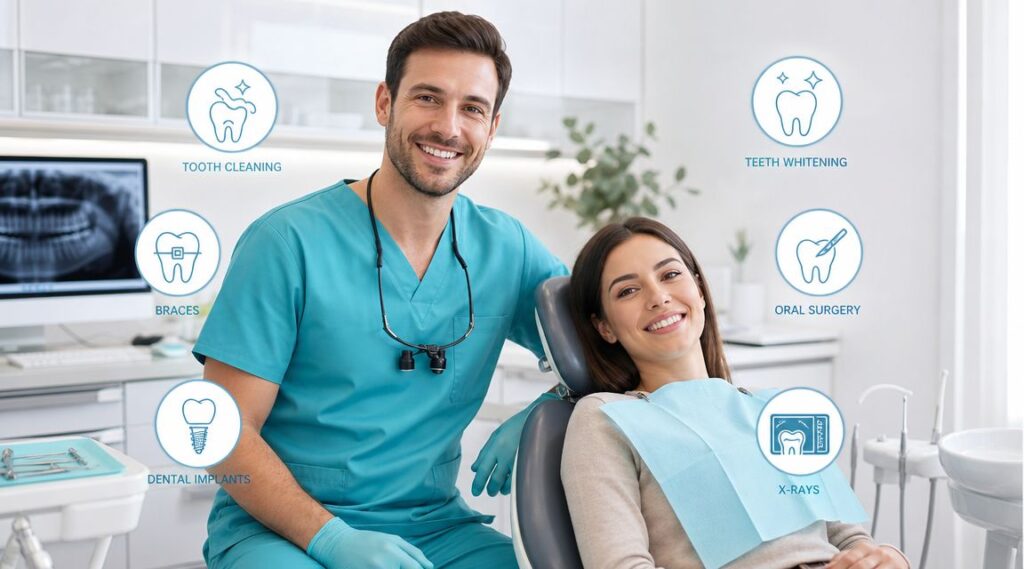
A tooth starts aching before a work meeting in Downtown Miami. A front tooth chip becomes impossible to ignore before a wedding. A missing molar makes chewing uncomfortable, but the idea of treatment feels bigger than the problem itself. That's usually when people start searching for a dentist near me or a dentist in Miami, FL, and run into a long, confusing menu of terms.
A clear dentist procedures list should make decisions easier, not harder. Most dental care still centers on prevention and diagnosis. In the U.S., about 548 million dental procedures were recorded in 2009, and 43.4% were diagnostic while 32.5% were preventive, so those two categories made up about 76% of all procedures according to AHRQ MEPS data on dental procedure patterns. That matters because routine exams, imaging, cleanings, and monitoring are still the starting point for most treatment plans, even in offices that also provide implants, cosmetic dentistry, and emergency dental services.
At Ultra Smile DentalSpa, patients in Miami often want two things at once. They want excellent clinical dentistry, and they want the process to feel manageable. That's why a practical guide helps. It shows what each procedure does, when it's usually recommended, what trade-offs matter, and how comfort, timing, and appearance fit into the decision.
This guide focuses on the procedures offered at Ultra Smile DentalSpa in Miami. It explains common treatments in plain language, including whitening, veneers, Invisalign, dental implants, tooth extraction, same-day crowns, root canal therapy, and other services that patients often compare before booking.
Table of Contents
- 1. Professional Teeth Whitening
- 2. Porcelain Veneers
- 3. Invisalign (Invisible Orthodontics)
- 4. Dental Implants
- 5. Composite Resin Fillings
- 6. Same-Day Crowns (CEREC)
- 7. Root Canal Therapy (Endodontics)
- 8. Wisdom Teeth Extraction
- 9. Dental Bonding and Composite Cosmetic Bonding
- 10. Bone Grafting for Implant Preparation
- Top 10 Dental Procedures Comparison
- Your Next Step to a Healthier Smile in Miami
1. Professional Teeth Whitening
For many adults in Miami, whitening is the easiest place to start. Coffee, tea, red wine, tobacco, and simple enamel aging can leave teeth looking dull even when they're healthy. A brighter smile often changes how a person feels on video calls, in social settings, and in photos.
Ultra Smile DentalSpa offers professional whitening as part of its cosmetic dentistry services, and the practice also provides complimentary yearly whitening for existing patients. That benefit matters because whitening often becomes the entry point into a larger smile plan. A patient may begin by wanting brighter teeth, then decide to address a chipped edge, old bonding, or uneven spacing.
When whitening makes sense
Whitening works best when the main issue is stain or generalized yellowing. It doesn't change the color of crowns, veneers, or fillings, so timing matters. If someone is considering veneers or bonding on front teeth, whitening is usually better first so the final restorations can be matched to the new shade.
Practical rule: Whitening first, then bonding or veneers, usually creates the most natural color match.
A few situations come up often in practice:
- Before a major event: Weddings, reunions, media appearances, and business travel are common reasons patients book whitening.
- Before cosmetic upgrades: Whitening can help clarify whether a patient really needs veneers or only minor reshaping afterward.
- After a long gap in care: Once teeth are cleaned and examined, whitening can give a healthy smile a noticeable lift without changing tooth structure.
Patients should expect short-term sensitivity in some cases. That doesn't mean something is wrong. It usually means the teeth need a little time and good home care after treatment. Avoiding strongly staining foods and drinks for the first couple of days is smart.
Many people also arrive with misconceptions about over-the-counter strips versus professional care. Ultra Smile DentalSpa addresses those concerns in its guide to common teeth whitening myths patients hear in Miami. For patients searching cosmetic dentist near me, whitening is often the lowest-commitment way to improve a smile quickly.
2. Porcelain Veneers
Veneers are often the treatment patients ask about when they want a bigger visible change. They can improve color, shape, length, symmetry, and small gaps, all while keeping the smile natural-looking when planned carefully.
A typical Miami veneers patient isn't always looking for a dramatic transformation. Sometimes the goal is much more specific. One lateral incisor is undersized. Two front teeth have worn edges. An old childhood chip still shows in every close-up photo. Veneers can solve those problems elegantly when the underlying teeth and gums are healthy.
What veneers fix well and what they don't
Porcelain veneers are thin restorations bonded to the front surfaces of selected teeth. They're strong, stain-resistant in everyday life, and especially useful when whitening alone won't solve the issue. Deep discoloration, uneven tooth shape, and visible wear are common reasons they're recommended.
What doesn't work as well is using veneers to hide a bite problem that should be corrected first. If teeth are severely crowded, edge-to-edge, or grinding against each other heavily, veneers may not be the first move. In those cases, Invisalign, bite protection, or restorative treatment may come before cosmetic work.
Patients usually compare veneers with bonding, whitening, and Invisalign. The trade-offs are straightforward:
- Veneers vs whitening: Veneers change both color and shape. Whitening changes color only.
- Veneers vs bonding: Veneers are often chosen when patients want more durability and stain resistance on highly visible teeth.
- Veneers vs Invisalign: Invisalign moves teeth. Veneers can create the appearance of alignment in selected cases, but they don't correct the bite the way orthodontics can.
Veneers work best when the smile design respects the patient's face, speech, bite, and natural tooth proportions, not just the trend of ultra-bright uniform teeth.
At Ultra Smile DentalSpa, veneer planning fits well with a patient-first approach because many adults want to preview the logic behind treatment, not just hear a sales pitch. For someone searching for a cosmetic dentist near me in Miami, that kind of planning matters as much as the final result.
3. Invisalign (Invisible Orthodontics)
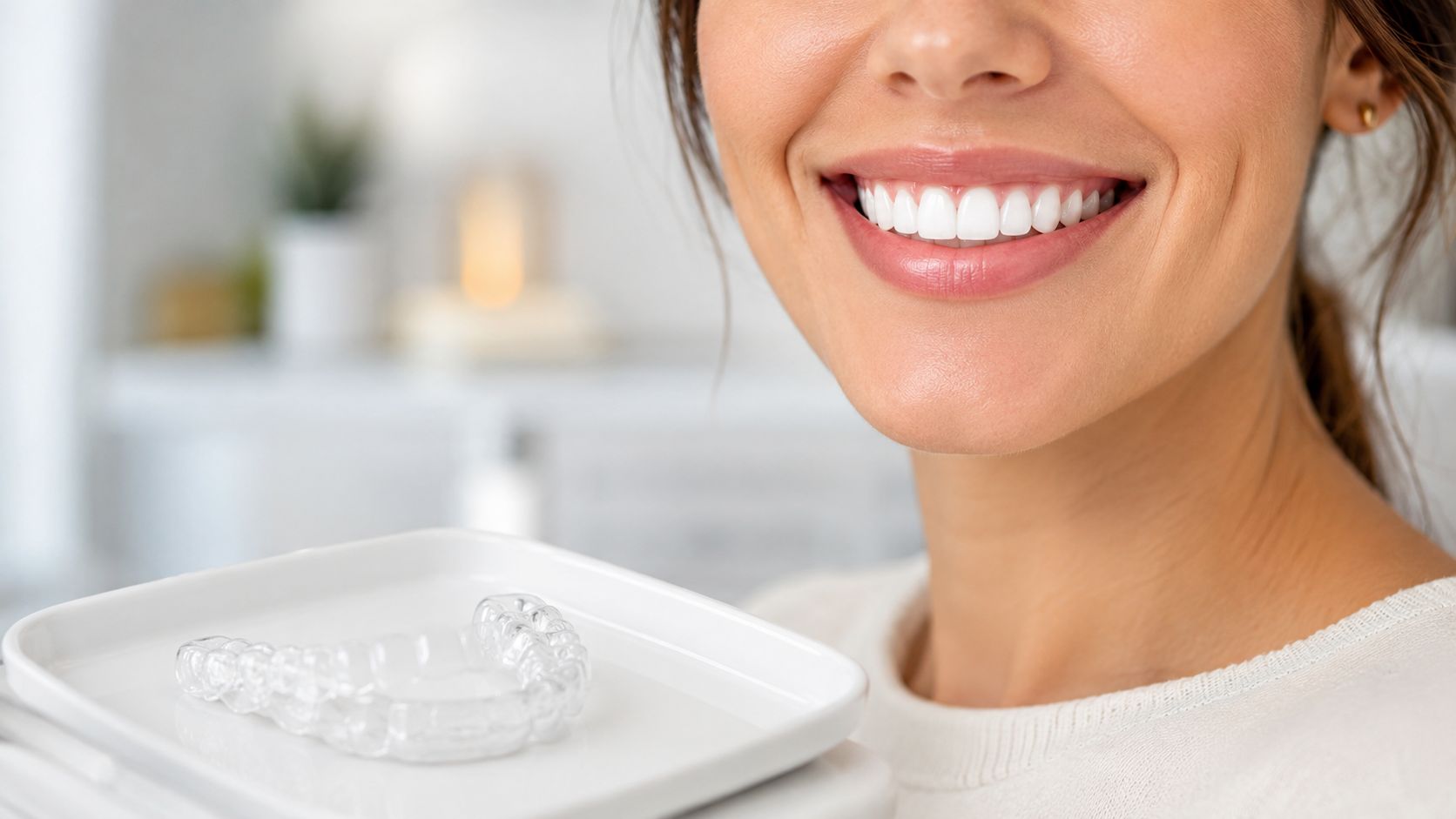
A lot of adults put off straightening their teeth because they don't want metal braces in professional or social settings. That's where Invisalign tends to change the conversation. Clear aligners give patients a way to improve alignment without the look of brackets and wires.
This option is especially attractive in Miami for working professionals, people in front-facing roles, and anyone who wants treatment that blends into daily life. The aligners are removable, which is convenient, but that convenience only helps patients who will wear them consistently.
Who usually does best with Invisalign
Invisalign uses a sequence of clear aligners to move teeth in small steps. The system is useful for crowding, spacing, minor bite concerns, and relapse after past orthodontic treatment. It can also be part of a larger cosmetic plan, especially when a patient wants straighter teeth before whitening, bonding, or veneers.
One of the biggest advantages is digital planning. In 2024, 85% of North American dental practices had adopted some form of digital technology, 53% of U.S. dentists were using intraoral scanners, and 35% had implemented AI, with 77% of those AI adopters reporting positive outcomes according to dental technology adoption data summarized by Resonate. In practical terms, that means scanner-based workflows and more visual treatment planning are now part of mainstream dentistry, not a niche add-on.
Patients do best with Invisalign when they're realistic about the routine:
- Wear time matters: Aligners need consistent daily wear.
- Meal habits matter: Frequent snacking makes compliance harder because aligners should come out for eating and most drinks.
- Retention matters: Teeth can drift back if retainers aren't worn after treatment.
A common Miami scenario is a patient who wants a cleaner, straighter smile but doesn't want veneers right away. Invisalign often makes sense there. It preserves natural tooth structure and can reduce the amount of future cosmetic work needed. For people searching dentist in Miami, FL or cosmetic dentist near me, clear aligners often appeal because they fit busy schedules and a polished professional image.
4. Dental Implants
Missing a tooth changes more than appearance. It affects chewing, speech, bite balance, and often confidence. In back teeth, patients may adapt for a while by chewing on the other side, but that workaround rarely feels good long term.
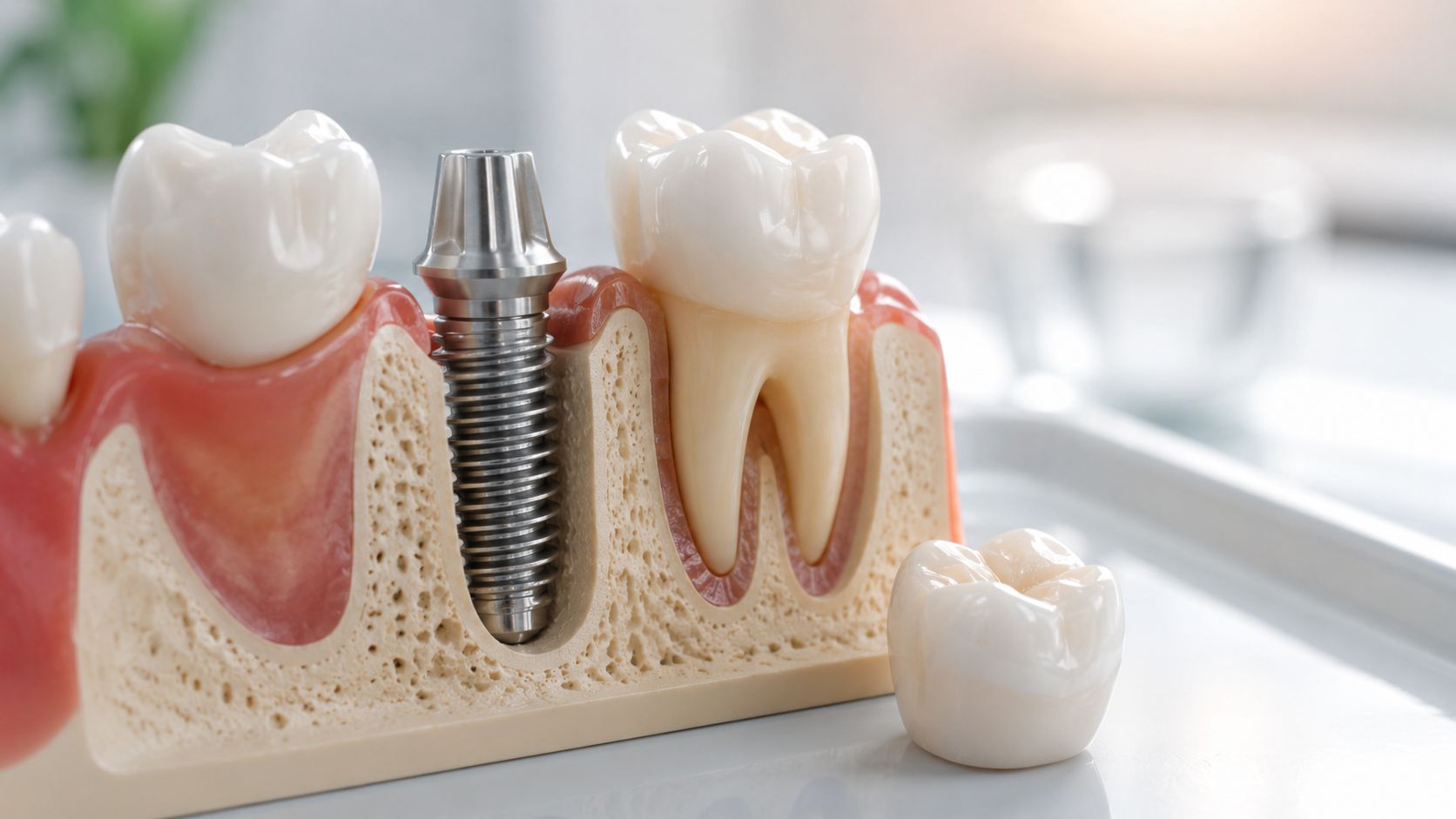
Dental implants are often the most complete replacement option because they replace the missing root and support a crown, bridge, or full-arch solution depending on the case. At Ultra Smile DentalSpa, implants are part of a broader restorative dentistry approach, so the decision isn't treated like a one-size-fits-all recommendation.
When an implant is the better long-term choice
An implant is often the strongest choice when a single missing tooth has healthy neighboring teeth. Instead of cutting down adjacent teeth for a bridge, the replacement stands on its own. That's a major advantage when the surrounding teeth are intact.
Still, implants aren't always the first step. Some patients need an extraction first. Others need bone grafting because the jaw has thinned over time. Some may be better candidates for a bridge or partial denture if timing, anatomy, healing, or budget make implant treatment less practical right away.
Decision-making is where many generic dentist procedures list pages fall short. Patients usually don't just want definitions. They want to know when a filling is enough, when a tooth needs a crown, when a root canal can save it, and when extraction plus implant becomes the better route. That gap is reflected in MetLife's overview of major dental procedures and treatment categories, which helps classify treatments but doesn't answer every real-world sequencing question patients ask.
An implant is excellent when the site is healthy, the bite is controlled, and the patient is ready for the full process. It's not the right answer simply because it sounds permanent.
For someone searching dental implants near me in Miami, the best consultation is one that compares implants fairly with bridges, removable options, and staged treatment, not one that assumes every missing tooth should be handled the same way.
5. Composite Resin Fillings
Most patients don't think of fillings as cosmetic treatment, but in many cases they are both restorative and aesthetic. A good composite filling repairs damage and disappears into the smile.
This is one of the most common services on any practical dentist procedures list. Cavities, worn edges, small fractures, and failing older fillings can often be handled in a single visit with tooth-colored composite resin. The material bonds directly to the tooth, which allows for conservative treatment when decay or damage is limited.
Why tooth-colored fillings are so common
Composite fillings are a strong choice when the tooth still has enough healthy structure to support a direct restoration. They're especially useful for visible areas because the shade can be matched closely to surrounding enamel. That makes them popular for front teeth and premolars, but they're also widely used on back teeth depending on the size and shape of the cavity.
Not every tooth should get a filling just because there's damage. If a tooth has a large crack, extensive decay, or weakened cusps, a crown or onlay may protect it better. That's one of the most important treatment trade-offs patients should understand. A filling is more conservative, but if the tooth is too compromised, it may fail under chewing forces.
A few real-life examples come up often in Miami practices:
- Small cavity on a front tooth: Composite is usually the most natural-looking answer.
- Dark old filling showing when smiling: Replacing it with a tooth-colored material can improve both function and appearance.
- Minor chip from biting something hard: Composite can restore the edge quickly without extensive prep.
Procedure timing also matters operationally. A contemporary study on routine dental work found that some shared procedures were completed in roughly 3.7 to 4.0 minutes on average, while scale and polish showed a much wider timing gap between clinicians, illustrating how some visits are brief and others require much more chair time according to a study published in the British Dental Journal. For patients, the takeaway is simple. Not every filling appointment is long, and not every “small issue should be delayed.
6. Same-Day Crowns (CEREC)
A cracked tooth rarely breaks at a convenient time. It happens before travel, before a presentation, or in the middle of a packed week when multiple appointments feel impossible. Same-day crowns are built for that reality.
Ultra Smile DentalSpa offers same-day crowns using digital scanning and in-office fabrication. For busy patients in Miami, that can remove one of the biggest frustrations in restorative dentistry. There's no need to leave with a temporary crown and return later for final placement in many cases.
A quick look at the process helps:
Why same-day crowns work well for busy Miami schedules
A crown is usually recommended when a tooth is too weakened for a filling alone. That may happen after a large cavity, a fracture, a root canal, or heavy wear. The crown covers and protects the tooth so it can function more predictably.
Same-day technology changes delivery more than it changes the purpose of the treatment. That distinction matters. The goal is still to restore strength, shape, and bite. The benefit is that digital scanning and in-office milling can reduce waiting, temporary restorations, and the risk of a temporary coming loose before the final visit.
Recent independent sources also describe changes in dentistry that many consumer procedure lists still ignore, including digital radiography, laser dentistry, teledentistry, 3D imaging and printing, and other technology-assisted approaches, as discussed in Project Smile's review of innovations in preventive dentistry. That's relevant because patients now often ask how a procedure is delivered, not just what it's called.
For front teeth, aesthetics and shade details deserve extra discussion. For back teeth, speed and strength often drive the decision more. Same-day crowns are excellent for many situations, but careful bite adjustment still matters. A crown made quickly still needs to feel right when chewing.
7. Root Canal Therapy (Endodontics)
Few procedures are misunderstood more than root canal therapy. Patients often assume the root canal is the painful part, when the actual problem is usually the inflamed or infected tooth that led to treatment.
A root canal removes diseased pulp tissue from inside the tooth, cleans the canal space, and seals it so the tooth can stay in place. In plain terms, it's often the procedure that lets a patient keep a tooth that would otherwise be lost. That's why it belongs on any honest dentist procedures list alongside tooth extraction and implants. They're not interchangeable. They're competing paths in certain cases.
When a root canal beats an extraction
If a tooth is structurally restorable and the surrounding bone and gum support are good, saving it is often preferable. Natural teeth usually function best when they can be preserved. Root canal therapy is commonly recommended for deep decay, infection, trauma, or severe sensitivity that points to pulp damage.
The key question isn't just whether the nerve is infected. It's whether the rest of the tooth can still support a filling or crown afterward. If the tooth is split below the gumline or severely broken down, extraction may still be the better option. This is exactly the kind of trade-off patients deserve explained clearly.
Save the tooth when it can be predictably restored. Remove it when keeping it would only delay a bigger problem.
For anxious patients in Miami, environment matters too. A spa-like setting, clear communication, bilingual support, and comfort-focused amenities can make an intimidating visit feel much more manageable. That's especially important for emergency dentist visits, when patients arrive already stressed and in pain.
After a root canal, the tooth often needs a crown for long-term protection, particularly in back teeth. Waiting too long to restore it can lead to fracture. So the procedure shouldn't be viewed as the finish line. It's one stage in getting the tooth healthy, comfortable, and functional again.
8. Wisdom Teeth Extraction
Wisdom teeth become a problem in different ways. Some stay trapped under the gums. Some partially erupt and collect bacteria around the tissue. Others push against neighboring teeth or become difficult to keep clean. When pain, swelling, infection, or crowding enters the picture, extraction often becomes the practical answer.
For many patients searching tooth extraction or emergency dentist in Miami, wisdom teeth are the reason. The discomfort can start suddenly and interfere with eating, sleeping, and concentrating. The decision to remove them depends on symptoms, position, gum health, available space, and the risk of future complications.
What recovery usually involves
Wisdom tooth removal can be straightforward or surgical depending on how the tooth is positioned. A fully erupted tooth may be simpler than one that's impacted or angled sideways in bone. That's why two patients can hear the same procedure name and have very different experiences.
Recovery usually goes better when patients prepare before the appointment, not after. A few basics make a real difference:
- Plan downtime: It helps to schedule extraction when a few recovery days are available.
- Set up soft foods early: Yogurt, soups, smoothies, and other easy foods are much easier than trying to improvise after the numbness wears off.
- Follow aftercare closely: Gentle rinsing, rest, and avoiding suction from straws or smoking help protect healing.
A common Miami scenario is the busy adult who has “managed a wisdom tooth for months with intermittent discomfort until a flare-up forces urgent care. That usually isn't the easiest path. When a wisdom tooth is repeatedly inflamed or impossible to clean well, delaying treatment often means more stress, not less.
At Ultra Smile DentalSpa, comfort matters here. Sedation discussions, clear post-op instructions, and a calming setting can lower anxiety before the procedure even begins. For patients who have been postponing care because they dread oral surgery, that can make the appointment feel much more approachable.
9. Dental Bonding and Composite Cosmetic Bonding
Bonding is often the most underrated cosmetic treatment in dentistry. It can repair a small chip, soften an irregular edge, close a minor gap, or improve a misshapen tooth without the commitment of veneers.
That makes it appealing for patients who want change, but not a major irreversible step. A person interviewing for a new job, preparing for an event, or finally fixing a small flaw that has bothered them for years may be an excellent bonding candidate. In the right case, the result is immediate and very natural.
Where bonding fits between whitening and veneers
Bonding uses tooth-colored composite material, shaped directly onto the tooth and polished to blend with the smile. It's conservative and versatile, but it's not the best solution for every cosmetic concern. It can stain and wear more easily than porcelain over time, especially in patients who drink a lot of coffee, smoke, or grind their teeth.
That's why bonding works best when the correction is modest and well targeted. One chipped corner. One dark area. One small space. When a patient wants a broader redesign across multiple front teeth with maximum stain resistance, veneers may be the stronger long-term choice.
A few common examples show where bonding shines:
- One front tooth chip: Fast repair with minimal drilling, if any.
- Tiny gap between front teeth: Often a quicker option than orthodontics when the bite allows it.
- Small shape mismatch: Bonding can make one tooth match the one next to it more closely.
For patients who are undecided, bonding can also serve as a useful step before more extensive cosmetic dentistry. It helps them see how a small change affects the whole smile. In a patient-first Miami practice, that lower-pressure option matters. Not every cosmetic concern needs a full smile makeover, and patients usually appreciate hearing that clearly.
10. Bone Grafting for Implant Preparation
Bone grafting is rarely the procedure patients search first, but it's often what makes a future implant possible. When a tooth has been missing for a while, the jaw in that area can lose width or height. If there isn't enough support, placing an implant safely and predictably becomes harder.
This is one of the most important behind-the-scenes procedures in restorative dentistry. Patients may think they need “just an implant, but the anatomy sometimes says otherwise. A careful consultation should explain that.
Why grafting is sometimes the step that makes implants possible
Bone grafting adds or preserves bone in areas that need more support. It may be recommended after an extraction, before implant placement, or as part of rebuilding a site that has changed over time. In some cases, doing the graft early keeps future options open and simplifies the restorative plan.
The bigger lesson is that access, timing, and treatment acceptance all matter. The global digital dentistry market was valued at USD 6.8 billion in 2024 and is projected to grow at a 9.9% CAGR from 2025 to 2030, while U.S. dental care expenditures reached USD 189 billion in 2024. Separately, only 45% of the U.S. population reported a dental visit in the past 12 months in 2022, with affordability, fear, and inconvenient scheduling cited as major barriers, according to Grand View Research's dental market overview. In practice, that means many patients arrive later than ideal for tooth replacement, and late treatment often creates the need for added steps like grafting.
A practical example is the patient who loses a back molar, waits because it isn't visible, and later wants a dental implant near me option. If the bone has thinned, grafting may become part of the plan before the implant crown can happen.
For patients exploring this route, Ultra Smile DentalSpa also explains healing expectations in its guide to dental implants and bone graft recovery. That kind of preparation helps patients understand that grafting isn't a detour. It's often the foundation for a stable result.
Top 10 Dental Procedures Comparison
| Procedure | Implementation complexity | Resource requirements | Expected outcomes | Ideal use cases | Key advantages |
|---|---|---|---|---|---|
| Professional Teeth Whitening | Low, non‑invasive, single or short series of visits | Low–medium cost; professional bleaching agents; 60–90 min session or take‑home trays | Rapid shade improvement (6–10 shades); results last ~6–12 months with maintenance | Surface/deep staining; quick cosmetic boost before events | Fast, non‑invasive, supervised treatment with immediate visible results |
| Porcelain Veneers | High, tooth preparation, lab fabrication, multiple visits; largely irreversible | High cost per tooth; lab work; 2–3 appointments; precise shade matching | Long‑lasting esthetics (10–15+ years); stain‑resistant, dramatic transformation | Comprehensive smile makeovers; severe discoloration, chips, gaps | Highly aesthetic, durable, corrects multiple cosmetic issues simultaneously |
| Invisalign (Invisible Orthodontics) | Medium, digital planning and staged aligner changes over months | Moderate–high cost; 3D scanning and custom aligners; ongoing patient compliance | Gradual, predictable tooth alignment for mild–moderate cases; 6–24 month timeline | Adults/professionals seeking discreet orthodontics; mild–moderate malalignment | Nearly invisible, removable, more comfortable, easier hygiene than braces |
| Dental Implants | Very high, surgical placement, osseointegration, multi‑stage workflow | Very high cost; surgery, possible bone grafting, months of healing and specialist skill | Permanent tooth replacement; excellent function and longevity (20+ years) | Single or multiple missing teeth; patients seeking long‑term replacement | Restores function, prevents bone loss, preserves adjacent teeth |
| Composite Resin Fillings | Low–medium, single‑visit, technique‑sensitive placement | Low cost; shade‑matched composite materials; operator skill required | Aesthetic cavity repair lasting ~5–10 years; conservative tooth preservation | Small‑to‑medium cavities, front‑tooth cosmetic repairs | Tooth‑colored, conservative, repairable, mercury‑free alternative |
| Same‑Day Crowns (CEREC) | Medium, in‑office CAD/CAM scanning and milling; one visit | Moderate‑high equipment cost at practice; 1–2 hour appointment | Immediate ceramic crown with good fit; single‑visit restoration | Urgent crown needs; busy patients avoiding multiple appointments | Single‑visit convenience, no temporary crown, fast return to function |
| Root Canal Therapy (Endodontics) | Medium–high, canal instrumentation, disinfection; may need crown afterward | Moderate cost; endodontic instruments and possible specialist; 1–2 visits | Saves infected tooth; eliminates pain/infection; high success rate (90–95%) | Infected or traumatized teeth where pulp preservation is possible | Preserves natural tooth, avoids extraction and prosthetic replacement |
| Wisdom Teeth Extraction | Medium, surgical extraction varies by impaction complexity | Moderate cost; surgical/anesthesia resources; post‑op care and downtime | Removal of problematic third molars; resolution/prevention of infection and crowding; 7–10 day recovery | Impacted wisdom teeth, infection, orthodontic crowding prevention | Prevents future pathology and damage to adjacent teeth; routine surgical solution |
| Dental Bonding (Composite Cosmetic) | Low, direct resin application in single visit | Low cost; composite materials and artistic shaping skill | Quick cosmetic correction lasting ~3–10 years; susceptible to staining | Minor chips, gaps, small cosmetic changes, temporary fixes before veneers | Conservative, affordable, reversible, single‑appointment aesthetic fix |
| Bone Grafting for Implant Preparation | High, surgical grafting with healing period before implants | High cost; graft material (autograft/allograft/xenograft/synthetic); 4–6 month integration | Restores ridge volume for implant placement; improves long‑term implant stability | Insufficient jawbone prior to implant therapy; ridge preservation after extraction | Enables implants in deficient sites, restores facial contours, prevents further bone loss |
Your Next Step to a Healthier Smile in Miami
Dental decisions are easier when the patient understands what problem is being treated and why one option makes more sense than another. That's the true value of a dentist procedures list. It shouldn't read like a menu of disconnected services. It should help patients understand how preventive care, cosmetic improvements, restorative work, and emergency treatment all fit together in real life.
That's especially important in Miami, where many adults delay care until something becomes urgent. A dull ache turns into a root canal visit. A missing tooth that felt manageable starts affecting chewing. A cosmetic concern that seemed minor becomes something a person notices every day in meetings, photos, and conversations. Early care usually creates more choices and simpler treatment.
Comfort also matters more than is often acknowledged. Fear, scheduling problems, and cost concerns stop many adults from booking even when they know they need treatment. Patients often aren't looking for the most complicated explanation. They want clarity, respectful communication, and a setting that helps them feel calm enough to move forward.
Ultra Smile DentalSpa is built around that kind of experience. The practice combines general, cosmetic, restorative, and surgical services in one Miami setting, which helps when treatment overlaps. A patient may come in for tooth pain and end up needing an exam, digital imaging, a root canal, and a same-day crown. Another may begin with whitening and later decide on Invisalign or veneers. Another may need tooth extraction followed by bone grafting and implant planning. When care is coordinated in one office, those transitions are simpler.
The office environment matters too. A spa-like atmosphere, refreshments, custom aromatherapy, entertainment during procedures, and a soothing hot towel finish may sound like small details, but for anxious patients they change the tone of the entire visit. So does having bilingual staff. When patients can ask questions comfortably and understand the plan clearly, they tend to feel more confident about treatment.
For adults searching dentist near me, dentist in Miami, FL, cosmetic dentist near me, emergency dentist, tooth extraction, or dental implants near me, the most important next step isn't choosing a procedure from a list alone. It's getting a proper exam that identifies the underlying issue, the realistic options, and the sequence that protects comfort, function, and appearance.
Patients in Downtown Miami, Midtown Miami, and Hallandale Beach often need dentistry that fits into a busy schedule without feeling rushed. Same-day crowns, digital workflows, cosmetic planning, preventive care, and emergency treatment all serve that need when they're delivered thoughtfully. Some patients need the simplest solution. Others need a staged plan over time. Both approaches can be right.
Dr. Neda Bahmadi and the team at Ultra Smile DentalSpa provide that kind of personalized care in Miami. The goal isn't to push the biggest procedure. The goal is to match treatment to the patient's health, priorities, timeline, and comfort level so the result feels both functional and natural. That's what helps patients stop delaying care and start feeling better about their smile.
If you're looking for a Ultra Smile DentalSpa appointment in Miami, the next step is to schedule a consultation and get a clear treatment plan specific to your needs, whether that means cleaning and exams, cosmetic dentistry, root canal care, tooth extraction, same-day crowns, or dental implants.